If you’re eyeing a compact luxury EV SUV, the 2025 Mercedes EQB range test isn’t just trivia, it’s the make‑or‑break question. On paper, the EQB tops out at about 250 miles of EPA range, which puts it on the modest side of the class. The real question is how far it actually goes in the wild: on the highway at 70 mph, on cold mornings, with kids and cargo and a schedule to keep.
Quick EQB range snapshot
EPA range by trim: 2025 EQB lineup
2025 Mercedes EQB EPA range by trim
Official EPA estimates give us the ceiling; real‑world range will usually land below these numbers, especially at high speeds or in cold weather.
| Trim | Drivetrain | EPA range (mi) | Battery (usable kWh) | EPA MPGe (combined) |
|---|---|---|---|---|
| EQB 250+ | FWD | 251 | 70.5 | 107 |
| EQB 300 4MATIC | AWD | 205 | 70.5 | 87–89 |
| EQB 350 4MATIC | AWD | 206–207 | 70.5 | 87–89 |
All three 2025 EQB trims share the same ~70.5 kWh battery pack; motors and drivetrains drive the range spread.
All 2025 EQB trims share the same 70.5 kWh usable battery, but the moment you add a second motor and all‑wheel drive, losses pile on. The EQB 250+ is the clear efficiency play, with an EPA estimate around 251 miles. Step up to an EQB 300 or 350 4MATIC and you’re realistically working with about 205–207 miles on the window sticker.
On‑paper vs on‑road
Our 2025 Mercedes EQB range test method
Before you can judge the 2025 EQB, you need to understand the test. For this guide, we lean on a composite of instrumented results and modeled data built around the EQB’s energy use of roughly 31–32 kWh/100 miles in mixed driving, plus independent database estimates that translate EPA data into real‑world city and highway figures. Combined with known battery capacity, we can predict realistic range under different conditions and driving styles.
- Start with the usable capacity of the pack (~70.5 kWh) rather than the gross number.
- Apply real‑world consumption data at city (~30 mph) and highway (~70 mph) speeds in mild and cold conditions.
- Factor in typical driver behavior: some preconditioning, moderate HVAC use, and a 10–15% buffer instead of driving to 0%.
- Translate the math into scenarios: commuting, weekend errands, and sustained highway stints.
How to run your own EQB range test
City vs highway: real-world range results
Modeled real‑world EQB 250+ range (mild weather)
The 2025 EQB 250+ can actually beat its EPA number in gentle city driving. At around 30 mph in mild weather, estimates put it at roughly 270+ miles before you reach a low state of charge. The trouble starts when you merge onto the interstate and stay there.
City driving (best case)
- Frequent slowing lets the EQB lean on regenerative braking.
- Lower speeds mean aero drag stays reasonable.
- Real‑world range in mild weather can approach 260–270 miles in the EQB 250+ if you drive smoothly.
Highway driving (worst case)
- A tall, boxy SUV body fights the air at 70+ mph.
- Dual‑motor 4MATIC trims take an extra efficiency hit.
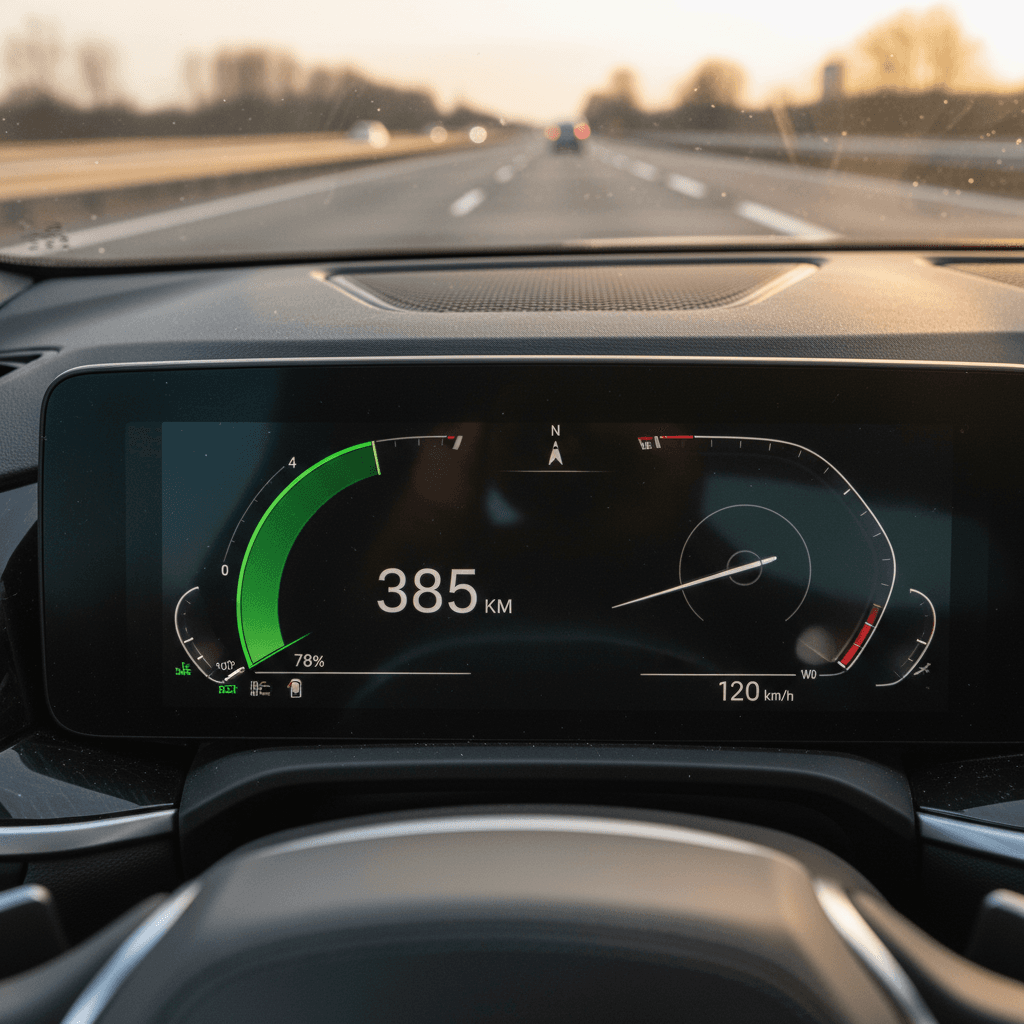
- Expect around 200–215 miles in an EQB 250+ and closer to 170–190 miles in 300/350 trims at sustained freeway speeds.
Why the EQB feels short‑legged on road trips
Cold-weather range and climate control impact
How winter changes the 2025 EQB’s range picture
Battery chemistry and cabin comfort both take a bite.
Colder battery, lower range
In freezing temps, the EQB’s pack resists taking and giving energy. Expect 20–30% less range on a long highway run in the cold, especially before the battery warms fully.
HVAC overhead
Electric heaters are energy‑hungry. Crank the heat and you might see another 5–10% hit, especially on lots of short trips where the cabin repeatedly cools down.
Trip length matters
A long drive lets the pack warm up and the hit shrinks a bit. Many short, cold errands are worst‑case: you pay the ‘warm‑up tax’ over and over.
Modeled data for the EQB 250+ suggests that in winter conditions around 14°F, city range can drop from the 270‑mile ballpark down to roughly 190–200 miles, while highway range can sag into the 170s. Dual‑motor versions will see similar percentage losses, just from a lower starting point.
Minimize winter range loss
Charging speeds: how fast the EQB recovers range
Range is only half the story; recovery time is the other. The 2025 Mercedes EQB tops out around 9.6 kW on AC and about 100 kW on DC fast charging. That’s adequate, not bleeding edge, for a compact luxury EV.
2025 EQB charging performance overview
Approximate charging times and range added for the 2025 EQB 250+ in good conditions.
| Charging type | Power | 10–80% time | Miles added in 10 minutes* | Best use case |
|---|---|---|---|---|
| Level 2 home/work | Up to 9.6 kW AC | ~7.5–8.5 hours | N/A (overnight) | Daily charging from a 240V wall box |
| Public Level 2 | 6–9.6 kW AC | 8–10 hours | N/A | Topping up while parked for several hours |
| DC fast charge | Up to 100 kW | ~30–35 minutes | ~55–60 miles | Highway road‑trip stops |
Real‑world charge times depend on station quality, battery temperature, and your starting state of charge.
Plan your stops, not just your max range
Compared with newer 800‑volt EVs that can gulp power at 200–300 kW, the EQB’s 100 kW ceiling means each fast‑charge stop feels a bit leisurely. That’s not a deal‑breaker if you road‑trip a few times a year, but heavy travelers might prefer something with faster DC capability.
Battery health: what to expect from a used EQB
The 2025 EQB’s battery warranty runs 8 years or 100,000 miles, and industry data suggests modern packs typically lose about 1–2% of range per year. For an EQB 250+ starting at 251 miles EPA, that implies something like 215–225 miles of rated range after 8 years, assuming typical use.
What normal degradation looks like
- Gradual drop in max displayed range over the years.
- Still plenty of usable range for commuting and errands.
- Degradation is usually slower in milder climates and with consistent home charging.
Red flags on a used EQB
- Range display far below what the odometer and age suggest.
- Previous owner heavily reliant on DC fast charging.
- Battery or high‑voltage system recalls that haven’t been properly addressed.
Note on recalls and safety
This is where Recharged comes in. Every EV we list includes a Recharged Score with verified battery health diagnostics, so you’re not guessing about pack condition or hidden range loss. For an EQB, that’s the difference between a satisfying daily companion and a short‑range headache.
Is the 2025 EQB’s range enough for you?
Range fit check: is the 2025 EQB right for your life?
1. Map your real daily miles
Add up your typical weekday driving. If you’re under about <strong>120 miles a day</strong>, any 2025 EQB trim provides ample buffer, even with winter losses.
2. Consider your climate
If you live in a cold region and park outside, assume a 25–30% winter hit and see if the math still works. Heated seats and preconditioning can help a lot.
3. Decide if you really need AWD
The jump from EQB 250+ FWD to 300/350 4MATIC costs you roughly <strong>40–50 miles</strong> of rated range. If you don’t truly need AWD, keep the 250+ on your list.
4. Think about your road‑trip pattern
If you take a handful of medium‑distance trips per year, the EQB’s range and 100 kW fast charging are perfectly livable. If you regularly crush 400–500‑mile days, you may want something with more range or faster charging.
5. Check home charging options
A 240V Level 2 charger makes the EQB feel bigger‑battery than it is. Wake up full every morning and the raw range number matters far less.
6. Look at future needs, not just today
If your commute or family logistics may grow significantly in the next 5–8 years, aim for some extra headroom now rather than relying on the top of the pack every single day.
When the EQB shines
Range vs rivals: compact luxury EV SUVs
On paper, the 2025 EQB sits in the lower half of the compact luxury EV‑SUV segment for range. It’s not hopeless, but rivals like the Kia EV6 or VW ID.4 Pro can go meaningfully farther on a charge and often charge faster, too.
2025 Mercedes EQB vs key compact luxury EV rivals
Approximate EPA ranges for comparable trims in the U.S. market.
| Model & trim | Drivetrain | EPA range (mi) | Usable battery (kWh) | Peak DC rate |
|---|---|---|---|---|
| Mercedes EQB 250+ | FWD | 251 | 70.5 | 100 kW |
| Mercedes EQB 350 4MATIC | AWD | ~206–207 | 70.5 | 100 kW |
| Volkswagen ID.4 Pro | RWD | ~270+ | 82 | 170+ kW |
| Kia Niro EV | FWD | ~207 | 68 | 85–100 kW |
| Lexus RZ 300e | FWD | ~230+ | 71 | 150+ kW |
Exact numbers vary by wheel size and options, but the pattern is clear: the EQB prioritizes comfort and familiarity over headline range.
What you’re really choosing
Practical shopping tips with Recharged
If you’re considering a new 2025 EQB or a gently used earlier model, your mission is to match real‑world range to your real life, and to verify that the battery is healthy. That’s exactly the problem Recharged was built to solve.
How Recharged helps you buy the right EQB
Battery clarity, fair pricing, and EV‑savvy guidance.
Battery health clarity
Every EQB on Recharged comes with a Recharged Score Report that includes pack diagnostics and range insights, so you’re not guessing how much real‑world distance is left.
Fair market pricing
We benchmark EQB prices against the broader EV market, battery condition, and mileage so you can see instantly whether a given example is priced right.
EV‑specialist support
From explaining EQB trims and charging to planning your first electric road‑trip, Recharged’s EV specialists walk you through every step, fully digital, or at our Richmond, VA Experience Center.
Ready to find your next EV?
Browse VehiclesThe 2025 Mercedes EQB range test tells a nuanced story: in its most efficient 250+ form, the EQB offers perfectly workable real‑world range for urban and suburban life, backed by decent charging speeds. At the same time, its modest battery size, average efficiency, and 100 kW DC ceiling mean it’s not the right tool for everyone, especially habitual long‑distance drivers. If you treat the EPA sticker as a ceiling, not a promise, and lean on tools like the Recharged Score to verify battery health on a used example, the EQB can be a charming, comfortable gateway into EV ownership rather than a range‑anxiety machine.