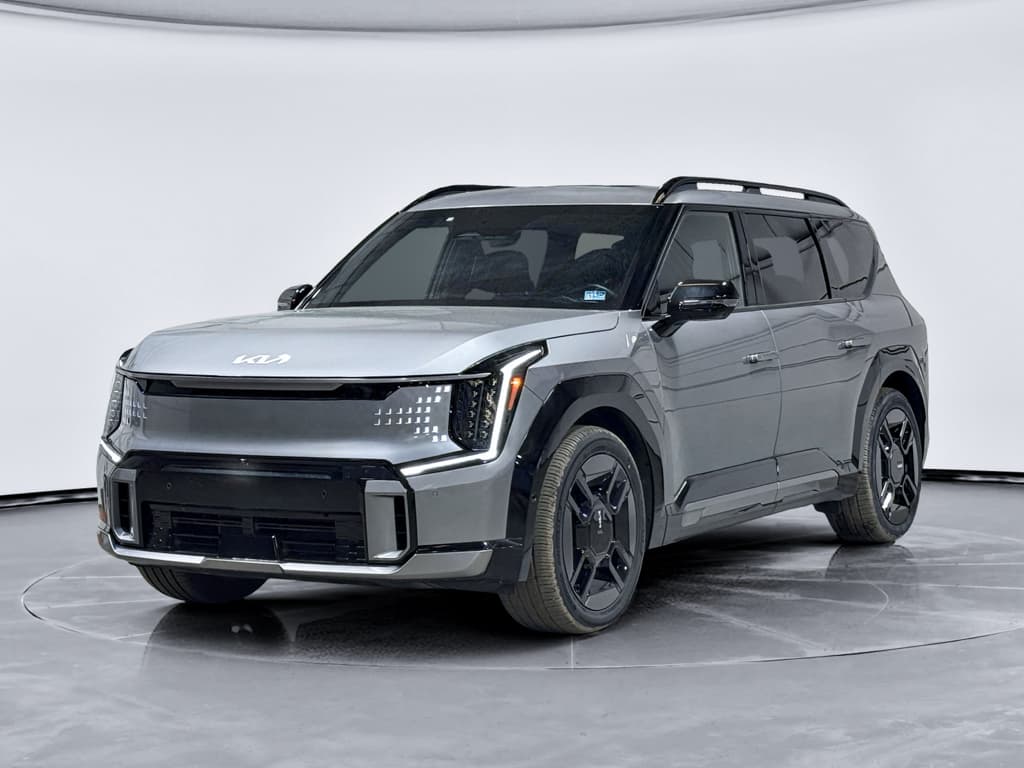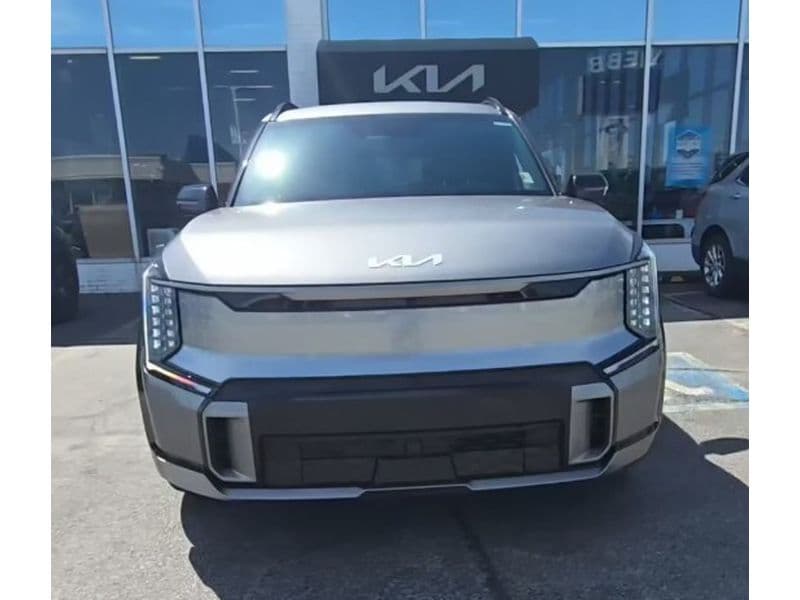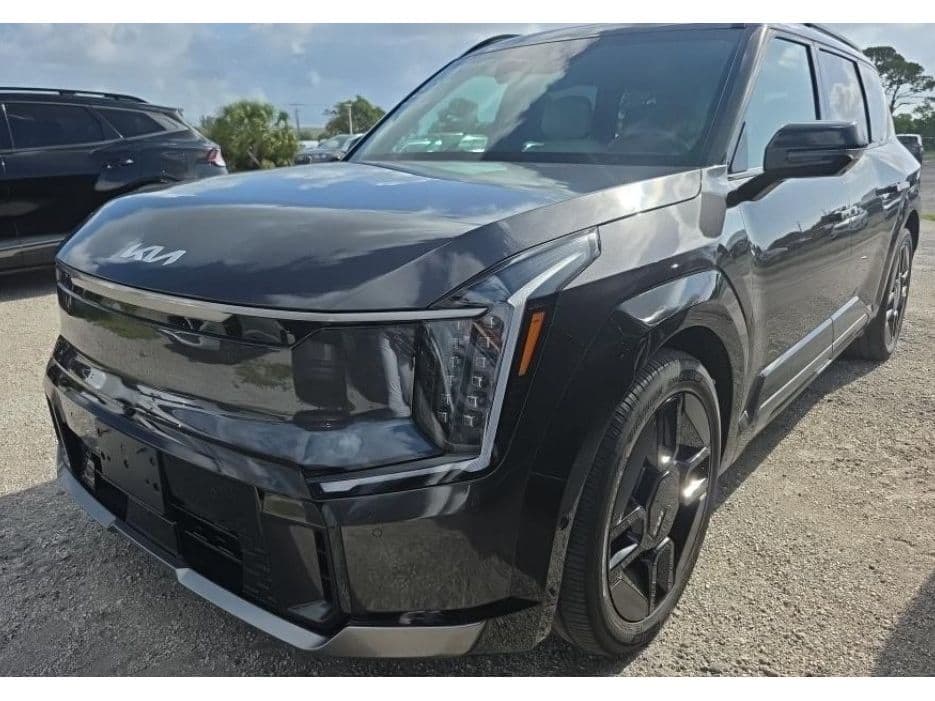
If you’re looking at a three‑row electric SUV, you’re probably asking one question first: **how far will it really go on a charge?** The 2025 Kia EV9 looks great on paper, but a proper **2025 Kia EV9 range test** means looking beyond the EPA label to real‑world highway results, charging performance, and how all of that feels on an actual road trip.
Quick takeaway
EPA range ratings for 2025 Kia EV9 trims
Before you dive into range tests, you need a baseline. Kia sells the EV9 in several trims with two battery sizes, and the **EPA‑rated range** varies quite a bit depending on which one you pick.
2025 Kia EV9 EPA range by trim (U.S.)
Official EPA combined range estimates give the starting point for any 2025 Kia EV9 range test.
| Trim (2025) | Drivetrain | Battery | EPA Range (mi) |
|---|---|---|---|
| Light | RWD | 76.1 kWh | 230 |
| Light Long Range | RWD | 99.8 kWh | 304 |
| Wind | AWD | 99.8 kWh | 280 |
| Land | AWD | 99.8 kWh | 280 |
| GT-Line | AWD | 99.8 kWh | 270 |
Figures shown are EPA combined estimates; actual range will vary with speed, temperature, load, and driving style.
How to read these numbers
Core EV9 range & efficiency specs at a glance
Real‑world range tests: highway vs mixed driving
Independent tests on pre‑facelift 2024 models already give us a solid picture of how the EV9 behaves on the road, and the **2025 Kia EV9 carries over the same battery and drivetrain options**. That means those early tests are directly relevant if you’re shopping a 2025 or a used 2024–2025 EV9.
Highway range: 75 mph test
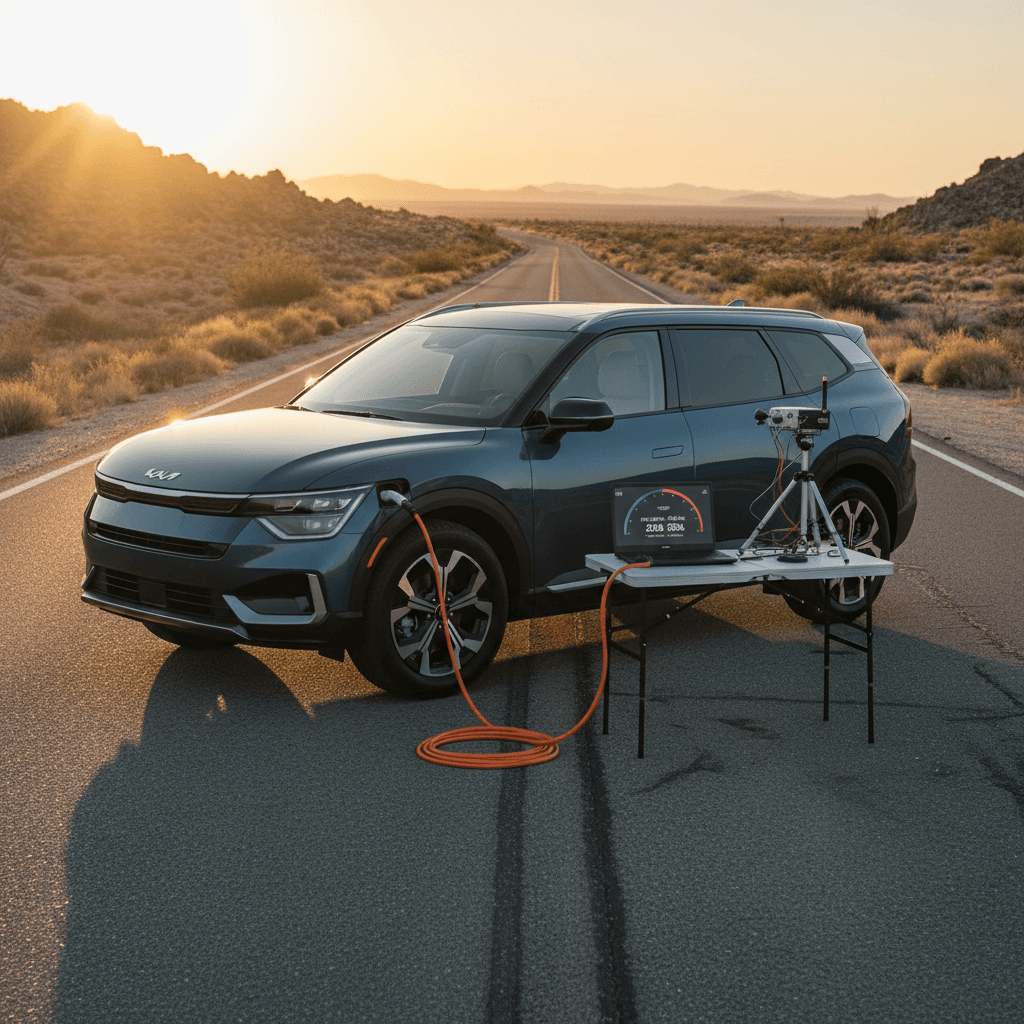
In a standardized 75‑mph highway test, a dual‑motor EV9 GT‑Line with the 99.8 kWh pack covered about 240 miles before reaching the low‑state‑of‑charge zone, roughly 88% of its 270‑mile EPA rating. That’s typical of modern EVs: the EPA number is generous at steady freeway speeds.
Translated: on a clear‑weather interstate run at American speeds, you can plan on roughly 200–230 miles of comfortable, no‑stress range in the heavier, more powerful trims before you’ll want a fast‑charge stop.
Mixed‑driving range: suburban + highway loop
On a mixed‑driving route more representative of daily use, suburban roads, some stop‑and‑go, and moderate highway speeds, independent testers have seen a GT‑Line EV9 match or even slightly exceed its 270‑mile EPA rating, landing just over 300 miles on a charge in favorable conditions.
That contrast highlights a key point: the EV9 is more efficient around town and at 45–60 mph than at 70–80 mph. If most of your miles are school runs, errands, and commutes, your day‑to‑day range will look a lot rosier than a highway torture test suggests.
Why range tests don’t always match
How driving conditions change your EV9 range
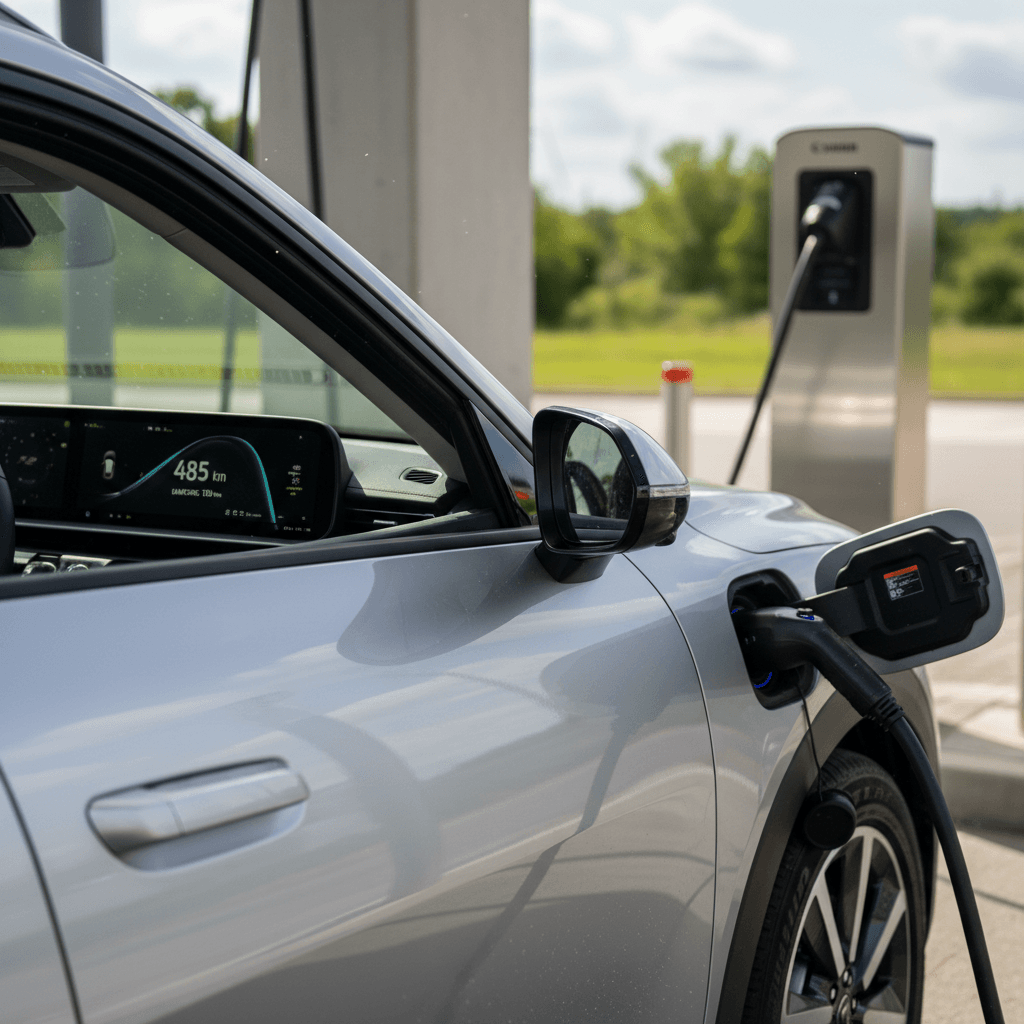
Once you move beyond the spec sheet, **conditions dominate your 2025 Kia EV9 range test results**. Here are the biggest levers you control, or can at least plan around.
Key factors that move your EV9’s real‑world range
Think in percent, not just in miles.
Temperature
Cold weather thickens battery chemistry and increases heating demand. A winter freeway run in the 20s °F can trim 20–30% off your usable range compared with a mild 60–70°F day.
Speed & aerodynamics
Above ~65 mph, aerodynamic drag rises steeply. At 75–80 mph, expect noticeably worse efficiency than at 60–65 mph. The EV9’s big, boxy shape is great for passengers, less great for slicing through air.
Weight & load
A full cabin, roof box, or a small trailer all add drag and mass. Figure on losing another 5–15% in range when you’re loaded for vacation compared with a solo commute.
Elevation & terrain
Long climbs can eat into the battery faster than you expect. You’ll recover some of that on the way down via regeneration, but not all of it, so mountain drives often show lower net range.
Driving style
Hard launches and last‑second braking are fun once in a while, but over a full battery they add up. Smooth, anticipatory driving can easily buy you 10–15% extra range without feeling slow.
Climate control & accessories
HVAC, heated seats, wheel, and rear‑seat climate all draw power. On hot or cold days, expect a few percent of your energy budget to go to comfort instead of propulsion, especially on short trips.
Easy win: eco‑heat and seat heaters
Charging performance and road‑trip pace
Range is only half of the story. The EV9’s real advantage over many rivals is that if you do burn through the pack quickly at highway speeds, you can **recharge that big battery surprisingly fast**.
2025 Kia EV9 DC fast‑charging highlights
For road‑tripping, what really matters is your **cruise‑speed range between 10–80%** and how consistently the EV9 holds a high charge rate. Tests show that on a strong 150–350 kW DC fast charger, the EV9 maintains more than 180–200 kW deep into the mid‑pack, rather than spiking briefly and dropping off a cliff. That stable charging curve translates directly into **shorter, more predictable stops**.
Planning a realistic EV9 road‑trip range test
1. Use 10–80% as your working window
The last and first few percent charge slowly. For fastest travel, plan legs that use roughly 60–65% of the battery, arriving around 15–20% and unplugging near 70–80%.
2. Aim for 150 kW or higher stations
The EV9’s 800‑V system shines on modern fast chargers. Older 50 kW units will work, but you’ll wait dramatically longer for the same miles added.
3. Expect 180–230 miles per leg in AWD trims
At 70–75 mph in normal weather, the dual‑motor Wind, Land, and GT‑Line are most comfortable covering around 180–220 miles between efficient stops.
4. Build in a winter penalty
For cold‑weather trips, especially below freezing, assume **20–30% less range** and plan more conservative legs to keep stress low.
5. Precondition when possible
Use navigation‑linked battery preconditioning (where available) so the pack is warm on arrival at a fast charger, this keeps you closer to that 200 kW+ sweet spot.
Which EV9 trim is best for range?
If you care more about **range than 0–60 bragging rights**, the EV9 lineup clearly favors the single‑motor Long Range configuration. But trade‑offs aren’t just about the spec sheet; they’re about how you actually use the vehicle.
EV9 trims through the lens of range
Same battery? Same physics. But use case changes everything.
Light Long Range (RWD, 99.8 kWh, 304 mi EPA)
- Best pick for max range: The longest‑range EV9 on paper and in most real‑world tests.
- Highway reality: Think ~240–260 miles at 70–75 mph in good conditions before you want a fast charge.
- Trade‑offs: Slower 0–60, rear‑drive traction only, but lower energy use per mile than AWD trims.
Wind / Land AWD (99.8 kWh, 280 mi EPA)
- Balanced choice: Extra traction and power with modest range penalty vs. Long Range RWD.
- Highway reality: Roughly 210–230 miles between 10–80% stops in typical highway conditions.
- Best for: Mixed‑climate families who value winter grip and passing power as much as range.
GT‑Line AWD (99.8 kWh, 270 mi EPA)
- Performance focus: Same big battery, but wider tires and extra equipment cost a bit of efficiency.
- Highway tests: 240 miles at 75 mph is in line with expectations; plan for ~200–220 miles per leg.
- Best for: Drivers who want the sharpest styling and acceleration and are happy to stop a little more often.
Standard Light (76.1 kWh, 230 mi EPA)
- Smaller battery: Still fine for suburban life, but less headroom for long rural stretches.
- Highway reality: Think ~170–190 miles of comfortable range at U.S. freeway speeds.
- Best for: Lower‑cost entry point if you mostly charge at home and take shorter trips.
If range is your north star…
Range tips for EV9 owners and shoppers
The EV9 starts from a strong foundation, big battery, competitive efficiency for its size, and excellent charging. But you can still leave a lot of range on the table if you treat it like a gas SUV. Here are practical ways to make your own **2025 Kia EV9 range test** come out on the high side.
Practical ways to stretch your EV9 range
Use the right drive mode
Eco or Normal mode softens throttle response and trims back peak power. You still have plenty of punch for merging, but you’ll waste less energy on unnecessary surges.
Lean on regen instead of brakes
Dial in higher regenerative braking levels in traffic. Regeneration can’t defy physics, but it does recapture energy that friction brakes would otherwise turn into heat.
Watch the real‑time efficiency readout
On the EV9’s cluster and central display, keep an eye on kWh/100 mi (or mi/kWh). Small changes in speed or following distance can have a clear, immediate effect.
Pre‑condition while plugged in
On cold or hot days, pre‑heat or pre‑cool the cabin while the EV9 is still charging at home. That way, energy for comfort comes from the grid, not your battery.
Choose wheels and tires wisely
If you’re range‑sensitive, avoid the largest wheel/tire packages and aggressive off‑road rubber. They look great but add drag and weight you’ll pay for every mile.
Plan your public charging hierarchy
On road trips, favor the fastest, most reliable DC networks on your route. A stable 150–350 kW charger can save you <strong>tens of minutes</strong> over the course of a day.
Used EV9 shopping: how to judge range and battery health
Because Kia launched the EV9 for the 2024 model year, the **first wave of used three‑row EV9s** is starting to hit the market, often as early lease returns or demos. That’s a big opportunity if you want maximum space and tech without paying new‑SUV money, but only if you understand what’s happening with the battery and real‑world range.
Battery health vs. rated range
Modern packs like the EV9’s 76.1 and 99.8 kWh units tend to degrade slowly if they’ve been charged and stored reasonably. After the first year or two, most owners see only modest range loss, and sometimes none that’s obvious in day‑to‑day driving.
The real question is less “Has it lost 5–8%?” and more “Does this particular car still behave consistently, charge quickly, and deliver the range I need?” That’s why a structured, repeatable range and charging evaluation matters far more than a one‑off anecdotal drive.
How Recharged approaches used EV9s
Every EV sold through Recharged includes a Recharged Score Report with verified battery health, detailed charging data, and a fair‑market price analysis. For a used EV9, that means we’re not just eyeballing the EPA sticker, we’re looking at how the pack has been treated, how it fast‑charges, and how its real‑world range compares to when it was new.
If you’re considering trading in or selling an EV9, Recharged can also provide an instant offer or consignment option, plus EV‑specialist guidance on whether your current range profile still fits your needs.
Don’t buy a used EV9 on EPA numbers alone
FAQ: 2025 Kia EV9 range test questions
Common questions about Kia EV9 range and testing
Bottom line: Is the Kia EV9’s range good enough?
Taken as a whole, the **2025 Kia EV9 range story is quietly impressive**. No, it doesn’t defy physics: push a big, three‑row box through the air at 75–80 mph and you’ll see numbers well below the EPA label. But in careful real‑world testing, the EV9 consistently lands in the **upper tier of large EV SUVs**, often delivering 80–90% of its rating on the highway and easily matching it in mixed driving, backed by some of the most robust fast‑charging performance in the segment.
If you’re cross‑shopping three‑row EVs, that combination of **honest‑ish range, fast charging, and family‑friendly space** is exactly what you should be optimising for. And if you’re looking at a used EV9, pairing those strengths with an objective battery‑health picture, like the **Recharged Score Report** you get on every EV at Recharged, is the best way to ensure the range you test on day one is the range you can rely on for years to come.