If you’re eyeing a **2025 Genesis GV60**, you’re probably wondering how reliable it really is. On paper, the GV60 pairs luxury with cutting‑edge EV tech and excellent safety scores. In the real world, though, early Genesis EVs, including the GV60, have faced some hiccups, especially around high‑voltage electronics and dealer service. This guide pulls together ratings, recalls, and owner feedback so you can understand the true **2025 Genesis GV60 reliability rating** before you sign a contract or shop used.
Important context
Overview: How reliable is the 2025 Genesis GV60?
Genesis GV60 reliability snapshot (through early 2026)
If you like simple labels, the 2025 GV60 sits in the “**safe but somewhat risky**” camp. Crash protection and driver‑assistance tech are a clear strength, and the shared Hyundai–Kia E‑GMP platform is efficient and fast‑charging. Where things get murkier is **electrical reliability**, specifically issues like Integrated Charging Control Unit (ICCU) failures, high‑voltage component recalls, and software bugs first seen on 2022–2024 GV60s and their Hyundai/Kia cousins. Some of those problems appear to persist into 2025 for a subset of owners, even as others report thousands of trouble‑free miles.
Early verdict
Safety scores vs. reliability: 2025 GV60
One big reason shoppers conflate "safety" and "reliability" is that both show up under the umbrella of “is this car good?” For the 2025 Genesis GV60, it’s crucial to separate the two.
- **Crash safety**: The GV60 has consistently earned top crash-test marks. The Insurance Institute for Highway Safety (IIHS) initially gave the GV60 a Top Safety Pick+ designation and continues to rate it highly in updated side-impact and pedestrian-avoidance tests that apply to 2024–2026 models.
- **2025 IIHS awards**: Genesis has publicly highlighted that the **2025 GV60** earned the IIHS **Top Safety Pick+** rating under the stricter 2025 criteria, which is a strong indicator of structural integrity and effective advanced driver-assistance systems.
- **NHTSA testing**: The GV60 appears in NHTSA’s 5‑Star Safety Ratings program; buyers should look up the specific star ratings for their exact trim and model year when shopping.
- **Euro NCAP**: In Europe, the GV60 has scored five stars in Euro NCAP evaluations, reinforcing the idea that this is a very safe small luxury EV in a crash or emergency.
How to read “reliability rating” here
The takeaway: **safety is a major strength for the 2025 GV60**. If you’re worried about crashworthiness or driver‑assistance performance, this Genesis is near the top of the EV class. Reliability is where you need to dig deeper.
Known issues, recalls, and service campaigns
Because the 2025 GV60 rides on the same E‑GMP platform as the Hyundai Ioniq 5 and Kia EV6, it shares some of their strengths and weaknesses. Hyundai Motor Group has issued multiple recalls across 2022–2025 EVs around **power‑electronics modules, the ICCU, and software that can lead to sudden power loss or charging failures**. The GV60 is part of those campaigns in several model years.
- **ICCU failure and sudden power loss**: Owners of 2022–2024 GV60s, and at least a few 2025s, have reported the car shutting down or refusing to move after a high‑voltage control failure. In some high‑profile complaints, drivers lost propulsion while underway, requiring towing and module replacement.
- **Multiple software and control-module recalls**: Hyundai and Genesis have recalled E‑GMP EVs (including GV60) for issues such as DC fast‑charging communication faults, electronic parking brake malfunctions, and control-unit software that could trigger warnings or limp‑home modes.
- **HVAC and comfort electronics**: A smaller but real group of owners reports failures of HVAC compressors, seat functions, or infotainment glitches that require dealer visits and module swaps.
- **Charging behavior and range complaints**: Some drivers say the indicated range is optimistic and that they rarely achieve the EPA‑rated mileage, especially in cold climates or at highway speeds. While that’s common across EVs, it fuels perception that the car is “unreliable” when it’s really an expectations issue.
Why ICCU failures matter
To Genesis’ credit, **most of these issues are being handled under warranty**, and in some documented cases of repeat failures, Genesis has agreed to buy back vehicles. Still, if you’re shopping a 2025 GV60, new or used, you want to know whether your specific VIN has had these software updates and hardware fixes applied, and whether it has any open recalls.
Battery, charging hardware, and EV components
Genesis uses Hyundai Motor Group’s **E‑GMP 800‑volt architecture**, which is one of the most advanced EV platforms on the market. It enables very fast DC charging and solid efficiency, but there’s more complexity than in some competitors. That complexity is where some reliability anxiety comes from.
How the GV60’s EV hardware stacks up
Strengths and risks you should weigh before buying
Fast charging & range
The GV60 can add a large chunk of range in under 20 minutes on a 350 kW DC fast charger when conditions are ideal. That’s a major convenience advantage over slower‑charging EVs in its class.
Real‑world owners, though, often report **lower than advertised range** at highway speeds and in cold weather, common EV behavior, but worth knowing if you’re planning long trips.
High-voltage battery durability
So far, there’s **no widespread pattern of battery pack failures** on the GV60. Most long‑term concerns focus on electronics around the pack (ICCU, chargers, modules) rather than the cells themselves.
The factory EV component warranty is long, which helps backstop major battery concerns, especially on younger used examples.
Electronics & software
The GV60 leans heavily on complex driver‑assistance tech, over‑the‑air updates, and integrated control modules. When everything works, it feels thoroughly modern.
When a module glitches, though, **you may be at the mercy of software updates and back‑ordered parts**, and some owners describe multiple visits to squash persistent bugs.
Smart pre‑purchase step
Owner experience and dealership service quality
Scroll GV60 owner forums and you see two very different stories. Some drivers report **years of smooth, quiet driving** with only routine software updates and recall visits. Others document early ICCU failures, repeated trips to the dealer, and frustration with communication or loaner availability.
When it goes right
- Many owners report 1–3 years of GV60 ownership with **no major repairs**, just scheduled maintenance and recall software updates.
- They highlight excellent ride quality, quiet cabins, strong performance, and premium-feeling interiors that compare favorably to Tesla and some German rivals.
- Some second owners still receive decent support during recall visits, including EV loaners in certain markets.
When it goes wrong
- Other owners describe GV60s that **failed within days or months of delivery**, often attributed to ICCU or module issues.
- Dealership experiences can be **inconsistent**, some Genesis locations are EV‑savvy and responsive, others operate more like traditional Hyundai stores with little E‑GMP expertise.
- Loaner vehicles, parts availability, and clear communication about root causes can be pain points when complex repairs drag on.
Plan for the "what if"
Warranty coverage and what it really means
One reason buyers still take a chance on early‑generation EVs like the GV60 is **strong factory warranty coverage**. While exact terms can vary slightly by model year and region, U.S. Genesis EVs have generally offered:
- A **5‑year/60,000‑mile basic warranty** covering most non‑EV components.
- A **10‑year/100,000‑mile powertrain warranty** for original owners, which can include the electric motor and related driveline hardware.
- Long‑term **EV battery coverage**, often aligned with powertrain terms, against excessive capacity loss or outright failure.
- Roadside assistance during the basic-warranty period in many markets, which is valuable if your GV60 suddenly refuses to move or charge.
Used buyers: read the fine print
Warranty doesn’t erase reliability concerns, it simply shifts more of the **financial risk** off your shoulders. Time and hassle are still yours to manage. But if you balance that risk against the GV60’s performance, features, and pricing on the used market, the equation can still make sense, especially if you buy a well‑vetted example.
Buying a used 2025 Genesis GV60: what to check
If you’re shopping a used 2025 GV60, or a leftover new one at a discount, you don’t have to roll the dice blindly. You can stack the deck in your favor with a structured inspection and history review.
Key checks for a used 2025 GV60
1. Run the VIN for recalls & campaigns
Use official tools to confirm there are **no open recalls** on the ICCU, charging system, electronic parking brake, or other critical modules. Ask the seller for documentation of completed campaign work.
2. Review repair history carefully
Look for patterns such as **multiple ICCU replacements, repeated no‑start complaints, or chronic HVAC/infotainment issues**. One repair early on isn’t automatically a dealbreaker; repeat failures often are.
3. Check DC fast‑charging behavior
On a test drive, stop at a reliable DC fast charger and see how the GV60 behaves. It should start charging without drama and ramp up to expected power levels when the battery and charger conditions allow.
4. Scan for high‑voltage fault codes
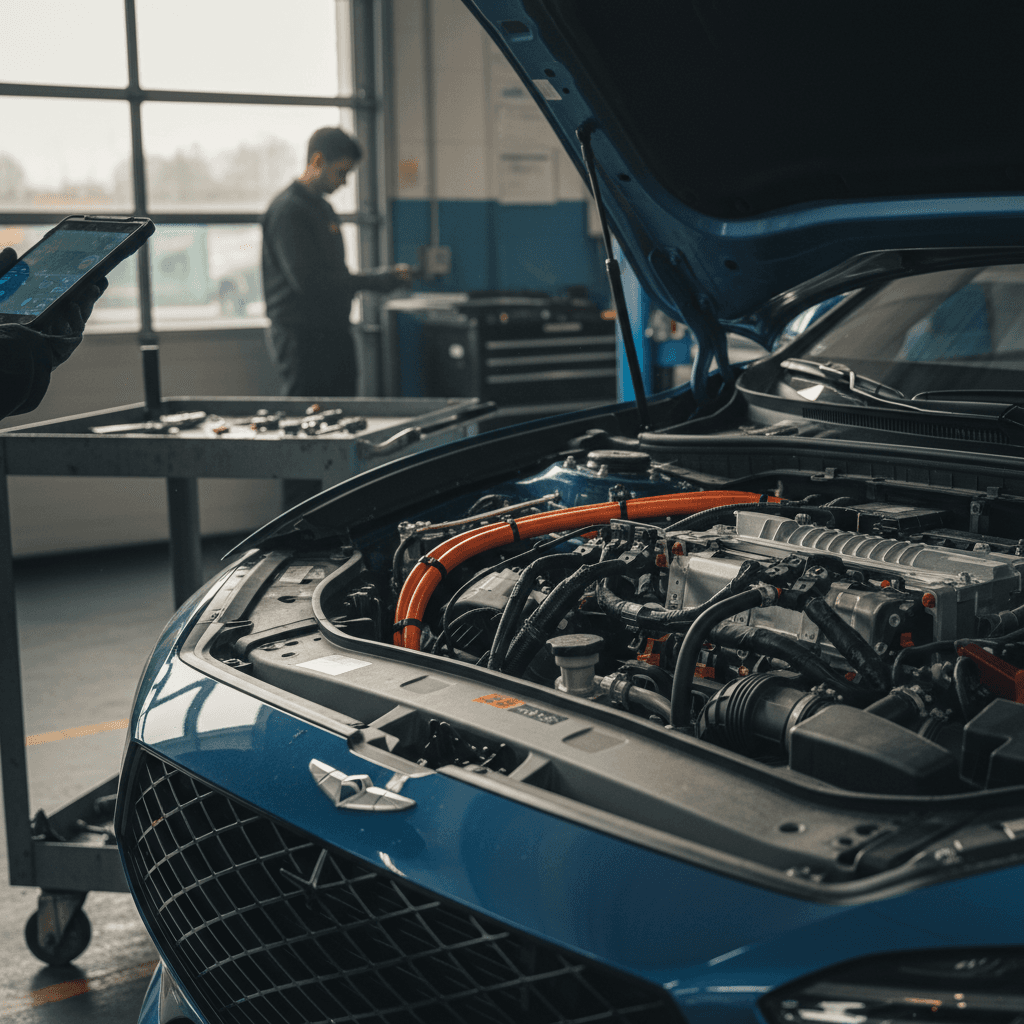
Have a Genesis dealer or independent EV specialist pull a **full diagnostic scan**. Hidden or intermittent codes around the battery, ICCU, or inverter are red flags, even if the dashboard looks clean.
5. Inspect tires, brakes, and suspension
The GV60 is quick and relatively heavy. Check for uneven tire wear, brake pulsation, or suspension noises, which can hint at hard use or alignment problems that aren’t strictly EV-related but still cost money.
6. Confirm remaining warranty
Call Genesis with the VIN to verify what **battery, powertrain, and roadside coverage** remains, and whether any of it is limited for second owners. This can significantly affect your risk tolerance.
How Recharged helps here
How Recharged evaluates Genesis GV60 reliability
When Recharged buys or consigns a Genesis GV60, 2025 model year included, we treat reliability as more than a gut feel. Our EV‑specialist team leans on a structured process to decide whether a particular vehicle earns a green light, a yellow flag, or a hard pass.
Inside a Recharged GV60 reliability review
What goes into the Recharged Score for this model
Battery health diagnostics
We use professional tools to **measure actual battery capacity and cell balance**, not just rely on the dash gauge. Significant degradation or imbalanced modules pull a vehicle’s Recharged Score down, and in some cases, keep it off our marketplace entirely.
High-voltage & software history
Our team reviews service records for **ICCU replacements, inverter issues, failed module updates, and repeat power‑loss complaints**. A GV60 that’s already had critical components replaced and is now stable may be less risky than one with unresolved gremlins.
Market pricing vs. risk
We align our **fair‑market pricing** with the model’s track record. If the GV60 carries higher‑than‑average risk of electrical problems, we price accordingly so buyers aren’t overpaying for a car that may ask for more attention down the road.
Ready to find your next EV?
Browse VehiclesWe also back shoppers with **EV‑specialist support from start to finish**. If you’re comparing a 2025 GV60 to, say, an Ioniq 5, EV6, or Model Y, our advisors can walk you through reliability trade‑offs, total cost of ownership, and how each vehicle scored in our system.
FAQ: 2025 Genesis GV60 reliability rating
Frequently asked questions about 2025 GV60 reliability
Bottom line: Should you buy a 2025 GV60?
The **2025 Genesis GV60 reliability rating** is a nuanced story. On one side, you have a small luxury EV with standout safety scores, quick charging, and a polished driving experience that many owners genuinely love. On the other, you have a platform with a documented history of high‑voltage control issues, recalls, and uneven dealer service quality that can turn a rare failure into a long, frustrating saga.
If you’re willing to **do your homework, verify campaign completion, and insist on a thorough EV‑focused inspection**, the 2025 GV60 can be a compelling value, especially in the used market, where pricing often reflects its mixed reputation. If you prefer to minimize risk above all else, it may be worth paying more for an EV with a cleaner long‑term track record, or focusing on a GV60 that’s already been vetted by a specialty retailer.
Either way, don’t just ask, “Is the GV60 reliable?” Ask, “**Is this specific 2025 GV60, with this history and this inspection report, a risk I’m comfortable with?**” With the right information, and tools like a Recharged Score battery‑health report in your corner, you can answer that question with confidence.