Selling a used EV is already a little different from selling a gas car. Selling an electric car out of state adds another layer of anxiety: titles, taxes, shipping, payment safety, and the big one, how to prove your battery is still healthy to someone hundreds of miles away. The good news is that once you understand the steps, selling your electric car across state lines is straightforward and often nets you more money.
Quick take
Why selling your electric car out of state is different
On paper, an out‑of‑state sale for an EV looks just like any other used‑car sale: signed title, bill of sale, payment, done. In practice, there are three big differences with electric cars:
- Battery health is most of the value. A buyer in another state can’t just test‑drive and “feel” whether your battery is tired. They want proof.
- Charging expectations vary by region. A buyer in a colder climate or with weak public charging may care more about real‑world range than someone in California with chargers on every corner.
- Incentives are changing fast. Federal EV tax credits for purchases after September 30, 2025 have largely disappeared, and several states have added EV fees or changed rebates. That shifts used‑EV pricing and buyer expectations over state lines.
When out-of-state makes sense
Can you sell an electric car to an out-of-state buyer?
Yes. In almost every case, you can legally sell your EV to a buyer in another state as long as you:
- Are the legal owner listed on the title (or have a clear path to get the title from your lender).
- Properly sign the title over to the buyer and provide a dated bill of sale.
- Follow your state’s requirement to report the sale or release of liability.
- Remove your plates and cancel insurance once the sale is complete and reported.
Watch out for lender and lease restrictions
Paperwork you need to sell an EV out of state
Most of the documents you need are the same for gas or electric, but out‑of‑state EV buyers are especially sensitive to battery and charging history. Plan to gather:
Core documents for an out-of-state EV sale
Get these together before you list your car
Vehicle title
The original paper title in your name (or instructions from your lender for payoff and title release). Make sure the VIN and your name are accurate and that there are no undisclosed liens.
Bill of sale
A simple written agreement with:
- Buyer and seller names and addresses
- VIN, year, make, model, mileage
- Sale price and payment method
- "As‑is" language and sale date
Battery & service records
For EVs, this is your proof of value:
- Battery health or range reports
- Service history, recall work
- Any warranty documentation
You may also want a simple written agreement describing who pays for shipping, how long the buyer has to complete registration in their state, and whether you’re including home charging equipment like a Level 2 charger.
Step‑by‑step: How to sell your electric car out of state
Step-by-step checklist for an out-of-state EV sale
1. Confirm your payoff and title status
Contact your lender (if you have one) and ask for the payoff amount and how they handle titles for out‑of‑state buyers. Some lenders will only mail the title to you; others will mail or electronically release it to the buyer’s DMV.
2. Get an honest valuation
Research pricing on used‑car sites and EV‑specific marketplaces. Pay close attention to <strong>trim, battery size, drive type, and DC fast‑charging capability</strong>, those have a big effect on range and resale value.
3. Gather EV‑specific documentation
Screenshot your car’s displayed range at 100% charge, any in‑app battery health screens, and export service history if possible. If you’re selling through Recharged, your listing includes a <strong>Recharged Score Report</strong> with independent battery diagnostics, which makes long‑distance buyers much more comfortable.
4. Create a listing that answers out-of-state questions
In your ad, call out real‑world range, remaining battery warranty, plug type (CCS / NACS / CHAdeMO), and whether you’re including a home charger. Mention that you’re willing to work with out‑of‑state buyers and shipping companies.
5. Pre‑screen serious buyers
Before sharing your exact address, verify the buyer’s identity, confirm their state, and talk through logistics: inspection, payment method, and who handles shipping. Serious buyers will have real questions about battery health and charging, not just your “best price.”
6. Agree on payment and shipping terms in writing
Decide whether the buyer will inspect in person, send a third‑party inspector, or rely on photos and reports. Agree on a secure payment method (cashier’s check at your bank, wire transfer, or an online escrow service) and who schedules and pays for shipping.
7. Complete payment and sign paperwork
Never sign over the title or release the car until <strong>funds are verified</strong>. If possible, meet at your bank, call to confirm a cashier’s check, or wait for a wire to clear. Sign the title exactly as your name appears, complete the odometer section, and sign the bill of sale.
8. Report the sale to your state
Most states let you file an online <strong>release of liability</strong> or vehicle transfer notice. Do this immediately after the sale so future tickets, tolls, or crashes don’t come back to you while the buyer is registering the car in their state.
How Recharged simplifies out-of-state sales
Ready to find your next EV?
Browse VehiclesTitle transfer, registration, and plates across state lines
What you do as the seller
- Sign and date the title exactly as your name appears. If two owners are listed with “AND,” both must sign.
- Fill in the odometer disclosure on the title (or separate form) if your car is under the federal mileage threshold.
- Write a simple bill of sale with price, VIN, date, and “as‑is” language.
- Keep copies of both for your records, photos are fine.
- Remove your plates unless your state explicitly tells you otherwise, and file a release of liability or seller’s report with your DMV.
What the buyer does in their state
- Takes your signed title and bill of sale to their local DMV or tag agency.
- Completes their state’s title application, pays title and registration fees, and pays any state sales or use tax owed in their home state.
- Turns in your out‑of‑state title in exchange for a new title in their state.
- Obtains a temporary permit or plate if they’re driving the car home before permanent plates arrive.
Because rules vary, it’s smart to have the buyer check their state’s DMV site before you finalize the deal so there are no surprises.
Mind the temp tags and test drives
Sales tax, EV tax credits, and what happens when you sell
Sales tax is usually a buyer‑side problem, but you’ll get questions, especially from out‑of‑state shoppers hoping to save money. A few principles will keep you out of trouble:
- In many states, private sellers don’t collect sales tax at all. The buyer pays tax when they title and register the car in their home state.
- Some states exempt out‑of‑state buyers from sales tax if the vehicle leaves the state quickly, others don’t. The buyer needs to check their DMV or revenue department, not you.
- Even if the buyer pays tax in your state, their home state may still charge use tax, minus any credit for tax already paid.
- With the federal EV credits for new and used purchases largely eliminated for sales after September 30, 2025, the resale value of eligible EVs is now driven more by battery health, range, and local EV demand than by tax‑credit math.
What if you claimed an EV tax credit when you bought?
Pricing your EV and proving battery health
Why battery health drives your out-of-state sale
With a local buyer, you can say, “Take it for the weekend, see how it charges.” An out‑of‑state buyer doesn’t have that luxury, so your job is to make the invisible visible.
How to prove your EV’s battery health
The more data you share, the more confident distant buyers feel
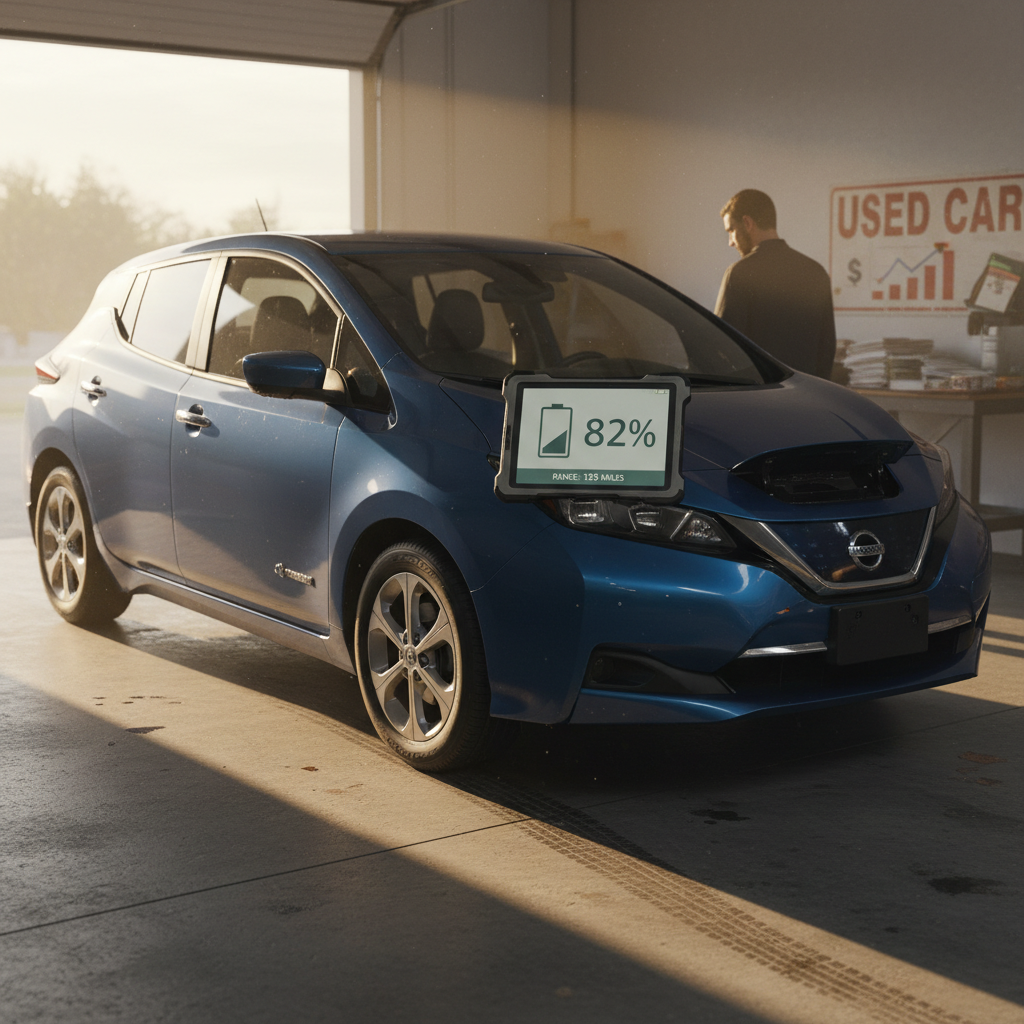
In‑car range screenshots
Charge to 100% and take clear photos of:
- Displayed full‑charge range
- State of charge (SOC)
- Outside temperature
Service & recall history
Show records for:
- Battery or drive‑unit work
- Software updates
- Any HV battery warranty claims
Independent battery report
Third‑party diagnostics, like the Recharged Score battery health report included with every EV sold on Recharged, give an objective read on capacity and fast‑charge behavior.
Price for real-world range, not brochure range
How to deliver an electric car to an out-of-state buyer
Once you’ve agreed on a price, you and the buyer have three main ways to move the car across state lines. Each has its own quirks for an EV.
Transport options for out-of-state EV sales
How different delivery methods affect cost, risk, and effort.
| Option | Best for | Pros | Cons |
|---|---|---|---|
| Buyer flies in and drives home | Medium distances, strong charging network | In‑person inspection, no transport company needed, great road‑trip story | Relies on public charging, adds miles, more wear on battery and tires |
| Open transport carrier | Most interstate sales | Lower cost, widely available, easy door‑to‑door scheduling | Exposed to weather, needs scheduling flexibility, car must have enough charge for loading/unloading |
| Enclosed transport | High‑value EVs, harsh climates | Maximum protection, ideal for luxury EVs or custom wheels | More expensive, may have longer lead times |
For long distances, enclosed or open shipping usually makes more sense than a one‑way road trip on a used battery.
Set a minimum state of charge before pickup
How to avoid scams with long‑distance EV buyers
Interstate sales attract serious buyers, but also scammers who hope distance and EV‑specific jargon will intimidate you. Fortunately, most scams follow predictable patterns.
Common out-of-state scam patterns
If it feels off, it probably is
Overpayment & “shipper” scam
Buyer offers to pay extra and asks you to wire money to a shipper. Later, their original payment bounces and you’re out the difference.
“I’ll send a code” scam
They insist on sending a text verification code before they’ll “prove they’re real.” They’re just trying to hijack your accounts.
Unverifiable cashier’s check
They mail a check and pressure you to release the car before it fully clears. Fake checks can look very convincing.
Safety checklist for out-of-state EV sales
1. Keep conversations on-platform until you’re sure
If you listed on a marketplace, keep early conversations there. Scammers usually push you to move to private email or messaging apps immediately.
2. Verify payment with your bank
Call your bank directly using a published number, not a number texted by the buyer, to confirm funds from cashiers’ checks or wires are final before you release the car or title.
3. Don’t share sensitive documents too early
Redact addresses and barcodes if you must share a photo of the title to prove you own the car. Don’t send photos of your driver’s license or full registration.
4. Use escrow or a trusted intermediary for big deals
For high‑value EVs sold across the country, consider a reputable online escrow service or a marketplace like <strong>Recharged</strong> that can handle funds and paperwork between you and the buyer.
5. Trust your instincts
If the buyer refuses a video call, dodges basic questions about how they’ll charge or register the EV, or keeps changing the story about payment or shipping, walk away. A legit buyer will be patient and specific.
FAQ: Selling an electric car out of state
Frequently asked questions
The bottom line: When an out-of-state buyer makes sense
If you own a desirable EV and local buyers are low‑balling you, opening the door to out‑of‑state shoppers can unlock a much bigger market, and a better price. The process isn’t mysterious: verify your title, document your battery, agree on payment and shipping, and protect yourself with clean paperwork and common‑sense fraud checks.
Where electric cars differ from gas cars is trust. A long‑distance buyer isn’t just betting on a body and an engine; they’re betting on invisible electrons stored in a battery they can’t see or test. When you meet that anxiety with data, clarity, and a professional presentation, your EV stops being a risk and starts looking like a smart find, no matter what state your buyer calls home. And if you’d rather have expert help from day one, Recharged can handle the pricing, battery diagnostics, buyer screening, and even nationwide delivery so selling your electric car out of state feels as simple as selling it next door.