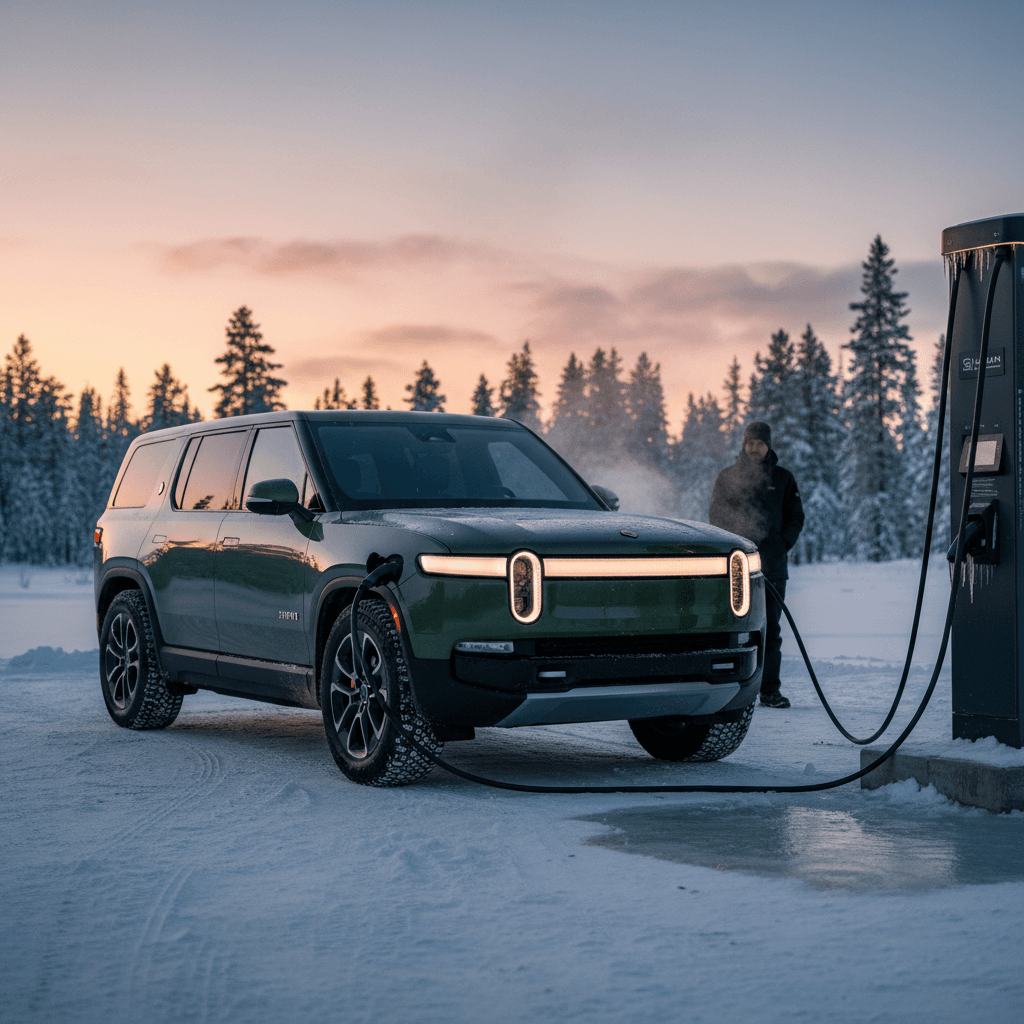
If you live where the weather forecast includes words like “lake‑effect” and “wind chill,” the obvious question is: what’s the Rivian R1S range in cold weather, not on an EPA window sticker, but on a dark January morning when it’s 10°F and you’re late for school drop‑off?
Quick take
Why Rivian R1S range drops in cold weather
Cold weather hurts every EV, but the R1S gets hit a bit harder because it’s a tall, heavy, brick‑aerodynamic three‑row SUV. To understand its winter range, you need to separate what cold does to the battery from what winter does to everything else: tires, air density, and your right foot.
- Cold batteries are sluggish. Lithium‑ion chemistry doesn’t like low temperatures. A cold‑soaked pack has higher internal resistance, so it takes more energy to deliver the same power and to accept charge when you plug in.
- Cabin heat is expensive. In an R1S, there’s no engine wasting heat. All warmth comes from electric heaters and seat heaters, which can easily pull several kilowatts when you first turn them on.
- Winter tires and slush add drag. Chunky all‑terrain or dedicated winter tires, snow on the road, and thicker cold air all increase rolling resistance and aerodynamic drag.
- Short trips are the worst. On a 15‑minute commute, most of the energy goes into warming the battery and cabin, not moving the truck. On a 3‑hour highway run, those fixed overhead losses get spread out.
Heavy SUV, heavy penalty
How much range you’ll lose: Rivian R1S winter estimates
Across owner reports and independent tests, a pattern emerges: in normal cold (20–32°F) you’ll typically lose about a quarter of your Rivian R1S range. In harsher conditions (single digits, strong wind, heavy heat use), that can creep toward a third or even more for short, cold‑soaked trips.
Typical Rivian R1S winter range loss
Translate that into miles, and a Dual‑Motor Large Pack R1S with an EPA range around 330 miles looks more like:
Estimated Rivian R1S winter range by condition (Dual Large example)
Approximate real‑world highway range for a Dual‑Motor Large Pack R1S, assuming 70 mph cruising and 21‑inch road tires. Use this as directional guidance, not a guarantee.
| Condition | Outside temp | Typical loss vs EPA | Realistic highway range |
|---|---|---|---|
| Mild fall day | 50°F | ~10–15% | 280–300 mi |
| Normal winter day | 25°F | ~20–30% | 230–265 mi |
| Very cold day | 5°F | ~30–35% | 210–230 mi |
| Brutal cold + short hops | Below 0°F | 35–50% (on short trips) | 160–215 mi equivalent |
Your actual results will depend on speed, elevation, tires, and how warm you like your cabin.
Think in percentages, not perfection
Battery packs and wheels: how your R1S specs change winter range
Not all R1S models are created equal in winter. Battery chemistry, pack size, motor count, and wheels all tug on the same rope, and in January, some tugs are stronger than others.
How major Rivian R1S configurations behave in the cold
Use this as a directional guide when picking an R1S for winter duty.
Dual Standard (LFP)
EPA range: ~270 mi (Gen 2)
Winter personality: LFP chemistry is more sensitive to cold when it’s truly frigid, but it shines for daily use when you frequently charge to 100%. Expect winter range in the 180–210 mi band on typical cold days if you’re driving highway speeds.
Dual Large
EPA range: around 330 mi (varies by year and wheel)
Winter personality: The sweet spot for most buyers. In normal winter use, think 230–270 mi of comfortable highway range with a warm cabin, more on slower mixed driving.
Dual Max / Quad / Tri Max
EPA range: high‑300s to ~400+ mi depending on year and motors
Winter personality: The big battery shrugs off winter the best. Even with a 25–30% hit, you’re still looking at 260–320 mi on the highway in real cold.
Wheels and tires matter more in January than they do in June. Rivian’s 20‑inch all‑terrain setup looks right at home in a snow‑covered parking lot, but it will chew through range faster than the 21‑inch road tire, especially at higher speeds. The 22‑inch performance package? Gorgeous and thirsty.
If you care about range, buy the wheel, not the Instagram
City vs highway vs mountains: real winter scenarios
1. Cold‑soaked commuter
It’s 15°F, your R1S sat outside overnight, and you have a 20–30 minute commute. This is the R1S at its least efficient:
- Battery and cabin are both cold, so the car spends a lot of energy just warming up.
- Short trips don’t let the pack reach its efficient temperature range.
- Range loss of 30–40% for the first few trips of the day is common.
The cure is preconditioning while plugged in and combining errands into fewer, longer drives.
2. Winter road‑trip warrior
Now imagine a 3‑hour highway stint at 70 mph on a 25°F day. Here the R1S looks much more composed:
- The battery is warm after the first 20–30 minutes.
- Cabin heat settles into a lower, steadier draw.
- Most owners see something like a 20–25% deficit vs EPA at this point.
On a Dual Large, that’s roughly 230–260 miles per comfortable leg, with a margin for weather and elevation.
Throw mountains into the mix and range becomes a bit of a carnival ride. Climbing long grades in the cold can briefly spike consumption well beyond what the trip planner predicted, but you’ll claw some of that back on the descent through strong regen, as long as the pack is warm enough to accept it.
Beware of cold descents
How to maximize Rivian R1S range in cold weather
Practical steps to stretch your R1S winter range
1. Precondition while plugged in
Use the Rivian app or departure scheduling to warm the cabin and battery while the car is still charging. This shifts that big initial heating load to the grid instead of the battery, protecting your first 30–40 miles of range.
2. Use seat and steering‑wheel heaters first
Seat and wheel heaters sip power compared with blasting the HVAC. Set the cabin temp a bit lower and let the seat heaters do the heavy lifting. You’ll stay comfortable while using less energy per mile.
3. Slow down 5–10 mph on the highway
A tall SUV punching a hole through dense winter air at 80 mph is a range murderer. Cruising at 65–70 mph instead of 75–80 can easily save <strong>10–15%</strong> of your remaining range.
4. Trim your roof rack and cargo
A loaded roof box might as well be a parachute. Remove crossbars and boxes when you don’t need them, and avoid hauling unnecessary weight in the cargo area on daily commutes.
5. Pick the right drive mode
Snow Mode softens throttle response and can reduce wheelspin, but on clear cold pavement you may see better efficiency in a standard road‑oriented mode with moderate regen and ride height.
6. Combine errands into fewer drives
Do one 60‑minute outing instead of three 20‑minute cold starts. The battery and cabin stay warm, so each additional mile costs less energy than it would on separate short hops.
Charging a Rivian R1S in the cold
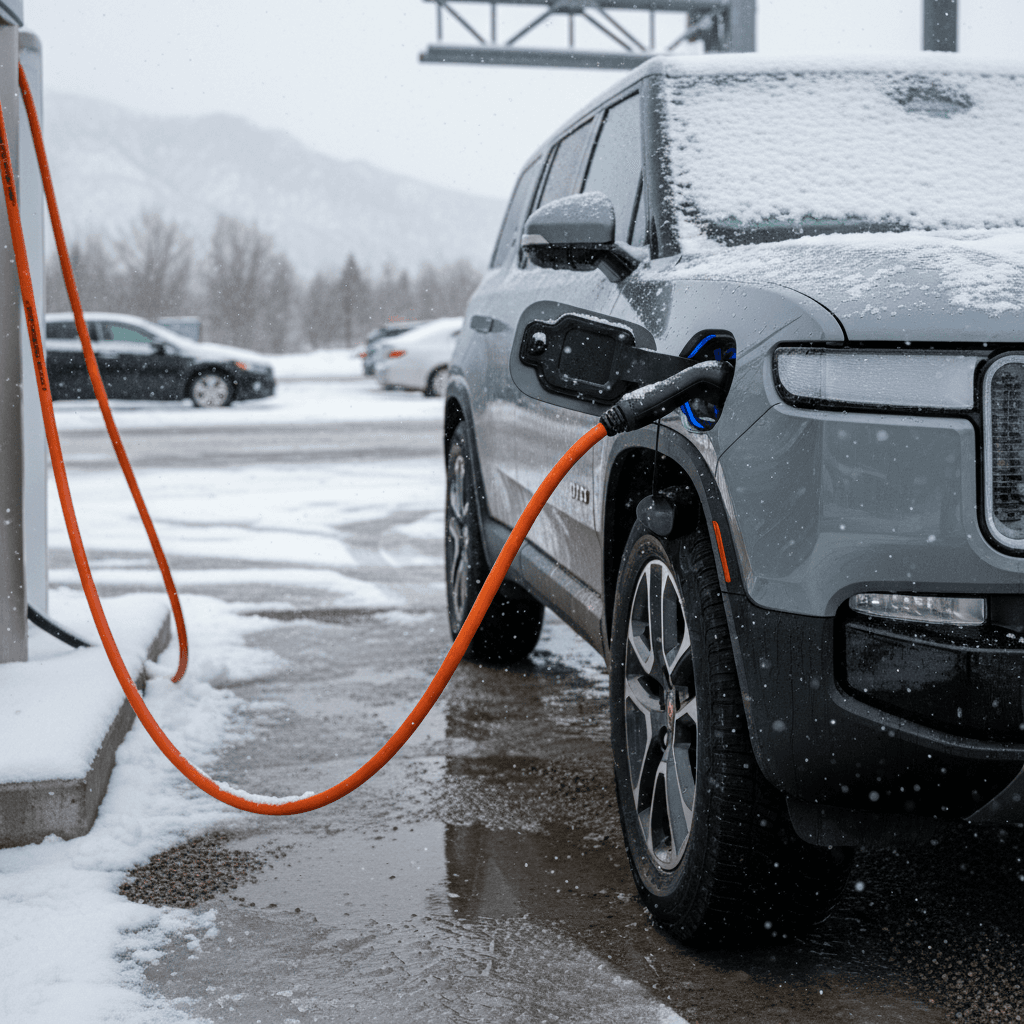
DC fast charging in winter is where newcomers to EVs get their first real taste of battery physics. A Rivian R1S that rockets from 10–60% in mild weather can suddenly feel sluggish at the plug when the pack is at 10°F.
- Precondition before fast charging. Use navigation to a DC fast charger so the truck warms the pack en route. You’ll arrive with a battery ready to accept high power instead of wasting 10–15 minutes of charging just warming itself.
- Don’t chase 100% at a fast charger in the cold. The R1S, like most EVs, tapers charging speed heavily above ~70–80%. In winter, that taper is even harsher. It’s usually faster overall to charge just enough to reach the next stop with a buffer.
- Expect slower home charging if the pack is truly cold. Level 2 charging is less dramatic than DC, but the car still limits current slightly when the battery is near freezing. Pre‑warming the pack via driving or preconditioning helps.
- Plan state of charge, not just miles. In persistent sub‑freezing temps, many experienced R1S owners simply “double” their battery percentage as a rough cold‑weather miles estimate on the highway. 60%? Plan on ~120 miles, not 180.
Night before a cold road trip
Used Rivian R1S: what winter‑range buyers should look for
Shopping for a used R1S when you live in Buffalo, Denver, or Minneapolis is a different game than shopping in Phoenix. Winter range isn’t just about the battery pack printed on the Monroney sticker; it’s about how that specific truck has aged and how it’s equipped.
Winter‑smart shopping checklist for a used R1S
Ask these questions before you sign anything, especially if snow is part of your life.
Battery health & pack type
Confirm which pack you’re buying (Standard, Large, Max, LFP vs older chemistries) and how healthy it is today, not just what it was new. A healthy Large or Max pack gives you margin to absorb winter losses without sweating every mile.
Every used EV on Recharged comes with a Recharged Score Report that includes verified battery health, so you’re not guessing about winter range potential.
Tires, wheels, and options
Look for a set‑up that matches your climate: efficient road tires in milder regions, and quality winter tires if you regularly see snow and ice. Ask whether a second set of wheels is included.
Heated steering wheel, heated seats in all three rows, and a heat‑efficient wheel/tire package are worth real miles when it’s below freezing.
If you’re trading out of a gasoline SUV into a used R1S, the biggest mindset shift in winter is to think in legs and buffers instead of “I’ll just top off somewhere.” When you buy through Recharged, an EV‑specialist can help you sanity‑check your daily routes and favorite ski trips against the specific R1S you’re considering so you know you’re within its comfortable winter envelope.
Winter range myths vs. reality
Rivian R1S winter range: myths vs. what actually happens
Common misconceptions about EVs in cold weather, decoded for Rivian R1S owners and shoppers.
| Myth | Reality for Rivian R1S |
|---|---|
| “EVs are useless in winter.” | The R1S is one of the most capable winter SUVs on sale. Range drops, but with realistic planning and DC fast‑charging, it handles snow‑belt life confidently. |
| “Heat will kill your range no matter what.” | Yes, HVAC draws real power, but using seat and wheel heaters and preconditioning slashes that penalty. Highway speed and tires often matter more than cabin temp. |
| “LFP Standard pack is bad in the cold.” | LFP does lose more performance when it’s very cold, especially when parked outside, but for daily driving with frequent charging it’s predictable and durable, just plan more buffer. |
| “You must have a Max pack to ski.” | Great if you can swing it, but plenty of owners run winter road trips in Large‑pack R1S models by planning 150–200‑mile legs and using DC fast chargers along the way. |
Understanding these myths makes winter with an R1S much less stressful.
What the R1S actually does well in winter
Rivian R1S winter range FAQ
Frequently asked questions about Rivian R1S range in cold weather
Bottom line: is the Rivian R1S good in winter?
If you judge an SUV purely by how far it goes on a frigid tank, or battery, the Rivian R1S will never match a diesel on a 0°F highway slog. But that’s missing the point. What the R1S offers in winter is confidence: enormous traction, a quiet, warm cabin, relentless torque in deep snow, and enough real‑world range, when you plan conservatively, to handle daily life and most getaways without drama.
The key is understanding how Rivian R1S range in cold weather actually behaves, where it sags, where it shines, and how to bend the curve in your favor with preconditioning, smart tire choices, and realistic buffers. Do that, and winter becomes just another season to enjoy the truck, not a reason to fear it. And if you’re shopping used, working with a specialist marketplace like Recharged, with verified battery health, fair‑market pricing, and EV‑savvy guidance, makes it much easier to find an R1S that fits your climate and your life from day one.