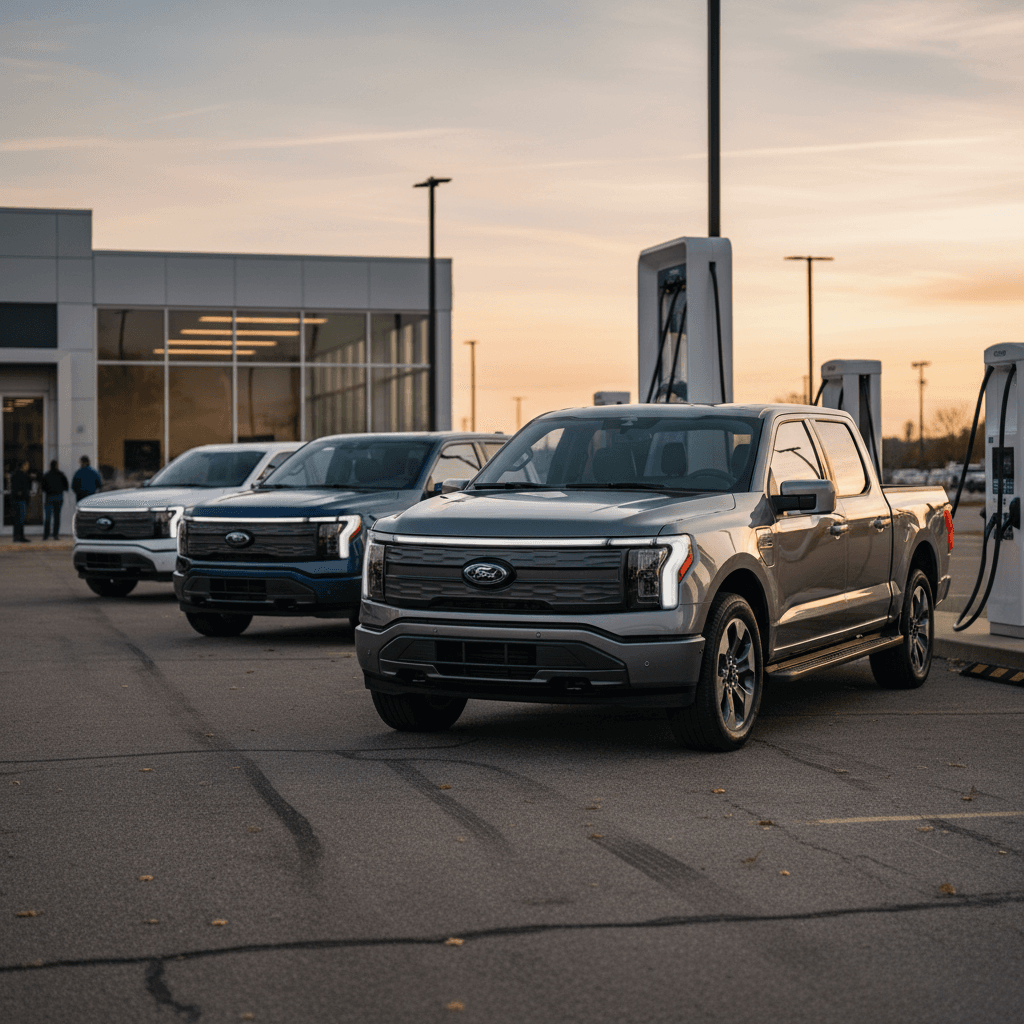
If you’re shopping for a 2025 Ford F‑150 Lightning, you’re in rare territory: one of the first mass‑market electric pickups, and one whose future just changed. Ford has ended production of the current all‑electric Lightning to make room for a next‑generation, range‑extended version, but 2025 trucks and recent used models will be in the market for years. This buying guide walks you through trims, batteries, range, towing, pricing, and how to shop new or used with confidence.
Important context for 2025 shoppers
Overview: 2025 F‑150 Lightning and today’s market reality
The 2025 Ford F‑150 Lightning is the final model year of Ford’s first‑generation electric pickup. It takes the familiar F‑150 crew‑cab body and swaps the gas powertrain for dual electric motors, a large battery pack, and a lockable front trunk. On paper, you get up to 10,000 pounds of towing capacity, payload over 2,000 pounds, and EPA‑rated range around 240–320 miles depending on battery and trim. In the real world, especially when towing, those numbers look different, and that’s where this guide focuses.
- All‑electric, dual‑motor, four‑wheel‑drive powertrain on every trim
- Standard and Extended Range battery options on most trims
- Max towing rating of up to 10,000 pounds with the right configuration
- Big front trunk (frunk) plus a 5.5‑foot bed with Pro Power Onboard outlets
- BlueCruise hands‑free driving available on higher trims
- Rapid depreciation and recent price cuts creating opportunities on the used market
Don’t buy on rated range alone
Key specs: 2025 F‑150 Lightning at a glance
Core 2025 F‑150 Lightning numbers
2025 F‑150 Lightning trim and battery overview
Approximate positioning of key 2025 F‑150 Lightning trims. Exact range and pricing vary by configuration and incentives.
| Trim | Typical battery | Target buyer profile | EPA range ballpark | Max tow rating (properly equipped) |
|---|---|---|---|---|
| Pro | Standard Range (ER on some fleet units) | Value‑oriented fleets and buyers who mostly drive locally | ~230–240 mi | Up to ~7,700 lb |
| XLT | Standard or Extended Range | Families and small businesses wanting more comfort and range | ~240–320 mi | Up to 10,000 lb |
| Flash / Lariat | Primarily Extended Range | Tech‑focused buyers, everyday commuters, light towing | ~300+ mi | Up to 10,000 lb |
| Platinum | Extended Range only | Luxury buyers, short‑distance towing, image vehicle | High‑200s to low‑300s mi | Often 8,500–10,000 lb depending on options |
Use this as a directional guide, always check a specific VIN’s window sticker or Monroney label for precise equipment.
Always decode the exact truck in front of you
Trims, batteries, and options: which Lightning fits you?
Choosing the right 2025 Ford F‑150 Lightning trim starts with how you’ll actually use the truck. Every Lightning is a crew‑cab, short‑bed 4x4; what changes is battery size, suspension tuning, comfort features, and software like BlueCruise. Here’s how to think about the main trims from a buyer’s perspective.
Matching 2025 F‑150 Lightning trims to real buyers
Think about your daily miles, towing needs, and comfort expectations before you pick a trim.
Pro & lower XLT: budget and fleet buyers
If you mainly use your truck for local driving, job‑site work, or commuting within 60–80 miles a day, a Pro or basic XLT with the Standard Range battery can make a lot of sense.
- Lower purchase price and insurance.
- Best payload ratings in the lineup.
- Interior is more work‑truck than luxury SUV.
- Range is fine for day‑to‑day, but less forgiving for long‑distance towing.
XLT Extended Range & Flash: daily drivers
For many personal‑use buyers, an XLT Extended Range or Flash is the sweet spot.
- Enough EPA range to cover a full day of errands or commuting without charging.
- Comfort and tech close to a well‑equipped SUV.
- Strong towing when equipped with the Max Trailer Tow package.
- Price is higher than Pro but usually far lower than Platinum on the used market.
Lariat: comfort and capability
Lariat Extended Range adds nicer materials, more sound deadening, and more available tech.
- Heated and ventilated seats, better audio, more driver‑assist features.
- A good choice if you road‑trip but don’t constantly tow at the limit.
- On the used market, Lariats often price closer to XLTs than you might expect.
Platinum: luxury truck, not work truck
Platinum is the flagship, think luxury SUV with a bed.
- Most features standard, from panoramic roof to premium leather.
- Heavier wheels and tires can trim range compared with simpler trims.
- Best for short‑haul towing, urban and suburban driving, and brand image, not long‑distance RV duty.
Key options that matter more than color
Range and charging: what you’ll see in the real world
Officially, a 2025 F‑150 Lightning with the Extended Range battery can crack roughly the 300‑mile mark on the EPA cycle. In Recharged road testing and owner data, most drivers see 60–80% of that rating in everyday mixed driving, less at 75–80 mph or in freezing temperatures, more around town at moderate speeds. The good news is that for many owners who drive 30–80 miles a day, that still leaves a comfortable buffer as long as you can charge at home or work.
Cold weather hits trucks harder
Home charging: where the Lightning shines
The Lightning is at its best when you can plug in every night.
- Level 2 (240V) at home is effectively mandatory; a standard 120V outlet is too slow for a big truck battery.
- With a 40–80‑amp home charger, you can usually go from low state of charge to full overnight.
- Smart charging lets you take advantage of off‑peak rates if your utility offers them.
If you’re new to EVs, start with our home charger installation guide before you sign paperwork.
Public fast charging: plan, don’t improvise
The Lightning supports DC fast charging and can add a meaningful chunk of range in 20–40 minutes when conditions are ideal.
- Think of fast charging as your road‑trip and backup plan, not your daily routine.
- Charging speeds taper as you reach higher states of charge, especially in cold weather.
- Station availability and pricing vary widely between networks; apps from Electrify America, ChargePoint, and Tesla (for compatible stations) help you scout ahead.
Recharged’s F‑150 Lightning towing and range guide goes deeper on planning long trips with this truck.
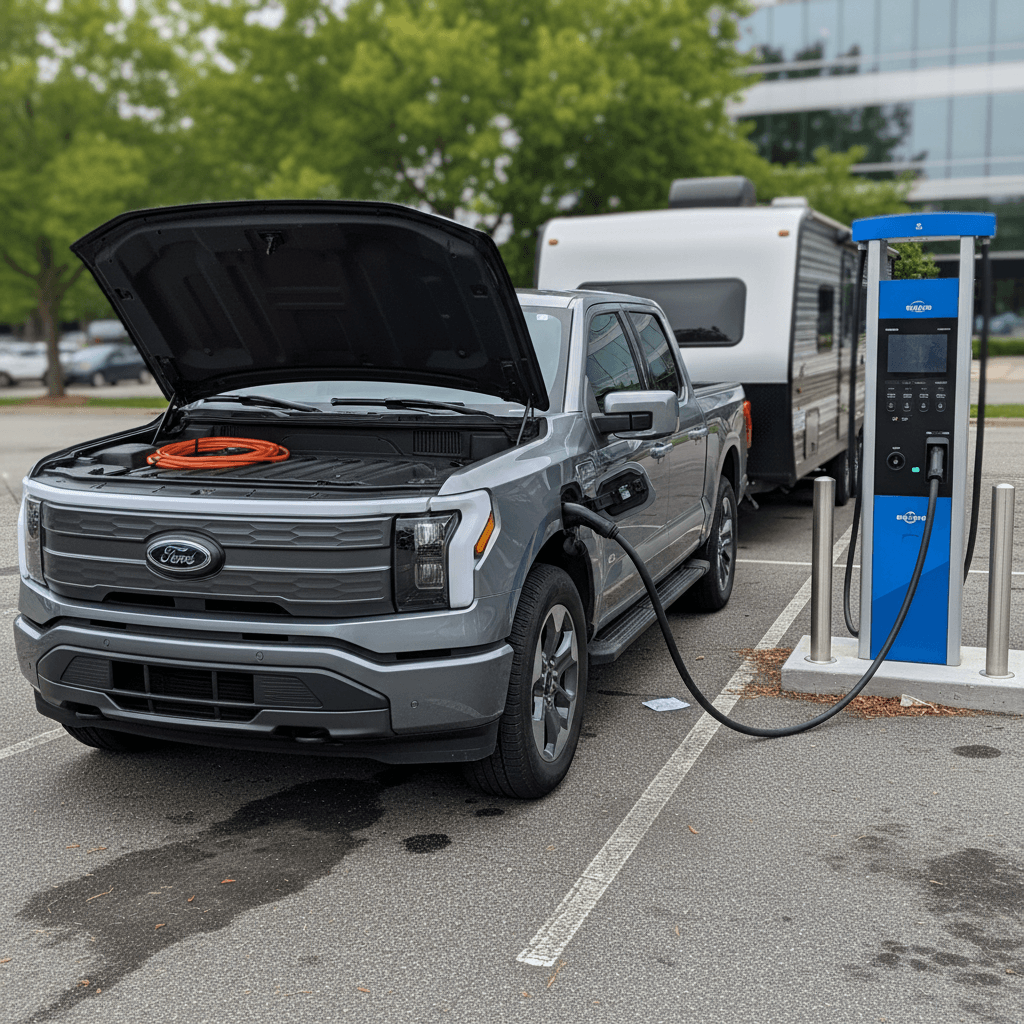
Range reality check before you buy
1. Map your real daily miles
Use a week of driving history to see how many miles you actually cover on a typical day and on your heaviest days. Many owners overestimate this number.
2. Decide your minimum winter range
If you need 120 miles on the coldest days without charging mid‑day, shop for a configuration whose real‑world winter range is at least 180–200 miles to leave a buffer.
3. Confirm home or workplace charging
Before you commit, make sure you can install a Level 2 charger or reliably access one where you park most nights. An electric truck without home charging is a very different ownership experience.
4. Be honest about highway speeds
If you regularly drive 75–80 mph, assume noticeable range loss versus EPA ratings. Build that into your expectations and route planning from day one.
Towing, hauling, and work‑truck duty
If you’re considering a 2025 F‑150 Lightning, you’ve probably seen the 10,000‑pound max towing figure. That number is real, but it applies only to specific configurations with the Extended Range battery and Max Trailer Tow package, and it does not guarantee road‑trip‑friendly range at that weight. In testing and owner reports, most Lightnings behave like a 100–150‑mile truck when towing serious loads at highway speeds.
How the 2025 F‑150 Lightning handles common towing jobs
Use this as a directional guide; your results will vary with speed, weather, terrain, and trailer shape.
Light utility trailers (1,500–3,500 lb)
Think open utility trailers, small teardrops, or a pair of ATVs.
- Range hit is noticeable but manageable, often 30–40% drop vs. unloaded.
- Ideal use case for a Lightning if you can charge near your destination.
- Standard Range battery may be enough if your routes are short.
Mid‑size campers & boats (4,000–6,000 lb)
Boxier RVs and enclosed trailers push a lot of air.
- Expect roughly half your unloaded range at 60–65 mph, less at 75 mph.
- You’ll be planning charging stops every 90–140 miles on long trips.
- Extended Range battery and Max Trailer Tow strongly recommended.
Heavy equipment and near‑max loads
Landscaping rigs, car haulers, and large travel trailers approaching 8,000–10,000 lb.
- Within rating, but best kept to shorter routes with known charging.
- A gas or diesel F‑150 may be better if cross‑country towing is your life.
- For job‑site shuttles and local deliveries, the Lightning can still be excellent.
Safety first when towing electric
Hauling is where the Lightning often surprises skeptics. Load a pallet of materials or tools in the bed and the truck’s range usually drops far less than with a tall trailer, because the aerodynamics don’t change much. For contractors, landscapers, and trades who stay within a metro area, a 2025 Lightning can be a quiet, powerful work truck that also powers tools and job‑site lighting from its battery.
Ownership costs, pricing, and resale
The F‑150 Lightning launched with high prices and limited supply. By 2024 and 2025, Ford had cut MSRPs, offered aggressive incentives, and watched used values slide as EV demand cooled. For buyers in 2026 and beyond, that’s a mixed bag: early owners took a hit, but you can now buy a lot of truck for the money, especially used.
Day‑to‑day running costs
- Electricity vs. gas: Even with higher electricity prices, fueling a Lightning at home is typically cheaper per mile than filling a gas F‑150, especially in states with off‑peak EV rates.
- Maintenance: No oil changes, fewer moving parts, and strong regenerative braking can mean lower routine maintenance, though tires and suspension still take a beating on heavy trucks.
- Insurance: EV pickups can be more expensive to insure than equivalent gas trucks due to repair costs; always get quotes for specific VINs.
Depreciation and resale value
- Lightning prices fell sharply from 2022 launch levels; by early 2025, many lightly used trucks traded well under original sticker.
- Ford’s decision to end production of the pure EV Lightning may weigh on resale in the short term but could also create “last of its kind” appeal for some buyers.
- Battery health and remaining factory warranty will heavily influence used values going forward.
Recharged tracks these trends closely in our Ford F‑150 Lightning resale value guide.
Where buyers are finding value now
New vs. used: should you buy 2025 or shop used?
By mid‑2026, you’re likely choosing between leftover or low‑mile 2025 F‑150 Lightnings and a growing pool of 2022–2024 used trucks. The right answer depends on your budget, risk tolerance, and how much you value the latest software and warranty coverage.
New (or nearly new) 2025 vs. used 2022–2024 F‑150 Lightning
Key advantages and trade‑offs when choosing between a 2025 model and earlier used trucks.
| Factor | 2025 model (new/low‑mile) | Used 2022–2024 |
|---|---|---|
| Purchase price | Higher sticker, but often offset by discounts or dealer incentives | Lower upfront cost, sometimes dramatically below original MSRP |
| Warranty coverage | Maximum remaining factory warranty; in‑service date is newest | Shorter remaining warranty; some trucks close to basic warranty end |
| Software & features | Latest model‑year updates and tweaks | May have fewer features or older BlueCruise versions |
| Battery health | Least calendar aging; lower risk of prior fast‑charging abuse | More aging and unknown use patterns, battery report is critical |
| Selection | Fewer configurations as inventory winds down | Broader mix of trims, colors, wheels, and option packages |
| Financing programs | Sometimes better OEM‑subvented rates on new | Banks increasingly comfortable with used EVs; rate depends on credit |
Use this table as a starting point, then compare specific trucks side‑by‑side with a tool like Recharged’s vehicle detail pages.
A practical rule of thumb
Battery health and what to look for on a test drive
With any used EV, but especially a big‑battery truck, battery health is the main mechanical story. The Lightning’s pack is engineered to last many years, but fast‑charging habits, heat, storage at 100% charge, and high‑mileage towing can all accelerate wear. When you shop, you want data, not guesses.
Used F‑150 Lightning inspection checklist
1. Get a professional battery health report
Ask for a third‑party battery diagnostic, not just the dashboard state‑of‑charge. Recharged’s <strong>Score Report</strong> uses specialized tools to quantify battery health and highlight abnormal degradation.
2. Verify DC fast‑charging history
Some diagnostic tools and service records can show how often a truck has been fast‑charged. A truck that lived on a DC fast‑charger may show more wear than one charged mostly at home.
3. Start with a cold‑soak test drive
If possible, test the truck after it has sat overnight. Watch how quickly range falls in the first 10–20 minutes of driving and how the truck behaves when you punch the accelerator.
4. Test driver‑assist and infotainment
Try BlueCruise (if equipped), adaptive cruise, cameras, and over‑the‑air update menus. Software glitches can be annoying, and you want to know they’re worked out, or negotiable.
5. Check for towing hardware and signs of hard use
Look at the hitch receiver, wiring harness, bed, and underbody. Heavy surface rust, bent hardware, or hammered bed floors don’t have to be deal‑breakers, but they should factor into price.
6. Confirm remaining warranty and coverage
Ask for the in‑service date and confirm the remaining bumper‑to‑bumper and battery warranties. Some buyers also layer on a third‑party EV‑friendly service contract for extra peace of mind.
How Recharged handles Lightning battery checks
How Recharged helps you buy or sell a Lightning
Because the 2025 Ford F‑150 Lightning sits at the intersection of truck culture, new EV tech, and shifting OEM strategies, it’s not a simple purchase. You’re weighing range vs. towing needs, new vs. used pricing, and how much risk you want around battery health and future values. This is exactly where a specialist marketplace adds value.
Shopping or selling a Ford Lightning with Recharged
What you get beyond a standard dealer lot or private‑party listing.
Recharged Score battery diagnostics
Every Lightning on Recharged includes a Recharged Score Report with verified battery health, charge behavior, and value context. You’re not guessing how the pack has been treated.
Flexible ways to sell or trade
Already own a Lightning? You can request an instant offer, consign it through Recharged, or use it as a trade‑in toward another EV. Our team understands Lightning‑specific options, software, and towing packages that affect value.
Nationwide delivery and digital paperwork
Recharged offers a fully digital buying experience with nationwide delivery, plus an Experience Center in Richmond, VA if you prefer to see and touch before you buy.
Ready to find your next EV?
Browse VehiclesExpert‑guided ownership from day one
FAQ: 2025 Ford F‑150 Lightning buying questions
Frequently asked questions about buying a 2025 F‑150 Lightning
Bottom line: Is a 2025 F‑150 Lightning right for you?
A 2025 Ford F‑150 Lightning is not a one‑size‑fits‑all truck. If you tow a fifth‑wheel across the country every month, a gas or diesel F‑150 probably still makes more sense. But if most of your miles are commuting, job‑site work, or regional trips with occasional moderate towing, the Lightning delivers quiet power, lower fueling costs, and a very different driving experience than any gas pickup. The key is to buy with eyes wide open: match the battery and trim to your real use case, build your expectations around real‑world range, not just EPA stickers, and insist on strong data around battery health if you’re shopping used. When you’re ready to take that step, Recharged can help you compare trucks, decode specs, and move from research to a Lightning in your driveway with a lot less guesswork.