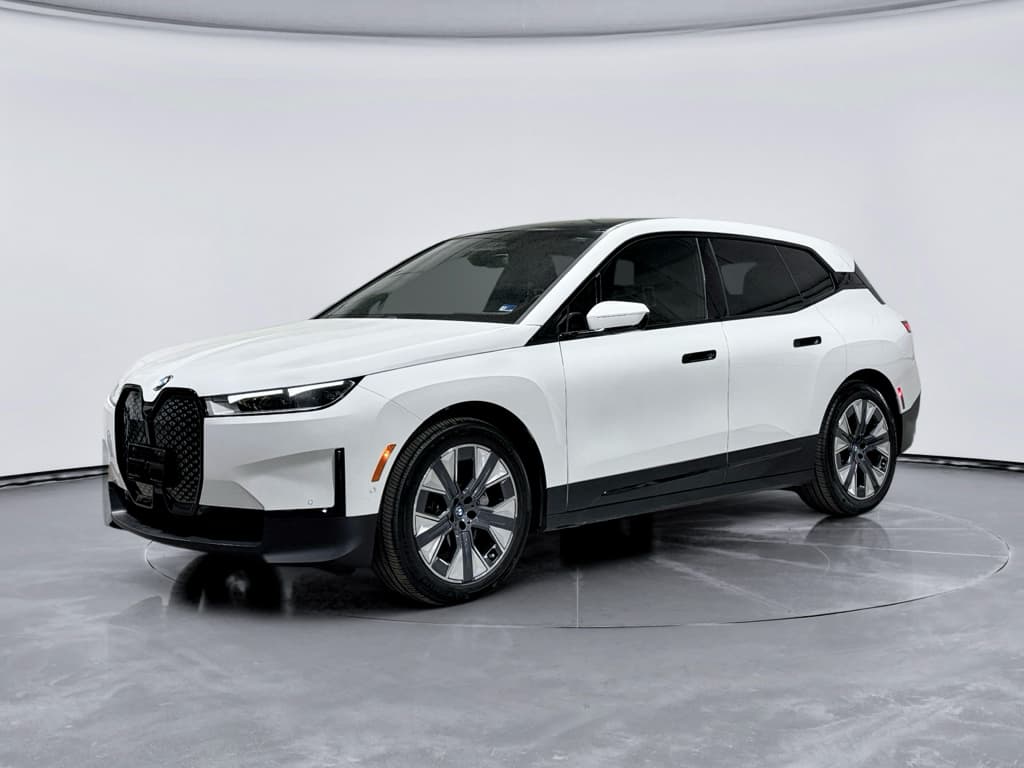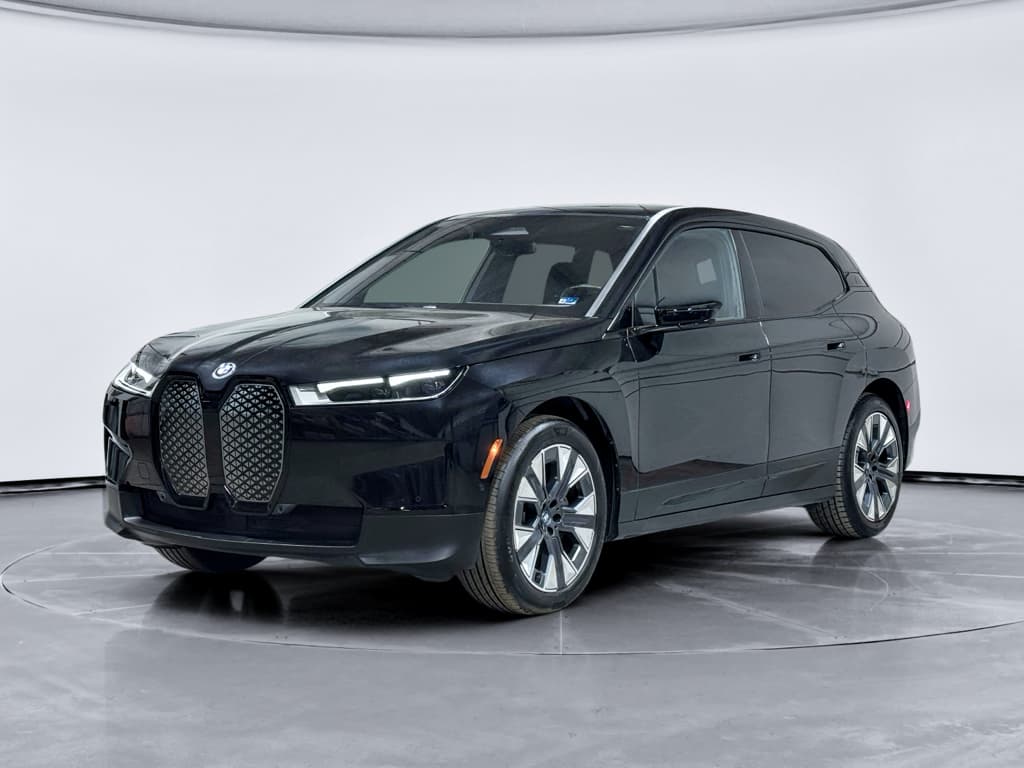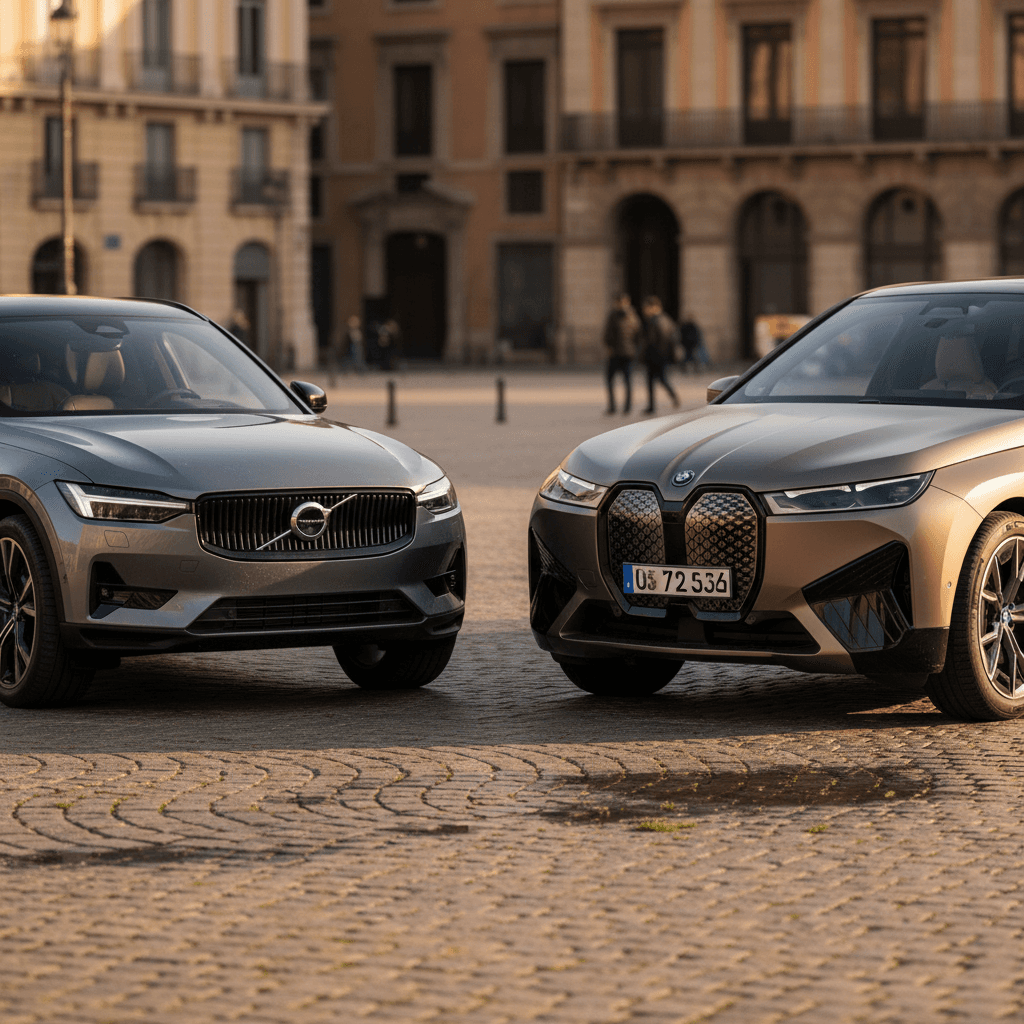
If you’re cross-shopping the Volvo EX90 vs BMW iX, you’re choosing between two very different visions of the luxury electric SUV. One is a safety-obsessed, three-row family hauler built in the U.S. with a brand‑new 800‑volt system; the other is a sleek two-row BMW that quietly became one of the most efficient big EVs on sale. The right choice has less to do with badges and more to do with how you actually live with your car.
Model years this comparison focuses on
Volvo EX90 vs BMW iX: Who Each SUV Is For
Volvo EX90: Tech-heavy family flagship
- 3 rows, up to 7 seats – rare among luxury EVs.
- Emphasis on crash safety and driver assistance.
- New 800‑volt architecture (2026+) for faster DC fast charging.
- Bi-directional charging hardware for future vehicle-to-home (V2H) use.
- Feels like a next-generation take on the classic XC90.
BMW iX: Futuristic two-row grand tourer
- 2 rows, 5 seats with lounge-like rear space.
- Best for households that don’t need a third row.
- Strong real‑world range and efficiency for a big SUV.
- Distinctive design and a very quiet, refined ride.
- M60 trim offers serious straight-line performance.
Start with your realities, not the brochure
Quick Specs: Volvo EX90 vs BMW iX
Headline Specs at a Glance
Core numbers for popular U.S. configurations. Exact specs vary by trim and model year.
| Spec | Volvo EX90 (Twin Motor / Performance, 2025–2026) | BMW iX xDrive50 / xDrive45 (2025–2026) |
|---|---|---|
| Drivetrain | Dual‑motor AWD | Dual‑motor AWD |
| Battery capacity (usable) | ~102–107 kWh (varies by year) | ~105 kWh (xDrive50), ~100 kWh (xDrive45) |
| EPA range (best trims) | Up to ~305–310 miles | Roughly 300–320 miles depending on wheel/trim |
| Architecture | 400V (2025), 800V (2026+) | 400V |
| DC fast charging peak | Up to ~350 kW (2026+), ~250 kW earlier | Up to ~200 kW |
| 10–80% DC charge time | ~22 minutes (2026+ claimed) | ~35 minutes (xDrive50, ideal conditions) |
| Seats | 6 or 7 (three rows) | 5 (two rows) |
| 0–60 mph | Low‑4s; Performance trims around 4.0s | xDrive50 ~4.4 s, M60 ~3.6–3.8 s |
| Starting MSRP new (U.S.) | Low‑$80Ks and up | Mid‑$70Ks (xDrive45) to upper‑$80Ks (xDrive50), more for M60 |
| Built in | South Carolina (for U.S. market) | Germany |
Key differences: EX90 adds a third row and 800V charging; iX counters with strong efficiency and slightly better range.
Range, Battery, and Charging: 800V vs Efficient Long-Haul
Realistic range: both are 300-mile-class SUVs
On paper, the BMW iX has a slight edge in maximum range. In xDrive50 form, it carries a roughly 105 kWh usable battery and is EPA‑rated around the low‑300‑mile mark, with many owners and tests reporting close to EPA range even at highway speeds. The EX90’s pack is slightly larger in early years (~107 kWh) and slightly smaller for 2026 (~102 kWh), with EPA estimates in the same 300‑mile ballpark depending on wheels and trim. In practical use, both are long‑legged enough that your charging strategy matters more than the 5–10 mile paper difference.
Highway vs city range
Charging speed: Volvo’s 800V leap
The big technical headline is the 2026 EX90’s switch to an 800‑volt architecture. Compared with the 2025 model’s 400V system, the 800V EX90 can add roughly 150+ miles of range in about 10 minutes on a high‑power DC fast charger and hit a claimed 10–80% in about 22 minutes under ideal conditions. Earlier 400V EX90s are more in the ~30–40 minute window for the same 10–80% window on a 250 kW charger.
The BMW iX sticks with a 400‑volt system but is no slouch. In xDrive50 trim it can accept around 200 kW peak, typically going from 10–80% in the mid‑30‑minute range on a capable DC fast charger. For most owners, that’s still a comfortable lunch stop, but the EX90’s 800V hardware is meaningfully quicker if you road‑trip often and can reliably find high‑power stations.
Remember: peak numbers are best-case fantasy
Home charging and bi-directional capability
At home, both SUVs are straightforward: they support roughly 11 kW Level 2 AC charging on a 48‑amp, 240‑volt circuit, meaning an overnight session will comfortably refill their large packs from low state of charge. Where the Volvo pulls ahead is future‑proofing: the EX90 is engineered with bi‑directional charging capability, so in the right setup it can eventually power your home or top up another EV. BMW hasn’t yet positioned the iX as a V2H workhorse in the U.S. market.
Charging: Key Takeaways
EX90 (2026+) is the fast-charge king
If you’re buying new or nearly new and prioritize the quickest possible DC fast charging, the 800V EX90 architecture is ahead of the iX and most other luxury SUVs right now.
BMW iX still road-trips well
The iX’s combination of solid efficiency and ~200 kW DC capability means it’s more than capable of cross‑country travel; you’re just spending a few extra minutes per stop compared with the latest EX90.
Home charging is a wash
Both will happily charge overnight on a 48‑amp Level 2 circuit. For day‑to‑day use, your home setup matters more than the logo on the grille.
Think about where you charge
If you mostly charge at home and only road‑trip a few times a year, range and comfort matter more than shaving 10 minutes off a charging stop.
Performance and Driving Feel
On power and acceleration, you won’t feel shortchanged in either SUV, but the way they use that power reflects their personalities.
How They Drive: Character, Not Just 0–60
Both are quick; they just prioritize different experiences.
Volvo EX90: Calm, confident, heavy
- Dual‑motor all‑wheel drive with outputs in the 400–600+ hp range depending on trim and year.
- 0–60 mph in the low‑to‑mid‑4s for most dual‑motor versions, with high‑output Performance trims targeting ~4.0 seconds.
- Chassis tuning leans toward stability and comfort, with Volvo’s usual focus on predictable behavior and safety.
- You always feel the mass, this is a big three‑row SUV, but it’s composed rather than playful.
BMW iX: Quiet, planted, unexpectedly fun
- xDrive50 brings roughly 516 hp, good for an official ~4.4‑second 0–60 mph; independent tests often see ~4.0 seconds flat.
- M60 trim cranks power well north of 600 hp and feels genuinely fast for a big SUV.
- Steering and chassis tuning deliver more traditional BMW balance, even if this isn’t an M3 on stilts.
- One of the quietest, most refined EVs on the highway, perfect for long‑distance touring.
Bottom line on performance
Space, Practicality, and Comfort
The third-row question: do you really need it?
This is the most fundamental difference between the Volvo EX90 and BMW iX. The EX90 offers three rows and up to seven seats, targeting families who routinely carry kids and their friends. The third row is best for smaller passengers, but that flexibility is gold if your life involves carpools, grandparents, or frequent airport runs. The iX, by contrast, is a two-row, five-seat SUV with a very generous second row and a big cargo area, but if you need a third row, the decision is basically made for you.
Cabin design: Scandinavian calm vs sci‑fi lounge
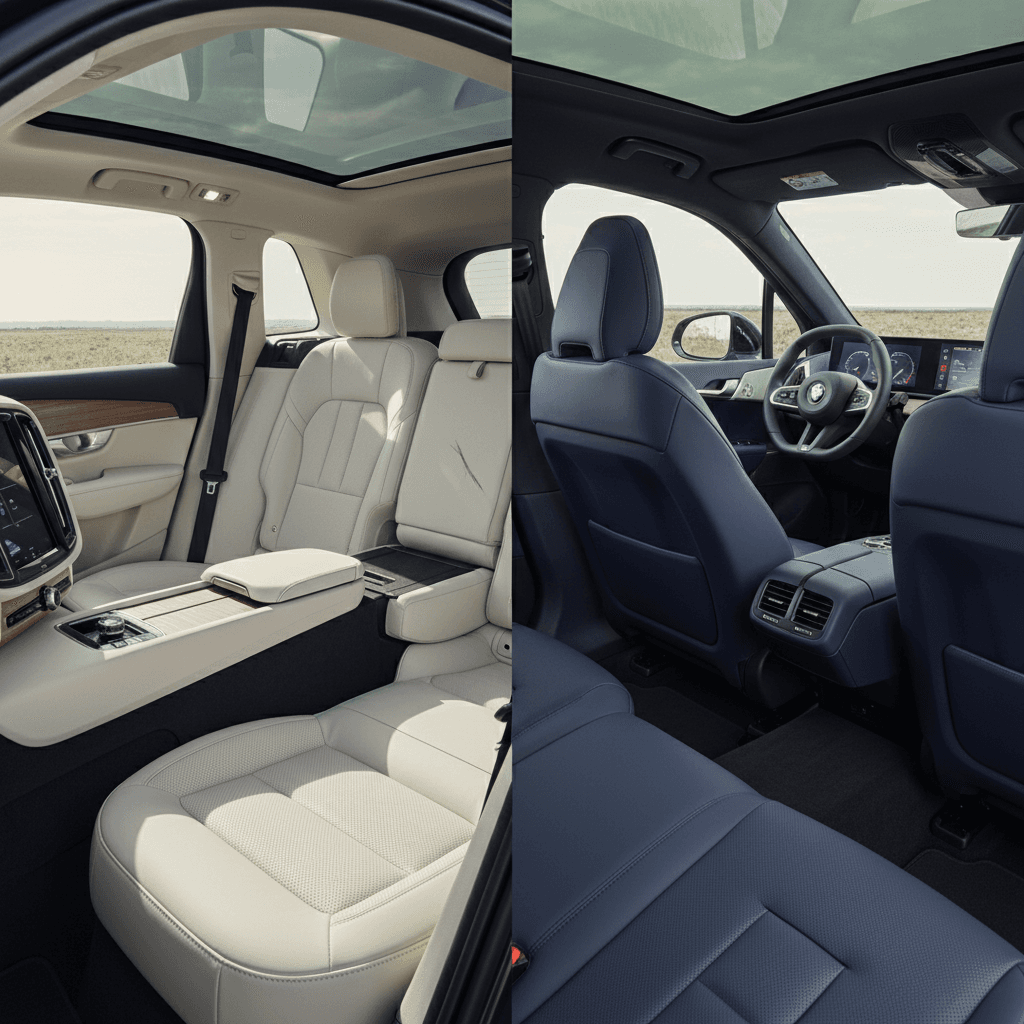
Volvo EX90 interior
- Clean, Scandinavian design with light color palettes and sustainable materials.
- Large central touchscreen with minimal physical buttons.
- Standard glass roof, moving to an electrochromic panoramic roof in newer model years.
- Plenty of family‑friendly touches: good outward visibility, pragmatic storage, and child‑seat‑friendly second-row layout.
BMW iX interior
- Bold, lounge‑like design with a floating center console, hexagonal steering wheel, and detailed ambient lighting.
- High‑end materials, optional glass controls, and excellent front seats.
- The rear bench is wide and comfortable for adults; no third row but great legroom.
- Cabin feels tailored more to adult luxury road‑tripping than kid‑hauling duty.
If you have kids, think ingress and egress
Tech, Safety, and Driver Assistance
Both of these SUVs are rolling tech showcases, but they lean into different strengths: Volvo toward safety and sensor suites, BMW toward infotainment polish and driving tech.
Infotainment and Driver-Assist Tech Compared
Both offer advanced suites; priorities differ.
Volvo EX90 highlights
- Next‑generation sensor stack with LiDAR on higher trims in many markets.
- Heavy emphasis on active safety and driver monitoring.
- High‑resolution central display with built‑in Google services in recent Volvos.
- Newer models add more advanced semi‑automated driving features as Volvo refines software.
BMW iX highlights
- Curved dual‑screen setup with BMW’s iDrive infotainment and frequent OTA improvements.
- Optional head‑up display and powerful driver-assist features (adaptive cruise, lane centering, auto lane change, automated parking).
- Voice and gesture controls add flair, even if some owners prefer to disable them.
Learning curve & updates
- Both rely heavily on software, so updates matter.
- Expect behavior of driver‑assist systems to evolve over time via OTA updates.
- On the used market, check that vehicles are on recent software and that all cameras/sensors are functioning properly.
Treat driver assistance as assistance
Costs, Depreciation, and the Used EV Market
New, both of these SUVs live firmly in the premium price bracket. But like most luxury EVs, they also experience meaningful early depreciation, which makes them compelling in the used market, especially if you can verify battery health and software status.
Ownership and Depreciation Snapshot
The BMW iX has been on the market longer and already shows a wide spread of used prices, especially for early xDrive50s. The EX90 is newer, but as volumes build and more leases cycle out, you should start seeing more 2–4‑year‑old examples at significant discounts from MSRP.
Incentives and taxes still matter
Which Is Better for You? Key Use Cases
Match the SUV to Your Life
1. Growing family with real third-row needs
If you frequently carry five or more people, run carpools, or want a single vehicle that can handle visiting relatives, the <strong>Volvo EX90’s third row</strong> is a decisive advantage. Even if the back row is kid‑only, the flexibility is hard to put a price on.
2. Couple or small family that road-trips often
For two adults and maybe a couple of kids, the <strong>BMW iX</strong> shines. It’s efficient, very quiet at speed, and its two‑row layout means more room per passenger. If you rarely need seven seats, you’re paying for space you won’t use in the EX90.
3. Tech-forward homeowner building backup power
If you’re already thinking about solar, home batteries, and resilience, the EX90’s <strong>bi‑directional charging</strong> potential and 800V architecture give it extra appeal as part of an energy ecosystem.
4. Performance enthusiast with a practical streak
The iX <strong>M60</strong> delivers sports‑sedan‑level thrust in a high‑riding body. The EX90 Performance is quick, but the iX still feels more playful when you find a good back road.
5. Value hunter in the used market
In the near term, expect a wider and deeper used inventory of <strong>BMW iX</strong> models simply because it launched earlier. As more EX90s come off lease, that balance will shift. In either case, buying used with transparent <strong>battery health data</strong> is your biggest lever on value.
Buying a Used EX90 or iX with Recharged
If you’re considering a used Volvo EX90 or BMW iX, the headline specs are only part of the story. Real‑world range, charging behavior, and driver‑assist performance all depend on software version, battery health, and how the previous owner charged the car. That’s exactly the information that’s hardest to see on a traditional dealer lot.
How Recharged De‑Risks a Used EX90 or iX
You shouldn’t need a PhD, or blind faith, to buy a used luxury EV.
Recharged Score battery health
Fair market pricing
EV‑specialist guidance
Nationwide delivery & trade‑in
Charging and home setup support
Experience Center in Richmond, VA
Ready to find your next EV?
Browse VehiclesVolvo EX90 vs BMW iX: FAQ
Frequently Asked Questions
Final Thoughts: Volvo EX90 vs BMW iX
Choosing between the Volvo EX90 vs BMW iX is less about which spec sheet wins and more about the kind of life you plug them into. The EX90 is a deeply modern take on the family SUV: three rows, top‑shelf safety, and cutting‑edge 800V and bi‑directional charging hardware that make sense if you’re building an EV‑centric household. The iX, by contrast, is an extremely refined two‑row touring machine that happens to be an EV, quiet, efficient, and unexpectedly engaging to drive.
If you regularly fill three rows of seats, the EX90 is the obvious answer. If you want a long‑legged, high‑tech luxury SUV for five that shrugs off interstate miles, the iX is hard to beat. And if you’re shopping used, the smartest move is to let battery health, charging history, and total cost of ownership guide you as much as the badge. That’s precisely where a transparent, EV‑specialist marketplace like Recharged can turn a complex decision into a confident one.