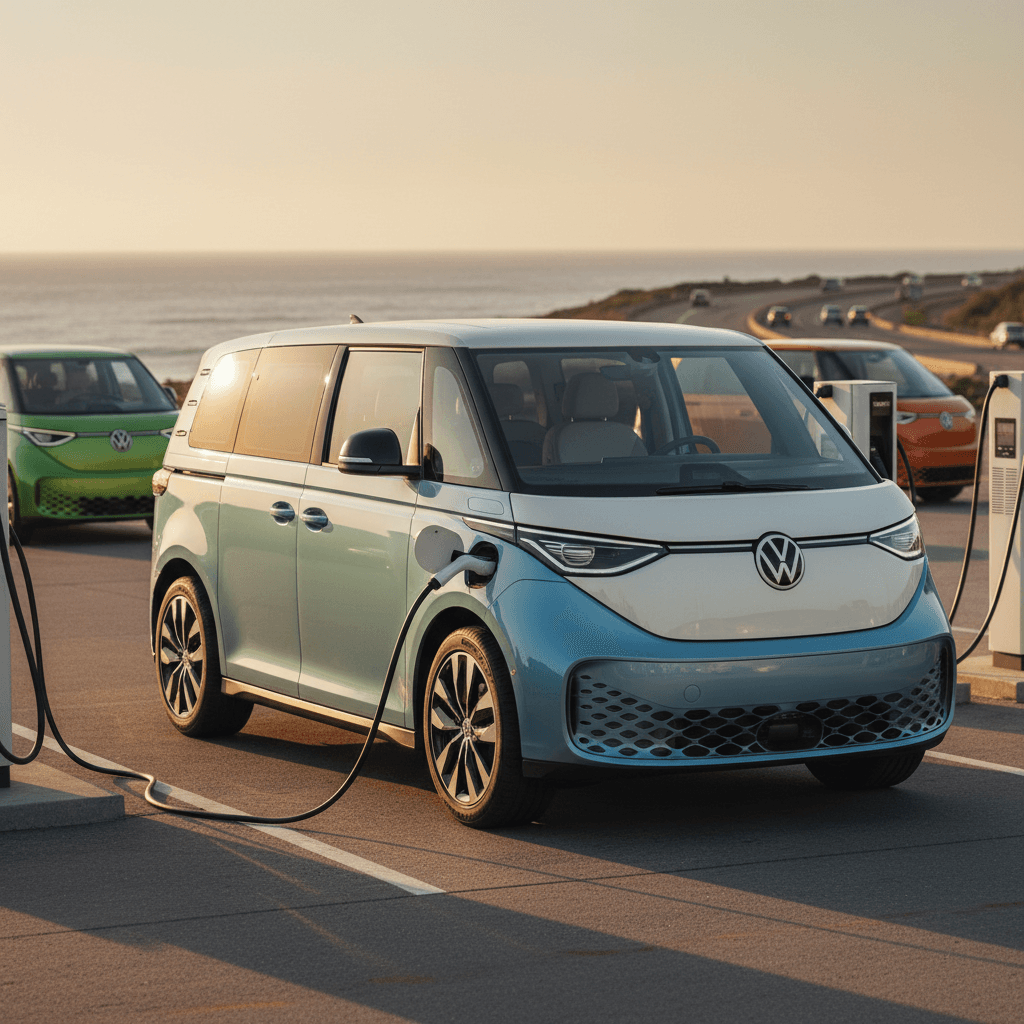
The 2024–2025 Volkswagen ID. Buzz is the long‑promised electric reboot of the classic VW Bus, and one of the most personality‑packed EVs on sale. If you’re considering a 2024 Volkswagen ID. Buzz, this buying guide walks you through trims, range, charging, interior space, pricing, and real‑world pros and cons so you can decide if this electric van fits your life, and your budget.
Model years vs calendar years
Why the 2024 ID. Buzz Matters
If you miss the soul of the old Microbus but live in a world of crossovers and three‑row SUVs, the **Volkswagen ID. Buzz** is your out. It’s an all‑electric, three‑row van with sliding doors, big windows, and a friendly face, but underneath it shares its modern EV platform and hardware with the ID.4 SUV. That means you get everyday usability, strong crash safety, and DC fast charging, not just nostalgia.
Who the ID. Buzz Is Built For
Think beyond flower power: this is a modern family and adventure EV
Families who hate minivans
Three rows, sliding doors, and a tall roof, without looking like your neighbor’s beige minivan.
Road‑trip warriors
Comfortable seats, tons of glass, and a quiet electric drivetrain make long days on the highway much less tiring.
Gear‑heavy lifestyles
Campers, cyclists, dog people, anyone who routinely maxes out a small SUV will finally have room to breathe.
2024–2025 ID. Buzz: Key Numbers (U.S. Long‑Wheelbase)
Quick Specs: 2024 ID. Buzz at a Glance
Core Specs for the North American ID. Buzz
Exact EPA numbers and pricing can shift slightly by model year and options, but these specs frame what you’re shopping for.
| Item | Spec (Approximate, U.S. LWB Passenger) |
|---|---|
| Wheelbase | 127.5 in |
| Battery (gross / usable) | ≈91 kWh / ≈86 kWh |
| Motors | RWD single motor; optional dual‑motor AWD |
| Horsepower | ≈282 hp (RWD), ≈335 hp (AWD) |
| DC fast‑charge peak | Up to ~200 kW on compatible chargers |
| AC charging | Up to 11 kW Level 2 |
| Seating | 6‑ or 7‑passenger |
| Drive modes | Eco, Comfort, Sport, Individual (varies by market/trim) |
Always confirm final specs and pricing on the window sticker or online configurator before you sign.
Don’t obsess over one spec sheet
2024 ID. Buzz Trim Levels and Features
For the U.S. launch, Volkswagen keeps the lineup relatively simple. All North American ID. Buzz passenger vans ride on the long‑wheelbase chassis with the larger battery; what changes from trim to trim is powertrain and equipment. Here’s how to think about the typical three‑trim structure you’ll see on window stickers and listings.
Typical U.S. ID. Buzz Trim Walk
Names can vary slightly by model year, but the logic is consistent.
Pro S (RWD)
Core idea: Well‑equipped single‑motor rear‑wheel‑drive.
- Large battery, long‑wheelbase body
- Single rear motor (~282 hp)
- IQ.DRIVE driver‑assist suite
- Big touchscreen, wireless CarPlay/Android Auto
- Cloth or cloth/leatherette seating, 6 or 7 seats
Pro S Plus (RWD or AWD)
Core idea: Adds creature comforts and options AWD.
- Available dual‑motor AWD (~335 hp)
- Upgraded seating and interior trim
- More advanced audio, ambient lighting, extra USB‑C ports
- Available panoramic roof, power sliding doors
1st Edition (AWD only)
Core idea: Launch special with most of the toys.
- Standard dual‑motor AWD
- Unique paint/graphics and interior details
- Maxed‑out options list bundled in
- Highest MSRP of the range
AWD isn’t just about snow
If you’re shopping new, the Pro S will likely be the value play, while the Pro S Plus or 1st Edition pile on niceties. In a few years, as ID. Buzz vans hit the used market, those trim differences will show up in resale pricing. A Pro S Plus with AWD and a panoramic roof will usually command a premium over a basic RWD Pro S, even with similar mileage.
Battery, Range, and Charging
Under the flat floor lives a large lithium‑ion pack very similar to what VW uses in its latest ID.4 and ID.7. For U.S. long‑wheelbase vans, you’re looking at roughly **91 kWh gross capacity and about 86 kWh usable**, paired with VW’s newer, more efficient rear motor. That’s a serious chunk of battery for a family hauler shaped like a rolling toaster.
What to expect for range
- Official estimates will land in the high‑100s to low‑200s of miles for most trims, depending on wheels, drivetrain, and test cycle.
- Real‑world highway road‑trip range is more likely in the 180–220‑mile window between stops, especially at 70+ mph with passengers and cargo.
- Colder weather, big wheels, roof boxes, and headwinds all tug that number down; gentle city driving can push it up.
Charging behavior
- DC fast charging: Peaks around 170–200 kW on a compatible charger, targeting roughly 10–80% in about 30 minutes in ideal conditions.
- Level 2 home charging: Around 11 kW. With a 40‑ to 48‑amp home charger, expect an overnight 0–100% refill.
- VW bundles access to public fast‑charging networks through its apps and may include intro charging credits on new purchases, check the fine print.
Home charging is non‑negotiable
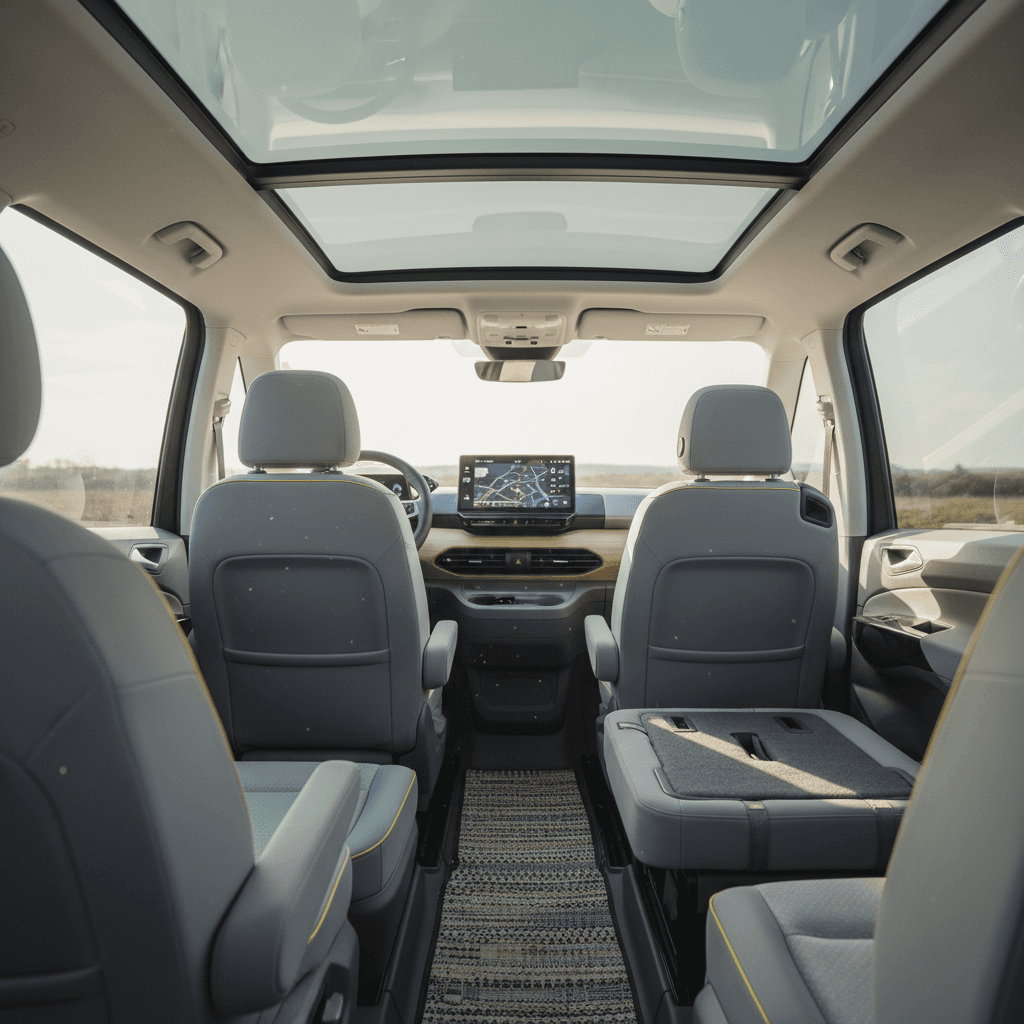
Space, Seating, and Everyday Practicality
This is where the ID. Buzz stops competing with sleek crossovers and starts feeling like a modern take on a family room. The long‑wheelbase body opens up a tall, squared‑off interior with legitimate three‑row space, sliding rear doors, and a cargo area that doesn’t vanish when you fill all the seats.
Interior Highlights
Small details make a big difference when you’re living with a van every day.
6 or 7 seats
Choose a second‑row bench for maximum people‑moving or **captain’s chairs** for easier third‑row access and comfier road trips.
Sliding and folding
Rows slide and fold to juggle people and cargo. With the rear seats folded (and optional flexboard), you get a long, flat load floor that campers and cyclists will love.
Light‑filled cabin
Huge windows and an optional **panoramic glass roof** make even the third row feel open, not claustrophobic, a big difference versus many three‑row SUVs.
Cargo vs passenger ID. Buzz
How the ID. Buzz Drives
On the road, the ID. Buzz feels more like a very tall, quiet wagon than a traditional minivan. The heavy battery pack lives under the floor, which helps keep the center of gravity low even as you sit upright with a commanding view out. Rear‑wheel drive keeps the turning circle tight and the steering light in parking lots; the AWD versions simply add more shove.
- Ride quality is tuned for comfort, not canyon carving. Big bumps are heard more than felt, and the tall body can lean a bit in fast corners.
- The steering is light and accurate, making the big box easy to place in traffic or in tight parking garages.
- Wind and road noise are well‑controlled, but that slab‑sided body will remind you when a crosswind hits.
- With one‑pedal‑ish regen available, stop‑and‑go traffic is less tiring once you acclimate.
Where the ID. Buzz shines
2024 ID. Buzz vs. Key Rivals
You don’t have many choices if you want an electric three‑row with character, but you do have options. Here’s how the ID. Buzz generally stacks up against other large family EVs.
ID. Buzz vs. Electric Three‑Row Alternatives
Ballpark comparisons; always check current specs and pricing before you buy.
| Model | Type | Seating | Est. Max Range | Starting Price (Approx. New) |
|---|---|---|---|---|
| Volkswagen ID. Buzz | Electric van | 6–7 | High‑100s to low‑200s | Low–mid $60,000s |
| Kia EV9 | SUV | 6–7 | Up to ~300 mi | Mid‑$50,000s and up |
| Tesla Model X | SUV | 5–7 | Up to ~330 mi | $80,000+ |
| Mercedes‑Benz EQB | Compact SUV | 5–7 (tight) | Mid‑200s | Low–mid $50,000s |
The ID. Buzz trades outright range and price for personality and packaging.
Where the ID. Buzz trails rivals
Cost of Ownership and Incentives
Sticker shock is real, the ID. Buzz is not the cheap hippie special some fans imagined. But over a few years of ownership, fuel and maintenance savings versus a gas‑powered van or SUV can be substantial, and federal or state incentives can soften the blow if you qualify.
Running costs
- Electricity vs gas: Even in pricey utility markets, powering an ID. Buzz at home is usually cheaper per mile than fueling a comparable gas SUV or minivan.
- Maintenance: No oil changes, fewer moving parts, and regenerative braking that can extend brake life. You’ll still need tires, cabin filters, coolant service, and the usual wear items.
- Insurance: New EVs can cost more to insure than older gas vehicles; shop quotes before you buy.
Incentives and credits
- Federal EV tax credit eligibility can change year to year and may depend on where the vehicle is built and how you buy it (purchase vs lease).
- Many states and utilities offer rebates for home chargers or time‑of‑use rates that make overnight charging cheaper.
- Ask the dealer or your lender to walk you through current programs, and double‑check with your tax professional.
Let the numbers work for you
Who the 2024 ID. Buzz Is (and Isn’t) Right For
Is the ID. Buzz a Good Fit for You?
Use this as a gut‑check before you spend dealer‑lot time.
Great match if…
- You routinely carry 4–7 people or bulky gear.
- You can install (or already have) **Level 2 home charging**.
- Your typical daily driving is well under 150 miles, even if you road‑trip a few times a year.
- You care as much about design and cabin vibe as you do about 0–60 times.
Maybe not the right call if…
- You regularly knock out 300‑mile highway legs without stopping.
- You can’t install home charging and public charging near you is thin or unreliable.
- Budget is tight and every dollar of payment counts, there are cheaper three‑row options.
- You’d rather have a conventional SUV shape and driving feel.
Buying Checklist for the 2024 Volkswagen ID. Buzz
Pre‑Purchase Checklist
1. Confirm your charging plan
Before you fall in love with the colors and the interior, make sure you have a clear path to reliable charging at home or near your regular routes. No charger, no sale.
2. Choose RWD vs AWD intentionally
Test‑drive both if you can. If you live in a snowy climate, tow, or will often be fully loaded on the highway, AWD is worth serious consideration.
3. Sit in all three rows
Load the van like you actually live, kids, car seats, dogs, coolers. Check access to the third row, kneeroom, and whether the cargo space behind the third row is enough.
4. Verify options and packages
Panoramic roof, upgraded audio, driver‑assist features, wheel sizes, these change the feel of the van and can’t be retrofitted easily. Use the window sticker or online build sheet to verify.
5. Look at total cost, not just MSRP
Compare insurance, expected fuel savings, and maintenance versus your current vehicle or a gas alternative. The Buzz’s personality is a plus, but the numbers still have to work.
6. Think about future resale
Historically, distinctive VWs develop a following. Well‑equipped, tastefully spec’d ID. Buzz vans in good colors should be easier to sell or trade later than stripped, oddball builds.
Buying Used or Certified Pre-Owned ID. Buzz
The ID. Buzz is just starting to arrive in North America, which means truly used examples will initially be ex‑demos, early leases, or lightly‑driven one‑owner vans. That’s exactly when careful shopping pays off: you’re still writing a large check, but you can let the first owner absorb the steepest depreciation.
How Recharged can help with a used ID. Buzz
Used ID. Buzz Inspection Priorities
Battery health and DC fast‑charge history
Ask for battery‑health data and service records. Frequent DC fast charging isn’t automatically bad, but you want to see that software updates and recalls are current.
Driver‑assist sensors and cameras
Verify that IQ.DRIVE features (adaptive cruise, lane centering, blind‑spot monitoring) work properly. Collision repairs can knock sensors out of calibration.
Charging equipment included
Confirm the van comes with its **OEM charge cable** and any adapters the seller is advertising. Replacing them after the fact is expensive.
Tires and alignment
A heavy, tall EV can be hard on tires. Uneven wear can hint at curb hits or suspension issues, worth addressing before they eat tires for breakfast.
Frequently Asked Questions About the 2024 ID. Buzz
ID. Buzz Buying FAQ
Bottom Line: Should You Buy a 2024 ID. Buzz?
If you judge every EV strictly by range per dollar, the 2024–2025 Volkswagen ID. Buzz won’t win your spreadsheet. But if you want an electric family vehicle that feels like more than an appliance, something your kids will name and your neighbors will recognize, the Buzz is in a class of one. It’s roomy, clever, and deeply likable, with enough range and charging speed to handle real‑world family duty as long as you plan your charging life thoughtfully.
As the ID. Buzz matures and more examples hit the used market, tools like the Recharged Score Report will make it easier to shop with confidence: verified battery health, transparent pricing, and EV‑savvy guidance from first test‑drive to final paperwork. Whether you buy new from a dealer today or wait to snap up a used Buzz tomorrow, go in with clear eyes about your range needs, charging options, and budget, and this cheerful electric bus will likely return the favor every time you turn the keyless start.