If you’re researching 2024 Lexus RZ problems, you’re probably picking up on a pattern: owners love the quiet, upscale Lexus experience, but the EV tech feels a generation behind. Range, charging performance, and a couple of recalls are the big themes. This guide pulls together owner reports, test data, and recall history so you can decide if an RZ fits your life, or if you’re better off with a different used EV.
Quick take
2024 Lexus RZ at a Glance
Key 2024 Lexus RZ Specs That Matter for Problems
The Lexus RZ rides on the same e‑TNGA platform as the Toyota bZ4X and Subaru Solterra. That’s important, because it means the RZ shares many strengths and weaknesses with those siblings: comfortable ride and refinement, but modest battery size and charging hardware that’s already being outpaced by newer EVs.
The Biggest 2024 Lexus RZ Problems in Plain English
Most Common 2024 Lexus RZ Complaints
Pulled from road tests, owner forums, and recall history
Short real‑world range
Underwhelming DC fast charging
Software & app frustrations
HVAC / defroster recall
Don’t overreact to generic “problem lists”
Range Problems: Why the RZ Feels Short-Legged
On paper, the 2024 RZ 450e (dual‑motor) is rated around 196–220 miles of EPA range, depending on wheel size, and the single‑motor RZ 300e does somewhat better. In practice, many owners and testers see substantially less, especially at U.S. highway speeds or in extreme temperatures.
- Independent 70‑mph highway testing has seen roughly 170–175 miles from full to empty under mild conditions.
- Some owners report struggling to get more than 120–150 real miles when using A/C or heat normally.
- The smallish ~64 kWh usable battery simply doesn’t leave the headroom that rivals with 77–100+ kWh packs enjoy.
Why HVAC hits range so hard
Main causes of RZ range complaints
- Small usable battery (~64 kWh) for a midsize luxury SUV.
- Dual‑motor AWD setup on the 450e that’s less efficient than single‑motor rivals.
- High‑speed aero drag on a relatively tall crossover body.
- Climate control use in very hot/cold conditions.
How that feels in everyday use
- Highway legs of 120–160 miles between comfortable fast‑charge stops.
- More frequent planning around chargers on road trips.
- Commuters with home charging mostly fine, but road‑warriors frustrated.
- Some buyers wishing they’d chosen a Lexus hybrid SUV instead.
Where the RZ range actually works well
Charging Issues: Slow Speeds and Network Frustrations
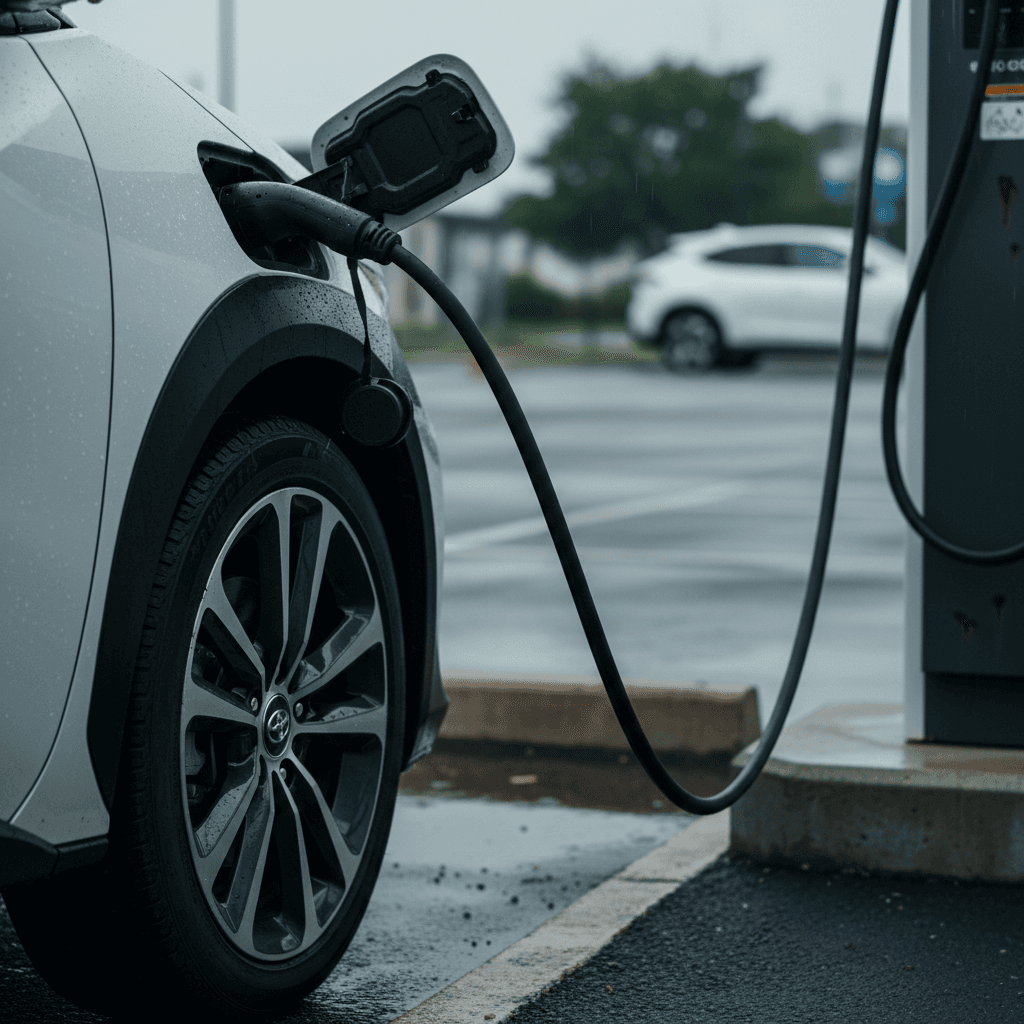
The 2024 Lexus RZ looks decent on a spec sheet: up to 150 kW DC fast charging and a 6.6 kW onboard AC charger. In the real world, owners report two main problems: slower‑than‑expected DC fast charging and an AC charger that’s already behind the curve for a premium EV.
Typical 2024 RZ Charging Complaints
What owners are actually seeing in the wild
Low DC power vs spec
Communication glitches
Slow Level 2 at home
To be fair, some of this isn’t unique to Lexus. Public fast‑charging networks in the U.S. are still inconsistent, and cars from every brand deal with handshake issues and disappointing station performance. But because the RZ’s battery is modest in size and its DC charging curve conservative, you feel every kilowatt more acutely when a charger under‑delivers.
How to make RZ charging less painful
Battery Health & Degradation: What We Know So Far
Because the RZ launched for the 2023 model year, we only have about two to three years of real‑world data. The early signal: no widespread catastrophic battery failures, but some owners are anxious about range figures that appear to drop faster than they expected.
- Several owners report the dash‑estimated range at 100% charge dropping from ~205–210 miles when new to the high‑190s within the first year.
- Others see little change but complain that they’ve never actually achieved the displayed range, even driving efficiently.
- Toyota and Lexus historically tune their battery management systems conservatively, which should help long‑term health but limits usable capacity and performance.
GOM vs real degradation
How to sanity‑check a used RZ’s battery health
1. Compare displayed range to rated range
With the battery at or near 100%, note the displayed range. If it’s <strong>dramatically below</strong> the original rating (for example, 160–170 miles in mild weather), ask why.
2. Look at recent efficiency
Check miles/kWh over the last few hundred miles. Heavy highway use or winter weather can make a healthy pack look bad. Low efficiency plus low range suggests a usage issue, not necessarily degradation.
3. Ask for DC fast‑charging history
Frequent 100% DC fast‑charging isn’t ideal for any pack. An occasional high‑speed top‑up is fine, but a car fast‑charged to full several times a week is worth a deeper look.
4. Get an independent battery health report
With a Recharged Score battery diagnostic, you get a <strong>measured state of health</strong> instead of guessing from a range display or seller claims.
Software & HVAC Recalls: What’s Actually Been Fixed
Like most modern EVs, the 2024 Lexus RZ has already seen a couple of software‑centric recalls, plus at least one safety‑relevant HVAC issue shared with its Toyota and Subaru cousins.
Key Recalls Affecting the Lexus RZ Platform
Not exhaustive, but these are the big items shoppers ask about.
| Issue | Affected Systems | Real‑World Risk | Remedy |
|---|---|---|---|
| HVAC / defroster software fault | HVAC control ECU, windshield defrosting | In cold weather, the system can enter failsafe and stop heating, hurting defog/defrost performance and visibility. | Dealers reflash HVAC software and may replace the compressor if required, free of charge. |
| Backup camera display freezing (select years) | Panoramic View Monitor / backup camera | Camera image may not display or may freeze when reversing, increasing backing‑up risk in tight spaces. | Parking Assist ECU software update at dealer, free of charge. |
| Generic EV‑platform updates | Charging logic, stability of infotainment/ADAS | Quirks like system resets, occasional charging communication issues. | Software updates during regular service or recall visits. |
Always run a VIN check on NHTSA or Lexus before you buy; recall status can change over time.
Good news on recalls
Comfort & Quality vs. EV Tech: The Core Tradeoff
It’s important to separate the RZ’s electric‑vehicle technology from its core Lexus traits. Most owners are happy with ride quality, cabin comfort, and materials. Where the RZ stumbles is competitiveness with newer EVs on range, charging, and software polish.
Where the 2024 RZ shines
- Quiet, refined ride that feels more Lexus than tech startup.
- Solid build quality with few reports of rattles or panel issues.
- Conservative battery management that should support longevity.
- Available dealer loaner programs can ease road‑trip anxiety by providing a gas Lexus for long drives (programs vary by dealer).
Where it lags EV rivals
- Shorter real‑world range than competitors like the Cadillac Lyriq, Genesis GV60, or Tesla Model Y.
- Slower AC charging than many current luxury EVs.
- More app and software rough edges than you’d expect from a premium brand.
- Resale values already under pressure due to aggressive lease incentives and lukewarm demand.
The resale value risk
Is the 2024 Lexus RZ Reliable Overall?
Mechanically, the 2024 RZ doesn’t show the early horror stories we’ve seen from some first‑generation EVs. The platform is shared with Toyota and Subaru, who tend to favor durability over bleeding‑edge performance. Instead of hard failures, most of the "problems" you read about fall into three buckets: range disappointment, charging frustration, and software fussiness.
How to think about RZ reliability
Different lens than a gas Lexus, but still important
Low drivetrain complexity
Software defines experience
Range as reliability
So far, the RZ’s story is less "this car breaks" and more "this car doesn’t go as far or charge as fast as I hoped." If you match the car to the right use case, reliability looks decent. If you mismatch it, heavy road‑tripper, apartment dweller without reliable charging, it becomes a headache.
Buying a Used Lexus RZ: Checklist & Negotiating Leverage
Because the 2024 RZ has been heavily leased and discounted, the used market is already interesting. You can often find low‑mileage examples at compelling prices, but you need to be extra disciplined on inspection, especially around charging performance and software updates.
Used 2024 Lexus RZ Problems Checklist
1. Confirm all recalls and software updates
Ask the seller for <strong>dealer service records</strong> showing HVAC/defroster and camera/parking ECU updates have been completed. If not, factor the time and hassle of getting them done into your decision.
2. Test real‑world range on a long drive
On a mixed 30–50 mile test drive at highway speeds, compare the <strong>miles driven vs. % battery used</strong>. If consumption looks worse than expected for conditions, dig deeper.
3. Fast‑charge it before you sign
If possible, plug into a reputable DC fast charger and watch the power curve from ~20–70%. Glacial speeds or multiple failed starts can indicate <strong>charging‑system or software issues</strong> that a generic pre‑purchase inspection might miss.
4. Verify home charging behavior
On Level 2, make sure the car reliably draws close to its 6.6 kW limit and doesn’t stop early. Any weirdness here can be a red flag for onboard charger or firmware problems.
5. Evaluate the Lexus app and profiles
Pair the vehicle with your phone, set up driver profiles, and make sure remote features (lock/unlock, state of charge, charge history) actually work. Owners do report <strong>account and sync quirks</strong>, especially with multiple users.
6. Get a professional battery health report
A marketplace like <strong>Recharged</strong> includes a Recharged Score battery‑health diagnostic on every used EV. That means verified state of health, real‑world range estimates, and fair‑market pricing built around the pack’s condition, not just the odometer.
How Recharged can simplify an RZ purchase
2024 Lexus RZ Problems: FAQ
Common Questions About 2024 Lexus RZ Problems
Bottom Line: Should You Buy or Lease a Lexus RZ?
The 2024 Lexus RZ isn’t a bad EV so much as a conservative first‑generation effort in a market that’s moving very quickly. If you value Lexus comfort and refinement, have reliable home charging, and mostly drive predictable distances, the RZ’s main problems, range and charging performance, will be annoyances you can work around. If you need an EV that can swallow spontaneous 300‑mile days and drink from any fast‑charger without drama, you’ll be happier with a different model.
From an economics and risk perspective, this is a car that makes more sense to lease new or buy used at a discount than to buy new at full MSRP. And if you go the used route, buying through a platform like Recharged, with verified battery health, fair market pricing, and EV‑specialist support, can turn "Is this RZ hiding problems?" into a much more confident "This fits my life, at the right price."