If you drive or are shopping for a 2024 Hyundai Kona Electric, you’ve probably heard whispers about recalls, software updates, and charging quirks. This guide pulls together the known 2024 Hyundai Kona Electric recalls list for the U.S., explains the big software campaign affecting charging, and translates it all into plain English, especially if you’re considering a used Kona EV.
Quick context: second‑gen Kona EV
Overview: 2024 Kona Electric recalls at a glance
2024 Kona Electric recall picture (U.S.)
For the 2024 model year in the U.S., the Kona Electric is affected by one federal safety recall that covers the broader 2024 Kona line, plus at least one major EV‑specific service campaign aimed at charging behavior. It’s not the horror‑show level of the previous‑gen battery recalls, but it’s enough that you should check your VIN and stay current on dealer updates.
The big one: 2024 Kona EV NHTSA recall 23V-901
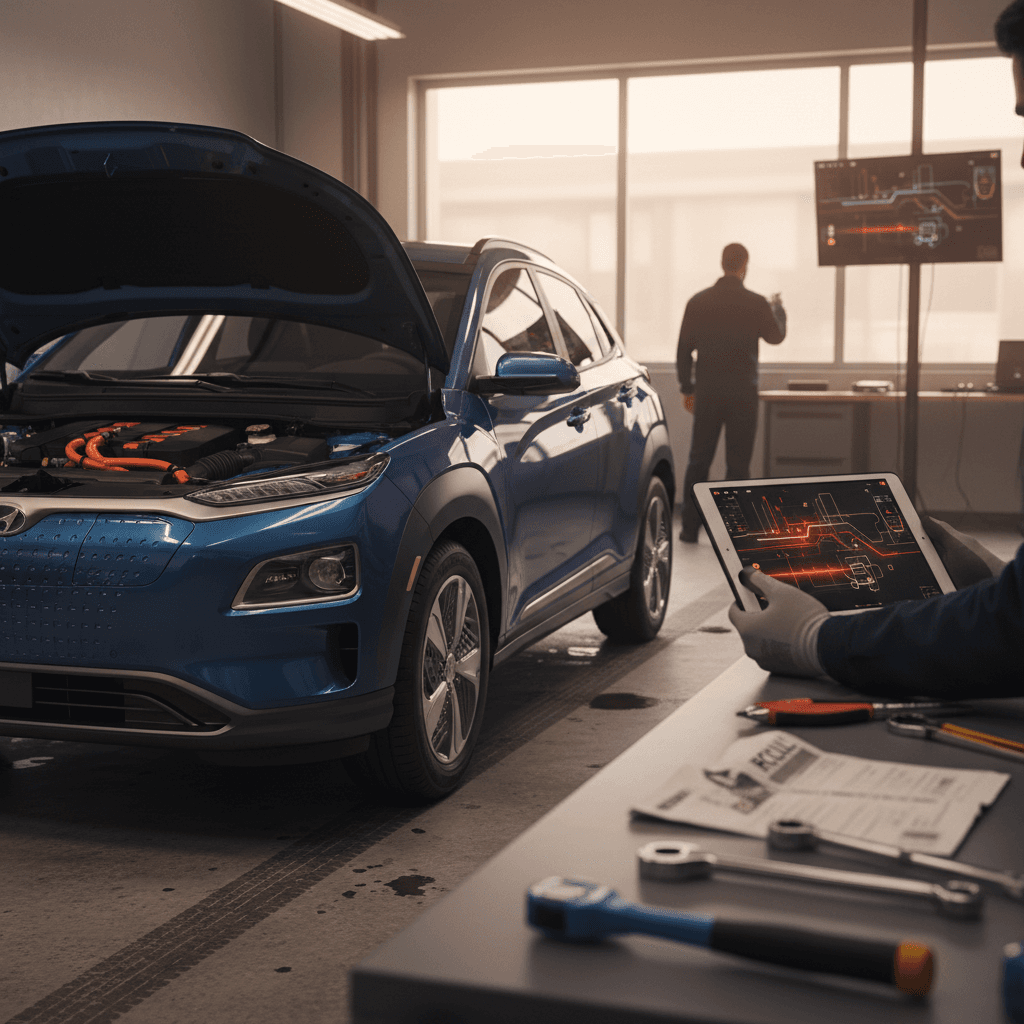
Late in 2023, Hyundai filed a safety recall with NHTSA covering the 2024 Kona for a potential engine‑compartment fire risk due to an electrical short. Even though the NHTSA paperwork lists the vehicle as simply “Hyundai/Kona/2024,” the campaign can include Kona Electric VINs built during the affected production window.
NHTSA Recall 23V-901: 2024 Hyundai Kona (includes EV)
High‑level summary of the primary 2024 Kona recall that can impact Kona Electric owners.
| Item | Detail |
|---|---|
| NHTSA campaign number | 23V-901 |
| Component | Electrical system / engine compartment harness (short‑circuit risk) |
| Model year covered | 2024 Hyundai Kona (gas and EV, depending on VIN) |
| Typical symptom | Increased risk of electrical short and under‑hood fire; many vehicles show no symptoms before failure. |
| Interim guidance | Park outside and away from structures if your car is in the affected VIN range until the fix is completed. |
| Remedy | Dealer inspection and repair of the affected wiring / fuse protection, performed free of charge. |
| Owner notification | Hyundai mailed notices after filing in late 2023 and continues to notify subsequent owners as registrations update. |
| Status as of April 2026 | Active; parts and procedures are available at U.S. Hyundai dealers. |
Always verify details against your specific VIN; not every 2024 Kona EV is necessarily affected.
Take the fire‑risk recall seriously
If you’re unsure whether your specific 2024 Kona Electric is under this umbrella, don’t guess. Use the VIN tools we’ll walk through below, or call a Hyundai dealer’s service department with your full VIN and ask them to check for open campaign 23V‑901 or equivalent Hyundai internal codes.
VCMS charging software campaign for 2024–2025 Kona Electric
Separate from the formal safety recall, Hyundai released a service campaign (not classified as a safety recall) for the Vehicle Charging Management System (VCMS) on 2024–2025 Kona Electric. In Hyundai’s own wording, some cars can experience interrupted Level 2 charging sessions or unusually slow charging when plugged into a 240V AC charger at home or in public.
VCMS software update campaign: 2024–2025 Kona Electric
Key details of the U.S. service campaign that targets charging behavior rather than safety‑critical defects.
| Item | Detail |
|---|---|
| Campaign type | Service campaign (quality / reliability), not a federal safety recall |
| Vehicles covered | Certain 2024–2025 Hyundai Kona Electric (SX2 EV) – coverage determined by VIN |
| Primary issue | Charging session cuts off early or drops to a much lower charging speed on 240V Level 2 AC chargers. |
| Root cause | VCMS control logic may misinterpret some charging conditions and limit power or stop charging prematurely. |
| Remedy | Dealer updates VCMS software to revised calibration; in some cases applied via over‑the‑air (OTA) updates where available. |
| Owner cost | $0 – software update performed free of charge as part of the campaign. |
| Time required | Typically 1–2 hours of dealer time; some owners report being in and out the same half‑day. |
Hyundai treats this as a customer‑satisfaction / quality update, but the effect on daily usability can be significant.
Why you want this update even if charging "seems fine"
In the real world, owners have described this as the difference between the car taking a predictable overnight charge and waking up to the unpleasant surprise of a half‑charged battery. For daily commuters, the software update is cheap insurance.
Full 2024 Hyundai Kona Electric recalls list (U.S.)
Putting it together, here’s how the 2024 Hyundai Kona Electric recalls list looks today for U.S. vehicles, as of April 2026. Always verify against your specific VIN, campaign coverage can change or be expanded over time.
2024 Hyundai Kona Electric – known U.S. recalls & major campaigns
Snapshot of key safety recall(s) and EV‑specific service campaign(s) currently relevant to 2024 Kona Electric owners.
| Type | Campaign ID / reference | What it affects | Applies to 2024 Kona Electric? | Owner action |
|---|---|---|---|---|
| Federal safety recall | NHTSA 23V-901 (Hyundai internal recall code varies by region) | Electrical system in engine compartment; short‑circuit could lead to engine‑bay fire. | Yes – if your VIN is in the affected range | Check your VIN with NHTSA or Hyundai; if open, schedule the recall repair promptly and park outside until it’s done. |
| Service campaign | VCMS software update for 2024–2025 Kona Electric (Hyundai service campaign letter, sometimes referenced as VCMS/charging logic update) | Vehicle Charging Management System (VCMS) behavior on Level 2 240V AC chargers; can cause interrupted or slow charging. | Yes – many 2024–2025 Kona EVs | Ask your dealer if the VCMS update is open for your VIN; if yes, schedule the free software update. |
| Other recalls | Older Kona Electric battery recalls (2019–2020 global HV‑battery fire risk, plus 2019–2023 BMS campaigns) | High‑voltage battery pack and battery‑management system on first‑gen Kona Electric. | No – not applicable to 2024 SX2 EV | Relevant only if you’re shopping older 2019–2023 Kona EVs. Different platform and recall history. |
Information may evolve; NHTSA and Hyundai VIN tools are the source of truth for your individual vehicle.
Campaign names and numbers can differ
How to check your 2024 Kona Electric for open recalls by VIN
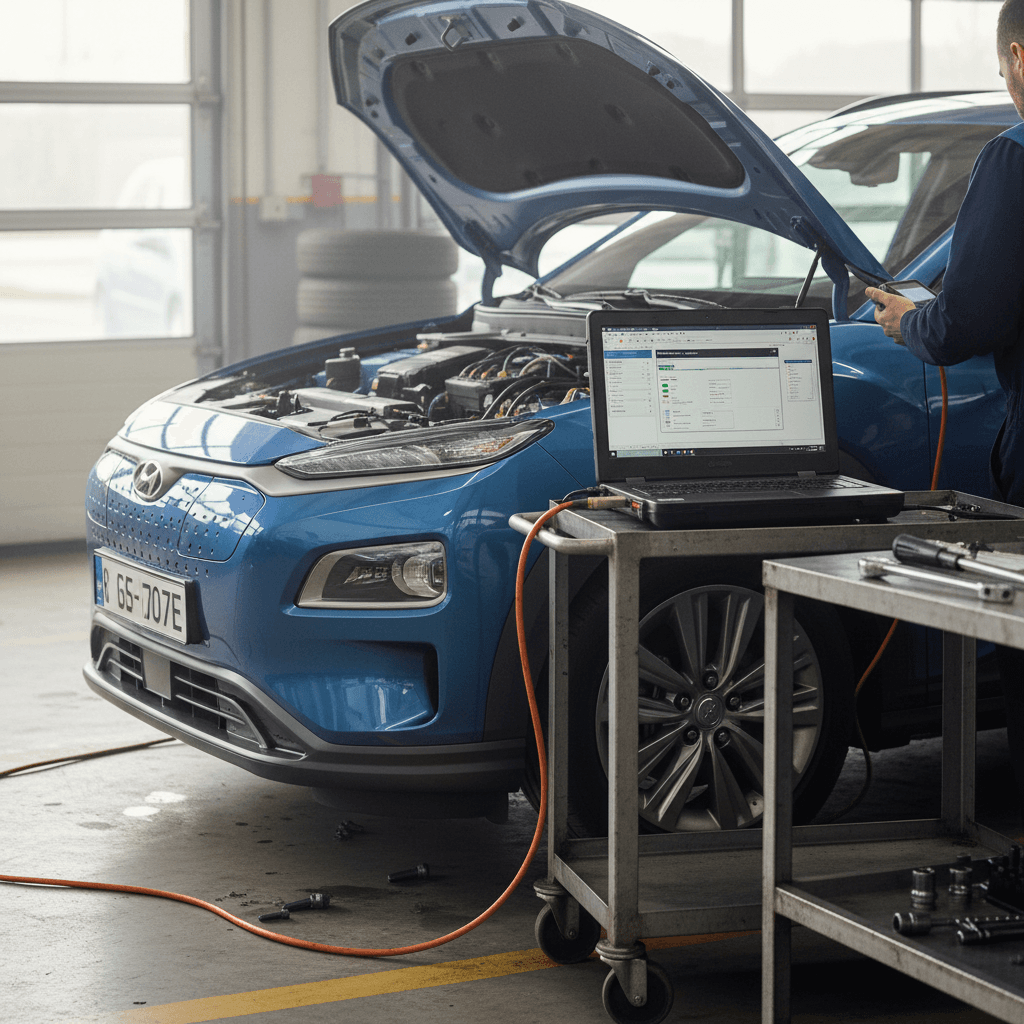
Recalls live and die at the level of the Vehicle Identification Number (VIN). Two seemingly identical 2024 Kona Electrics can have different recall status depending on build date, plant, and running production changes. Here’s how to get a definitive answer for your car in a few minutes.
Step‑by‑step: Check your 2024 Kona EV for recalls
1. Find your VIN
Your 17‑digit VIN is on a label at the base of the windshield on the driver’s side, on the driver‑door jamb, and on your registration or insurance card. Snap a photo so you don’t have to keep leaning over the dashboard.
2. Use the NHTSA recall lookup
Go to the U.S. NHTSA recall lookup site and enter your full VIN. It will show all <strong>open safety recalls</strong>, including campaign 23V‑901, specific to your vehicle. If it shows “0 unrepaired recalls,” you’re clear on the federal side for now.
3. Check Hyundai’s own campaign portal
Hyundai also maintains a VIN‑based recall and service‑campaign checker. This may reveal <strong>non‑safety campaigns</strong> such as the VCMS charging update that don’t appear in the NHTSA tool.
4. Call your Hyundai dealer’s service department
Ask the advisor to run your VIN for “all open recalls and campaigns, including VCMS updates.” They can see internal service actions, technical service bulletins (TSBs), and eligibility for software updates.
5. Confirm whether work has already been done
If you bought the car used, previous owners may have already completed some campaigns. Ask the dealer to verify completion dates; they can reprint prior recall‑repair records tied to your VIN.
6. Keep a paper trail
After any recall or campaign visit, keep the repair order in your glovebox or scanned to cloud storage. It helps with future warranty claims, resale value, and peace of mind.
Recharged shortcut for used‑EV shoppers
Ready to find your next EV?
Browse VehiclesWhat these recalls actually mean for owners
Day‑to‑day usability
For most 2024 Kona Electric drivers, the VCMS charging campaign is the one you’ll notice most. If your car occasionally wakes up undercharged after an overnight Level 2 session, or the charging speed randomly falls off a cliff, the software update is designed to tame that behavior.
Once applied, owners generally report more predictable, boring‑in‑a‑good‑way charging sessions. That’s exactly what you want from an appliance you trust to get you to work.
Safety and long‑term risk
The 23V‑901 recall is less about daily drivability and more about avoiding rare but serious events. It’s statistically unlikely you’ll ever see symptoms, but regulators view even a small fire risk as unacceptable.
The upside: once the recall fix is done, you can treat this as a resolved chapter in the Kona’s story, not an ongoing cloud hanging over the car.
Recall vs. TSB vs. service campaign
Impact on used 2024 Kona Electric shoppers
Recalls and campaigns can either hurt a car’s reputation or, if handled well, become a selling point. With the 2024 Kona Electric, we’re closer to the latter. The big, scary battery‑pack fire recalls hit the previous generation, not this one, and Hyundai has moved quickly to address charging‑logic complaints on the new SX2‑platform car.
How 2024 Kona Electric recalls affect used‑EV value
What a savvy buyer or seller should take away from the recall history so far
1. Battery stigma is mostly past‑tense
The global high‑voltage battery recalls on the first‑gen Kona Electric made headlines. But they targeted 2019–2020 builds, not the all‑new 2024 car. For many shoppers, that distinction isn’t clear, if you can document the generation and recall status, you can calm a lot of anxieties.
2. Completed recalls add confidence
A 2024 Kona EV with documented completion of 23V‑901 and the VCMS campaign looks better than one where the owner never bothered. It signals conscientious maintenance and gives the next owner fewer errands to run.
3. Open recalls can be leverage
If a private‑party seller hasn’t done recall work, that’s not necessarily a reason to walk away, repairs are free, but it is a reason to negotiate. You’re the one who has to carve time out of your life to babysit the car at the dealer.
How Recharged handles recall history on used Kona EVs
How to stay ahead of future Kona EV recalls
The 2024 Kona Electric is still a relatively young product. As more miles stack up and more data flows back to Hyundai and regulators, new service campaigns, or even additional recalls, are entirely possible. You can’t control the engineering, but you can absolutely control how quickly you respond.
- Opt in to Hyundai emails and app notifications so you don’t miss owner letters or over‑the‑air update prompts.
- Bookmark the NHTSA VIN lookup page and check twice a year, especially before long road trips or just before your warranty expires.
- Have your dealer check for open campaigns at every scheduled service visit, even if you only go in for tire rotations.
- Keep your address up to date with both your state DMV and Hyundai so recall notices follow you if you move.
- If you buy used, run the VIN through both NHTSA and Hyundai tools on day one, and schedule any open work immediately.
Don’t confuse Europe‑only campaigns with U.S. recalls
2024 Hyundai Kona Electric recalls FAQ
Frequently asked questions about 2024 Kona Electric recalls
The 2024 Hyundai Kona Electric arrives with far less recall baggage than its predecessor, but it’s not recall‑free. A single, serious electrical‑system recall and a key charging‑logic campaign are already on the books, and more tweaks may come as the miles pile up. If you stay on top of VIN checks, schedule free updates promptly, and keep your paperwork, these campaigns turn from red flags into reassuring proof that the car is being actively supported. And if you’d rather someone else untangle the alphabet soup of 23V‑this and 9B‑that, shopping a Kona Electric through Recharged means every vehicle comes pre‑vetted for recall status, battery health, and fair market pricing, so you can get on with the business of simply owning and enjoying an EV.