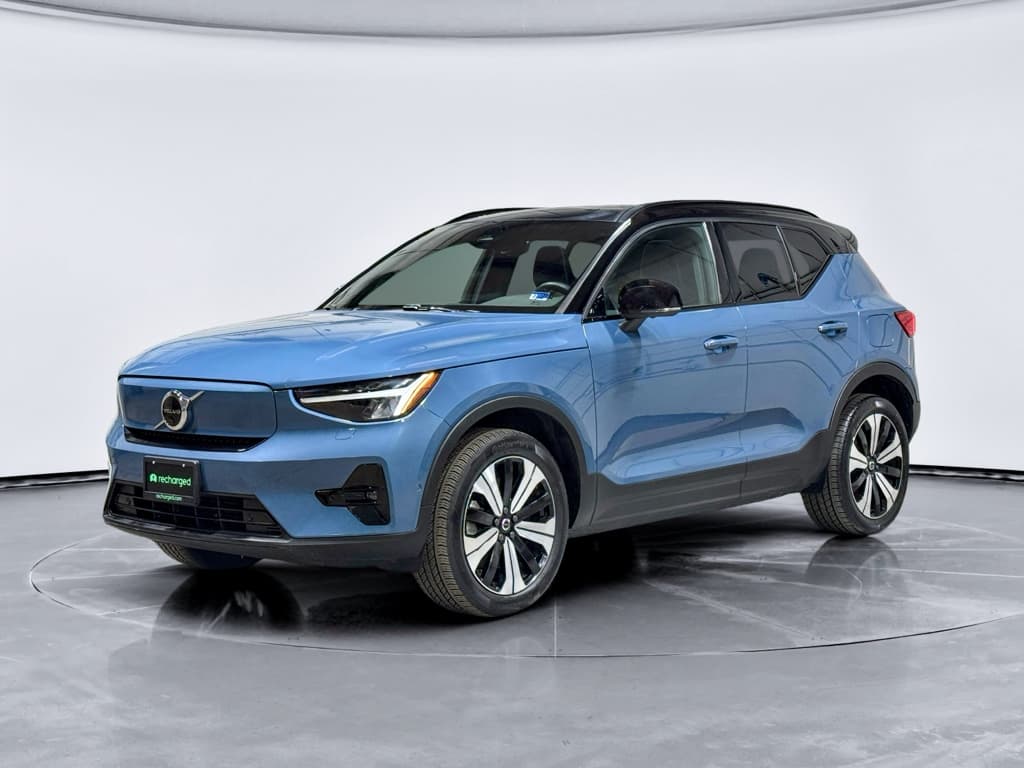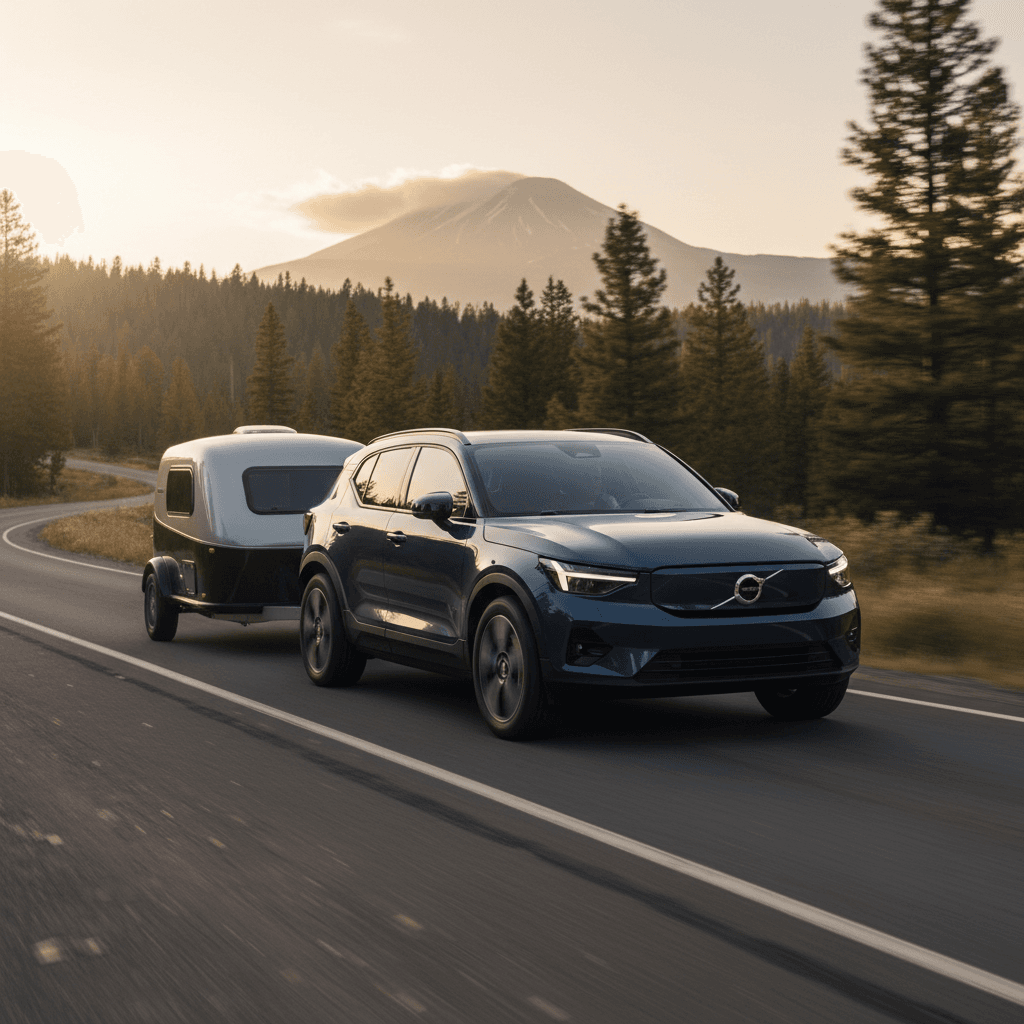
If you’re looking at a Volvo EX30 and wondering whether this small EV can tow a camper, jet skis, or a utility trailer, you’re not alone. The EX30’s compact size and modest battery make towing more sensitive to range loss than in larger electric SUVs, but that doesn’t mean you can’t tow confidently if you understand the limits and plan around them.
Key takeaway up front
Volvo EX30 towing overview
Volvo positions the EX30 as a city‑friendly premium EV, not a hardcore tow vehicle, yet it still offers legitimate towing capability for light duty toys and trailers. In North America, factory and dealer documentation pins the maximum braked towing capacity at 2,000 lb (907 kg) when the car is equipped with the official tow package, with a typical maximum tongue weight around 100 kg (about 220 lb). That’s in line with many compact crossovers, including gas models.
- Body style: subcompact electric SUV, roughly similar in footprint to a Hyundai Kona or Chevy Trax
- Battery: 69 kWh pack (about 64 kWh usable) on U.S. models, shared across Single Motor Extended Range and Twin Motor Performance trims
- EPA range (U.S.): up to about 261 miles for Single Motor Extended Range and roughly 253 miles for Twin Motor Performance under ideal conditions
- Designed for light trailers: small campers, single‑axle utility trailers, small boats, dirt bikes, and bike racks
Tow rating depends on hitch & market
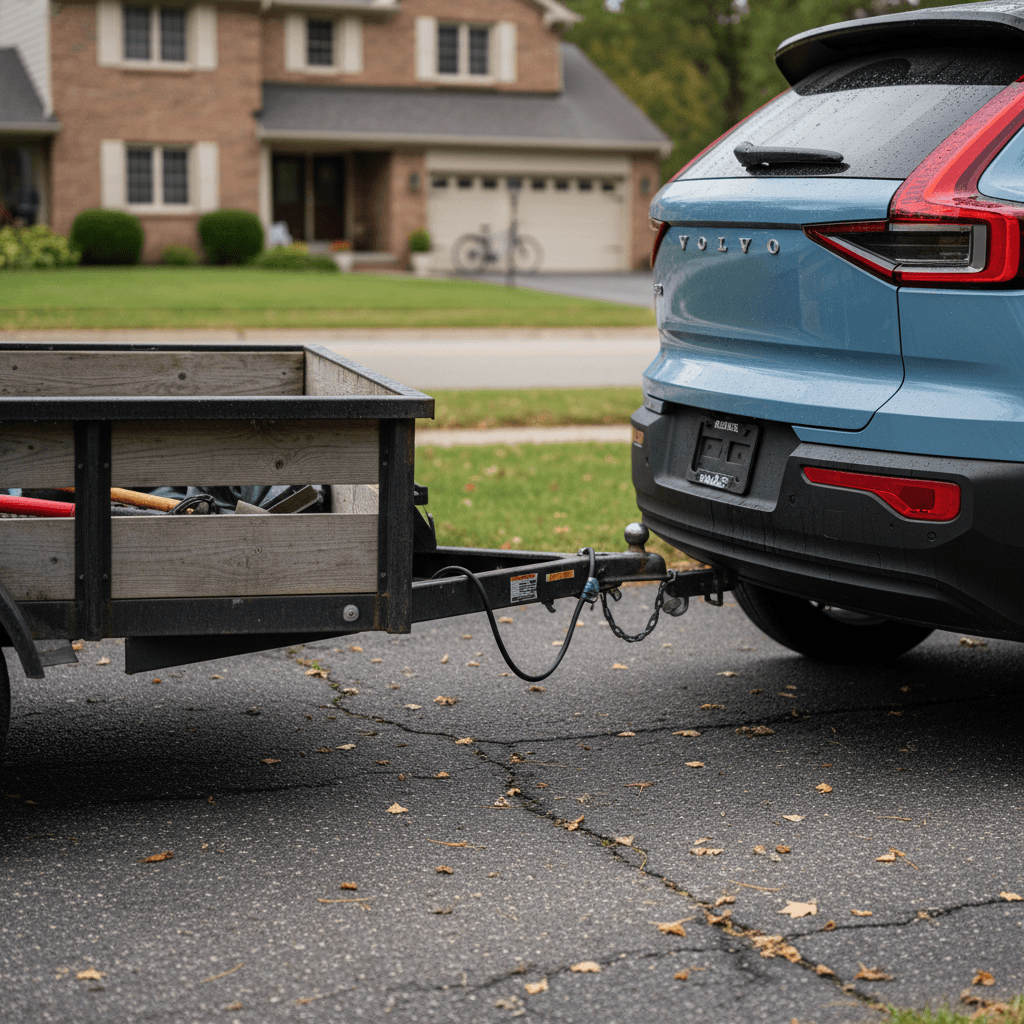
Volvo EX30 towing capacity by trim and equipment
The useful news for shoppers is that all major EX30 powertrains share the same basic tow rating when properly equipped. Whether you pick rear‑wheel drive or dual‑motor all‑wheel drive, the limiting factor is the platform and cooling, not the motor count.
Volvo EX30 towing capacity by trim (2025–2026)
Approximate manufacturer ratings for braked trailers when equipped with an approved tow bar. Always confirm against your vehicle’s documentation.
| Trim (U.S. / EU) | Drive | Battery | Max braked trailer | Unbraked trailer* | Max tongue / towball load |
|---|---|---|---|---|---|
| Single Motor Extended Range | RWD | 69 kWh | 2,000 lb (907 kg) | ~1,650 lb (750 kg) | ~220 lb (100 kg) |
| Twin Motor Performance | AWD | 69 kWh | 2,000 lb (907 kg) | ~1,650 lb (750 kg) | ~220 lb (100 kg) |
| EX30 Cross Country (Twin Motor) | AWD | 69 kWh | 2,000 lb (907 kg) | ~1,650 lb (750 kg) | ~220 lb (100 kg) |
Volvo EX30 tow ratings are conservative but consistent across trims, which simplifies shopping for a tow‑capable EX30.
Braked vs. unbraked trailers
Because the tow rating is the same across trims, you can choose between Single Motor Extended Range and Twin Motor Performance based on how you drive rather than how much you tow. For most owners who tow occasionally, the rear‑drive Single Motor’s extra efficiency is actually more valuable than the Twin Motor’s higher power.
How towing actually hits Volvo EX30 range
The EX30’s official EPA range numbers, roughly 261 miles for the Single Motor Extended Range and 253 miles for the Twin Motor, come from standardized tests without a trailer. Real‑world owners and independent tests consistently report lower figures at highway speeds even without towing, often in the 200–230 mile ballpark for the Single Motor and closer to 170–200 miles for the Twin Motor on fast highway runs.
1. Aerodynamic drag skyrockets
Adding a trailer or tall bike rack behind a compact SUV dramatically increases frontal area and turbulence. At 65–75 mph, aero drag is already the biggest energy drain on the EX30. A boxy camper can easily push consumption up by 40–60% compared with solo driving.
2. Weight and rolling resistance climb
Even a light 1,500–2,000 lb trailer adds a lot of mass for a 69 kWh battery to haul. You also add extra rolling resistance from the trailer’s tires and potentially from heavier wheels and gear in the car. That extra load shows up most clearly on hills and during repeated acceleration.
Expect big drops vs. brochure range
Typical Volvo EX30 range impact when towing
Those percentages aren’t unique to Volvo; they’re typical of EVs across the board. The difference with the EX30 is that you’re starting from a relatively small battery. Losing 40% of a 250‑mile rated range still leaves you about 150 miles; lose 40% of a 190‑mile reality‑check highway range and you’re suddenly down closer to 110–120 miles between stops.
Real‑world examples of EX30 range loss while towing
Because the EX30 is still a relatively new model, there aren’t yet hundreds of formal towing tests. But between Volvo’s own range calculator, independent highway testing, and what we know from similar‑size EVs, we can sketch realistic scenarios so you can sanity‑check trips before you buy, or before you hitch up.
What Volvo EX30 range looks like in towing scenarios
Approximate, simplified examples to illustrate the trade‑offs. Your numbers will vary with weather, terrain, and driving style.
1. Light utility trailer
Setup: Single Motor Extended Range, 1,000 lb open utility trailer with bikes and camping gear, 60 mph cruising in mild weather.
- Solo highway reality: ~220 mi between charges
- With trailer: typically ~150–170 mi
- Range loss: roughly 25–30%
2. Small box camper
Setup: Twin Motor Performance, 1,800–2,000 lb compact box camper, 65–70 mph highway, mixed hills.
- Solo highway reality: ~170–190 mi
- With camper: often ~100–130 mi
- Range loss: roughly 35–45%
3. Short‑hop boat towing
Setup: Single Motor Extended Range, 1,700 lb boat/trailer combination, mostly 45–55 mph between home, storage, and ramp.
- Solo mixed driving: ~230–250 mi
- With boat, short distances: 160–180 mi
- Range loss: roughly 20–30%
Use Volvo’s range tools, then discount
Is the Volvo EX30 actually good for towing?
Whether the EX30 is “good” for towing depends less on the brochure tow rating and more on how far you’re trying to go. As a light‑duty tow vehicle for short and medium‑length trips, it’s surprisingly capable. As a cross‑country tow rig, it’s compromised by its battery size and modest efficiency at highway speeds.
Where the EX30 works well
- Short‑range towing: Hauling a boat to a nearby lake, a pair of jet skis, or a small utility trailer 10–50 miles at a time.
- Occasional camping: Weekend trips to a campground within 75–100 miles, especially if you can charge at or near your destination.
- Urban utility: Using a small trailer instead of owning a pickup for Home Depot runs around town.
Where the EX30 struggles
- High‑speed, long‑distance towing: 65–75 mph interstate travel with a tall trailer will demand frequent fast‑charge stops.
- Cold‑weather towing: Below‑freezing temps plus cabin heat further cut range on top of towing losses.
- Very heavy or tall campers: Even if you stay under 2,000 lb, big frontal area can make consumption skyrocket.
Good match for light‑duty owners
How to tow smarter with a Volvo EX30
The easiest way to make the EX30 feel like a more capable tow vehicle is to manage the variables that drive energy use. With a modest‑size battery, every efficiency gain directly translates into extra miles of margin.
Volvo EX30 towing setup checklist
1. Choose the right trailer
Pick the smallest, most aerodynamic trailer that will do the job. A low, open utility trailer or teardrop‑style camper will hurt range far less than a tall square‑sided box.
2. Mind your weight
Weigh your trailer (and cargo) if possible. Stay well under the 2,000 lb max and keep tongue weight within the rated limit. Overloading will hurt stability, braking, and range.
3. Run appropriate tire pressures
Check tire pressures on both the EX30 and trailer before every tow. Under‑inflated tires add rolling resistance and heat, which eats into range and safety.
4. Use the right drive mode
If you have the Twin Motor Performance, reserve full‑power or performance modes for when you actually need them. Calmer drive modes reduce unnecessary power spikes and shortens regen gaps.
5. Secure and streamline your load
Tie down loose items in the trailer and avoid tall loads that stick into the airstream. Roof boxes on the EX30 plus a trailer create a double aero penalty.
6. Check cooling and charging access
After your first stop with a trailer, check that the car’s cooling fans sound normal. When fast‑charging on the road, park so the trailer doesn’t block other chargers or force kinked cables.
Trailer brakes matter
Trip planning and charging when towing with an EX30
In a gas crossover you can often ignore towing’s impact on range until the fuel light comes on. In a small‑battery EV like the EX30, trip planning is part of the deal. The good news is that once you understand the pattern, it becomes second nature.
1. Build a conservative energy budget
Start by looking at your solo‑driving consumption. If your EX30 normally averages 3.0 mi/kWh on the highway (about 21 kWh/100 km), assume something more like 1.8–2.1 mi/kWh when towing a medium‑size trailer at similar speeds. On a 64 kWh usable pack, that’s roughly 115–135 miles from full to empty, then subtract another 10–20% as a safety buffer.
2. Plan charging stops for the trailer
Use apps such as A Better Routeplanner, PlugShare, or your EX30’s native navigation to map DC fast chargers every 80–110 miles along your route. Look at photos and reviews to spot sites with drive‑through or pull‑through access so you don’t have to drop the trailer for every charge.
- Favor 50–65 mph cruising where traffic allows; every extra 5 mph over 65 is expensive in range when you’re towing.
- Arrive at fast chargers with 10–25% charge rather than running down to 0%, the EX30 charges fastest at lower states of charge.
- Charge only to 70–80% on the road when possible; that shortens stop time and keeps you in the fastest part of the DC charging curve.
- If your destination has Level 2 charging, plug in overnight and leave with a full battery for the return tow.
Think in hours, not just miles
Protecting EX30 battery health when you tow
Towing in itself doesn’t doom an EV battery, but it does mean more time at high load and often more frequent DC fast charging. If you want your EX30 to stay healthy, especially if you’re thinking ahead to resale or a future trade‑in, there are a few habits that go a long way.
Battery‑friendly towing habits
Balance capability today with range and value tomorrow.
Avoid repeated 0–100% DC sessions
On trips, it’s perfectly fine to fast‑charge when you need to. But try to bounce between about 10–80% rather than running from 0 to 100% over and over while the pack is hot from towing.
Precondition in extreme temps
In very cold or very hot weather, let the car precondition the battery before fast charging if your EX30 supports it. A properly warmed pack charges more efficiently and with less stress.
Use Level 2 at home
For day‑trip towing, rely on Level 2 home charging to restore energy slowly overnight. It’s gentler on the battery than frequent fast charging and cheaper on most utility tariffs.
How Recharged looks at towing & battery health
Volvo EX30 towing capacity & range loss FAQ
Frequently asked questions about Volvo EX30 towing
Bottom line: when the EX30 makes sense for towing
The Volvo EX30 isn’t a mini semi‑truck in disguise; it’s a compact premium EV that happens to have a genuinely useful 2,000 lb tow rating. Treat it that way and it’s a great tool: perfect for small trailers, toys, and occasional camping trips inside a roughly 75–120 mile radius, especially if you can charge at either end of the journey.
Where owners get frustrated is expecting gas‑SUV towing behavior from a 69 kWh battery. Highway towing at 65–70 mph will cut range sharply, turning 250‑mile brochure figures into something closer to 110–160 miles between fast‑charge stops. If that sounds acceptable, and you value the EX30’s size, safety, and design, it can be a compelling tow‑capable EV.
If you’re weighing a used EX30 for towing duty, it’s worth pairing this knowledge with a clear view of the car’s battery health and usage history. That’s exactly what Recharged was built for: from our Recharged Score battery diagnostics to expert EV guidance, we help you find the right EV for how you actually drive, and tow.