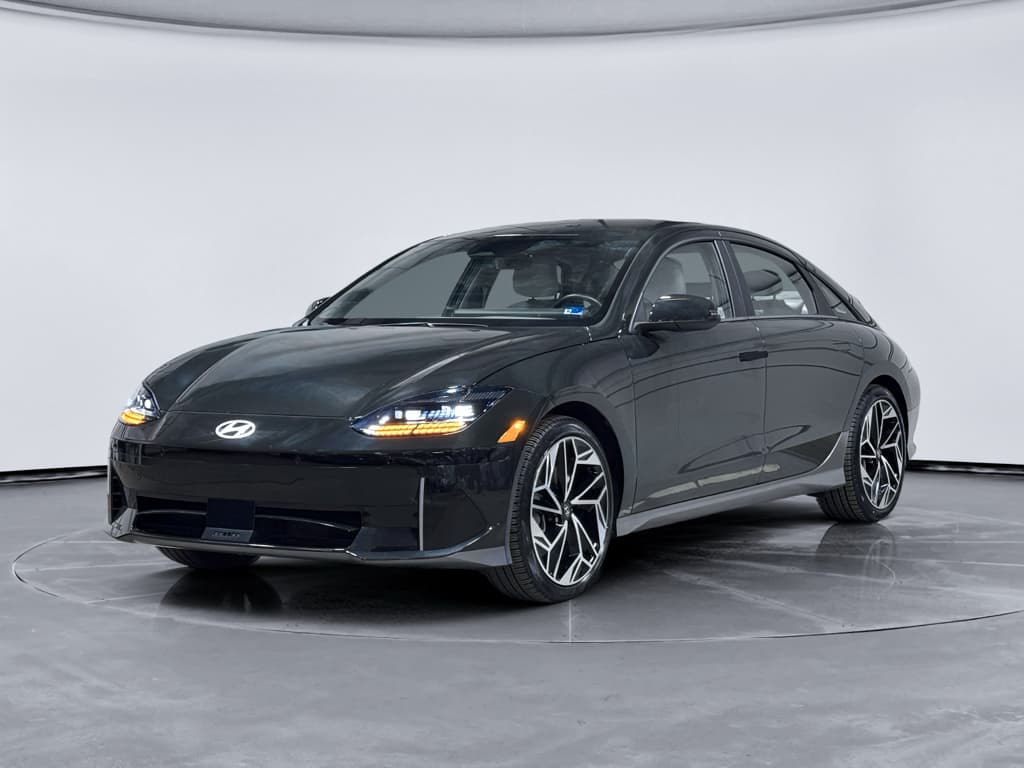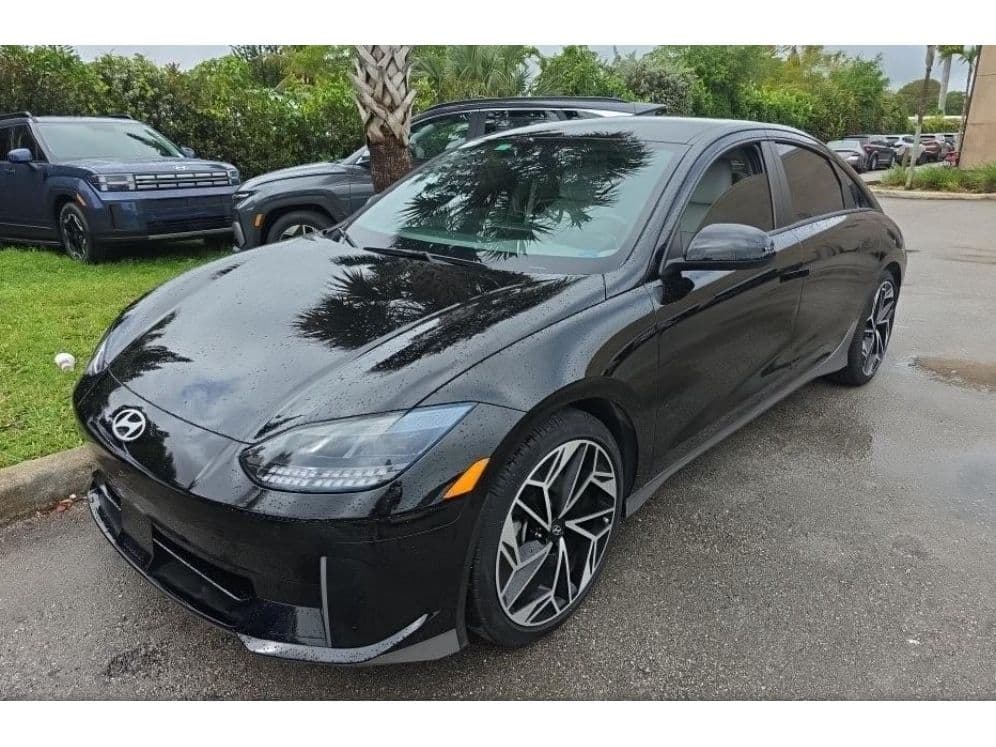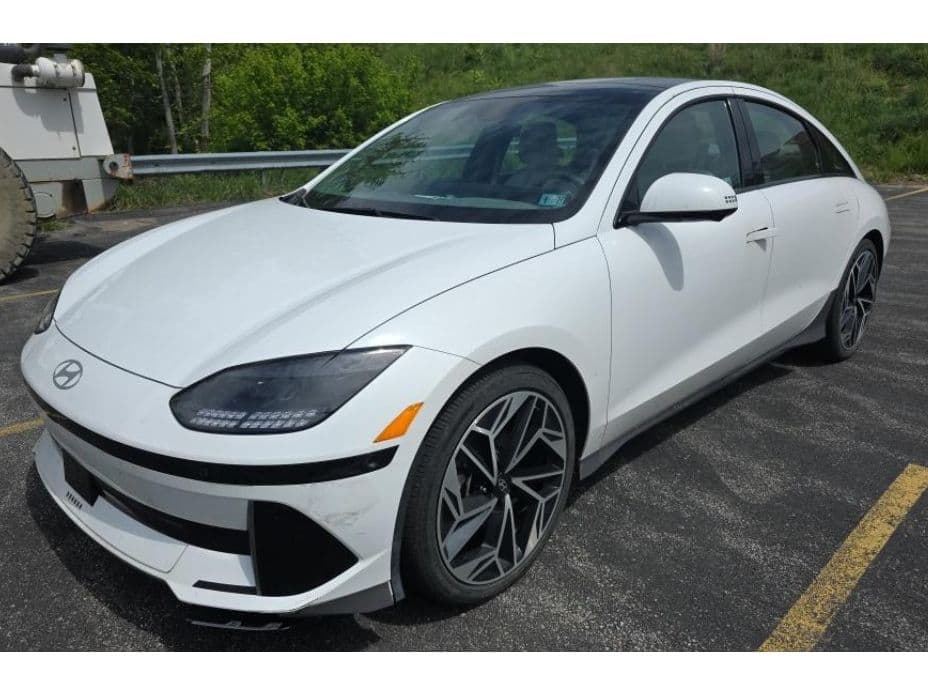
If you’re shopping for a used 2024 Hyundai Ioniq 6, you’re in an interesting sweet spot. The car is still effectively new in terms of technology and warranty, but early depreciation and stackable new-car incentives have already blown a big hole in MSRP. This review looks at the 2024 Ioniq 6 specifically as a used EV: how it drives, what kind of range and charging you can actually expect, how fast it’s dropping in value, and what to scrutinize before you sign anything.
Quick take
Should you buy a used 2024 Hyundai Ioniq 6?
The 2024 Ioniq 6 is Hyundai’s streamliner-style electric sedan on the E-GMP platform, sharing much of its hardware with the Ioniq 5, Kia EV6, and Genesis GV60. As new, it launched into a crowded market and then ran headlong into rapidly falling Tesla prices and rich incentives, which is why used values today can look shockingly low relative to window stickers just a year or two ago.
Used 2024 Ioniq 6: key pros and cons
How it looks when you’re shopping secondhand, not new
What makes it compelling used
- Excellent efficiency and long EPA range (up to 361 miles for SE Long Range RWD).
- 800-volt E-GMP platform enables very fast DC charging when conditions are right.
- Top Safety Pick+ crash ratings and a full active-safety suite standard.
- Comfortable, quiet ride and a more premium-feeling cabin than its price suggests.
- Hyundai’s 10-year/100,000-mile high-voltage battery warranty is transferable to subsequent owners.
Where you need to be careful
- Heavy early depreciation means some used prices are all over the map.
- Not everyone loves the styling or the low sedan seating position.
- Hyundai software and infotainment lag the best in class for polish.
- DC fast charging speeds can be sensitive to battery temperature and charger quality.
- Hyundai dealer support and EV literacy are still inconsistent region to region.
If your priorities are range per dollar, safety, and low running costs, the Ioniq 6 is frankly overqualified. If you live for razor-sharp steering feel or want the ubiquity of a Tesla Supercharger connector without adapters, there are better fits. The trick is buying the right trim and making sure the battery and charging behavior are healthy, which is exactly where a structured used-EV inspection matters.
2024 Ioniq 6 trims, batteries, and key specs
Understanding trims is crucial because range, performance, and value are very different between a Standard Range SE and a fully loaded Limited AWD. For the U.S. 2024 model year you’ll generally see this lineup:
2024 Hyundai Ioniq 6 U.S. trims at a glance
Core configurations you’re likely to encounter on the used market
| Trim | Battery | Drivetrain | Approx. Power | EPA Range (2024) |
|---|---|---|---|---|
| SE Standard Range | 53.0 kWh | RWD | ~149 hp | 240 mi |
| SE Long Range | 77.4 kWh | RWD | ~225 hp | 361 mi |
| SE Long Range AWD | 77.4 kWh | AWD dual motor | ~320 hp | 316 mi |
| SEL Long Range RWD | 77.4 kWh | RWD | ~225 hp | 305 mi |
| SEL Long Range AWD | 77.4 kWh | AWD dual motor | ~320 hp | 270 mi |
| Limited Long Range RWD | 77.4 kWh | RWD | ~225 hp | 305 mi |
| Limited Long Range AWD | 77.4 kWh | AWD dual motor | ~320 hp | 270 mi |
Battery size and drivetrain choices drive most of the real-world differences between used Ioniq 6 models.
Trim sweet spot
Range and efficiency: what to expect used
Range profile for a used 2024 Ioniq 6
Hyundai squeezed impressive efficiency out of the Ioniq 6. In independent testing, an SEL AWD with the big battery and 20-inch wheels, rated at 270 miles, delivered around 265 miles at a steady 70 mph, which is unusually close to EPA numbers for a highway test. That’s good news for used buyers because it suggests the car’s window sticker isn’t pure fantasy, at least when the battery is healthy and temperatures cooperate.
As a used shopper, though, your concern isn’t just what the car could do new, but what it does now. Lithium-ion batteries in modern EVs typically hold up well in the first few years, and there’s no widespread evidence of early Ioniq 6 packs dropping off a cliff. Still, individual cars can diverge based on fast-charging habits, climate, and storage patterns.
Watch for climate history
Charging performance and road-trip viability
On paper, the Ioniq 6’s 800-volt E-GMP platform supports DC fast charging up to roughly 235–250 kW, with Hyundai marketing headline figures around the classic "10–80% in about 18–20 minutes" under ideal conditions. In practice, most owners and long-term tests see high peak rates when the battery is warm and the charger is cooperating, but charge curves can flatten if you plug in with a cold pack or at an older station.
Everyday charging
- AC charging: About 10–11 kW on Level 2, which means a big overnight refill from a 240V home charger.
- If you’re doing 30–60 miles a day, you’ll rarely see the bottom half of the pack.
- Public Level 2 works well, but you’ll want a reliable home solution if you own rather than rent.
Road-trip behavior
- On a healthy pack and modern 250 kW DC station, 10–80% in ~20 minutes is realistic.
- The car prefers arriving at lower state-of-charge (20–30%) to unlock high speeds.
- Plan for a bit of extra time in winter or at smaller 150 kW sites, where peak speeds are lower.
Plan around station quality, not just the car
Driving experience, comfort, and tech
Set expectations correctly and the Ioniq 6 is generally a pleasant surprise from behind the wheel. The long wheelbase and low center of gravity give it a planted, almost luxury-sedan feel in daily use. RWD cars feel lighter on their feet and are more than quick enough; AWD versions add genuine punch off the line but also extra weight and a harsher ride on big wheels.
What it’s like to live with a used Ioniq 6
Owner experience matters more than 0–60 bragging rights
Ride & handling
Interior & space
Infotainment & UX
SE vs SEL vs Limited inside
Safety ratings and driver assistance
From a safety standpoint, the Ioniq 6 punches above its price class. It earned IIHS Top Safety Pick+ status, with strong crashworthiness scores and solid crash-avoidance tech. That puts it in the top tier of EVs alongside the best from Volvo, Tesla, and others.
- Standard automatic emergency braking with pedestrian detection
- Lane-keeping assist and lane-centering steering assist
- Adaptive cruise control with stop-and-go on most trims
- Blind-spot monitoring and rear cross-traffic alert
- Available 360° surround-view camera system on upper trims
Used-car safety checklist
Depreciation and used pricing reality
Here’s where the 2024 Ioniq 6 goes from "interesting" to "quiet bargain." Like most early EVs, it’s been hammered by a combination of price cuts on new rivals, aggressive factory incentives, and the $7,500 federal tax credit that effectively reduced transaction prices from day one. Layer normal depreciation on top of that and used buyers now see numbers that look almost too good to be true.
What depreciation looks like
The headline here is simple: as a used buyer, you’re not the one taking the punch. Your main job is to understand how the original incentives distort the apparent discount. A car that cost $50,000 on the window but transacted effectively in the low-$40Ks after credits and rebates hasn’t "really" dropped from 50 to 22; it’s fallen from more like 42 to 22. Still steep, still good news if you’re walking onto the lot now.
How Recharged approaches Ioniq 6 pricing
Battery warranty and battery health checks
Hyundai’s warranty is one of the key reasons a used 2024 Ioniq 6 is less scary than it looks on a spreadsheet. In the U.S., high-voltage components, including the traction battery, are covered by a 10‑year/100,000‑mile warranty, and crucially, Hyundai states that this battery warranty is transferable to subsequent owners. That means a typical 2024 example with 20,000–30,000 miles still has the better part of a decade of coverage left, subject to time and mileage limits.
What the warranty does (and doesn’t) cover
- Defects in materials and workmanship in the high-voltage battery and related components.
- Many OEMs, Hyundai included, define a minimum capacity threshold, if the pack drops below it within the warranty period, they may repair or replace it.
- It doesn’t cover normal, gradual degradation from use, abusive charging, or accident damage.
Why you still need a health report
- Two identical 2024 Ioniq 6s can have very different battery condition based on how they were used.
- A quantified state-of-health (SoH) reading helps you compare cars and negotiate price.
- On Recharged vehicles, the Recharged Score Report includes verified battery health data so you’re not buying blind.
How Recharged measures battery health
Ready to find your next EV?
Browse VehiclesCommon owner complaints and what to check
There’s no sign of a systemic reliability disaster with the Ioniq 6 so far. Most long-term tests and owner reports describe it as "drama-free", which is about the highest compliment an EV can get in 2026. Still, a few patterns show up often enough that you should keep them in mind while shopping used.
- Charging behavior quirks: Some owners see inconsistent DC fast-charge speeds, especially on cold days or at aging stations. A brief real-world DC session on test drive day is worth the $20 in electrons.
- Software and UX rough edges: The infotainment stack is competent but not cutting-edge. Occasionally laggy screens or Bluetooth quirks are annoyances, not deal-breakers, but test all functions you care about.
- Road noise and rattles: Hyundai spent real effort on sound insulation, and most cars are solid. Still, listen for trim buzzes on rough pavement, especially from door panels and the rear deck.
- Dealer prep and recall compliance: The weakest link in many EV ownership stories is the dealer, not the car. On a used Ioniq 6, verify that all campaigns and recalls are closed and that the latest software is loaded.
Walk-away conditions
How a used Ioniq 6 compares to rivals
When you’re cross-shopping a used 2024 Ioniq 6, the natural rivals are the Tesla Model 3, Hyundai’s own Ioniq 5, the Kia EV6, and to a lesser degree the Polestar 2 and some compact luxury hybrids. Each has its own trade-offs:
Used-market comparison: Ioniq 6 vs key rivals
How it stacks up on the metrics that matter
Tesla Model 3
- Pros: Ubiquitous fast-charging access (especially with NACS), strong performance, dense Supercharger network.
- Cons: Ride quality and NVH can feel less refined, build quality is variable, used pricing is volatile.
- Ioniq 6 edge: Quieter, more comfortable, often cheaper for similar range.
Hyundai Ioniq 5 / Kia EV6
- Pros: Same E-GMP platform, hatchback practicality, strong charging speeds.
- Cons: Boxier aero means slightly worse efficiency than Ioniq 6 in many scenarios.
- Ioniq 6 edge: Better highway efficiency and range at similar battery size.
Polestar 2 & others
- Pros: More premium badge and interior feel in some cases.
- Cons: Often shorter range per kWh and more expensive on the used market.
- Ioniq 6 edge: Value for money, especially when you factor in equipment and warranty.
If you mainly care about road-trip charging convenience and live deep in Tesla country, a used Model 3 may still be the path of least resistance. If you want a refined, efficient, well-warranted EV sedan that undercuts most rivals on a price-per-mile-of-range basis, the used Ioniq 6 is hard to ignore.
Used 2024 Ioniq 6 buying checklist
Step-by-step checklist for evaluating a used 2024 Ioniq 6
1. Confirm trim, battery, and wheels
Decode the VIN or use the window sticker (if available) to confirm whether you’re looking at Standard Range or Long Range, RWD or AWD, and 18" vs 20" wheels. This dramatically affects range, value, and tire costs.
2. Review warranty start date
Ask for the in-service date so you know exactly how much of the 10-year/100,000‑mile high-voltage battery warranty remains. Remember that time matters just as much as mileage.
3. Get a real battery health report
Don’t accept vague assurances about "good range." On Recharged-listed vehicles, review the <strong>Recharged Score Report</strong> for a quantitative battery state-of-health. Elsewhere, ask for diagnostic printouts or third-party testing.
4. Test DC fast charging
If possible, arrive at a DC fast charger with 15–30% charge and monitor peak kW and how the curve holds to 60–70%. Compare what you see to typical E-GMP behavior; abnormally low peaks may warrant more investigation.
5. Inspect tires, brakes, and alignment
The Ioniq 6’s torque and weight can chew through cheap tires. Check for uneven wear (especially on big 20" wheels), listen for brake noise, and verify the car tracks straight on the highway.
6. Scan for software updates and recalls
Ask the seller for documentation of completed recalls and recent software updates. On a test drive, cycle through all driver-assistance features and infotainment functions you’ll actually use.
7. Evaluate charging and usage history
If the seller has logs or app screenshots, look at how often the car was DC fast charged vs. home charged, and whether it lived in an extreme climate. A commuter in a mild climate is ideal; a high-mileage rideshare car is not inherently bad, but price should reflect it.
8. Compare total cost of ownership
Factor electricity vs. fuel, insurance, expected depreciation from today’s price, and maintenance. A used Ioniq 6 can easily undercut a similarly sized gas sedan on monthly cost once you run the math.
FAQ: Used 2024 Hyundai Ioniq 6
Frequently asked questions about the used 2024 Ioniq 6
Bottom line: should you go for it?
If you strip away the noise around EVs and just look at the numbers, a used 2024 Hyundai Ioniq 6 makes an unusually rational case for itself. You’re getting top‑tier safety, long range, fast charging, and a still‑fresh design on a modern 800‑volt platform, all cushioned by a long high‑voltage warranty and someone else’s depreciation bill.
The real work is picking the right configuration, verifying battery health, and making sure the price reflects both the incentives baked into the original sale and the reality of today’s used market. That’s exactly what Recharged is built for: transparent battery diagnostics, fair‑market pricing, EV‑savvy support, and delivery or pickup on your terms. If an efficient, comfortable, future‑proof sedan fits your life, a well‑vetted used Ioniq 6 deserves to be near the top of your list.