If you’ve been waiting for the **best 3-row electric SUV in 2026** before going all‑electric with your family hauler, your timing is good. Two years ago you had maybe one or two real choices; now there’s a genuine lineup of 7‑seat EVs spanning mainstream, luxury, and off‑road‑ready niches.
What this guide covers
Why three-row electric SUVs are exploding in 2026
Three-row gasoline SUVs have long been the default for American families. As battery tech has improved and charging networks have expanded, automakers are finally aiming EVs squarely at that market. Models like the **Kia EV9**, **Hyundai Ioniq 9**, **Volvo EX90**, **Mercedes-Benz EQS SUV**, **Tesla Model X**, and **Rivian R1S** now offer the combination of range, cabin space, and towing that families expect from a full-size SUV, just with far less maintenance and no gas station stops.
Three-row EVs in 2026 at a glance
Quick picks: Best 3-row electric SUVs for 2026
Key three-row electric SUV options for 2026
High-level comparison of the most important 3-row EVs U.S. shoppers are likely to cross‑shop in 2026. Specs are approximate and focus on the mainstream configurations most families consider.
| Model | Seats | Target buyer | Approx. starting MSRP (new) | Max range (approx.) | What it’s best at |
|---|---|---|---|---|---|
| Kia EV9 | 6–7 | Value-focused families | Mid‑$50,000s | Up to ~300 mi | Best all‑around mix of space, price, and tech; strong lease deals. |
| Hyundai Ioniq 9 | 6–7 | Quiet‑luxury shoppers | Upper‑$60,000s | Low‑300‑mile range | Refined cabin, smooth ride, and high feature content. |
| Volvo EX90 | 6–7 | Safety‑first luxury buyers | Low‑$80,000s | ~300+ mi | Safety tech, Scandinavian design, calm highway manners. |
| Mercedes-Benz EQS SUV | 6–7 | Top‑tier luxury shoppers | Around $110,000+ | Low‑300‑mile range | Flagship cabin, ultra‑quiet, lots of tech (and options). |
| Tesla Model X | 6–7 | Long‑range and performance fans | Mid‑$90,000s+ | ~340–350 mi | Strong range and acceleration, access to Tesla Superchargers. |
| Rivian R1S | 7 | Adventure‑oriented families | High‑$70,000s+ | Up to ~400+ mi | Off‑road capability, outdoorsy styling, big power. |
Always confirm exact specs and pricing on the manufacturer’s site or with a dealer, numbers can shift with options and software updates.
How to use this list
Kia EV9 2026: The mainstream benchmark
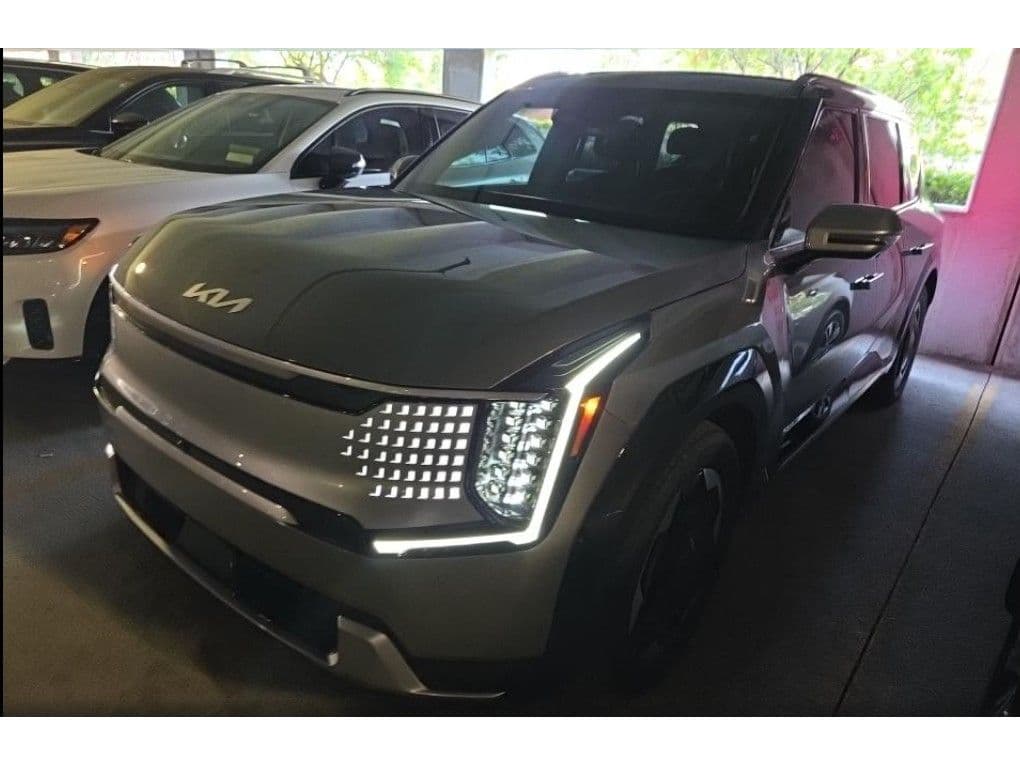
If you’re asking which **3-row electric SUV is best for most families in 2026**, the default answer is usually the **Kia EV9**. Kia launched the EV9 for the 2024 model year and has refined pricing, trims, and incentives through 2025 and into the 2026 model year. It’s one of the few EVs that genuinely competes with gas three‑row SUVs on space and price, especially once you factor in **used examples that are already hitting the market**.
Kia EV9: Strengths and tradeoffs
Why the EV9 dominates the 3-row EV conversation, and where it’s not perfect.
Where the EV9 shines
- Real third-row space: Adults can fit back there for shorter trips, and kids are fine on long drives.
- Competitive pricing: New EV9s typically start in the mid‑$50,000s, undercutting most luxury rivals.
- Flexible layouts: Seven‑seat bench or six‑seat captain’s chairs depending on trim.
- Modern tech: Big screens, over‑the‑air updates, and available advanced driver assists.
- Growing used supply: Early‑build EV9s are already showing up on the used market at meaningful discounts versus new.
Where the EV9 falls short
- Not a luxury interior: Nicely finished, but it won’t feel as upscale as a Mercedes or Volvo.
- Weight and efficiency: It’s a big, heavy SUV; real‑world efficiency depends heavily on your driving and climate.
- Early software quirks: First‑generation software saw some glitches; many have been reduced with updates, but it’s worth checking a **Recharged Score** or similar report on any used example.
Used EV9 pricing reality check
Hyundai Ioniq 9 2026: Quiet luxury and tech
Hyundai’s **Ioniq 9** is the brand’s large, three‑row flagship EV, sized similarly to the EV9 but positioned a bit more upmarket. Officially launching for the **2026 model year**, it leans into a refined ride, upscale materials, and a tech‑heavy cockpit rather than rugged styling.
Why families like the Ioniq 9
- Smoother, quieter ride than many gas competitors, ideal if your driving is mostly highway and suburbs.
- Polished interior design that feels more premium than mainstream crossovers, with wide screens and a clean dashboard.
- Strong driver‑assist suite that can take the edge off long road trips when traffic is heavy.
What to watch for
- Price step‑up over EV9: Expect a starting price nearer the upper‑$60,000s once dealer fees and popular options are added.
- Early availability: As a fresh model, dealer inventory and incentives may be tight at launch.
- Used market lag: It will take a couple of years before you see significant numbers of Ioniq 9s on used‑EV marketplaces like Recharged.
Sibling strategy: EV9 vs. Ioniq 9
Volvo EX90: Safety-first luxury family EV
The **Volvo EX90** is Volvo’s all‑electric successor to the XC90. It’s a three‑row SUV aimed at buyers who value safety, a calming interior, and Scandinavian design as much as horsepower. U.S. deliveries have begun, and by 2026 you’ll see more EX90s on the road, and, eventually, in the used market.
Volvo EX90 highlights
Where it fits in the three-row EV landscape.
Safety and driver assist
Volvo leans hard on its safety reputation. Expect advanced driver‑assist systems, a strong crash‑structure focus, and features designed to monitor driver attention and surroundings.
Calm, upscale cabin
Minimalist Scandinavian design, natural materials, and a clean interface help the EX90 feel more like a modern living room than a gadget showroom.
Performance and range
Dual‑motor trims offer brisk acceleration and roughly 300+ miles of range in real‑world scenarios, depending on wheel size and options.
Who should prioritize the EX90
Mercedes EQS SUV & Tesla Model X: Top-shelf luxury
Once you cross into six‑figure budgets, the **Mercedes-Benz EQS SUV** and **Tesla Model X** sit at the top of the three‑row EV pyramid. Both deliver serious performance, strong range, and serious brand cachet, but they appeal to slightly different buyers.
Mercedes-Benz EQS SUV
- Flagship comfort: Ultra‑quiet cabin, optional air suspension, and a focus on isolating you from the outside world.
- Luxury-first interior: High‑end materials, available "Hyperscreen"‑style displays, and extensive ambient lighting.
- Third row: More suitable for kids than tall adults on long trips, but that’s true of many 3-row SUVs.
If you prioritize traditional luxury cues and dealer network familiarity, the EQS SUV is the more conventional choice.
Tesla Model X
- Range and performance: Among the longest‑range three‑row EVs, with serious acceleration even in non‑Plaid trims.
- Charging access: Native access to Tesla’s Supercharger network still matters if you road‑trip often.
- Unique design: Falcon‑wing rear doors and minimalist interior remain polarizing but distinctive.
If you care more about charging convenience and range than traditional luxury features, the Model X remains compelling, especially as a used buy.
Luxury vs. value
Rivian R1S: Adventure-ready three-row EV
The **Rivian R1S** is the wild card of this group. It’s a true three‑row SUV with serious off‑road bonafides, air suspension, and available quad‑motor setups that can put down super‑car levels of power. It’s priced in luxury territory, but targets buyers who might otherwise be looking at a Land Rover Defender or high‑end Jeep Wagoneer.
- Standard three-row seating with a boxy, upright shape that helps interior space.
- Available high ground clearance and off‑road drive modes for camping or trail use.
- Long‑range battery options that push well north of 300 miles in certain trims.
- Interior that blends modern tech with outdoorsy design cues.
Reality check on Rivian
Key shopping factors for 3-row electric SUVs
Once you’ve narrowed your choices, focus less on brochure numbers and more on how the SUV will actually fit your life. For a three‑row EV, a few factors matter more than others.
Three-row EV buying checklist
1. Test the third row like you mean it
Don’t just glance at the back seats, have adults and kids climb in. Check headroom, legroom, and how easy it is to get back there with child seats in the second row.
2. Look beyond headline range
A 300‑mile EPA estimate is great, but highway speeds, winter weather, rooftop boxes, and trailers can all cut that down. Ask how the vehicle behaves at 70–80 mph in mixed conditions.
3. Confirm your charging plan
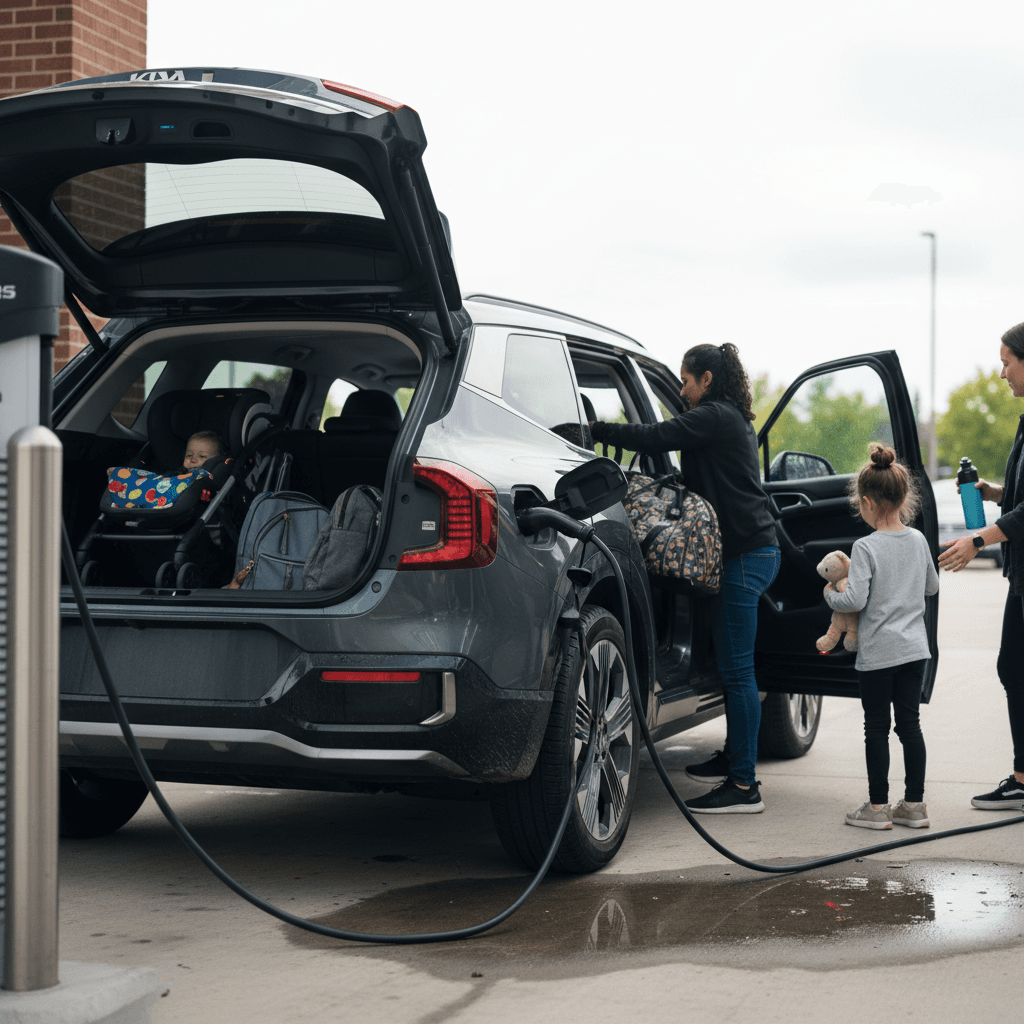
If you road‑trip, map out DC fast‑charging along your common routes. At home, confirm whether you can install a **Level 2 charger** on a 240‑volt circuit, or if you’ll rely on public charging.
4. Check towing requirements
If you tow, verify the rated tow capacity and whether you need specific packages. Range can drop sharply when pulling a boat or camper, so plan conservatively.
5. Compare total cost of ownership
Factor in electricity vs. gas, maintenance (EVs typically win big here), insurance, and any remaining tax incentives. Used EVs can be especially attractive if you avoid early‑depreciation pain.
6. Dig into software and driver-assist
Check how intuitive the infotainment system is, whether it supports your phone ecosystem, and how mature the driver‑assist tech feels in real use, not just on a spec sheet.
Don’t forget charging hardware
New vs. used 3-row EVs: Where value is right now
By 2026, you’re no longer limited to brand‑new three‑row EVs. Early **Kia EV9**, **Mercedes EQS SUV**, **Tesla Model X**, and some **Rivian R1S** builds are already in the used market, with more arriving every month as leases roll over and early adopters trade into the latest thing.
When buying new makes sense
- You want the latest battery and driver‑assist tech and plan to keep the vehicle for many years.
- You can capture remaining tax incentives or manufacturer rebates that reduce the real transaction price.
- You’re particular about color, interior, and options, and don’t want to compromise.
When used is the smarter play
- You want to avoid the steepest initial depreciation on high‑MSRP EVs.
- You’re open to a 1‑ to 3‑year‑old EV9, Model X, EQS SUV, or R1S that’s already proven itself in daily use.
- You value a verified battery‑health report over being the first owner.
Battery health is the new mileage
How Recharged helps with used three-row EVs
Three‑row EVs are big‑ticket items, and the used market is still young. That’s exactly where a specialized EV marketplace like **Recharged** can de‑risk the process for you.
Why shop used three-row EVs through Recharged
Tools and services that matter more when the vehicle is large, complex, and expensive.
Recharged Score battery report
Transparent pricing & financing
Nationwide delivery & support
Ready to find your next EV?
Browse VehiclesOn-the-ground experience, online convenience
FAQ: Best 3-row electric SUV 2026
Common questions about 3-row electric SUVs in 2026
Bottom line: Which 3-row electric SUV is best for you?
There’s no single **best 3-row electric SUV for 2026**, only the one that best matches your family’s budget, driving patterns, and expectations. For most buyers, the **Kia EV9** strikes the strongest balance of price, space, and tech. If you want more polish, the **Hyundai Ioniq 9** and **Volvo EX90** move you into luxury territory. If you’re chasing maximum range or off‑road capability, **Tesla Model X**, **Mercedes EQS SUV**, and **Rivian R1S** are the heavy hitters.
What has changed versus just a few years ago is that you no longer have to buy new or pay top‑of‑market prices to get into one of these vehicles. With early three‑row EVs already entering the **used market**, platforms like Recharged can help you read between the lines on battery health, pricing, and long‑term value, so you end up with a three‑row EV that works just as hard as your last gas SUV, only cleaner, quieter, and cheaper to run over time.