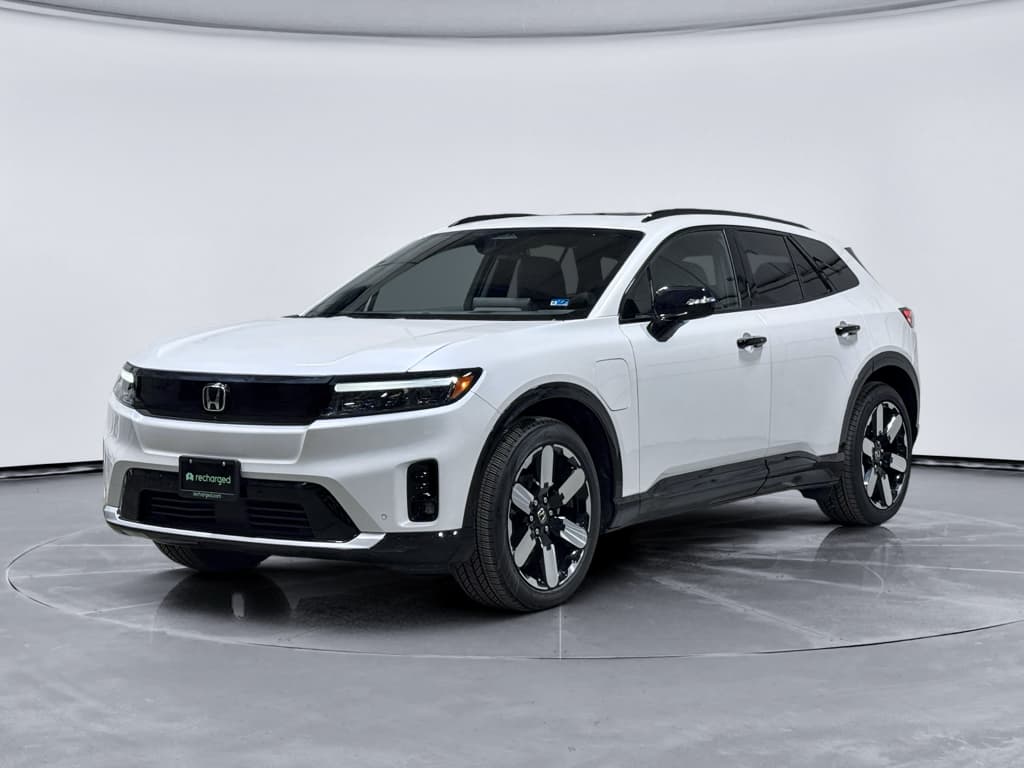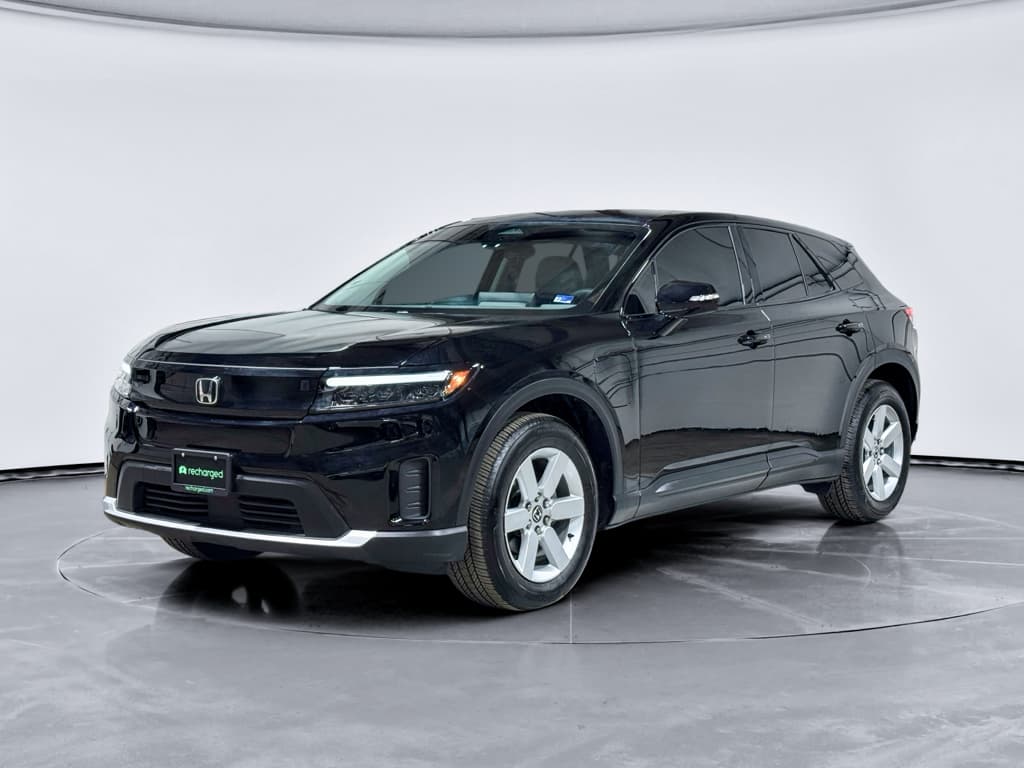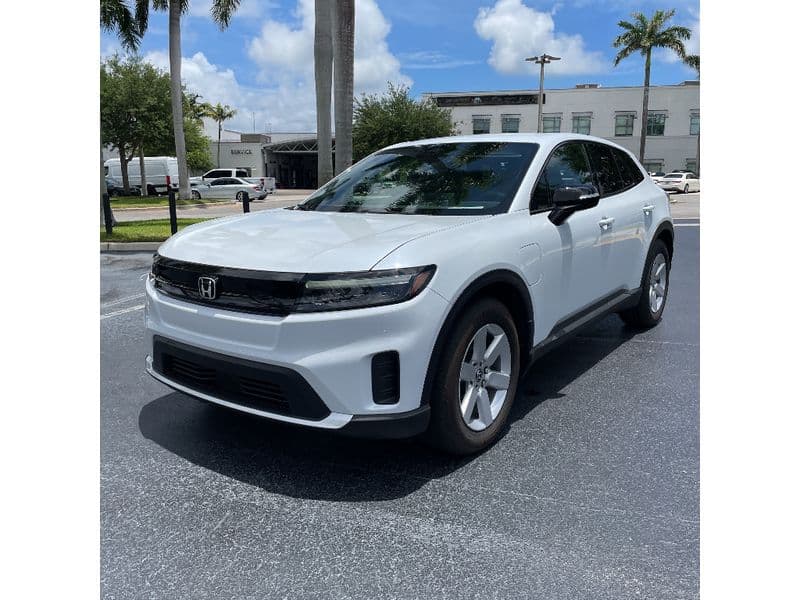
If you’re searching for 2024 Honda Prologue problems, you’ve probably noticed a disconnect: Honda’s reputation for reliability on one side, and a stream of early complaints from Prologue owners on the other. The truth sits somewhere in between, this is a brand‑new, shared‑platform EV with some very real early‑run issues, but also a lot of nuance that typical headline summaries miss.
Big Picture on Prologue Problems
Overview: Are 2024 Honda Prologue Problems a Dealbreaker?
Early data from owner reports and reliability trackers show the 2024 Honda Prologue scoring below average for reliability compared with other 2024 vehicles. Issues cluster around the electric drive and high‑voltage systems, in‑car electronics, and front‑suspension components rather than interior trim or minor squeaks. That’s exactly where you’d least like to see problems on a new, relatively complex EV.
2024 Honda Prologue: Early Issue Snapshot
So should you cross the Prologue off your list? Not necessarily. But you should approach it differently than you’d treat a decade‑proven CR‑V or Accord: budget extra time for due diligence, focus hard on battery and high‑voltage health, and favor vehicles with documented repairs and warranty coverage well into the future. That’s especially true if you’re considering a used 2024 Prologue from a non‑Honda retail channel.
How the Prologue Is Built (and Why That Matters for Problems)
GM Ultium Under the Skin
The 2024 Honda Prologue isn’t a clean‑sheet Honda product. Underneath the Honda bodywork and cabin, it rides on GM’s Ultium EV platform, sharing key components, battery pack, high‑voltage architecture, drive units, and much of the software, with vehicles like the Chevrolet Blazer EV and Cadillac Lyriq.
That matters because any systemic platform issue (battery cooling valves, charging behavior, software quirks) can show up across multiple brands and nameplates, and fixes sometimes arrive as shared updates or redesigned parts.
Honda on Top, GM Beneath
This collaboration creates a bit of a split personality. You get familiar Honda ergonomics and driver‑assistance branding (Honda Sensing, Collision Mitigation Braking System) layered on GM’s power electronics and charging stack. When things go wrong, diagnosis and parts can be slower than usual because technicians are still climbing the learning curve and sometimes waiting on GM‑sourced components.
For you as a shopper or owner, that means more reason to focus on service history, recall completion, and software update status than you might on a traditional Honda SUV.
Tip for Platform‑Shared EVs
Known 2024 Honda Prologue Recalls and Official Actions
As of early 2026, the 2024 Prologue has one publicly documented safety recall plus a growing list of technical service bulletins (TSBs) and informal “known issues” dealers are seeing repeatedly.
Key 2024 Honda Prologue Safety & Repair Actions
This table focuses on safety‑relevant items and high‑impact issues that show up repeatedly in owner reports and dealer notes.
| Issue type | Area affected | Symptom owners see | What Honda/dealers do | Risk if unresolved |
|---|---|---|---|---|
| Recall | Front suspension lower control arm | Potential fracture of the right front lower control arm on some vehicles | Inspect and replace defective arm free of charge | Loss of control if the arm fails at speed |
| TSB/known pattern | High‑voltage system & battery cooling | “Service High Voltage System”, “Reduced Acceleration”, loss of heat/AC, charging disabled | Replace defective cooling valves or related components; software updates | Reduced performance, potential battery damage, stranded vehicle |
| TSB/known pattern | Front CV axles | Loud clicking or knocking when turning from a stop, often under 5,000 miles | Diagnose and replace CV axles; some dealers waiting on redesigned parts | Possible axle failure, vibration, unsafe handling |
| Investigated complaints | Collision mitigation & reverse automatic braking | Hard, unexpected braking with no obstacle (“phantom braking”), especially in reverse or at low speed | Software calibration changes expected; currently dealers often “no fault found” | Rear‑end collision risk, whiplash injuries |
| Service trend | Forward camera / adaptive cruise | Adaptive cruise disconnects, camera “blocked” message, erratic follow distances | Sensor alignment checks; pending software fixes | Inconsistent driver assistance, sudden speed changes on highway |
Always run the VIN through Honda’s and NHTSA’s recall tools before you buy, especially for a first‑year EV.
Recall ≠ All Known Problems
Battery & High-Voltage Problems Owners Are Reporting
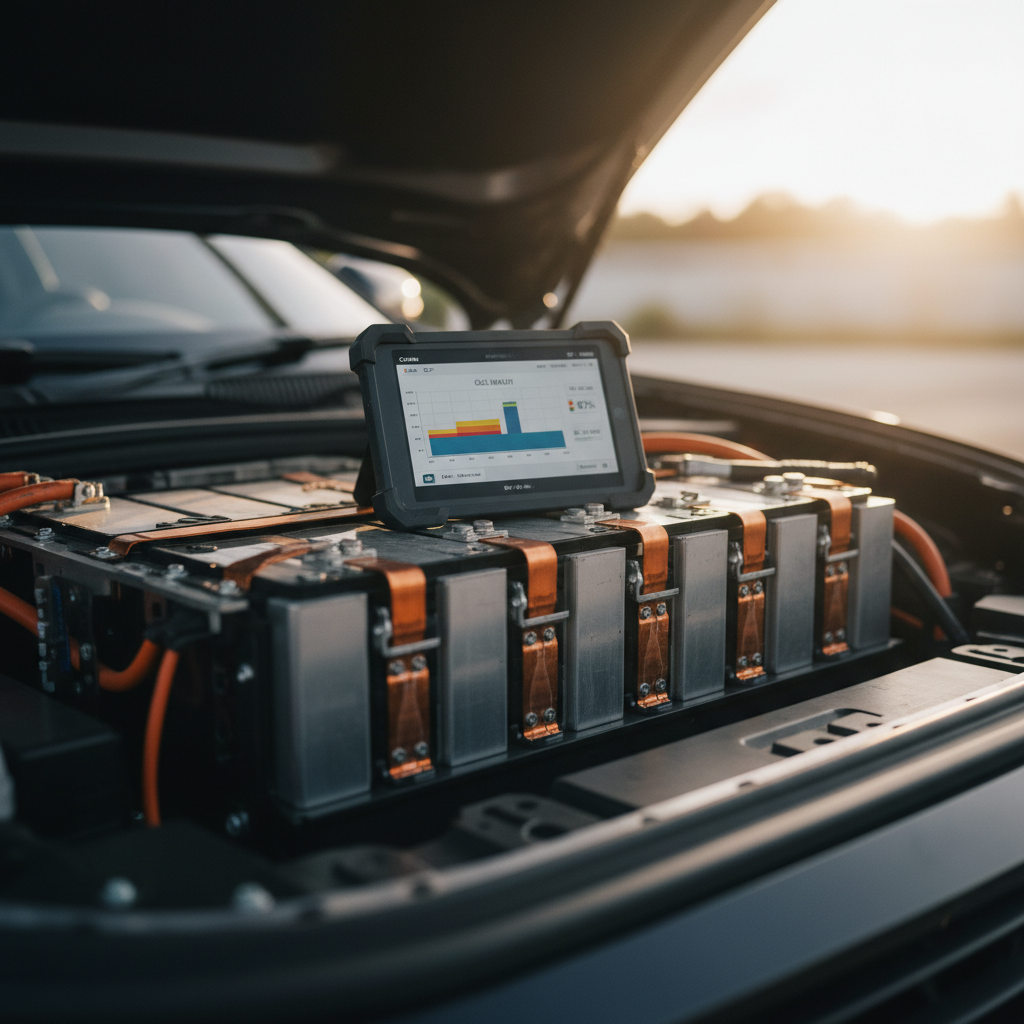
For any EV, the big anxiety question is the pack: is the battery safe, and will it hold up? With the 2024 Prologue, the more acute issues so far aren’t classic range fade, but high‑voltage system faults that can temporarily knock the vehicle out of commission.
- “Service High Voltage System” and “Service Vehicle Soon” warnings popping up with fewer than 10,000 miles on the odometer.
- Reduced acceleration and speed limiting (for example, stuck around 25–35 mph) when these warnings appear.
- Loss of heat and A/C, particularly in cold weather or wet conditions, because the same hardware used to heat or cool the cabin also manages battery thermal control.
- Vehicles that will not accept a charge at all until repairs are completed, effectively leaving owners stranded and dependent on towing and loaner vehicles.
- Extended repair times, sometimes measured in weeks, because parts for the battery cooling system or pack‑adjacent components are back‑ordered.
Underlying many of these stories is a common thread: problems with valves and hardware that manage coolant flow for the high‑voltage battery. When they fail or throw a fault code, the car errs on the side of safety, limiting power, shutting down DC fast charging, or refusing to charge altogether until a technician repairs the system.
Why High‑Voltage Warnings Matter
From a long‑term perspective, there’s no evidence yet of systemic cell‑level failures or the kind of mass pack recall that hit early Chevy Bolt EVs. But the pattern of cooling‑system‑related high‑voltage issues means you should treat thermal management hardware as a key inspection point, and assume software and component revisions will continue to roll out over the first few model years.
CV Axle Clicking & Front-End Noises
One of the most consistent complaints unique to the Prologue is a loud clicking or knocking sound from the front axle area when turning sharply from a stop. Owners report the issue starting with as little as 2,500–5,000 miles and getting progressively worse over time.
- Clicking or popping noise when turning left or right from a stop, sometimes in both forward and reverse.
- Noise most noticeable on sharper turns, such as parking‑lot maneuvers or tight neighborhood corners.
- Some dealers quickly diagnosing a bad CV axle and declaring the vehicle unsafe to drive until it’s replaced.
- Others acknowledging the noise but calling it “normal” while waiting on redesigned parts or official guidance from Honda.
- Reports of both left and right CV axles needing replacement, with some owners told a revised design is in the works.
Why CV Axle Noise Is a Red Flag
For a used‑EV shopper, this is exactly the kind of issue you want to catch on a test drive. Drive slow figure‑eights in a parking lot with the windows cracked. If you hear rhythmic clicking that wasn’t there on a comparable test drive in another Prologue, or in a similar Ultium‑based GM EV, insist on a thorough inspection and a clear record of parts replaced under warranty.
Phantom Braking & Driver-Assist Glitches
Almost every modern EV has at least some owners complaining about “phantom braking,” but the 2024 Honda Prologue’s Collision Mitigation Braking System and reverse automatic braking have drawn unusual scrutiny. Multiple owners describe the car slamming on the brakes with no obvious obstacle, both at low speeds and on the highway.
- Aggressive automatic braking while backing out of garages or parking spaces, even when sensors are clear.
- Sudden full‑force stops going forward, sometimes at 20–70 mph, with nothing visible in the lane ahead.
- Overly sensitive reverse braking and cross‑traffic alerts that repeatedly lock up the vehicle.
- Adaptive cruise control that loses sight of the car ahead, accelerates, then suddenly brakes hard when it reacquires the target.
- Forward camera “blocked” warnings and automatic cruise disengagement, even in normal weather conditions.
Safety Implications of Phantom Braking
Right now, fixes for these behaviors are spotty. Some owners report minor improvements after camera calibration or software updates, others see no change. This is a classic example of where the industry’s rush to advanced driver assistance collides with messy edge cases in the real world. If you’re a buyer who prefers conservative, predictable ADAS behavior, this aspect of the Prologue deserves extra scrutiny.
Charging Port & Home Charging Problems
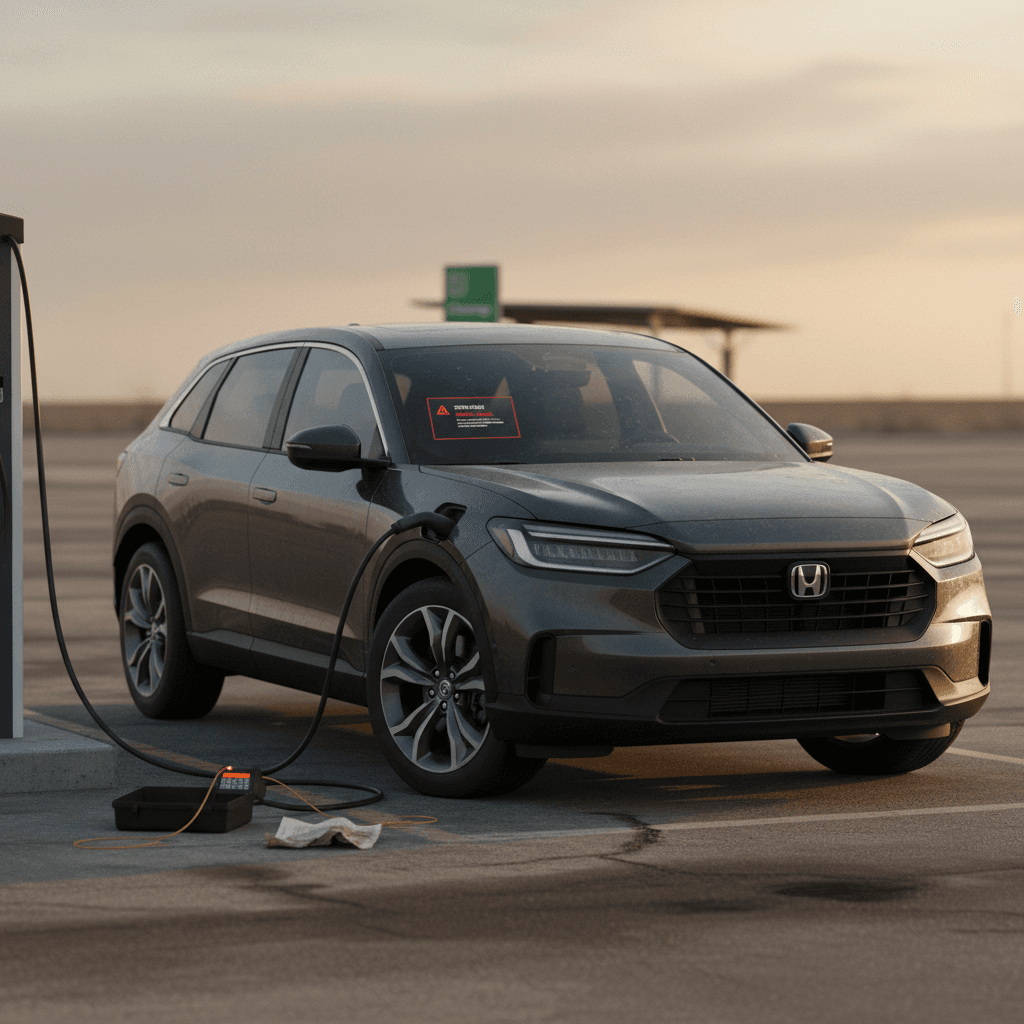
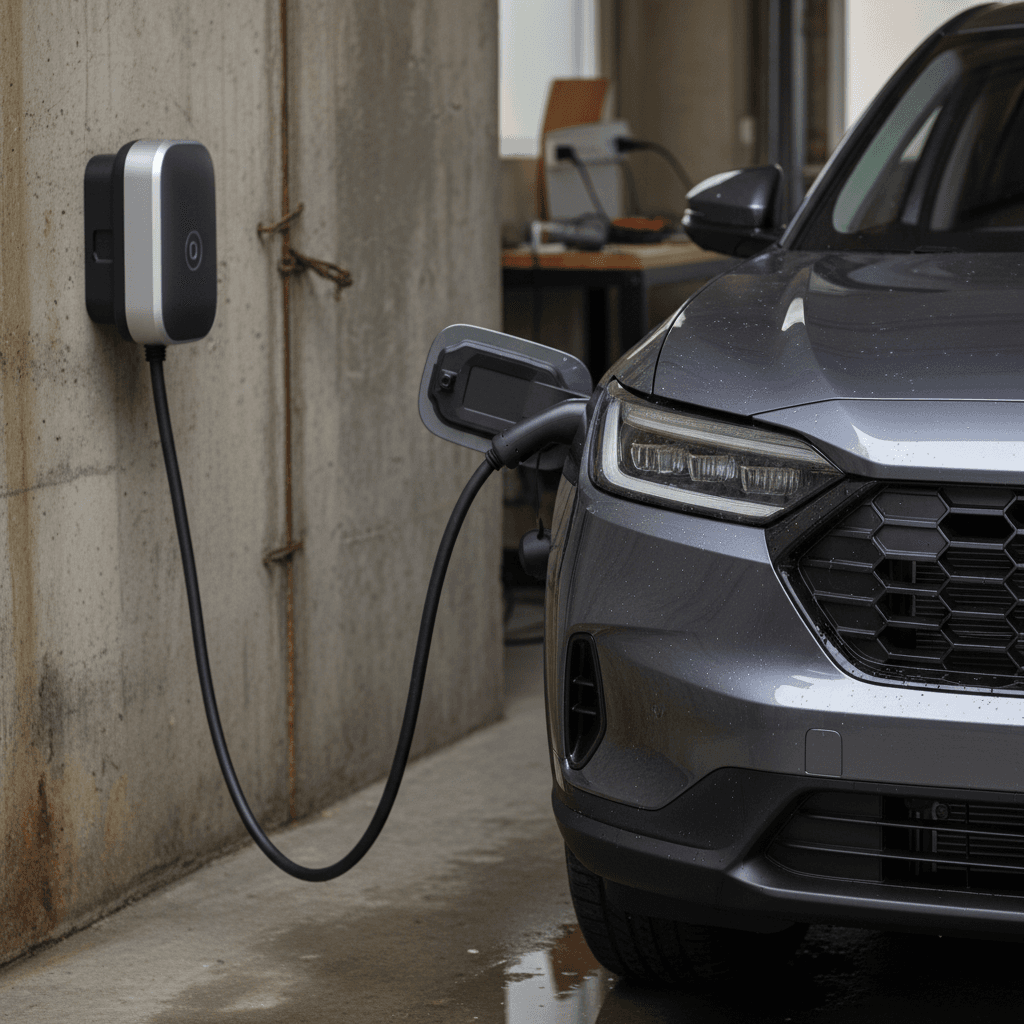
Although the Prologue’s GM‑sourced charging hardware is broadly similar to other Ultium EVs, a subset of owners have reported charging‑port failures and home‑charging anomalies that go beyond the occasional public‑charger glitch.
- Charging coupler and port assemblies showing burn marks or melted plastic after Level 2 home charging sessions, sometimes diagnosed as a failed onboard charger receptacle.
- Vehicles that refuse to charge despite a healthy home EVSE and no visible damage to cables or plug.
- Dealers and Honda corporate pushing back on warranty coverage when they believe the charge port was “damaged,” even if owners report normal use and no misuse.
- High‑voltage system warnings occurring immediately after a charging attempt, requiring tows and extended diagnostic time.
Protect Yourself on Charging Issues
At Recharged, our technicians focus heavily on charging behavior and port condition when we evaluate any used EV, not just the Prologue. A clean physical inspection plus a reliable charge session at both Level 2 and, when possible, DC fast charging, tells you more than a spec sheet ever will.
Software, Infotainment & HondaLink App Complaints
Because the Prologue marries Honda’s UX with GM’s underlying electronic architecture, it’s not surprising that owners are bumping into some rough edges in the software stack.
Common Software & UX Problems Reported by Prologue Owners
Most are annoying more than dangerous, but they drive down satisfaction.
HondaLink / App Instability
Some owners report the HondaLink app crashing or staying offline for weeks or months, despite repeated support tickets. That matters because OTA updates and status alerts are increasingly routed through the app ecosystem.
Infotainment Glitches
Wireless CarPlay or Android Auto dropping connections, phones disappearing from paired‑device lists, and random audio/volume quirks.
These can usually be worked around, but they’re frustrating in a new, tech‑forward EV.
Random Settings Changes
Reports of vehicle settings, lighting, door locks, window locks, seemingly changing on their own after updates or restarts. Hard to reproduce, and therefore hard for dealers to fix decisively.
The Silver Lining on Software
What This Early Data Says About Long‑Term Reliability
Reliability is always a moving target for a first‑year EV, and the 2024 Honda Prologue is no exception. Early surveys have already flagged it as less reliable than the average 2024 vehicle, with trouble spots squarely in the drivetrain, high‑voltage, and electronic systems. That’s not where you want to see red ink.
What’s Worrying
- High‑voltage system warnings and cooling‑system faults are serious, not cosmetic.
- CV axle and suspension issues popping up within the first 5,000 miles suggest the front end is under‑engineered for EV weight and torque, or at least not tuned for all use cases yet.
- Driver‑assist unpredictability undermines trust in safety systems that should be boring and consistent.
- Repair parts delays and long service times indicate the support ecosystem is still catching up.
What’s Reassuring
- We haven’t seen a systemic battery chemistry failure or runaway degradation trend reminiscent of the earliest mass‑market EV missteps.
- Automakers and suppliers typically iterate hardware and software quickly in the first model years, so later‑build 2024s or 2025s may be noticeably better behaved.
- The underlying Ultium platform is shared across multiple models, giving Honda and GM more incentive (and data) to fix root causes.
- Honda still has a strong corporate bias toward durability, even if this EV venture is off to a bumpy start.
In other words: the 2024 Prologue is not a write‑off, but it’s also not yet the sort of “buy blind” Honda some shoppers are used to. Treat it like any other early‑run EV: reward examples with the cleanest histories and most complete documentation, and be cautious about cars that have lived at the service department.
Should You Buy a 2024 Honda Prologue Used?
If you’re shopping the used‑EV market, the Prologue is intriguing: spacious, modern, and often attractively priced compared with new‑car MSRPs. Whether it’s a smart buy comes down to execution, not concept, specifically, execution on the individual vehicle you’re looking at.
2024 Honda Prologue as a Used EV: Pros & Cons
Why some shoppers are tempted, and why others walk away.
Why It’s Tempting
- Honda badge and cabin design feel familiar and approachable.
- Ultium platform brings modern charging speeds and competitive range.
- Early depreciation can make monthly payments appealing vs. new.
- Still within factory EV powertrain warranty for years, if mileage is low.
Why You Should Be Cautious
- First‑year reliability has been weaker than typical Hondas.
- High‑voltage and CV axle issues can strand a vehicle for weeks.
- Driver‑assist quirks can be stressful, especially for less‑experienced EV drivers.
- Parts and technician experience are still catching up.
How Recharged Approaches High‑Variance EVs
Checklist: What to Inspect on a Used 2024 Prologue
Critical Checks Before You Commit to a 2024 Honda Prologue
1. Pull a Full Recall & TSB History
Run the VIN through Honda and NHTSA recall tools. Confirm the lower‑control‑arm recall (if applicable) is completed and ask the seller for records of any high‑voltage or CV axle‑related TSB work.
2. Scan for High‑Voltage & HV Cooling Faults
Have a qualified EV technician scan the car for stored or historical DTCs related to the high‑voltage system, battery cooling valves, and onboard charger. A clean history is a strong positive signal; repeated HV faults are a major caution flag.
3. Test Drive for CV Axle Noise
On your test drive, do slow full‑lock turns in both directions in an empty lot. Listen for <strong>repetitive clicking or knocking</strong> from the front end. If you hear it, insist on a detailed inspection and written estimate before proceeding.
4. Stress‑Test Driver Assistance
Safely test forward collision warning, adaptive cruise, and reverse automatic braking in controlled conditions. You’re looking for <strong>predictable, consistent behavior</strong>. If the car brakes aggressively with no clear reason, treat that as a serious safety concern, not just a quirk.
5. Inspect and Test the Charge Port
Open the charge port door and look for discoloration, pitting, or melted plastic. Then plug into a known‑good Level 2 charger and confirm the Prologue charges normally without errors or excessive heat at the port.
6. Verify Software & OTA Update Status
Check that the infotainment, driver‑assist, and powertrain control software are on <strong>current versions</strong>. Ask the seller for service invoices showing recent updates or fixes, and confirm the HondaLink/app connection actually works.
7. Review Warranty Coverage & Loaner Policies
Because some repairs have taken weeks, confirm how much <strong>factory EV powertrain and high‑voltage coverage</strong> remains, and ask the selling dealer about their loaner/rental policy if extended diagnostics are needed down the road.
Leverage Third‑Party Diagnostics
FAQ: 2024 Honda Prologue Problems
Frequently Asked Questions About 2024 Honda Prologue Problems
The 2024 Honda Prologue is a textbook example of where the EV transition is today: compelling on paper, uneven in execution, and heavily dependent on how seriously you take the details. There are genuine problems, especially around the high‑voltage system, CV axles, and driver‑assistance tuning, but there are also individual vehicles that perform well once teething issues are resolved. If you approach the Prologue like an appliance, you may be disappointed. If you approach it like a sophisticated, first‑generation EV platform and demand the right diagnostics and documentation, you can still make a clear‑eyed decision about whether this particular Honda belongs in your driveway.
If you want help stress‑testing a specific Prologue, or comparing it against other used EVs with stronger early track records, Recharged can pair you with an EV‑savvy specialist and deliver a car that’s already been through the hard questions. In a segment where software, batteries, and service ecosystems matter as much as badges, that extra layer of scrutiny is fast becoming the new test drive.