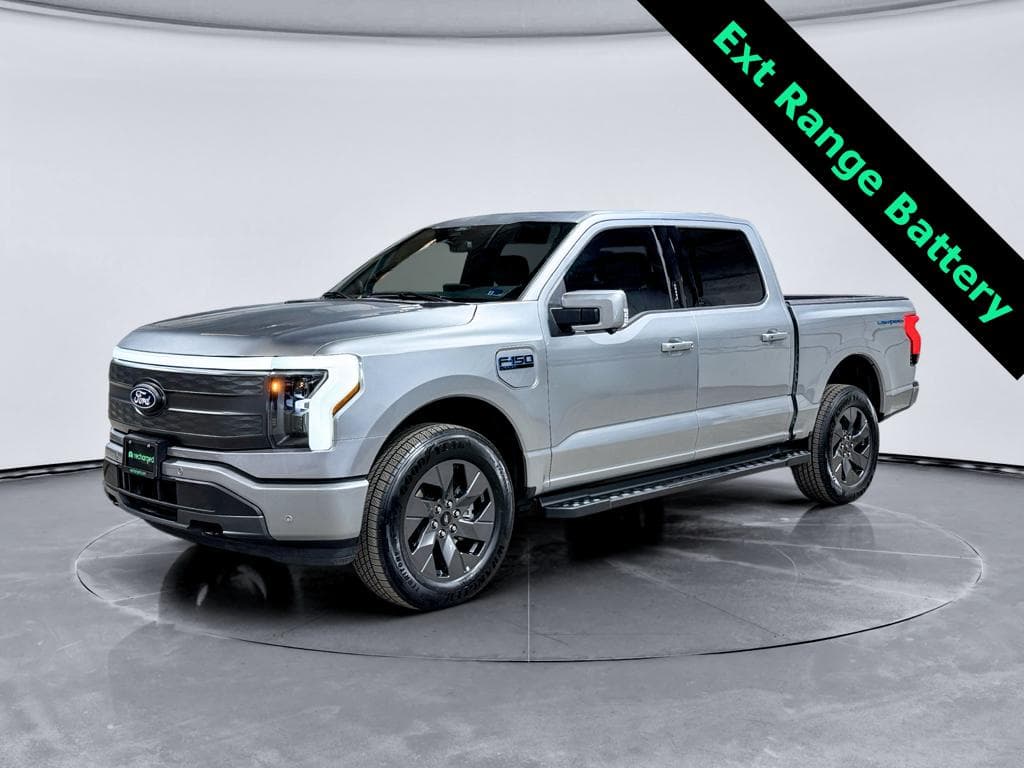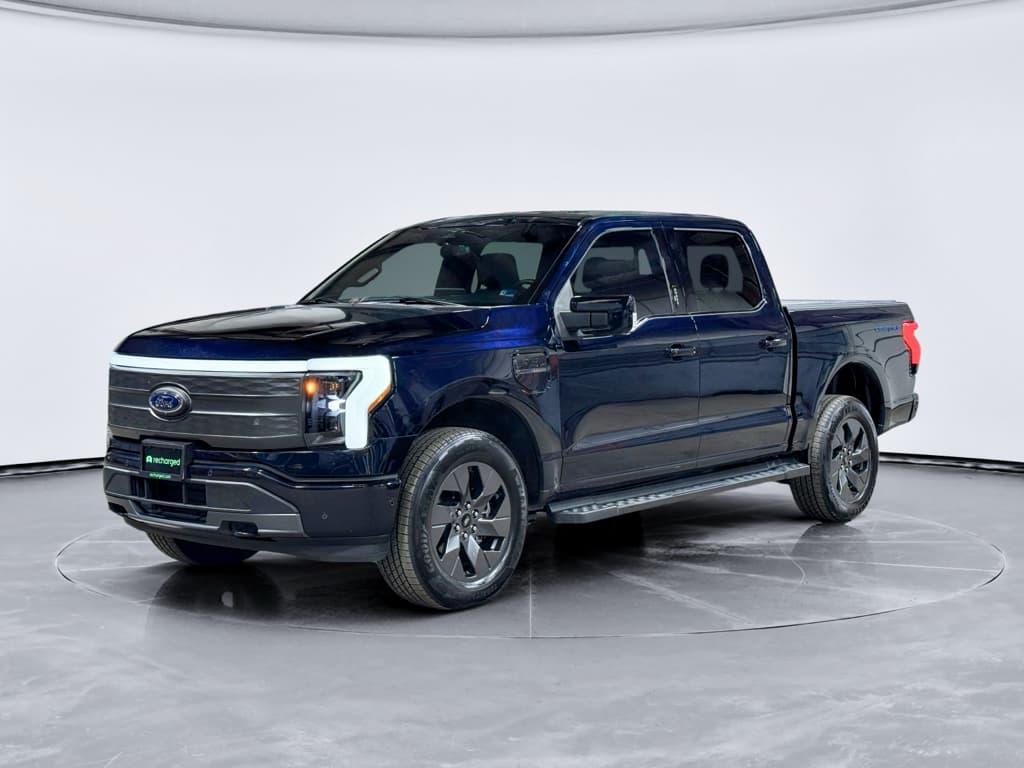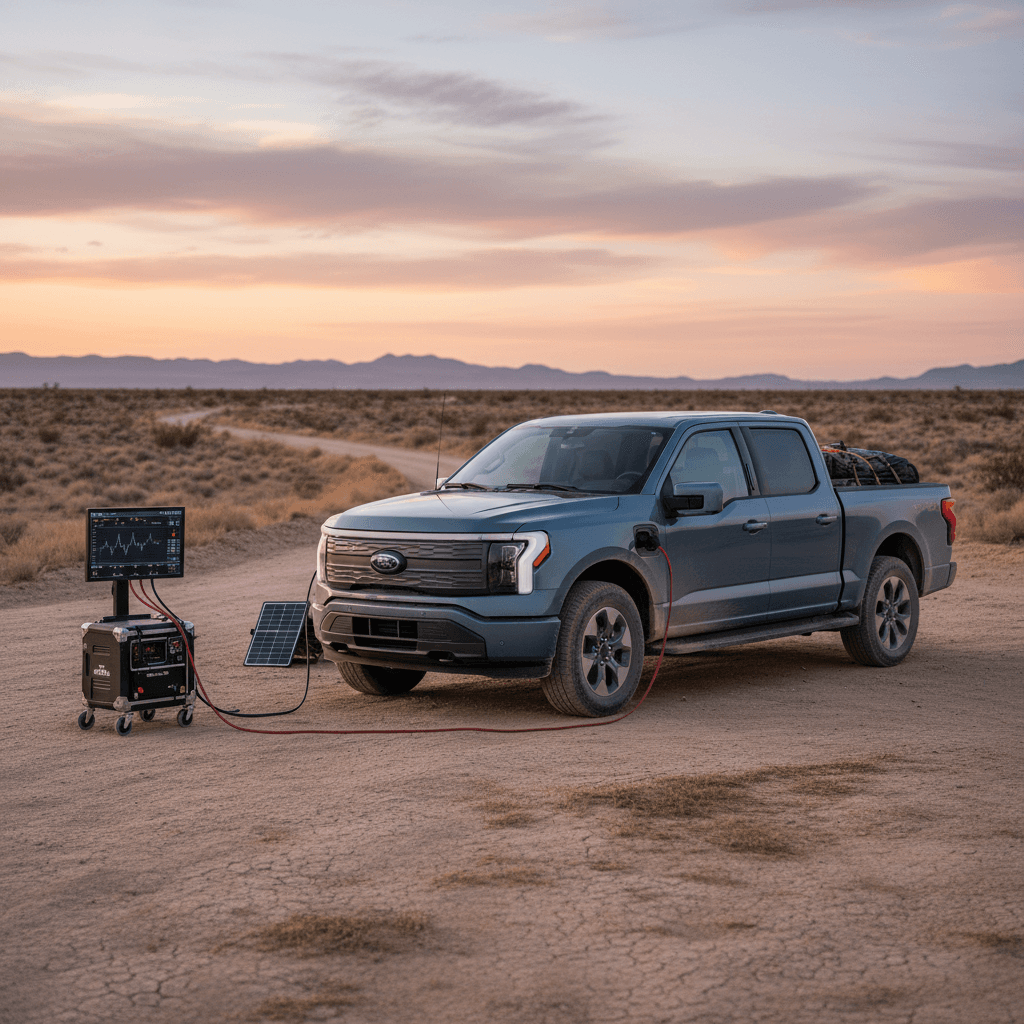
The 2024 Ford F-150 Lightning walks into the bar with a big number stamped on its chest: up to 320 miles of EPA-rated range. That sounds stout on paper, but range tests tell a more nuanced story, especially once you’re running 75 mph with a bed full of gear, a trailer on the hitch, or a February headwind in your face.
Key takeaway up front
Overview: Why F-150 Lightning range tests matter
Range anxiety is old news in compact EVs. In a full-size electric pickup that can weigh over 6,000 pounds and tow up to 10,000 pounds, it becomes range logistics. A serious 2024 Ford F-150 Lightning range test has to look at more than a gentle suburban loop. It has to answer three questions you actually care about:
- How far will a 2024 F-150 Lightning really go at 70–75 mph on the interstate?
- What happens to range when you tow a real trailer, not just air?
- How badly do cold temperatures and headwinds eat into the battery, especially if you’re thinking of buying one used?
The answers are encouraging if you’re realistic, sobering if you’re not. The Lightning isn’t a miracle; it’s a big, square truck moving a lot of air. But it’s also cleverly managed, surprisingly efficient for its size, and perfectly workable as a daily driver or work truck once you understand its range envelope.
2024 F-150 Lightning range numbers at a glance
EPA range vs real-world: what Ford promises
Ford doesn’t shortchange you on battery. The 2024 F-150 Lightning uses either a 98 kWh standard-range pack or a 131 kWh extended-range pack (those are usable capacities, not marketing fluff). Official EPA combined ratings look like this:
2024 Ford F-150 Lightning EPA range by trim
Approximate EPA combined range ratings for 2024 F-150 Lightning trims in the U.S.
| Trim (2024) | Battery | Drive | Wheels | EPA Combined Range |
|---|---|---|---|---|
| Pro SR | 98 kWh SR | AWD | 18 in | ≈240 mi |
| XLT SR | 98 kWh SR | AWD | 18 in | ≈240 mi |
| Flash ER | 131 kWh ER | AWD | 20 in | ≈320 mi |
| Lariat ER | 131 kWh ER | AWD | 20 in | ≈320 mi |
| Platinum ER | 131 kWh ER | AWD | 22 in | ≈300 mi |
Numbers are EPA estimates on standard wheels and tires; real-world range varies with speed, temperature, load, and driving style.
Those numbers assume a blend of city and highway driving at moderate speeds. The EPA cycle also bakes in some charging losses, which is why the published efficiency for the Lightning works out to around 2.1 miles per kWh overall. In real life, the truck can hit or beat those numbers around town, but open highway and cold weather are where expectations need a haircut.
Don’t treat the EPA number as your road-trip number
Highway range test: what to expect at 70–75 mph
On the highway, the F-150 Lightning is playing aerodynamics on “hard mode.” You get instant torque, serene cabin, and that big-truck, king-of-the-road feeling, but you’re also pushing a brick through the air. Real-world 70–75 mph tests with the 131 kWh extended-range battery tend to cluster around these ballpark results:
Real-world 2024 F-150 Lightning highway range ballparks
Assuming 90–100% down to about 10% state of charge on flat highway, no trailer, mild temps
Extended-Range (20" wheels)
Typical 70–75 mph range: about 210–250 miles in mild weather.
That’s roughly 65–80% of the 320-mile EPA figure, which tracks with many owner reports and independent media tests.
Crosswinds & headwinds
Add a steady headwind or crosswind and you can shave another 10–15% off those numbers.
Think 190–220 miles at the same speeds if the weather is working against you.
Raised ride height & accessories
Larger off-road tires, lift kits, roof racks, and light bars are all range tax collectors.
It’s easy to give up another 5–10% on top of the wind and speed penalties.
The standard-range truck, with its ~240-mile EPA rating, behaves the same way, just with a smaller fuel tank. At 70–75 mph in good weather, a realistic highway leg in a standard-range Lightning is 150–180 miles before you want to start thinking about the next charger.
A simple planning rule for highway trips
Towing range test: how fast range drops with a trailer
Every truck ad on TV shows a pickup towing a mountain. Very few of them are honest about how that affects consumption. Towing with the F-150 Lightning is a double-whammy: extra weight and extra aero drag. The result is a dramatic but predictable hit to range.
Scenario 1: 5,000 lb travel trailer
Hook up a boxy ~5,000 lb camper and drive 65 mph on relatively flat interstate in mild weather. What many testers and owners see is:
- Range cut roughly in half vs driving solo
- Extended-range Lightning realistically doing about 120–150 miles on a comfortable leg
- Standard-range often in the 90–110 mile neighborhood
Scenario 2: Open car hauler or flatbed
A low, open trailer with a vehicle or equipment is friendlier to range than a rolling billboard of fiberglass. It’s still heavy, but presents less frontal area:
- Expect more like a 35–45% hit vs solo driving
- Extended-range can often manage 150–180 miles per leg at 65 mph if you’re gentle
- Speed is everything, 75 mph vs 65 mph is the difference between “fine” and “that escalated quickly”
The EV towing reality check
The good news: Ford’s built-in trailer profiles and range estimates are genuinely helpful. Once you’ve logged a few towing trips, the truck becomes much better at predicting how far you can safely go with a given trailer and speed. You start thinking in two-hour towing legs instead of 400-mile hauls, and the truck feels perfectly usable within that framework.
Cold-weather range test: winter hits harder in a truck
Cold is where the laws of physics come out from behind the curtain. Batteries don’t like low temperatures, air gets denser, and you’re running the cabin heater to turn a steel-and-aluminum ice cube into something habitable. Owners of the F-150 Lightning reporting from real winters regularly see 25–35% range loss in sustained sub-freezing conditions, more in brutal Arctic snaps.
How winter changes F-150 Lightning range
Approximate impacts assuming mixed driving and no trailer
Cool (40–55°F)
Battery still happy, HVAC working but not overclocked. Expect about a 10–15% range loss vs mild 70°F days.
Cold (20–32°F)
Now you’re in the zone where 20–30% total range loss is normal. Short trips with no preconditioning suffer the most.
Bitter cold (single digits & below)
In sustained deep cold, especially at highway speeds, the Lightning can give up 35–40% or more of its mild-weather range.
Preconditioning is your secret weapon
In practice, a 2024 F-150 Lightning with the extended-range pack that does 220–240 miles at 70–75 mph in mild weather might be closer to 150–180 highway miles at similar speeds in a proper winter. Around town, the penalty can feel even bigger on lots of short, cold-soaked trips.
How driving style and load change your range
The Lightning is honest to a fault. If you mash the throttle away from every stoplight and run 80 mph because “it feels so smooth,” the truck will simply show you the consequences in real time on the energy screen. Think of range as a budget with a few major line items:
Main factors that move your F-150 Lightning’s range up or down
1. Speed over everything
Aerodynamic drag rises with the square of speed. The difference between 65 mph and 80 mph in a tall, bluff truck is the difference between “this is fine” and “why am I stopping again already?”
2. Elevation and grades
Long climbs burn energy faster than anything else, even more than heavy acceleration. The good news is the Lightning’s regen is strong on the way down, so route profiles with big descents can be surprisingly friendly.
3. Tires and wheel choice
Aggressive all-terrains on heavy aftermarket wheels are a fashion statement with a clear price: think 5–10% range loss, sometimes more, depending on how extreme you get.
4. Payload in the bed and cab
Weight hurts, but not as brutally as a tall trailer. A few hundred pounds of tools or camping gear might take only a single‑digit percentage off your range if you keep speeds modest.
5. HVAC and comfort features
Seat and steering-wheel heaters are cheap in energy terms. The main hog is the cabin heater, especially when turning a frozen cabin into a warm one over and over again.
The Lightning makes efficiency feel like a game
Range and charging on a road trip
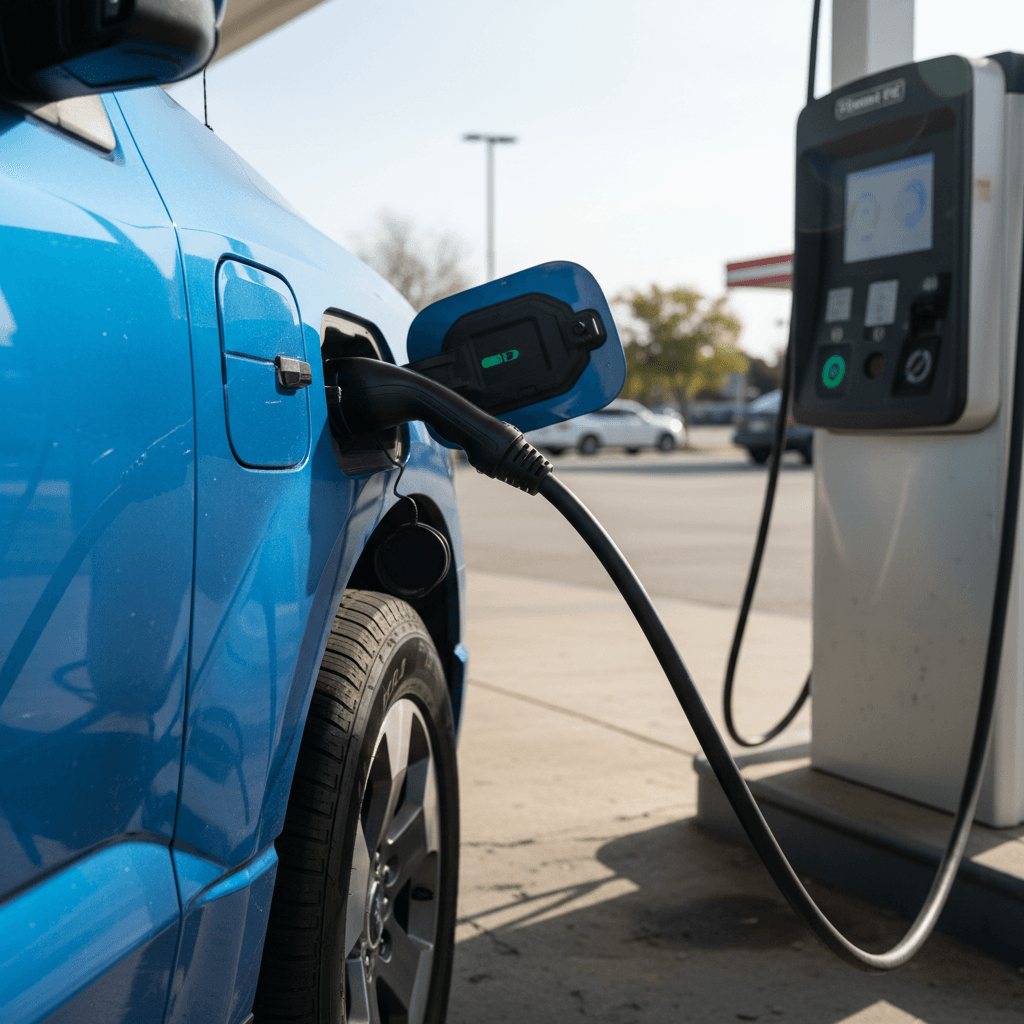
Range numbers are only half the story. The other half is how quickly you can put miles back in the battery. The 2024 F-150 Lightning will DC fast charge at up to around 155 kW on a suitably powerful charger, which translates to roughly 15–80% in around 35–40 minutes when everything is ideal.
Planning your legs
On a long interstate drive in an extended-range Lightning, the sweet spot is usually 150–200 miles between stops. That keeps you comfortably above the low-battery jitters while avoiding painfully long sessions trying to cram in the last 10%.
Think of it like human road trips: you tend to want food, coffee, or a restroom every two to three hours anyway.
Charging curve reality
Like most modern EVs, the Lightning charges fastest between roughly 15–60% state of charge. Above that, the power tapers. On a big road trip, it’s often faster overall to make more frequent, shorter stops and leave when you hit ~60–70% rather than waiting for a “full tank.”
Use apps to stack the deck in your favor
Used F-150 Lightning: what range looks like as the battery ages
By 2026, a lot of 2022–2024 F-150 Lightnings are entering the used market, and range is the first thing shoppers want to talk about. The reassuring part: Ford’s big lithium-ion packs have so far shown modest, gradual degradation, especially on trucks that haven’t lived their entire life on DC fast chargers.
Realistic expectations for a used F-150 Lightning’s range
Assuming normal use, mixed charging, and no major abuse
After ~2–3 years
Many owners report only a single-digit percentage drop in usable capacity. An extended-range truck that was good for ~230–240 highway miles new might be more like 215–230 today.
Heavy DC fast charge use
Lots of high-power DC charging can accelerate wear. You may see more noticeable range loss, but it’s highly usage-dependent. This is where objective battery health data matters.
Warranty & peace of mind
Ford backs the Lightning’s battery with a long warranty window in years and miles. That doesn’t mean no degradation, but it does mean catastrophic pack failures are unlikely on a properly maintained truck.
How Recharged helps with used Lightning range
If you’re cross-shopping used Lightnings, pay attention not just to the odometer but to how the truck was used: Was it a commuter with mostly home Level 2 charging, or a work truck living on public DC fast chargers? A truck with fewer miles but harder charging habits can, in some cases, be worse for long-term range than a higher-mileage cream puff with gentle treatment.
How the Lightning compares to other electric trucks
The F-150 Lightning is not the range king of electric pickups. Rivian’s R1T can be specced with a bigger battery and higher EPA figures, and GM’s Silverado EV and Sierra EV are chasing big numbers of their own. But the Lightning is competitive enough that, in the real world, usage patterns and charging access matter more than the spec-sheet arms race.
Electric pickup range comparison snapshot
Approximate EPA range figures for popular electric pickups as of 2025 model-year equivalents.
| Model & configuration | Battery (usable approx.) | EPA Range (max trims) | Notes |
|---|---|---|---|
| Ford F-150 Lightning ER | 131 kWh | ≈320 mi | Strong value, familiar F-150 package, excellent daily-driver manners. |
| Rivian R1T Max Pack (dual-motor) | ~149 kWh | ≈400+ mi | Adventure-focused, higher range, smaller overall footprint. |
| GMC Sierra EV Denali ER | ~170 kWh | ≈390 mi | Big pack, luxury focus, fewer units on road so far. |
| GMC Sierra EV Denali Max Range | ~216 kWh | ≈460 mi | Massive battery, impressive range, likely higher price and weight. |
Numbers are approximate and vary by battery, wheels, and configuration. Always verify exact specs for the trim you’re considering.
More range isn’t always better for you
Range tips for daily driving, towing, and winter
Once you understand how the 2024 F-150 Lightning behaves, there’s a lot you can do to bend range back in your favor without driving like you’re in a funeral procession. Think of these as easy wins, tailored to how you actually use a truck.
Practical ways to stretch your Lightning’s range
1. Cap your cruise speed
Dropping from 78 mph to 68 mph might feel like a big sacrifice, but it can claw back <strong>10–20% range</strong> in a tall truck. Over a full day of driving, that’s the difference between two charges and three.
2. Precondition whenever you can
In both summer and winter, use scheduled departure and preconditioning while plugged in. Warming or cooling the cabin and battery on house power leaves more energy available for driving.
3. Use the trip energy screen
The Lightning’s trip energy breakdown shows how much consumption goes to speed, climate, and accessories. If you see speed as a giant chunk of the pie, you know where to cut first.
4. Be smart about towing routes
When towing, prefer routes with <strong>more chargers and gentler grades</strong> over the steepest, shortest path. Build in extra margin and plan to arrive with at least 10–15% battery.
5. Keep the aero add-ons reasonable
Lift kits, wide mud-terrain tires, roof racks, and big light bars make the truck look ready for Mars, but they all cost you range. If you care about long highway legs, keep the bolt-ons in check.
6. Charge mostly on Level 2 at home or work
Regular home Level 2 charging is kinder to the battery than constant DC fast charging and helps preserve capacity, and thus range, over the long haul, especially if you’re planning to own the truck for many years.
FAQ: 2024 Ford F-150 Lightning range tests
Frequently asked questions about F-150 Lightning range
Bottom line: is the F-150 Lightning’s range good enough?
Taken in isolation, the 2024 Ford F-150 Lightning’s range numbers don’t sound outrageous: 240 miles with the standard pack, up to 320 with the extended range. The truth revealed by real-world range tests is more complicated but not disappointing, just honest. At highway speeds, figure on roughly 70% of the EPA number; add towing or serious cold and that slice gets thinner. Within those bounds, the Lightning is a superb daily driver and a perfectly workable road-trip machine.
If your life looks like a 30–60 mile round-trip commute, weekend Home Depot runs, and a few long hauls a year, the Lightning’s range is more than adequate, especially with the extended battery and access to DC fast charging. If your entire identity is dragging a 9,000 lb toy hauler across three states at 75 mph every Friday, you’ll either need to change the way you travel or wait for the next generation of ultra-long-range trucks.
For used shoppers, the crucial questions are less about the original window-sticker EPA number and more about this truck’s battery, today. That’s exactly the gap Recharged was built to close: verified battery health, transparent range expectations, and expert EV guidance from search to delivery. With the right information in hand, the 2024 F-150 Lightning stops being a range mystery and starts being what it really is, a highly capable, quietly sophisticated electric truck that just happens to be honest about how far physics will let it go.