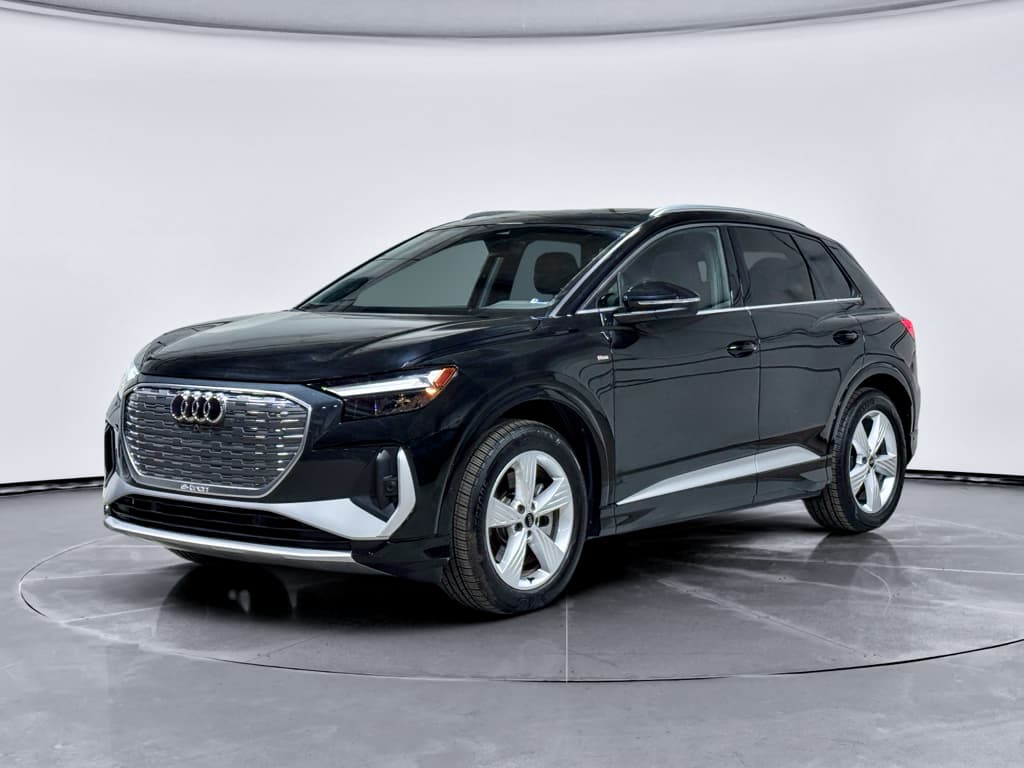
If you own or are shopping for a 2024 Audi Q4 e-tron, keeping up with the **latest recall list** isn’t optional, it’s central to understanding the SUV’s real‑world reliability and safety. The Q4 shares a lot of hardware with the Volkswagen ID.4, and as those issues surface, they’re increasingly turning into formal recalls for the 2024 Q4 e-tron as well.
Quick date context
Overview: Why 2024 Q4 e-tron recalls matter
The 2024 Audi Q4 e-tron sits in a tricky spot: it’s a premium EV built on a **mass‑market VW platform**. That brings economies of scale, but it also means that when Volkswagen discovers a defect on the ID.4, it often sweeps in the Q4 as well. For owners and used buyers, understanding those shared recalls is key to avoiding surprises like **no‑start conditions, loss of power, or charging failures**.
Shared hardware with VW ID.4
- Common high‑voltage battery architecture
- Shared onboard charger and DC–DC converter components
- Very similar software stack and control modules
Why that matters for recalls
- Defects often show up in higher‑volume ID.4 first
- Once confirmed, Audi Q4 e-tron gets pulled into the same campaigns
- Fixes and parts availability can lag demand, leaving cars parked for weeks
Recall vs. technical service bulletin
Quick reference: 2024 Audi Q4 e-tron recalls list
Based on NHTSA data through early 2026, there is **one major U.S. safety recall** that clearly and explicitly lists the 2024 Audi Q4 e-tron and Q4 e-tron Sportback by model year. That recall targets the **on-board charger and DC–DC converter**, which can lead to 12‑volt battery failure and loss of power.
Confirmed 2024 Audi Q4 e-tron recalls (U.S., as of April 2026)
This table summarizes the primary U.S. safety recall currently covering 2024 Audi Q4 e-tron and Q4 e-tron Sportback models.
| Recall ID (NHTSA / Audi) | Issue | Model years & body styles | Symptoms / risk | Remedy status |
|---|---|---|---|---|
| 25V125000 / 93FR | On-board charger / DC–DC converter can fail, depleting the 12‑volt battery | 2024–2025 Q4 e-tron SUV and Q4 e-tron Sportback | Warnings, charging failure, potential sudden loss of drive power | Dealer replaces affected power electronics; remedy active, parts supply can be tight |
Always verify by VIN on NHTSA.gov or with an Audi dealer, as additional recalls may be added after this article is published.
About the NHTSA campaign number
Recall 93FR / 25V125000: On-board charger & 12-volt battery failure
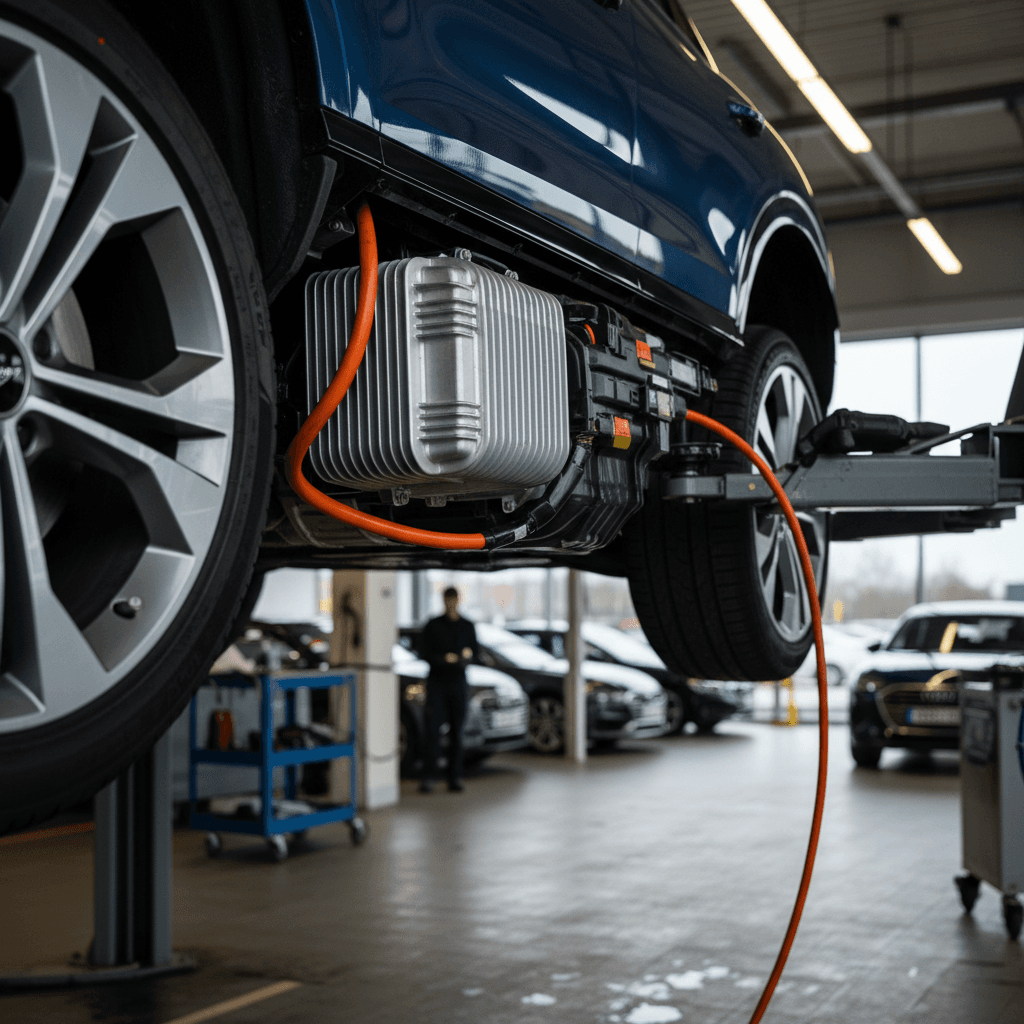
For most 2024 Q4 e-tron owners, recall 93FR (NHTSA 25V125000) is the **headline item**. It targets the **on-board charger and DC–DC converter (often referred to as the OCDC)**, the component that uses the high‑voltage traction battery to keep the 12‑volt system alive. When it fails, the 12‑volt battery can discharge and take key vehicle systems down with it.
Recall 93FR / 25V125000 at a glance
What exactly is going wrong?
The OCDC is a solid‑state device that steps high‑voltage battery power down to roughly 12 volts. In the affected 2024 Q4 e-tron vehicles, internal failures in this module can cause: - **Repeated 12‑volt warning messages** - Inability to charge properly or stay connected - Vehicles arriving at the dealer on a flatbed with a dead 12‑volt system If the 12‑volt system drops out while you’re driving, the vehicle can enter a **safe‑state shutdown**, potentially leading to a sudden loss of propulsion. You still have mechanical braking, but it’s not a scenario you want to experience in traffic.
Why this is a true safety recall
Which 2024 Q4 e-tron builds are covered?
- 2024 Audi Q4 e-tron SUV (all trims built within the affected production window)
- 2024 Audi Q4 e-tron Sportback (select VIN ranges, expanding into some early‑build 2025s)
- Region: U.S. market vehicles under Volkswagen Group of America, which includes Audi of America
To know if **your** Q4 is included, you have to check by **VIN**, the recall doesn’t cover every single 2024, just those with the suspect hardware batch. I’ll walk through how to check that in a moment.
What owners experience before the fix
Common real‑world symptoms before 93FR is performed
If you see any of these on a 2024 Q4 e-tron, treat them as urgent, not optional.
12‑volt warnings
Messages about battery faults, repeated prompts to stop driving or contact service, sometimes accompanied by other warning icons.
Charging failures
Home or DC fast‑charging sessions that stop abruptly, or the car refusing to start a charge despite a healthy EVSE.
No‑start / tow‑in
Vehicle that appears “bricked” in the driveway or parking lot, needing a flatbed tow to the Audi dealer for diagnosis.
If you’re shopping used
How the 93FR recall is fixed
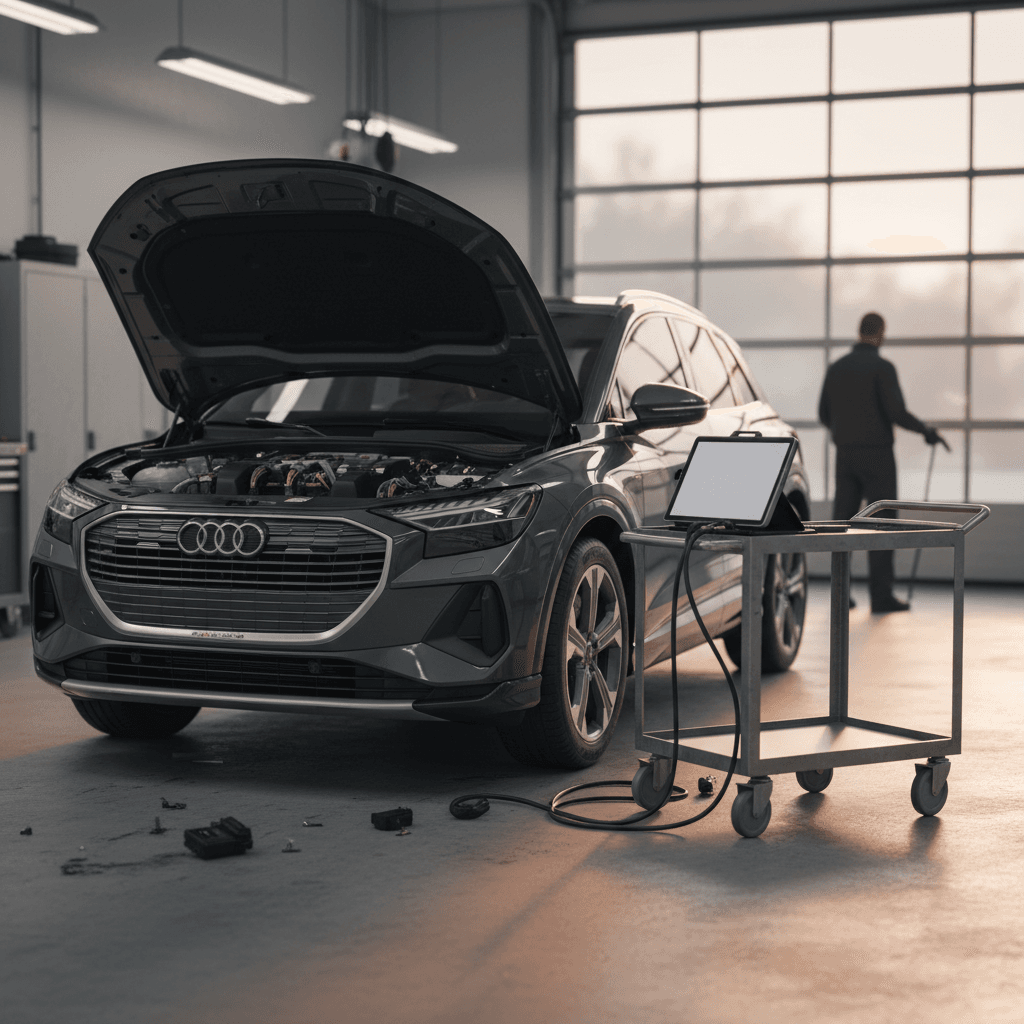
The remedy for 93FR / 25V125000 is straightforward in theory, if not always quick in practice: 1. Dealer confirms your VIN is in the affected population. 2. They perform diagnostics on the existing OCDC module. 3. If necessary, they **replace the on-board charger/DC–DC converter assembly** with an updated part number. 4. The dealer uploads updated software and clears any related fault codes. For owners, the repair has to be **performed free of charge**. The real constraint isn’t labor; it’s **parts availability**, particularly when several thousand ID.4s and Q4s in a region all need the same hardware.
Expect downtime for parts
Other issues to watch beyond formal recalls
In typical VW Group fashion, the line between **formal recall**, **TSB**, and **“we’re still investigating”** can be fuzzy on the Q4. Beyond 93FR, there are a few patterns 2024 owners and shoppers should keep on their radar even if they aren’t yet tied to a dedicated NHTSA campaign for the 2024 model year.
Common 2024 Audi Q4 e-tron complaints not always tied to recalls
These may show up in forums and owner reports even if your VIN shows “no open recalls.”
Software / infotainment glitches
Intermittent loss of audio, laggy or frozen center display, and random warning messages. These are often addressed via software updates rather than recalls.
Drivability warnings
Messages like “safety system: fault” or “stop driving” that clear after a restart. Dealers sometimes struggle to reproduce these, but they can be early signs of electrical issues.
Reduced range or charging performance
Some owners report bigger‑than‑expected range drops in specific conditions. That can be normal EV behavior, but it’s also something VW has occasionally addressed via high‑voltage battery software updates.
Why this matters for used buyers
How to check if your 2024 Q4 e-tron has open recalls
Because recall coverage depends on **exact VIN and build date**, you should never rely on a generic model‑year list alone. Fortunately, you have three solid options for verifying open recalls on a 2024 Audi Q4 e-tron.
Step‑by‑step: Confirming recall status on a 2024 Q4 e-tron
1. Locate your VIN
Your 17‑digit VIN is visible at the base of the windshield on the driver’s side, on the door jamb sticker, and on your registration or insurance card.
2. Use the NHTSA recall lookup tool
Go to the official NHTSA recall lookup site, enter your VIN, and check for open safety recalls. This is the **most authoritative U.S. source** for safety campaigns like 25V125000.
3. Check with an Audi dealer
Call or visit an Audi service department, provide your VIN, and ask them to print a <strong>campaign status report</strong>. Make sure they specifically confirm whether **93FR** has been completed.
4. Review service history
Ask the seller for digital or paper records. On a proper Audi invoice, recall work is usually labeled with a **campaign code** (e.g., 93FR) and should show a $0 customer cost.
5. Re-check after purchase
If you buy the vehicle, run the VIN again a few weeks later. Automakers sometimes add **new recalls** after a car is already in your driveway.
Pro move for private‑party purchases
Safety impact: Are these recalls a dealbreaker?
On paper, a recall involving potential **loss of power while driving** is serious, and you should treat it that way. But the existence of a recall doesn’t automatically make the 2024 Q4 e-tron a bad bet. The key questions are **how the car behaves once repaired** and how a given seller has handled maintenance up to this point.
When recalls are a red flag
- Vehicle still shows open recalls by VIN.
- Owner reports recurring 12‑volt or charging issues after recall work.
- Dealer visits drag on for weeks with unclear diagnosis.
- Service history is missing or obviously incomplete.
When they’re just part of EV life
- Recall campaigns are clearly marked as “completed” in dealer records.
- No active warning messages or charging issues during a test drive.
- Software is up to date and the car behaves consistently.
- You’ve budgeted time for the occasional software or campaign visit, just like any modern car.
Healthy skepticism beats panic
Used 2024 Q4 e-tron shopping checklist
If you’re eyeing a 2024 Audi Q4 e-tron on the used market, whether from a dealer, a marketplace, or a private seller, here’s a focused checklist to keep the recall risk and broader reliability picture under control.
Checklist for evaluating a used 2024 Audi Q4 e-tron
1. Confirm recall completion
Run the VIN through NHTSA and an Audi dealer. Make sure campaign **93FR / 25V125000** is closed, not just “scheduled.”
2. Inspect for warning lights or messages
On the test drive, watch closely for any <strong>yellow or red warning icons</strong>, especially those relating to battery, charging, or drivetrain systems.
3. Test AC and DC fast charging
If possible, plug the car into both a Level 2 charger and a DC fast charger. You’re looking for <strong>stable charging sessions</strong> with no unexplained stops or error messages.
4. Review service records for electrical complaints
Scan for repeat visits related to 12‑volt batteries, no‑start conditions, or charging failures. A single repaired incident is fine; a pattern of unresolved problems is not.
5. Ask about downtime
If the vehicle spent weeks at the dealer for electrical issues, ask exactly what was replaced. Long stays without a clear parts replacement can indicate unresolved root causes.
6. Get independent battery health data
Where possible, use a third‑party battery diagnostic (like the <strong>Recharged Score</strong>) to see real metrics on high‑voltage battery health, not just a dashboard guess.
How Recharged handles Q4 e-tron recalls and battery health
At Recharged, we see the 2024 Q4 e-tron for what it is: a **compelling premium EV** built on a platform with some early‑life electrical drama. That’s fixable, but only if you shine light in the right places. Our process is built around removing as much of that uncertainty as possible for used buyers.
What we do before listing a 2024 Audi Q4 e-tron
Every Q4 e-tron on Recharged goes through more than a cosmetic detail.
Recall clearance by VIN
We cross‑check each vehicle against NHTSA and manufacturer systems to ensure open recalls are addressed before you ever see the listing.
Recharged Score battery diagnostics
Our Recharged Score Report measures high‑voltage battery health and charging performance, so you’re not guessing about degradation or hidden issues.
EV‑specialist inspection
Technicians familiar with VW/Audi MEB‑platform quirks inspect for 12‑volt issues, software anomalies, and charging faults that don’t always rise to the level of a recall.
If you already own a Q4 e-tron and are thinking about selling, Recharged can also help you **clear recalls, document battery health, and get a fair offer** through trade‑in, instant offer, or consignment options, all with EV‑savvy support and **nationwide buyers**.
FAQ: 2024 Audi Q4 e-tron recalls
Frequently asked questions about 2024 Audi Q4 e-tron recalls
Bottom line on 2024 Q4 e-tron recalls
The **2024 Audi Q4 e-tron recalls list** is short but serious. Campaign **93FR / 25V125000** for the on-board charger and DC–DC converter is the one you can’t afford to ignore, because it goes straight to the heart of whether the vehicle will start, charge, and keep pulling when you need it to.
If you already own a 2024 Q4 e-tron, your next step is clear: **run your VIN, confirm recall status, and get any open work scheduled**. If you’re shopping used, treat recall completion, service records, and real battery‑health data as non‑negotiables. That’s exactly the gap Recharged was built to fill, using verified diagnostics, transparent pricing, and EV‑specialist support so you don’t have to become your own recall investigator just to buy the right car.