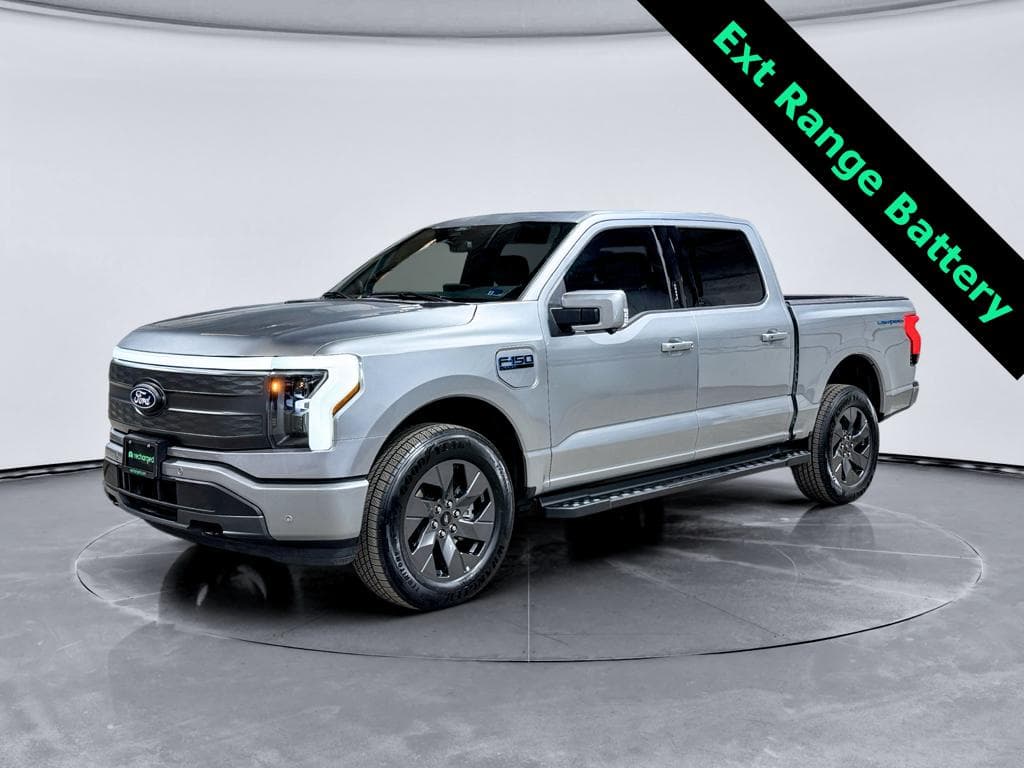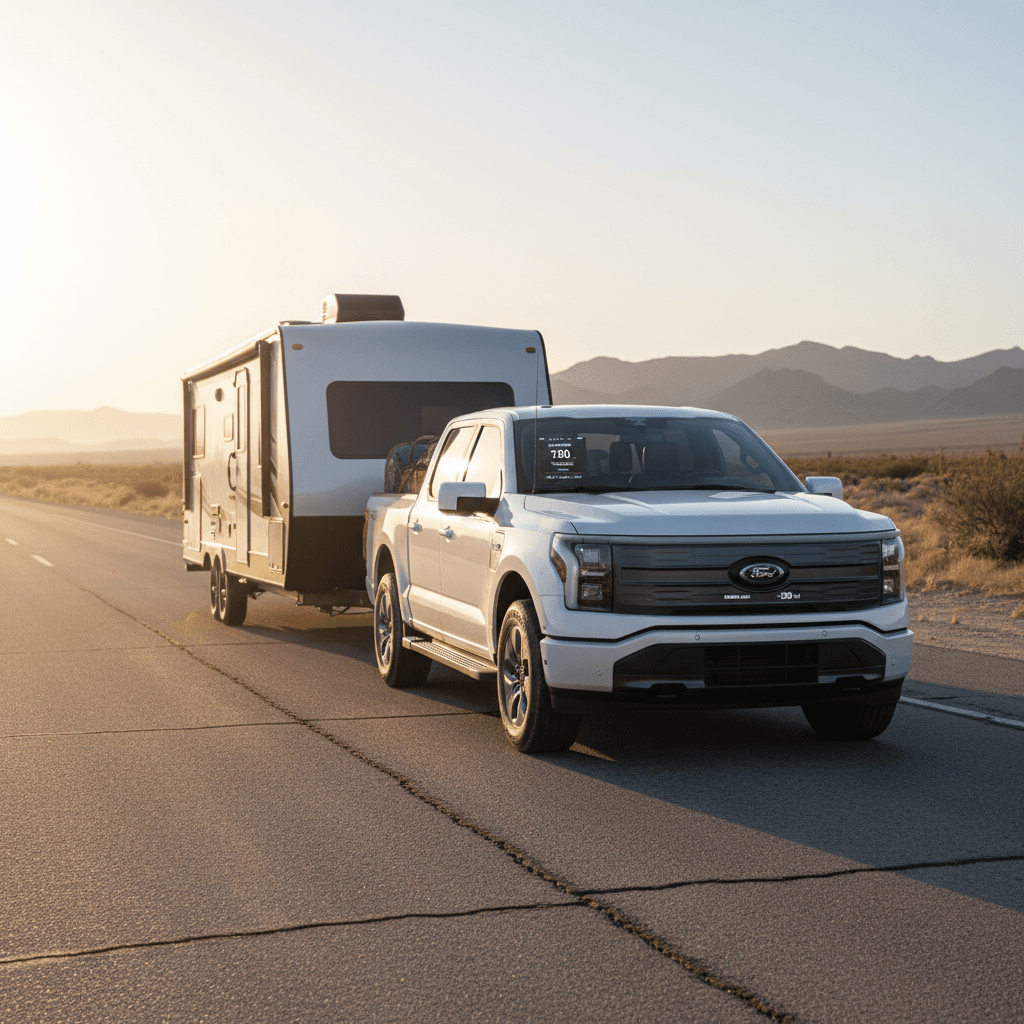
If you’re eyeing a Ford F-150 Lightning because it can tow like a truck and drive like an EV, there’s one thing you absolutely need to understand: towing capacity and range loss are not the same story. On paper, the Lightning can pull up to 10,000 pounds. On the highway with a tall camper in tow, your usable range can drop by half, or more.
EV trucks tow differently
Why F-150 Lightning towing feels so different
On a conventional pickup, towing feels like a fuel-economy penalty. Annoying, but you can always grab the next gas station. In a Ford F-150 Lightning, towing changes how you think about every mile: where you’ll charge, how fast you drive, and what kind of trailer you hitch up.
- Instant torque makes the Lightning feel strong and confident getting a heavy trailer moving.
- Regenerative braking and one-pedal driving can make downhill towing feel controlled and smooth.
- But towing exposes the EV’s biggest constraint: you have a fixed battery size and a limited fast-charging network that’s trailer-friendly.
The Lightning’s built-in trailer profiles and on-screen range estimates help, but they can’t change physics. Your experience will depend heavily on how you load and what you tow. That’s why it’s important to separate rated towing capacity (what it can pull) from towing range (how far it’ll go while pulling it).
Ford F-150 Lightning towing capacity by trim and package
Ford sells the F-150 Lightning in several trims, and the tow rating depends on battery, drivetrain, and whether you have the Max Trailer Tow Package. Here’s a simplified look at factory numbers for recent model years. Always confirm against the door-jamb sticker and owner’s manual for a specific truck.
Rated towing capacity by common F-150 Lightning configurations
Approximate maximum conventional towing ratings when properly equipped. Always verify for the exact VIN.
| Trim / Configuration | Battery | Max Tow Package | Rated Max Towing | Approx. Payload |
|---|---|---|---|---|
| Pro / XLT standard battery | Standard (SR) | No | 5,000 lbs | ~2,000 lbs |
| Pro / XLT standard battery | Standard (SR) | Yes | 7,700 lbs | ~1,800 lbs |
| XLT / Lariat extended battery | Extended (ER) | No | 7,700 lbs | ~1,700 lbs |
| XLT / Lariat extended battery | Extended (ER) | Yes | 10,000 lbs | ~1,500 lbs |
| Platinum extended battery | Extended (ER) | N/A (standard content) | 8,400 lbs | ~1,400 lbs |
These are headline numbers, your real-world safe tow limit may be lower once you account for payload, passengers, and cargo.
Watch payload, not just tow rating
F-150 Lightning battery and range basics (unladen)
How much range you really lose when towing
Here’s the uncomfortable truth: you don’t get to keep that tidy EPA range sticker once you hitch something heavy behind an F-150 Lightning. Most owners see 40–60% range loss on the highway with a significant trailer. In ugly conditions, tall RV, headwinds, cold temps, you can lose even more.
Rule-of-thumb Lightning towing range loss
Actual results vary, but these bands match what many owners see on the road.
Light, low trailer (2,000–3,500 lbs)
- Small utility trailer, single-axle boat
- Range loss: roughly 25–35%
- Extended battery: 200–230 mi realistic at 65 mph
Mid-size trailer (3,500–6,000 lbs)
- Pop-up camper, small enclosed trailer
- Range loss: roughly 40–50%
- Extended battery: 150–190 mi at 60–65 mph
Large RV or cargo (6,000–9,000 lbs)
- Tall bumper-pull RV, big box trailer
- Range loss: 50–60% (sometimes more)
- Extended battery: 110–160 mi at 60 mph
A simple planning shortcut
Real-world Ford Lightning towing examples
Scenario 1: Weekend camping with a small travel trailer
Truck: XLT Extended Battery with Max Tow
Trailer: 3,500 lb, 20-foot low-profile camper
Route: 150-mile mix of two-lane and highway, mild weather
Owners in this setup often report around 1.4–1.7 mi/kWh, which works out to roughly 180–220 miles of usable range from a full extended-battery charge if you keep speeds near 60 mph and the terrain is reasonable. A 150-mile tow leg without charging is very doable, with margin.
Scenario 2: Long-haul RV trip at interstate speeds
Truck: Lariat Extended Battery with Max Tow
Trailer: 6,000–7,000 lb, tall 26–28 foot RV
Route: Mostly interstate at 70–75 mph, rolling hills
Here, it’s not unusual to see consumption around 1.0–1.2 mi/kWh. That can mean just 120–160 miles of range per charge, and smart trip planning may limit you to 100–130 mile legs to preserve a buffer and hit convenient fast chargers.
Once you’ve towed a few times with the same trailer, the Lightning’s learned energy use and trailer profile make its range estimates more trustworthy. But on the first outing with a new trailer, you should always assume you’ll use more energy than the dash suggests and plan extra charging options along your route.
6 factors that kill (or help) Lightning towing range
The F-150 Lightning’s motors are strong enough to handle heavy loads; what limits you is how quickly the battery empties. These six variables do most of the damage, or the saving, when it comes to towing range.
What matters most for Ford Lightning towing range
Some of these you can’t control, but several you absolutely can.
1. Aerodynamics (trailer height and shape)
2. Speed
3. Terrain
4. Weather & temperature
5. Total weight & tongue weight
6. HVAC and accessories
The upside: EV towing control
How to plan trips and charging when towing
On a gas truck, you hop in and go. On an F-150 Lightning with a trailer, you’re better off thinking like a pilot: plan your route, know your alternate “airports” (chargers), and don’t cut your reserves close. The payoff is a quieter, calmer tow with no fuel smell and no transmission hunting for gears.
Practical Lightning towing trip-planning steps
Start your range estimate conservatively
For your first few trips with a given trailer, assume <strong>50% of your normal highway range</strong>. If your extended-battery Lightning gets 300 miles unladen, plan as if you have about 150 miles while towing, and treat that as the upper limit, not a target.
Use EV-aware route planners
Apps and tools that understand charging (including Ford’s built-in navigation, PlugShare, A Better Routeplanner, and others) can help you locate DC fast chargers within towing-friendly distances. Double-check that stations have pull-through access or room to maneuver with a trailer.
Aim to charge between 10–70%
Fast charging slows dramatically above ~70–80% state of charge, especially on a warm battery. It’s often faster overall to make <strong>more frequent, shorter stops</strong> than one big charge all the way to 100%.
Think about where you’ll park the trailer
Some DC fast-charging sites are easy with a trailer; some are a nightmare. When possible, favor stations with <strong>pull-through spots</strong> or open perimeters so you can stay hitched while you charge, or know in advance where you’ll safely drop the trailer.
Have two backup charging options
Before you leave, identify <strong>at least two alternative charging locations</strong> between each major leg of your trip. Construction, broken chargers, or long queues are more stressful with 7,000 lbs attached; your backups are your peace of mind.
Practice towing locally first
Before you cross three states, do a 30–50 mile shakedown tow near home. Watch your mi/kWh, see how the truck behaves under regen, and get a feel for your trailer’s impact on range.
Be cautious in remote areas
Buying a used F-150 Lightning for towing
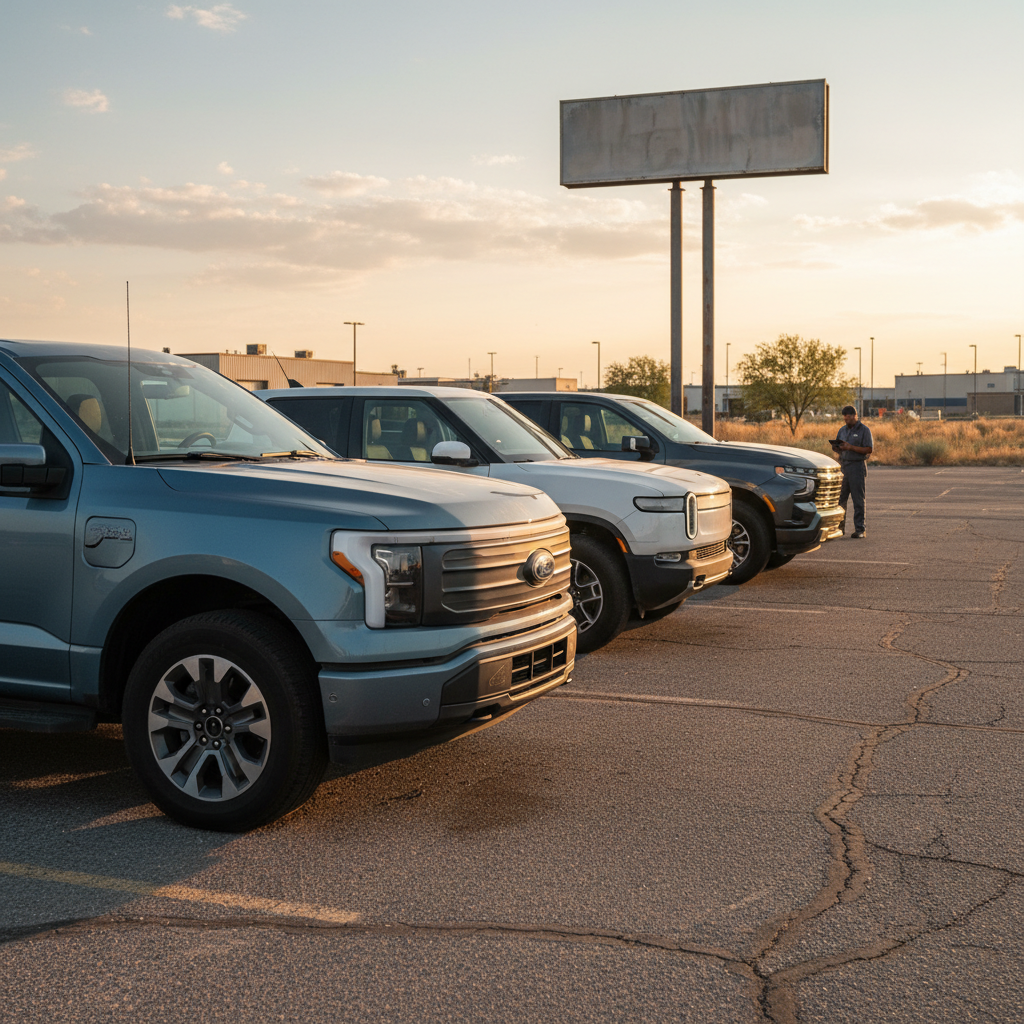
The used market is where the F-150 Lightning starts to look especially tempting for campers, boaters, and weekend haulers. Prices have softened compared to early launch days, and many trucks have led relatively easy lives as commuters or family haulers instead of workhorses.
What to look for in a used Lightning if you plan to tow
Think beyond the sticker tow rating, buy for the way you’ll actually use the truck.
Extended battery & Max Tow Package
Battery health and real range
History and usage pattern
Software updates and towing features
At Recharged, every used EV, including trucks like the F-150 Lightning, comes with a Recharged Score Report that details real battery health, fair market pricing, and how the vehicle compares to similar EVs. If you’re shopping specifically for towing, that battery insight matters as much as any tow rating badge on the tailgate.
Pre-trip checklist for towing with a Lightning
Once you own the truck and know your trailer, your biggest job is being consistent and methodical each time you tow. This quick checklist keeps the F-150 Lightning’s strengths working for you instead of surprising you.
Quick pre-trip checklist for Ford F-150 Lightning towing
Confirm weights and tongue weight
Know your trailer’s actual loaded weight, not just its brochure number. Check that tongue weight is in the recommended 10–15% range and that you’re within the truck’s <strong>payload rating</strong> after counting passengers and cargo.
Set up or select the correct trailer profile
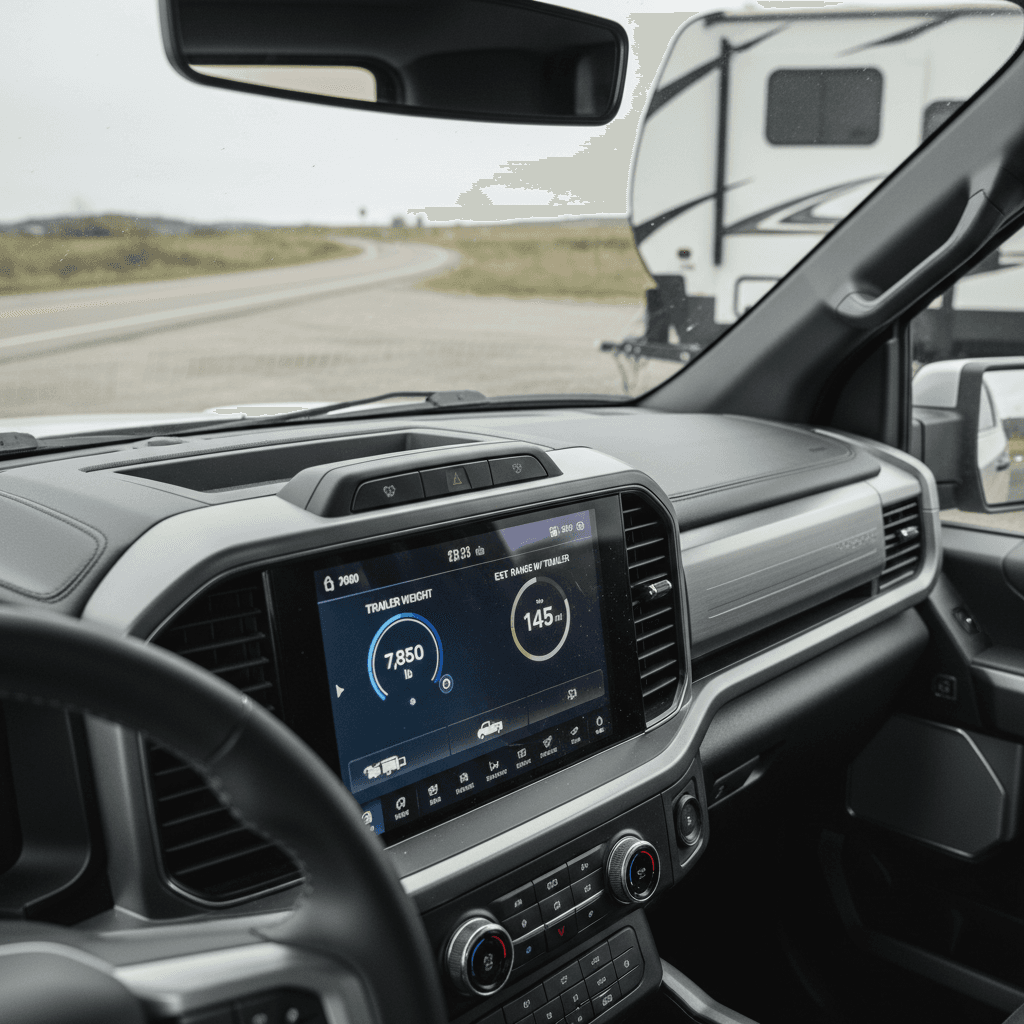
On the Lightning’s towing screen, create or select the trailer you’re using. Over time, the truck will fine-tune its <strong>range estimates</strong> based on that trailer’s real energy use.
Check tire pressures (truck and trailer)
Underinflated tires hurt efficiency, range, and stability. Verify pressures when tires are cold, and match them to the specs on the door sticker and trailer placard.
Walk-around inspection
Verify hitch coupler is latched and pinned, safety chains crossed and secure, breakaway cable attached, and all lights (including trailer brakes) working. A quiet EV can hide dragging gear you’d normally hear in a gas truck.
Load your route and backup chargers
Program your primary route, then identify backup DC fast chargers within range. Save them or star them in your apps so you’re not scrambling if your first choice is unavailable.
Do a short local test drive
If something feels off, sway, odd noises, poor braking, better to discover it five miles from home than 150 miles into a trip. Use this shakedown to confirm your initial energy consumption and adjust expectations.
Ford F-150 Lightning towing FAQ
Common questions about Lightning towing capacity and range loss
Bottom line: Who the Lightning tows best for
The Ford F-150 Lightning can absolutely tow like a truck. It just doesn’t tow like the gas truck you might be used to. If you understand that towing capacity and towing range are different stories, and you’re willing to plan your routes around charging, the Lightning delivers a quiet, confident, remarkably stable towing experience, especially for campers, boaters, and weekend haulers who tow within a few hundred miles of home.
If you’re considering a Lightning, especially a used one, for towing, focus on the extended battery, the right tow package, and verified battery health. That’s exactly what the Recharged Score Report is built for: taking the guesswork out of EV range and ownership costs so you can choose the electric truck that truly fits your life. When you’re ready, you can browse used F-150 Lightning listings, explore financing, or even trade in your current vehicle entirely online through Recharged, with expert EV guidance at every step.