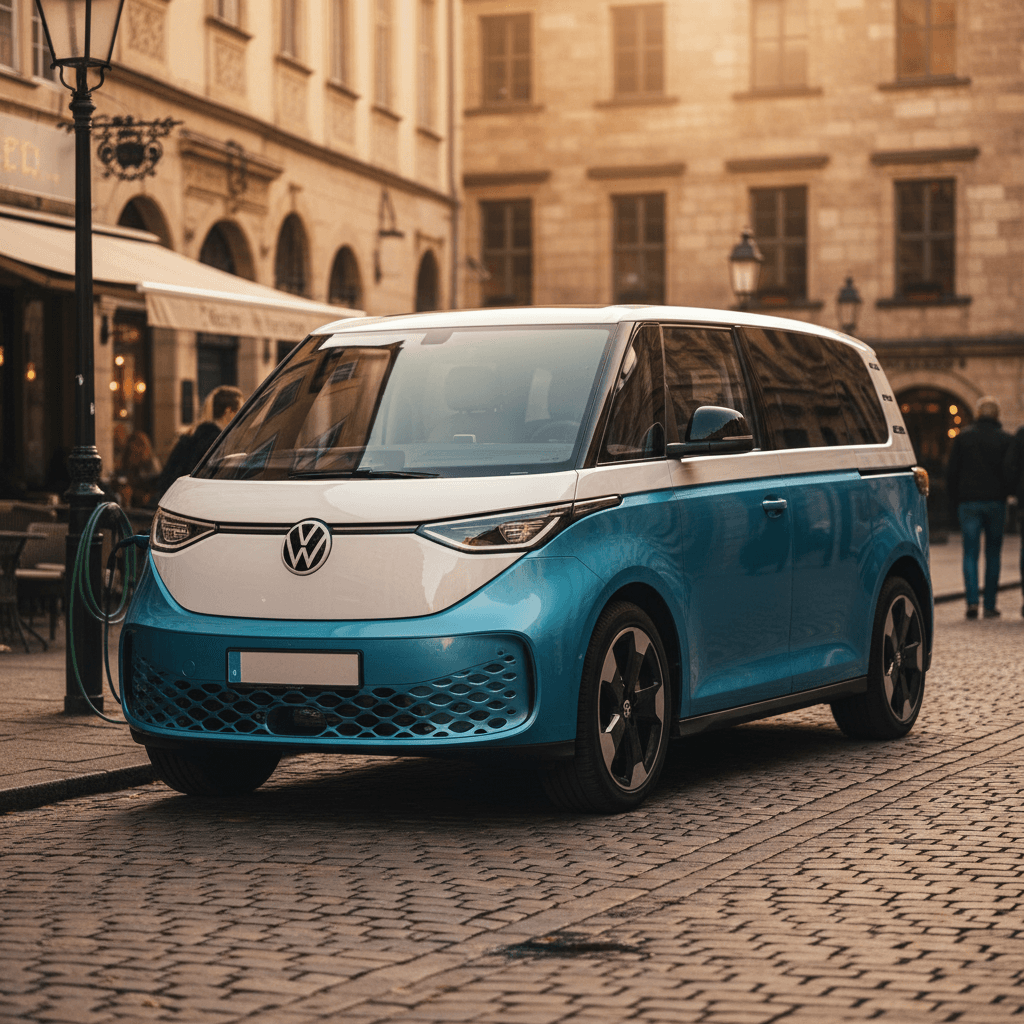
If you’re asking yourself “is the Volkswagen ID. Buzz worth buying in 2026?”, you’re probably torn between the heart and the spreadsheet. The heart sees a charming, all‑electric reboot of the classic Microbus. The spreadsheet sees a three‑row EV that costs luxury‑SUV money, delivers only mid‑200‑mile range, and has a reputation for glitchy software. Let’s walk through where the ID. Buzz absolutely nails the brief, where it stumbles, and whether it makes sense for you in 2026, especially if you’re thinking ahead to the used market.
2026 Snapshot
Is the VW ID. Buzz Worth Buying in 2026? The Short Answer
When the ID. Buzz is worth it
- You want the most characterful family EV on sale, full stop.
- You need three real rows, sliding doors, and upright access for kids, pets, and cargo.
- Your daily driving fits comfortably inside ~230 miles of real‑world range.
- You’re okay paying a premium for design, safety, and packaging over spec‑sheet bragging rights.
When the ID. Buzz is not worth it
- You road‑trip often in cold climates and care deeply about 300+ mile range.
- You’re sensitive to infotainment bugs, lag, or half‑baked apps.
- You just want “maximum EV” per dollar (Kia EV9, Hyundai Ioniq 7, big‑battery Model Y/Model X competitors).
- You don’t need van packaging, an electric SUV will do.
In 2026, the Volkswagen ID. Buzz is a fantastic lifestyle choice but a lukewarm spreadsheet choice. It’s worth buying if you value its design, space, and safety enough to overlook middling range for the money and VW’s fussy software. If you just want the most range, the quickest charging, or the cheapest monthly payment, there are better options.
What the Volkswagen ID. Buzz Actually Is
The U.S.‑spec ID. Buzz is not a little Euro van with cute curtains. It’s a three‑row, long‑wheelbase electric minivan with sliding doors, a big glassy cabin, and a battery in the floor. Think of it as the spiritual successor to the old Microbus, reimagined as a battery‑powered family hauler with modern crash structure and driver assistance.
ID. Buzz at a Glance (U.S. spec)
Key facts that matter when you’re deciding whether to buy in 2026
Body & Layout
- Long‑wheelbase only in the U.S.
- Three rows, 6–7 seats depending on configuration
- Two large sliding doors, big hatch
Powertrain & Range
- RWD single‑motor or AWD dual‑motor
- Usable battery ~90 kWh class
- EPA range generally in low‑ to mid‑200‑mile band, depending on trim
Positioning
- Sticker starts in low $60Ks
- Well into premium territory
- Competes with EV9, Model Y 3‑row alternatives, EX90, etc.
Think of it as an electric van, not a tall wagon
Pricing, Trims and What You Really Pay
VW ID. Buzz Money Picture (2026 U.S. market)
By 2026, the ID. Buzz has landed squarely in luxury‑EV pricing territory. A base rear‑drive model with a single motor, good equipment, and the big battery is in the low $60Ks. Add dual‑motor AWD, nicer seating, paint, and the nostalgia‑tax 1st Edition package, and you’re quite naturally staring at a sticker in the low‑ to mid‑$70Ks.
Watch the option creep
Leasing can soften the blow, especially if VW or your dealer can pass through any commercial‑lease‑style incentives. If you’re financing, compare monthly payments against other three‑row EVs and high‑trim hybrids, because that’s what your wallet will feel, not the heritage story in the brochure.
Range and Charging: Enough for Real Life?
On paper, the ID. Buzz’s roughly low‑ to mid‑200‑mile EPA range is fine. Not great, not disqualifying, fine. In the real world, with a bluff‑fronted van, a boxy roofline, kids, dogs, and highway speeds, you should budget closer to 180–200 miles between fast charges on road trips, and less in winter.
ID. Buzz 2026 Range & Charging Snapshot
Approximate U.S.‑spec numbers to help you think about your use case, not to quote at the dealership.
| Configuration | Drivetrain | EPA Range (approx.) | Best Use Case |
|---|---|---|---|
| Pro S | RWD | ≈230–240 mi | Suburban family duty, school runs, moderate‑distance trips |
| Pro S Plus | RWD | ≈230 mi | Luxury‑leaning daily driver with occasional road trips |
| 1st Edition / AWD trims | AWD | ≈220–230 mi | Snow‑belt families needing traction more than maximum range |
Exact EPA figures and charging speeds vary by trim and wheel choice. Always confirm the specific configuration you’re buying.
Charging speed reality check
- For daily commuting and school‑run life inside 60–80 miles a day, the ID. Buzz’s range is perfectly adequate.
- For once‑a‑year 400‑mile Thanksgiving odysseys, you’ll be planning more charging stops than in a big‑battery SUV.
- In cold climates, expect a noticeable winter penalty; think 25–35% off the window‑sticker range in bad conditions.
This is the tension at the heart of the ID. Buzz in 2026: you’re paying premium‑EV money for mid‑pack range and charging. If you can live with that, and many families can, the packaging and personality help make up the difference.
Space, Seating and Everyday Practicality
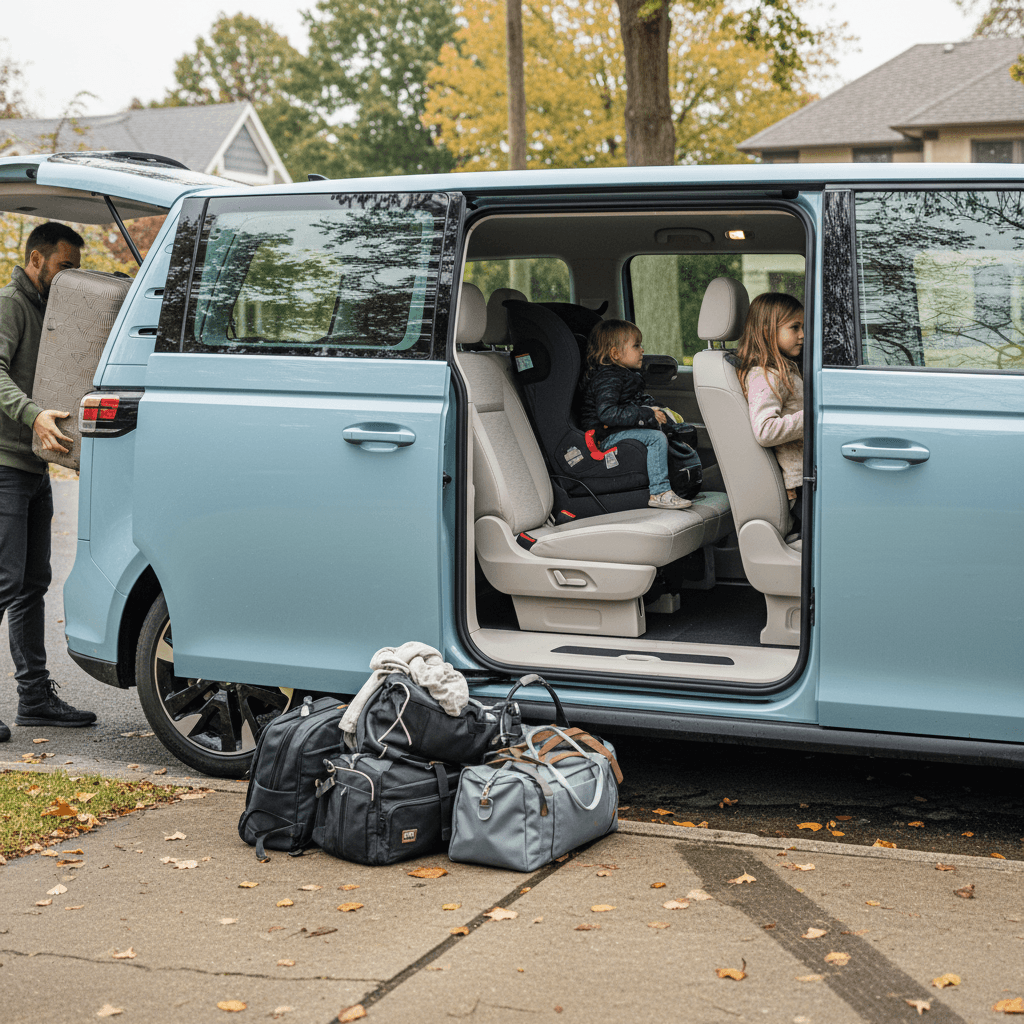
If range and price are the concessions, space is the payoff. The ID. Buzz is a masterclass in packaging. The upright body, flat floor, and sliding doors turn the usual SUV gymnastics, bending, ducking, threading kids through narrow apertures, into something almost graceful.
Where the ID. Buzz Shines as a Family Vehicle
This is why parents and dog‑owners fall hard for it.
Genuinely Useful Third Row
- Adults can tolerate the third row for real‑world trips.
- Legroom is better than many three‑row SUVs.
- Easy step‑in height for kids and older relatives.
Cargo & Flexibility
- With the third row up, space is “weekend adequate.”
- Fold seats and it becomes a small cargo van.
- Boxy shape = usable, not decorative, cubic feet.
Sliding‑Door Life
- Huge doors that don’t swing into traffic.
- Child‑seat access is excellent.
- Perfect for narrow garages and crowded school pickup lines.
The real reason people buy it
Driving Experience: Comfort, Performance and Noise
Behind the wheel, the ID. Buzz is not some razor‑edged performance EV. It is, appropriately, a calm, slightly soft, very friendly thing to drive. Steering is light, visibility is excellent thanks to the tall glasshouse, and the instant EV torque makes urban and suburban traffic a non‑event.
- Ride quality skews comfortable but can feel busy over broken pavement and expansion joints, especially on big wheels.
- Noise levels are better than you’d expect for a barn‑shaped object, but wind noise around the mirrors and A‑pillars does intrude at highway speeds.
- Acceleration in RWD form is perfectly adequate; AWD versions feel more confident merging and passing when loaded with passengers and gear.
Test‑drive on your worst road
Software, Quirks and Early Reliability
Here’s the thorn in the paw: software. Owners love the space and the vibe, but they complain, often and loudly, about laggy infotainment, clumsy menus, and odd bugs with charging schedules, profiles, and smartphone integration. VW has been pushing over‑the‑air updates, but in early 2026 the verdict is still: work in progress.
Common Owner Complaints We’re Seeing in 2024–2026
None of these are deal‑breakers alone, but they add friction.
Infotainment Lag & Glitches
- Slow boot‑up times.
- Occasional freezes or reboots.
- Touch sliders and buried menus frustrate some drivers.
Charging & App Oddities
- Scheduled charging not always behaving as set.
- Inconsistent app connection and status updates.
- Confusing error messages when a public charger misbehaves.
Early‑Build Teething Issues
- Random warning lights that clear with software updates.
- Door and hatch sensors misreading.
- Owner anxiety over “Christmas tree” dashboards.
Don’t skip the software check on a test drive
On mechanical reliability, the ID. Buzz shares much of its architecture with other VW MEB‑platform EVs, which have had a mix of software headaches and generally solid core hardware. Battery and motor failures aren’t a common theme, but electrical gremlins and feature bugs are. For used buyers, this is exactly the kind of pattern the Recharged Score is built to surface, documented software updates, prior charging issues, and any electrical‑system repairs.
Safety Ratings and Family Peace of Mind
If you’re buying an ID. Buzz in 2026, chances are you’re transporting your favorite people in the world. The good news: safety is one of the Buzz’s strongest cards. European‑spec ID. Buzz models have earned top marks from Euro NCAP with five‑star overall ratings and very high adult and child‑occupant scores, and U.S. testing from major safety bodies mirrors that confidence with strong crash and driver‑assist results.
Why Safety‑Minded Buyers Like the ID. Buzz
Big, safe electric box
Who the ID. Buzz Is Perfect For (and Who Should Skip It)
Is the ID. Buzz the Right 2026 EV for You?
Great Match
You want a distinctive, feel‑good family EV that doesn’t look like every other crossover in the school lot.
You regularly use three rows and sliding doors, kids, grandparents, dogs, gear, the whole traveling circus.
You do most of your charging at home and your typical daily use is well under 150 miles.
You’re willing to live with imperfect software in exchange for space, safety, and style.
Probably Not a Match
You road‑trip frequently across long distances and care more about range and charging speed than about nostalgic design.
You’re easily annoyed by laggy touchscreens, odd menu logic, or buggy apps.
Your budget tops out around $50K, or you simply want maximum spec for the money.
You don’t really need van packaging, an efficient two‑row EV or PHEV SUV would cover your needs.
Buy New in 2026 or Wait for a Used ID. Buzz?
Because the ID. Buzz launched in the U.S. at premium prices, it’s a strong candidate for the classic EV depreciation curve: big initial hit, then a slower glide. That makes late‑2026 through 2028 an interesting window for used‑market shoppers who like the idea of the Buzz but not the MSRP.
Reasons to buy new in 2026
- You want the latest software and hardware revisions from the factory.
- You plan to keep the vehicle 8–10 years and value full control of its history.
- Lease or finance deals narrow the gap between the Buzz and competitors.
- You’re picky about color, interior, and seating configuration.
Reasons to target a used ID. Buzz
- You want to avoid the steepest part of depreciation.
- You’re happy to let early adopters shake out major software bugs and recalls.
- You care deeply about battery health and will buy with third‑party verification.
- You’re comfortable with a previous‑owner history as long as it’s well documented.
Where Recharged fits in
ID. Buzz 2026 Buying Checklist
What to Do Before You Commit to an ID. Buzz
1. Map your real range needs
List your actual weekly driving: commute miles, school runs, weekend activities, and annual road trips. If your typical days are under 80–100 miles and your longest regular trip is under 250 miles, the Buzz’s range can work.
2. Cross‑shop at least two rivals
Drive a Kia EV9, Volvo EX90, or a large‑battery three‑row SUV alongside the ID. Buzz. If you still want the VW after that, you’re likely buying it for the right reasons.
3. Stress‑test the software
On the test drive, spend quality time with the infotainment. Pair your phone, run navigation, try voice commands, set up a charging schedule. Decide if you can live with the interface as it stands today.
4. Drive it fully loaded
Bring the whole crew, kids, car seats, friends if you must. Load the cargo area with strollers or suitcases. Evaluate access to the third row, seat comfort, and noise with everyone aboard.
5. Check charging options at home and on routes
Confirm you can install or already have a Level 2 charger at home, and scan your usual routes for reliable DC fast‑charging. The Buzz is happier when you treat road‑trip charging as a planned event, not an improvisation.
6. For used, demand proof of software and charging fixes
Review service records for any electrical or charging complaints and ensure they were resolved with updated parts or software. A <strong>Recharged Score</strong> report can make this much easier to verify.
Volkswagen ID. Buzz 2026: Frequently Asked Questions
ID. Buzz 2026 Buyer FAQ
Final Verdict: Is the ID. Buzz Worth It in 2026?
The 2026 Volkswagen ID. Buzz is not the rationalist’s champion. On pure numbers, it’s too expensive for its range, its software is behind the curve, and better‑spec’d alternatives lurk in every corner of the showroom. But cars are not spreadsheets, and vans especially are not. The Buzz delivers something that’s increasingly rare: a family EV that feels like a character in your life, not a device.
If your world fits comfortably inside its range, if you value space, safety, charm, and usability over lap times and charging leaderboards, and if you go in with clear eyes about the software and price, then yes, the Volkswagen ID. Buzz can absolutely be worth buying in 2026. If instead you’re chasing maximum spec for every dollar, keep walking down the row of electric SUVs… and maybe circle back in a few years, when the used‑Buzz market is ripe and Recharged can hand you one with its battery health, history, and price laid out plainly in a Recharged Score report.