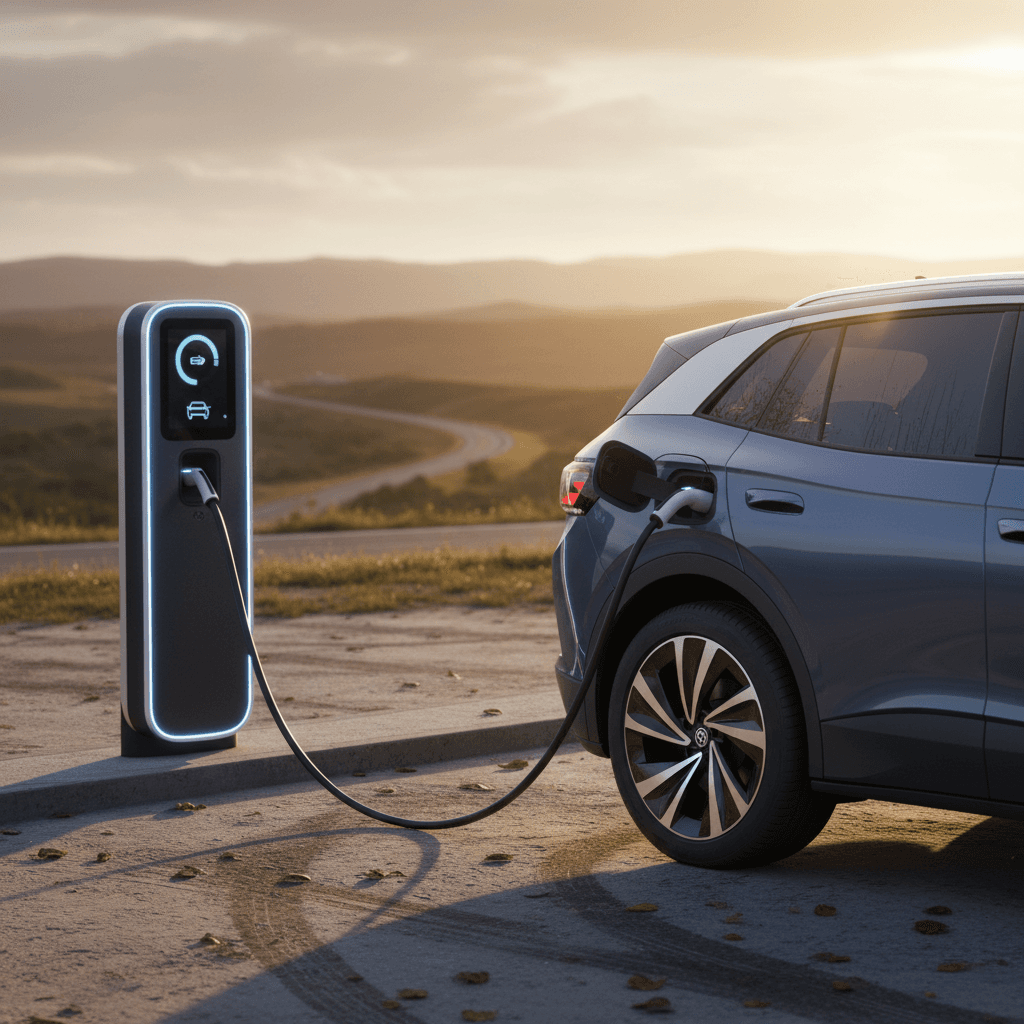
If you’re looking at a 2023 VW ID.4, you’ve probably seen the official EPA numbers, but a 2023 VW ID.4 range test in the real world tells a more nuanced story. Between two battery sizes, rear‑ and all‑wheel drive, weather swings, and highway speeds, actual range can land well above or below the window sticker. This guide breaks down what testers and owners are seeing and what that means if you’re considering a used ID.4.
Quick takeaways
2023 ID.4 battery packs and official EPA range
Volkswagen gave the 2023 ID.4 lineup two different battery packs and both rear‑wheel‑drive (RWD) and all‑wheel‑drive (AWD) options. That mix is why you’ll see several different range figures attached to the same model year.
2023 VW ID.4 trims, batteries, and EPA range
Official EPA combined‑range ratings and battery sizes for key 2023 ID.4 variants.
| Trim (2023 US) | Battery (gross) | Drive | EPA range (mi) | EPA efficiency (MPGe) |
|---|---|---|---|---|
| Standard / S | 62 kWh | RWD | 209 | 107 combined |
| Pro / Pro S / Pro S Plus | 82 kWh | RWD | 275 | 107 combined |
| AWD Pro / AWD Pro S / AWD Pro S Plus | 82 kWh | AWD | 255 | 99 combined |
Remember that wheel size, temperature, and how you drive can move real‑world results up or down from these lab numbers.
Gross vs usable capacity
2023 ID.4 range and efficiency at a glance
Real‑world 2023 ID.4 range test results
EPA ratings are a useful baseline, but range tests from journalists and owners reveal how the 2023 ID.4 behaves in real traffic, at real speeds, and in real weather. The pattern is familiar: city and mixed driving can meet or beat EPA, while long‑distance highway runs usually land below it, especially in the cold.
What independent tests are seeing
How 2023 ID.4 range tests stack up against the EPA label in different scenarios.
Mixed driving, mild temps
In moderate weather (40s–60s °F) with a blend of city and suburban roads, testers reporting on AWD 82 kWh models commonly see 230–250 miles before hitting a low‑state‑of‑charge warning, very close to the 255‑mile EPA rating.
Highway at 70–75 mph
On sustained interstate runs around 70–75 mph, RWD 82 kWh versions often land in the 200–230 mile range from full to near empty. That’s roughly 75–85% of the 275‑mile EPA number, which assumes a gentler test cycle than a true road‑trip pace.
Cold‑weather tests
In near‑freezing or below‑freezing weather, multiple tests and owner logs show 20–30% range loss. For an AWD Pro (82 kWh, 255 miles EPA), that can mean 170–200 miles of comfortable, usable range on a winter highway drive.
Cold hits harder than you think
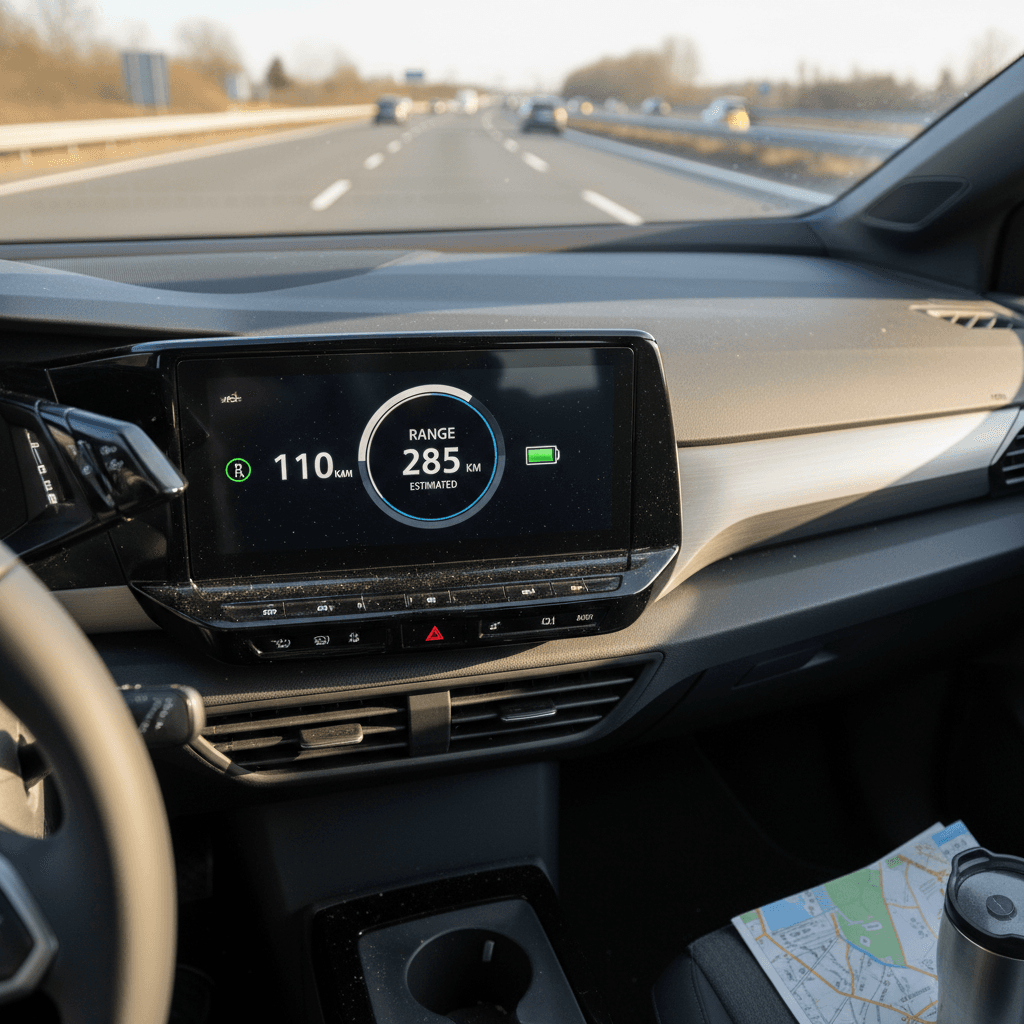
City vs highway vs winter: what really kills range
City & suburban driving
In stop‑and‑go conditions, the 2023 ID.4’s regenerative braking gives you some range back every time you slow down. Speeds are lower, aero drag is reduced, and the battery runs more efficiently. Many owners of RWD 82 kWh models report that their typical commute range actually matches or slightly beats the EPA number, especially in mild weather.
The smaller‑battery 62 kWh trims are at their best here: the 209‑mile EPA rating is usually realistic for urban users who charge nightly and don’t spend hours on the freeway.
Highway & winter driving
Push that same ID.4 at 75 mph into a cold headwind and the math changes quickly. Air resistance climbs with speed, the cabin heater may be running at full blast, and cold chemistry temporarily reduces usable capacity. It’s common to see 25–35% less range at winter highway speeds compared with a mild‑weather city loop.
Plan your winter road trips so you’re arriving at fast chargers with 10–20% state of charge left, not zero. That buffer protects your schedule if a charger is offline or busy.
Think in legs, not full‑tank range
Efficiency, miles per kWh, and what you should expect
Behind every range test is a simple equation: battery capacity multiplied by efficiency. The 2023 ID.4 does well here for a compact electric SUV, landing in the low‑3‑miles‑per‑kWh range in lab testing and, with some care, in the real world.
Typical 2023 ID.4 efficiency in the real world
These are ballpark real‑world numbers for drivers who are not hypermiling but also not driving flat‑out everywhere.
| Battery & drive | Scenario | Approx. mi/kWh | Estimated usable kWh | Real‑world range (mi) |
|---|---|---|---|---|
| 62 kWh RWD | Mixed city/suburban, mild weather | 3.0–3.3 | ~56 | 170–185 |
| 62 kWh RWD | 70–75 mph highway, mild weather | 2.5–2.7 | ~56 | 140–155 |
| 82 kWh RWD | Mixed city/suburban, mild weather | 3.0–3.3 | ~77 | 230–250 |
| 82 kWh RWD | 70–75 mph highway, mild weather | 2.5–2.8 | ~77 | 190–215 |
| 82 kWh AWD | Mixed driving, mild weather | 2.8–3.0 | ~77 | 215–230 |
| 82 kWh AWD | 70–75 mph highway, mild weather | 2.4–2.6 | ~77 | 180–200 |
Multiply these approximate miles‑per‑kWh values by your usable battery size to get an estimated real‑world range for your conditions.
EPA vs your numbers
Charging speeds and how they impact trip time
Range tests are only half the story. On longer trips, how quickly the 2023 ID.4 can add miles at a charger often matters more than the absolute range number.
How the 2023 ID.4 charges in the real world
From overnight at home to quick road‑trip top‑ups.
Level 1 (120 V outlet)
Useful as a backup, but slow. Expect roughly 2–5 miles of range per hour depending on trim and conditions. Best for apartment dwellers topping off each night or for emergencies.
Level 2 (240 V home or public)
The 2023 ID.4 has an 11 kW onboard charger, so a typical 40–48 amp home EVSE can refill from low to full in 6–7 hours. That’s effectively a full “tank” every night if you plug in at home.
DC fast charging
The smaller 62 kWh pack can accept around 140 kW peak, while the 82 kWh battery can reach about 170 kW at compatible stations. In ideal conditions, that’s roughly 30–35 minutes to go from about 10% to 80% state of charge.
Fast‑charge speed isn’t constant
Range shopping guide for used 2023 ID.4 buyers
If you’re eyeing a used 2023 ID.4, you’re probably asking a few specific questions: Will the smaller battery be enough? Is AWD worth the range hit? And how can you tell whether the battery is still healthy after a few years on the road?
Key range questions to answer before you buy
1. Match trim to your daily mileage
If your routine is under 60–80 miles a day with occasional road trips, the <strong>62 kWh Standard or S</strong> will likely feel comfortable, especially with home charging. If you regularly drive 150+ miles in a day, look at <strong>82 kWh Pro/Pro S</strong> trims.
2. Decide whether you need AWD
AWD trims offer better traction and quicker acceleration but cost about <strong>20 miles of EPA range</strong> versus the RWD 82 kWh versions. In snowy climates, that trade‑off may still be worth it.
3. Ask for a battery‑health snapshot
For any used EV, you want more than just the odometer. With Recharged, every vehicle includes a <strong>Recharged Score Report</strong> that verifies battery health and helps you understand how much real‑world range you can expect from that specific ID.4.
4. Look at how and where the car was used
Frequent DC fast charging and lots of hot‑climate miles can age a pack faster than gentle home charging in a moderate climate. Service records and owner history help fill in this picture.
5. Test drive with an eye on efficiency
On your test drive, reset the trip meter and watch <strong>mi/kWh</strong> over 15–20 miles. Compare what you see with the rough targets in the table above to spot anything unusual.
How Recharged helps
Ready to find your next EV?
Browse VehiclesPractical tips to maximize range in a 2023 ID.4
- Pre‑condition while plugged in so the cabin and battery are already at temperature before you leave.
- Use Eco mode and the gentler drive profiles when you don’t need full power.
- Keep highway speeds reasonable; the difference between 65 and 80 mph can easily be 15–25% of your range.
- Use seat and steering‑wheel heaters instead of cranking cabin heat whenever possible.
- Check tire pressures regularly; under‑inflation is a quiet range killer.
- Remove unused roof racks, cargo boxes, or bike carriers that increase drag.
- Plan winter routes with extra buffer and more frequent, shorter fast‑charge stops.
Don’t normalize 0% arrivals
2023 VW ID.4 range test FAQ
Frequently asked questions about 2023 VW ID.4 range
Bottom line: Is the 2023 ID.4’s range enough?
Viewed strictly through the lens of a 2023 VW ID.4 range test, Volkswagen’s compact SUV doesn’t chase headline‑grabbing numbers. Instead, it delivers predictable, usable range that lines up well with its EPA ratings in normal conditions and remains manageable even when winter and highway speeds conspire against you.
If you can plug in at home and are comfortable thinking in 150–220‑mile legs on road trips, the 2023 ID.4’s range is more than adequate for everyday life. The key is picking the right battery and drivetrain for your use case, and, when you’re buying used, making sure the specific vehicle’s battery is still healthy. That’s exactly what Recharged’s Recharged Score battery health diagnostics, transparent pricing, and EV‑specialist support are designed to help with, whether you’re browsing from your couch or visiting the Experience Center in Richmond, VA.