If you’re shopping for a used luxury EV, a 2023 Tesla Model S sits in a strange but compelling spot. It’s one of the quickest, longest‑range electric sedans ever sold in the U.S., yet brisk depreciation means 2023 cars are already showing up on used lots at prices that overlap new Model 3s, Model Ys and high‑end EVs from Hyundai, Kia and BMW. This 2023 Tesla Model S buying guide walks you through trims, real‑world range, pricing, reliability and inspection tips so you can decide whether this big Tesla actually fits your budget and your daily life.
Context: 2023 Model S in 2026
Why the 2023 Model S Is a Smart (But Tricky) Used Buy
Why shoppers want it
- Range and speed that still embarrass many 2025–2026 luxury EVs.
- Mature battery and drive‑unit hardware with solid long‑term track records.
- Access to Tesla’s Supercharger network plus growing NACS support from other automakers.
- Used pricing that undercuts many new luxury sedans.
Why you need to be careful
- Steep depreciation can keep falling if Tesla keeps discounting new cars or pulls back support.
- Build quality and software quirks can frustrate buyers used to German luxury brands.
- Complex options like Autopilot, air suspension and yoke steering make spec matching tricky.
- Battery health isn’t obvious from a quick test‑drive if you don’t know what to look for.
2023 Tesla Model S trims, range and performance
For 2023, the U.S. Model S lineup is simple: a dual‑motor all‑wheel‑drive Model S (often still called "Long Range" in the marketplace) and the tri‑motor Model S Plaid. Both share the same basic body, interior and 100‑kWh‑class battery pack, but performance and some hardware differ.
2023 Tesla Model S trims at a glance
Key specs you’ll see repeated in listings and window stickers.
| Trim | Drivetrain | EPA range (approx.) | 0–60 mph (claimed) | Top speed | Typical used asking price* |
|---|---|---|---|---|---|
| Model S (Long Range) | Dual‑motor AWD | 375–405 miles | ~3.1 sec | ~130–149 mph | High $40Ks–mid $50Ks |
| Model S Plaid | Tri‑motor AWD | 348–396 miles | <2.0 sec w/ rollout | ~200 mph (with paid wheels/tires) | Mid $60Ks–$80K+ depending on miles/options |
Exact EPA ratings vary slightly by wheel/tire selection and software updates, but this table captures the specs most buyers will encounter when shopping used 2023 cars.
Wheel size changes real‑world range
- Both trims use a large battery pack (roughly 100 kWh usable) with liquid cooling and a history of relatively slow degradation when not abused.
- Air suspension and adaptive damping were standard, giving the car a comfortable highway ride when set to softer modes.
- All 2023 cars use Tesla’s camera‑only Autopilot hardware (no radar) and can be optioned with Enhanced Autopilot or Full Self‑Driving (FSD) software. Those software options may or may not be included when you buy used; always confirm in the car’s menu.
Pricing and depreciation: what 2023 Model S cars cost today
2023 Tesla Model S value snapshot in 2026
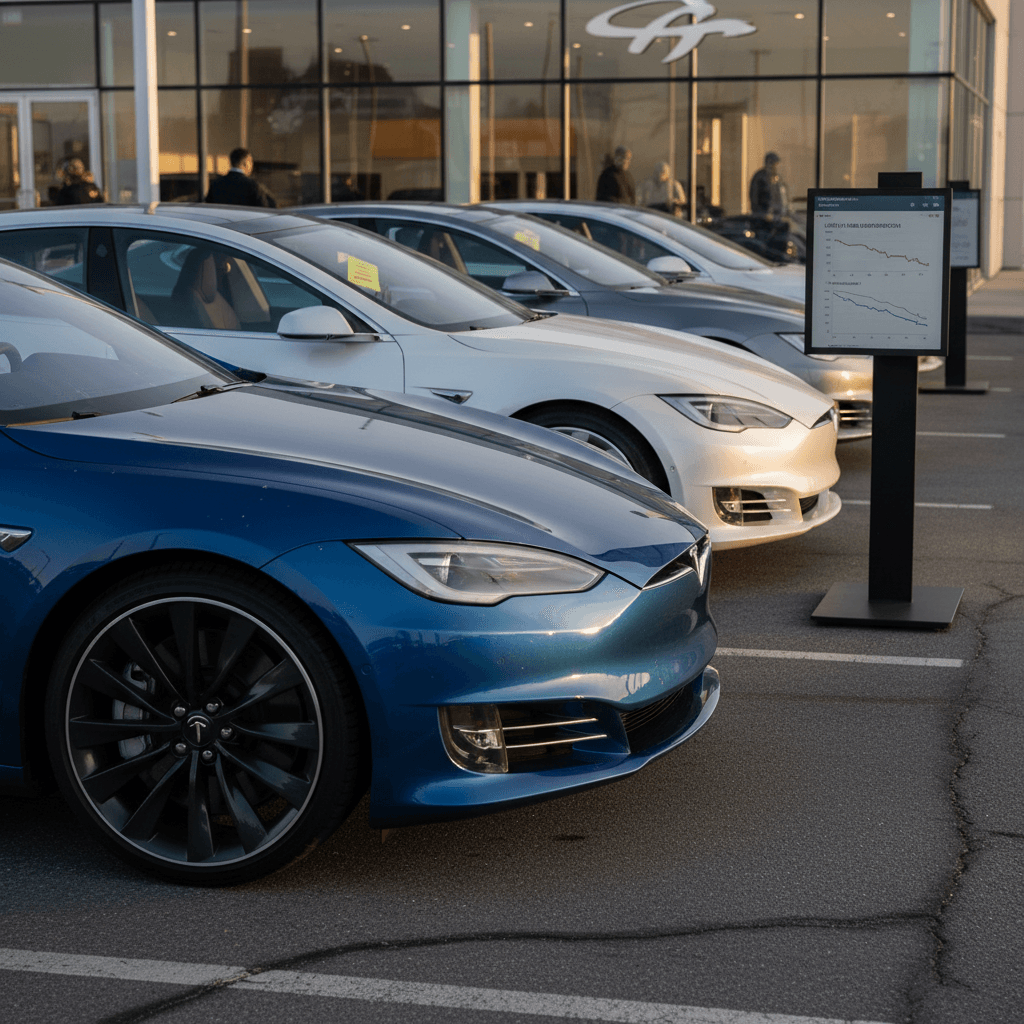
By spring 2026, a typical 2023 Model S with average miles is often advertised between the low $40,000s and upper $50,000s, with Plaid models and low‑mileage builds pushing higher. Trade‑in and wholesale values are lower, which is why you’ll see a gap between valuation tools and retail asking prices. The storyline: depreciation has been steep, but that’s exactly why the car lands on a lot of used‑EV shortlists.
Watch for ongoing price pressure
How to sanity‑check the price on a 2023 Model S
Three quick filters before you fall in love with a specific car
Compare to new alternatives
Price out a new Model 3 or Model Y, and non‑Tesla rivals, similarly equipped. If a used 2023 Model S is within a few thousand dollars of a brand‑new car with warranty and tax‑credit eligibility, you should demand a very clean history, low miles and desirable options.
Adjust for miles & trim
Plaid cars carry a meaningful premium over Long Range, and very low mileage (under 15,000) still commands a higher price. On the flip side, high‑mile Plaids hammered on track can be overpriced simply because "Plaid" is on the badge.
Look at total cost, not just sticker
Factor in financing, insurance (often higher on Plaid), expected charging costs and any aftermarket warranty. A slightly more expensive car with stronger battery health and fewer cosmetic issues can be cheaper to own over 5–7 years.
Battery and range: what to expect in the real world
On paper, a 2023 Model S can cross 350–400 miles of highway without stopping. In the real world, owner data suggests 330–370 miles from the dual‑motor car and somewhat less from the Plaid, depending on wheel size, climate, speed and driving style. That’s still more than most drivers cover in several days.
What affects your real‑world range
- Speed: Above 70 mph, aerodynamic drag ramps up quickly and range drops.
- Temperature: Cold weather and frequent cabin pre‑conditioning reduce efficiency.
- Wheels/tires: 21‑inch performance tires look sharp but sap range versus 19‑inch aero wheels.
- Charging habits: Regularly charging to 100% or fast‑charging on a hot pack can accelerate degradation over many years.
How to quickly gauge battery health
- Check the car’s displayed "rated range" at 100% or a known state‑of‑charge and compare it to original EPA ratings.
- Ask for service invoices or a battery‑health report if buying from a dealer or marketplace that offers diagnostics.
- Look for clear signs of abuse: frequent track use, extensive towing or many consecutive DC fast‑charging sessions on road‑trip cars.
Good news on 2023 Model S batteries
Recharged backs up this picture with its own Recharged Score Report, which includes verified battery health diagnostics on every vehicle we list. Instead of guessing from dash screenshots, you see a standardized read of pack condition, charging behavior and likely long‑term range so you know whether you’re buying a strong example or inheriting a tired pack.
Options and packages that matter on a 2023 Model S
Tesla’s online configurator changed prices and option mixes several times in 2023, but the big levers for used buyers stayed fairly constant. Some options are nice‑to‑haves; others meaningfully change the daily experience or resale value.
High‑impact options on a 2023 Model S
These are the features shoppers ask about first on the used market
Yoke vs. round steering wheel
Early refresh Model S cars emphasized the yoke; many 2023 buyers chose (or later retrofitted) a round steering wheel. A round wheel tends to broaden resale appeal. If you like the yoke, great, but understand you’re narrowing your future buyer pool.
Wheels and brakes
21‑inch Arachnid wheels, performance tires and optional ceramic brakes on Plaid cars add wow factor but can increase tire and maintenance costs. 19‑inch wheels with standard brakes are cheaper to live with and better for range.
Autopilot, EAP and FSD
All 2023 cars include basic Autopilot. Enhanced Autopilot (EAP) and Full Self‑Driving (FSD) are software unlocks tied to the VIN. Confirm in the on‑screen menu which features are active; don’t just trust the listing description.
- Premium paint colors, white interior and upgraded audio system typically help resale but don’t make or break the deal, condition and mileage matter more.
- Subzero weather features (heated steering wheel, rear seats) are nearly universal by 2023, but still worth verifying if you live in a cold‑weather state.
- Check for factory tow package on cars that will pull small trailers or bike racks; aftermarket solutions can complicate warranty coverage.
Don’t overpay for software you won’t use
Reliability, common issues and what to check
Reliability data on the 2023 Model S paints a familiar Tesla picture: batteries and motors tend to be robust, while non‑drivetrain items, trim, electronics, software and some suspension bits, generate most of the complaints. Owner surveys, complaint databases and Recharged’s own inspections all show the same pattern.
Typical 2023 Model S trouble spots
Most are fixable, but you want to spot them before you sign
Electronics & software hiccups
Center‑screen reboots, Bluetooth glitches, phantom warnings and camera calibration issues show up regularly. Many are corrected by over‑the‑air updates, but chronic issues can suggest a car that’s been bounced between owners or poorly supported.
- Test all cameras, sensors and driver‑assist functions.
- Scroll through recent service history for repeated "no trouble found" visits.
Build quality & wear items
Owners report misaligned trim, rattles, squeaky seats, wind noise around glass, and occasional door‑handle or window regulator issues.
- Drive on a rough road to listen for creaks and rattles.
- Inspect rubber seals, glass alignment and interior panels.
- Suspension clunks or knocks over bumps can point to worn links, bushings or adaptive dampers on higher‑mile cars.
- Uneven tire wear on 21‑inch cars can hint at previous alignment problems or aggressive driving.
- Check for recall work, especially software‑related campaigns, that should have been handled by Tesla service.
Red flags that should slow you down
Every Recharged vehicle goes through an EV‑specific inspection, and the Recharged Score rolls together battery diagnostics, OBD‑level data, visual inspection and fair‑market pricing into one report. That’s particularly useful for a complex car like the Model S, where a simple oil‑change‑style checklist doesn’t tell you much about long‑term risk.
2023 Model S vs alternatives: Model 3/Y and other EVs
By 2026, you’re not just cross‑shopping 2023 Model S sedans against each other. You’re looking at new and used Model 3s and Ys, plus strong non‑Tesla entries like the Hyundai Ioniq 6, Kia EV6, BMW i4 and Mercedes EQE. Each plays a different role.
2023 Model S vs popular alternatives
How a used 2023 Model S stacks up on the used lot.
| Vehicle | Typical price (2026) | Strengths vs 2023 Model S | Weaknesses vs 2023 Model S |
|---|---|---|---|
| 2023 Tesla Model S | ~$45k–$75k | Huge range, blistering acceleration, hatchback practicality, Supercharger access. | Higher insurance, larger footprint, more expensive tires/repairs. |
| 2023 Tesla Model 3 Long Range | ~$30k–$40k | Smaller, easier to park, cheaper to run, similar tech feel. | Less interior space and cargo room, shorter range on some trims. |
| 2023 Tesla Model Y | ~$32k–$42k | SUV shape, higher seating position, very practical for families. | Not as refined or quiet at highway speeds, less "special" than a Model S. |
| Hyundai Ioniq 6 / Kia EV6 | Varies, often $30k–$45k | Strong warranties, good build quality, rapid DC charging on 800‑V platforms. | Less seamless charging experience in some regions, brand cachet not Tesla‑like. |
| BMW i4 / Mercedes EQE | Often $40k–$60k used | Traditional luxury cabins, dealer support, quiet high‑speed manners. | Shorter range in many trims, less efficient, charging network not as integrated. |
Pricing is approximate and varies heavily by mileage, condition, incentives and local demand.
Production ending changes the calculus
Financing, warranty and insurance considerations
A used 2023 Model S is a big‑ticket purchase, and the way you structure the deal matters almost as much as the price on the windshield. You’re balancing depreciation risk, remaining factory coverage and higher‑than‑average repair and insurance costs compared with mainstream EVs.
Key ownership cost levers
Three buckets that determine whether a 2023 Model S truly fits your budget
Remaining factory warranty
Most 2023 cars will still carry some combination of basic and powertrain/battery warranty. Read the fine print on mileage and years; a low‑mile late‑build 2023 is much better protected than an early production car with 60,000+ miles.
Extended & third‑party coverage
On a tech‑heavy EV, a solid service contract can be worth considering, especially for air suspension, electronics and climate systems. Make sure any policy you buy explicitly covers EV components and labor rates in your region.
Insurance & registration
Check insurance quotes before you commit. Plaid models, high performance wheels and expensive paint can all raise premiums. Some states also charge higher registration fees for heavy or high‑MSRP EVs.
Use pre‑qualification to set a realistic budget
Inspection checklist for a used 2023 Tesla Model S
Whether you buy from Tesla, a franchise dealer, an independent lot or a private seller, you need a structured way to evaluate any 2023 Model S you’re considering. Use this checklist as a baseline, and remember that tools like the Recharged Score can fill in some of the technical gaps.
2023 Tesla Model S buyer’s inspection checklist
1. Verify trim, software and options
Confirm in the on‑screen menus whether you’re looking at a dual‑motor or Plaid, and which Autopilot/EAP/FSD features are currently active. Don’t pay Plaid or FSD money for a car that doesn’t actually have it unlocked.
2. Check battery health and charging history
Review rated range at a known state‑of‑charge, look for evidence of excessive fast‑charging, and ask for any available battery health report. A Recharged Score Report includes pack diagnostics so you’re not guessing.
3. Drive on mixed roads
Take a long enough test‑drive to sample smooth highways and bumpy streets. Listen for creaks, rattles, suspension clunks and wind noise around the glass roof and windows.
4. Test all electronics and driver‑assist features
Cycle every window, seat adjustment, camera view, speaker and climate function. Verify that Autopilot engages cleanly, lane‑keep behaves as expected and parking sensors (if equipped) work properly.
5. Inspect wheels, tires and brakes
Check for curb rash on expensive 21‑inch wheels, uneven tire wear that hints at alignment issues, and any vibration under braking. Performance tires and ceramic brakes on Plaids are costly to replace.
6. Review service and accident history
Ask for digital service records and a vehicle history report. Multiple body repairs, repeated visits for the same problem or accident damage near the battery pack are all reasons to dig deeper or walk away.
How Recharged helps you buy a 2023 Model S smarter
The 2023 Tesla Model S is the definition of a high‑information purchase: huge upside in performance and range, but enough complexity that a quick parking‑lot walk‑around won’t tell you whether you’ve picked a good one. That’s the problem Recharged is built to solve for used‑EV shoppers.
What you get with a 2023 Model S from Recharged
Transparency on the big unknowns: battery, pricing and support
Recharged Score battery diagnostics
Every vehicle on Recharged, including 2023 Model S listings, comes with a Recharged Score Report. It includes verified battery health, charge‑and‑use patterns, and an overall vehicle assessment so you understand long‑term range and degradation risk before you buy.
Fair‑market pricing & trade‑in options
Recharged benchmarks each car against live market data, depreciation curves and equipment levels. You’ll see whether a given 2023 Model S is priced aggressively, fairly or optimistically, and you can bring a trade‑in or request an instant offer or consignment to simplify the deal.
Nationwide delivery & EV‑specialist support
From fully digital paperwork to nationwide delivery and an in‑person Experience Center in Richmond, VA, Recharged pairs used‑EV inventory with staff who live and breathe EVs. That matters when you’re talking through battery reports, Autopilot options and home‑charging plans.
Ready to find your next EV?
Browse Vehicles2023 Tesla Model S buying FAQ
Common questions about buying a 2023 Tesla Model S used
Bottom line: should you buy a 2023 Tesla Model S?
A 2023 Tesla Model S is not the safe, lowest‑risk EV on the used market, but it may be the most interesting. You’re getting supercar‑grade acceleration, long‑distance range and a charging network that still sets the bar, all wrapped in a practical hatchback body. In exchange, you accept steeper depreciation, higher running costs than a Model 3 or Model Y, and the need to be picky about build quality and battery health.
If you walk in with clear priorities, run the numbers against alternatives and lean on tools like the Recharged Score Report instead of gut feel, a used 2023 Model S can be a standout value in 2026. Take your time, compare a few cars side by side and don’t be afraid to pass on anything with a shaky history. The right example will make itself obvious, and when it does, you’ll understand why this aging flagship still occupies so much space in the EV conversation.