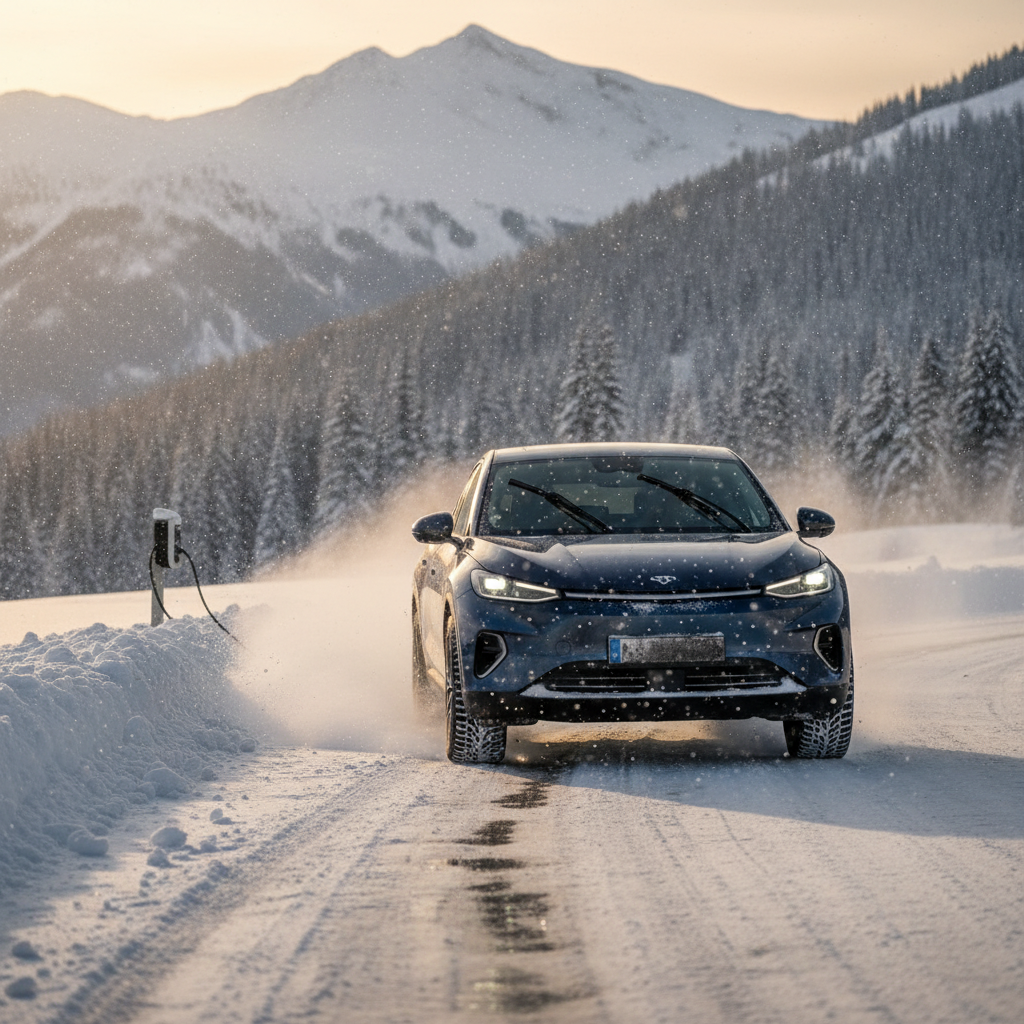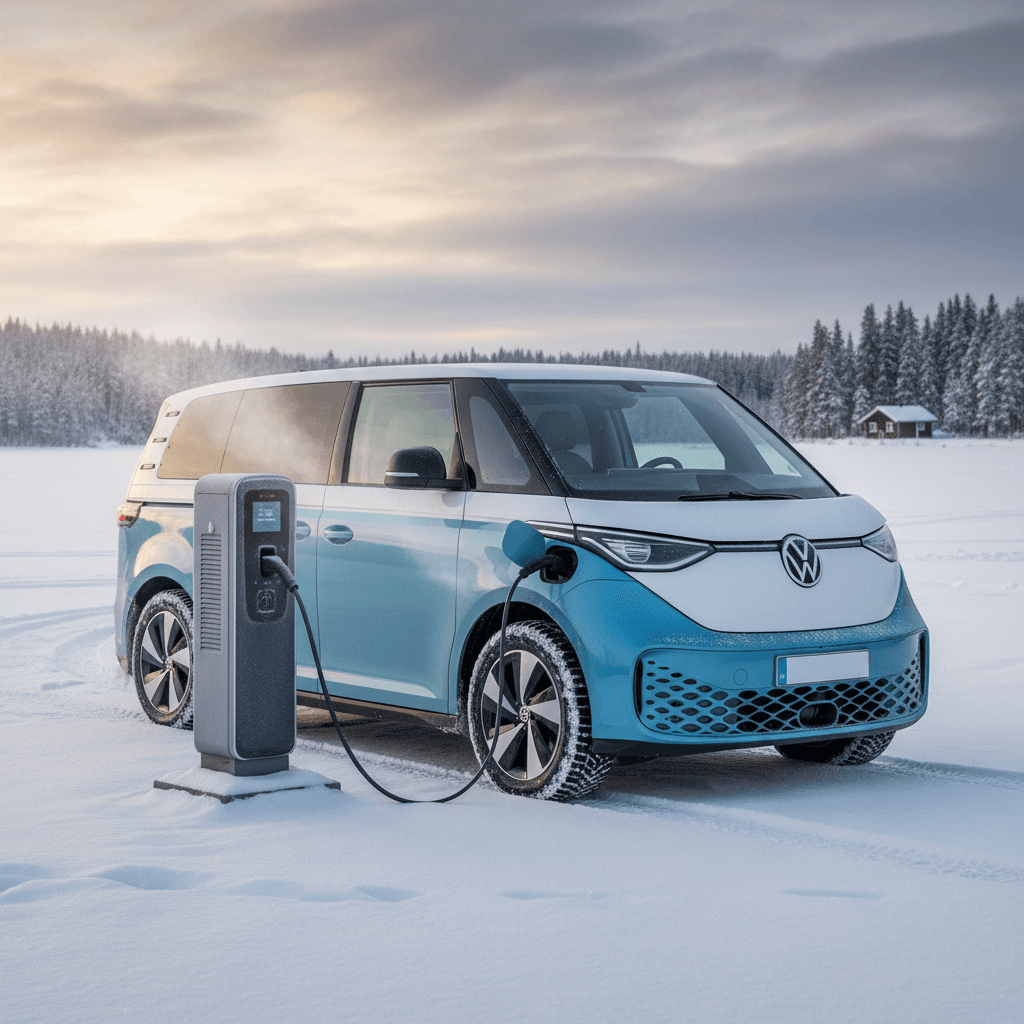
If you live somewhere with real winters, the Volkswagen ID. Buzz range in cold weather is not an abstract question. It’s the difference between a relaxed ski trip and white‑knuckling it to the next charger with the heater turned down to “Scandinavian frugal.” Let’s talk frankly about how far the Buzz really goes when temperatures drop, and what you can do about it.
Cold-weather reality check
Why the ID. Buzz Loses So Much Range in Cold Weather
Every EV loses range in winter, but the ID. Buzz is a big, boxy brick of a van. That’s part of the magic and part of the problem. Three forces team up against you when it’s cold:
- Cold batteries are less efficient. Lithium‑ion cells can’t move energy as easily at low temperatures, so you use more kWh per mile to go the same speed.
- Cabin and battery heating are energy hogs. Warming a large interior volume, plus keeping the battery in its happy temperature window, can eat 10–30% of your available energy on short trips.
- Aerodynamics and weight magnify losses. The ID. Buzz has the profile of a friendly refrigerator and weighs well over 5,000 pounds. At 65–75 mph in cold air, aero drag and rolling resistance spike, so all the usual winter penalties get amplified.
The highway penalty
Official vs Real-World ID. Buzz Range in Winter
Volkswagen quotes optimistic but laboratory‑correct WLTP range figures for the ID. Buzz on its European models, often in the mid‑200‑mile range on a full charge depending on wheel size and configuration. U.S.-spec long‑wheelbase models use larger packs (around 86 kWh usable) but are similarly rated in the 250‑ish‑mile ballpark in mild conditions.
ID. Buzz Range: Brochure vs. Reality
Approximate ranges for a healthy battery, starting from 100% charge. Real‑world numbers assume gentle but realistic driving.
| Scenario | Battery & setup | Temperature | Driving mix | Typical usable range |
|---|---|---|---|---|
| Brochure number (mild weather) | RWD, ~77–86 kWh usable | 65°F (18°C) | Mixed city/highway, modest speeds | 230–260 miles |
| Real world, mild weather | Same as above | 55–70°F (13–21°C) | Mostly highway 65–70 mph | 190–220 miles |
| Real world, cold weather | Same as above | 20–35°F (‑6–2°C) | Mostly highway 65–70 mph, heat on | 130–170 miles |
| Real world, deep winter | Same as above | 0–20°F (‑18–‑6°C) | Highway, snow tires, cabin toasty | 110–150 miles |
Exact EPA/WLTP ratings vary by market, wheel size, and drivetrain. Treat these as ballpark planning numbers, not promises.
What owners actually see
ID. Buzz Winter Range At a Glance
Highway vs City: How Driving Style Changes Winter Range
The Volkswagen ID. Buzz range in cold weather isn’t a single number; it’s a sliding scale that depends heavily on how and where you drive.
Cold city / suburban driving
- More stop‑and‑go means more regenerative braking, which helps claw energy back.
- Speeds are lower, so aero drag matters less than in highway use.
- Short trips can be brutally inefficient at first as the car warms the battery and cabin, but once everything is warm, consumption stabilizes.
Result: In 30–40°F stop‑and‑go driving, you might see only a 20–30% hit to range versus summer, especially if you precondition while plugged in.
Cold highway driving
- Cabin and battery heating stay on almost continuously at higher output.
- Boxy aerodynamics + cold, dense air + winter tires = higher drag.
- Even a small speed increase (from 65 to 75 mph) can noticeably drop range.
Result: At 65–75 mph in below‑freezing temps, many ID. Buzz drivers see 35–50% less range than the optimistic brochure numbers.
A simple winter highway rule
How Much Range Loss to Expect at Different Temperatures
Exact numbers will vary with wheel size, passengers, roof boxes, and speed, but you can use a few temperature bands as a working mental model for the ID. Buzz.
ID. Buzz Winter Range by Temperature Band
Use these as planning guidelines, not guarantees.
Mild cool (45–60°F / 7–16°C)
- Range loss: ~10–15% vs warm summer.
- Heat use is modest; battery not deeply cold.
- Highway road trips feel almost like summer with a small efficiency penalty.
Cold (25–45°F / -4–7°C)
- Range loss: ~25–35% on the highway.
- Cabin heat runs steadily; battery needs more active management.
- Expect 150–190 miles at steady 65 mph from a full charge.
Deep winter (below 25°F / -4°C)
- Range loss: ~35–50% at 65–75 mph.
- Short trips with frequent cold starts are worst‑case.
- Plan around 120–160 miles before your next fast charge.
Beware the optimistic guess‑o‑meter
Heat Pump, Tires, and Weight: What Hurts ID. Buzz in the Cold
Not all ID. Buzz setups are created equal in winter. A few hardware and option choices can dramatically shift your cold‑weather experience.
Key Hardware Factors That Affect Winter Range
1. Heat pump vs. resistive heater
Some ID. Buzz configurations offer a heat pump, which can cut winter cabin energy use significantly, especially in the 25–45°F band. If your van relies on a simple resistive heater, expect more range loss in cold weather because every degree of cabin heat pulls directly from the HV battery.
2. Wheel size and tires
Big 20–21" wheels with wide, soft winter tires look great but increase rolling resistance. The party line: smaller wheels with efficient all‑season or low‑rolling‑resistance winter rubber will usually give you noticeably better cold‑weather range.
3. Vehicle weight and payload
The ID. Buzz is heavy before you add kids, dogs, sports gear, and camping furniture. Fully loaded with roof box and bikes, don’t be surprised if your cold‑weather efficiency nudges into the 2.0–2.2 mi/kWh region at highway speeds.
4. Roof racks and accessories
Cargo boxes, ski racks, and tent systems punch huge, messy holes in the air. On a vehicle that’s already bluff‑fronted, roof gear can easily cost you another 5–10% of range at winter highway speeds.
Trip Planning With the ID. Buzz in Winter
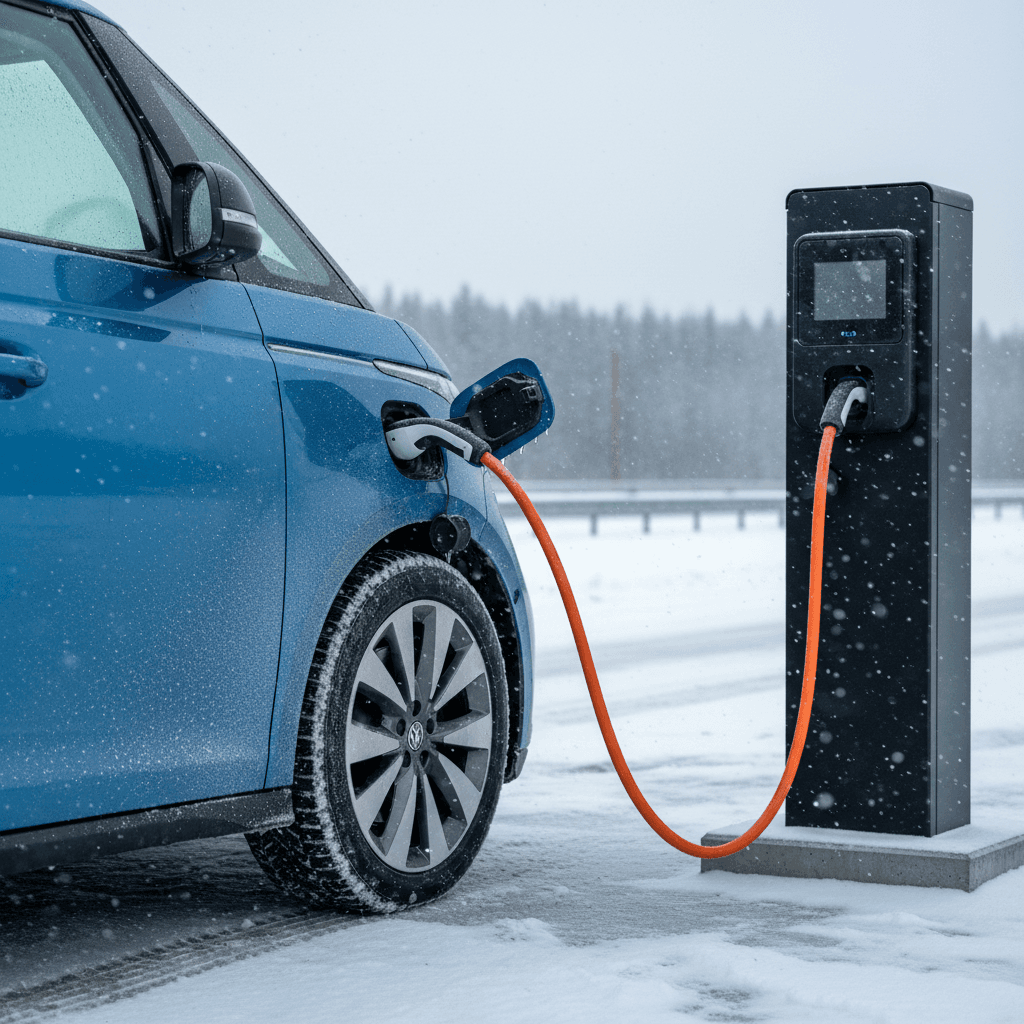
The ID. Buzz can absolutely do winter road trips, you just have to plan like an adult, not like a marketing brochure. Here’s how to keep things calm and predictable when it’s cold out.
Step‑by‑Step: Planning a Winter Road Trip in the ID. Buzz
1. Base your plan on winter range, not WLTP
For highway‑heavy trips in freezing weather, assume 130–160 miles of comfortable range from 100% to about 10–15% state of charge. If conditions are extreme (sub‑freezing, headwinds, snow tires, full load), use the low end of that band.
2. Target chargers at 20–30% state of charge
Don’t ride it down to 5% unless you absolutely must. Plan DC fast‑charging stops so you arrive with around 20–30% remaining. That gives you a buffer for detours, headwinds, or a busy station.
3. Prefer fast chargers at food and restroom stops
The Buzz is a family bus. Lean into that. Aim for well‑reviewed DC fast chargers co‑located with warm places to sit, eat, and let passengers stretch. You’ll worry less about the clock, and the battery will charge faster after being driven hard.
4. Precondition before you leave
While the van is still plugged in, heat the cabin and, where supported, pre‑warm the battery using the app or in‑car settings. This pulls energy from the grid instead of the pack, so you start with a warm, efficient battery and a comfortable cabin.
5. Watch elevation and weather, not just distance
Climbs, headwinds, and bad roads are winter range tax. A route planner that accounts for elevation and real‑time consumption (many EV trip‑planning apps, plus in‑car tools) will give you a truer picture than distance alone.
6. Don’t chase 100% on DC fast chargers
In winter, you may be tempted to charge to 100%. On road trips, it’s usually faster overall to charge to ~70–80%, drive, then charge again. The last 20–30% of the pack fills slowly, especially when cold.
How Recharged fits in
Ready to find your next EV?
Browse VehiclesPractical Tips to Improve ID. Buzz Range in Cold Weather
You can’t repeal the laws of thermodynamics, but you can stack the deck in your favor. These small habits add up to fewer charging stops and less range anxiety when it’s cold.
Simple Habits That Add Winter Miles
None of these are heroic; all of them help.
Use scheduled charging & departure
Tell the Buzz when you plan to leave, ideally while it’s still plugged in.
- Battery warms on shore power, not from its own energy.
- Cabin is already comfortable, so the heater works less hard once you’re driving.
Keep speeds sensible
Between 60 and 70 mph, drag goes up fast in cold, dense air.
- Dropping from 75 to 65 mph can be worth tens of miles of range.
- On a long winter leg, that can be the difference between one charging stop and two.
Use seat & steering‑wheel heaters
Seat and wheel heaters sip power compared with blasting cabin air heat.
- Keep cabin a couple of degrees cooler.
- Rely on direct heat to stay comfortable without hammering range.
Travel lighter and lower
If you don’t need the roof box, take it off. If you can leave the 200‑pound cargo rack at home, even better.
- Less aero drag, less rolling resistance.
- Noticeable gains on long winter hops.
Think in kWh, not just miles
Winter Range and Battery Health on a Used ID. Buzz
Cold weather range isn’t only about temperature; it’s also about how much usable capacity your battery still has. A Buzz that’s a few years old with heavy fast‑charging history may show slightly less winter range than a fresh pack, even in identical conditions.
How degradation shows up in winter
- A pack that’s lost 10% of its usable capacity will also have about 10% less winter range, all else equal.
- Because winter already magnifies losses, a modest capacity reduction can feel bigger when you’re watching the guess‑o‑meter plunge on a cold highway.
- You may find yourself shifting from one winter stop per leg to two, simply because the buffer shrank.
Why diagnostics matter when buying used
- On a used ID. Buzz, don’t rely on the dash range number from one test drive.
- Ask for battery health documentation, ideally a third‑party or dealer‑grade scan that estimates remaining usable capacity.
- At Recharged, the Recharged Score battery report gives you this data up front, so you know whether that Buzz will still handle your winter ski run without drama.
What you get with a Recharged ID. Buzz
FAQ: Volkswagen ID. Buzz Range in Cold Weather
Common Questions About ID. Buzz Winter Range
Is the ID. Buzz Right for You If You Live Somewhere Cold?
The bottom line on Volkswagen ID. Buzz range in cold weather is simple: physics doesn’t care how charming the van looks. In freezing temperatures at highway speeds, you’re realistically working with 130–160 miles of comfortable range between fast charges, sometimes less in harsh conditions. If you can live within those limits, and you’re willing to plan winter trips with a bit of rigor, the Buzz remains one of the most characterful, family‑friendly EVs you can buy.
If you’re exploring a used ID. Buzz, the smart play is to pair that realism about winter range with real data about battery health. That’s exactly what Recharged is built for: transparent diagnostics, fair pricing, expert EV guidance, and nationwide delivery. Get the numbers first, decide if this iconic electric bus fits your winter driving life second, and you’ll be far less likely to be surprised when the temperature drops.