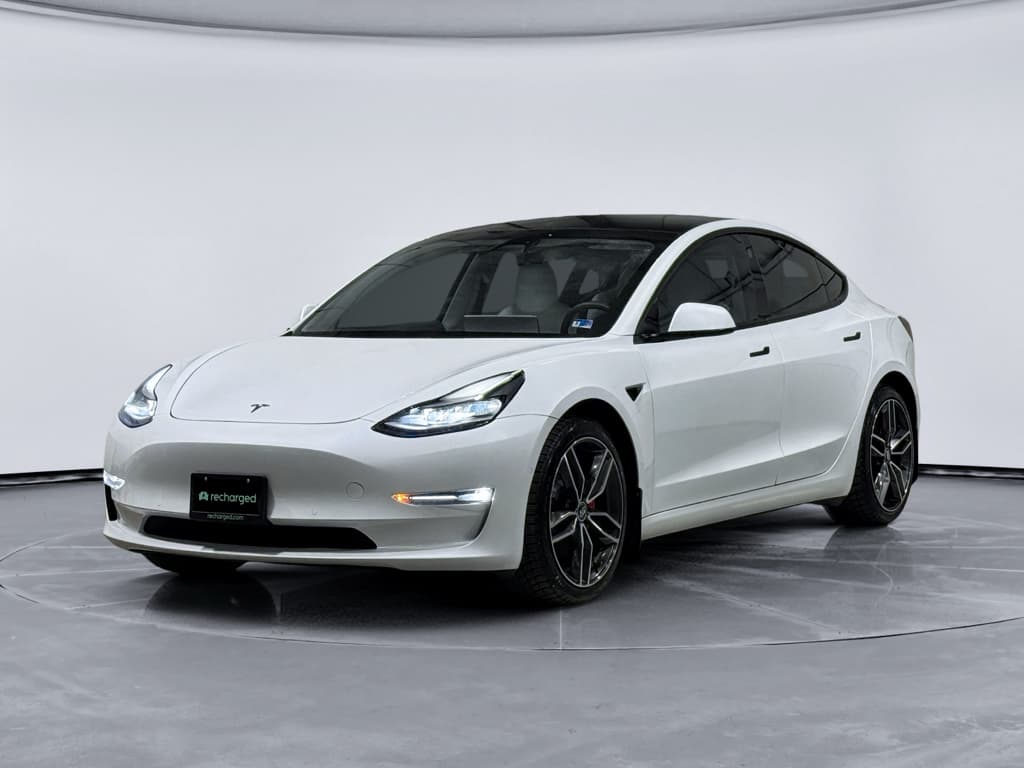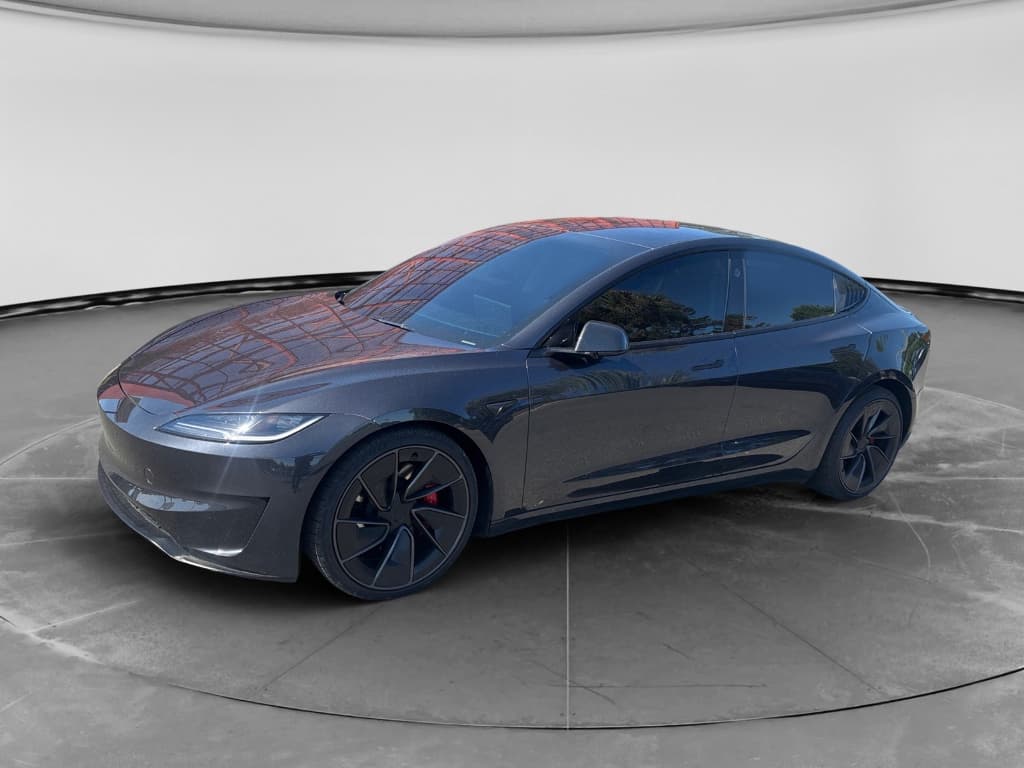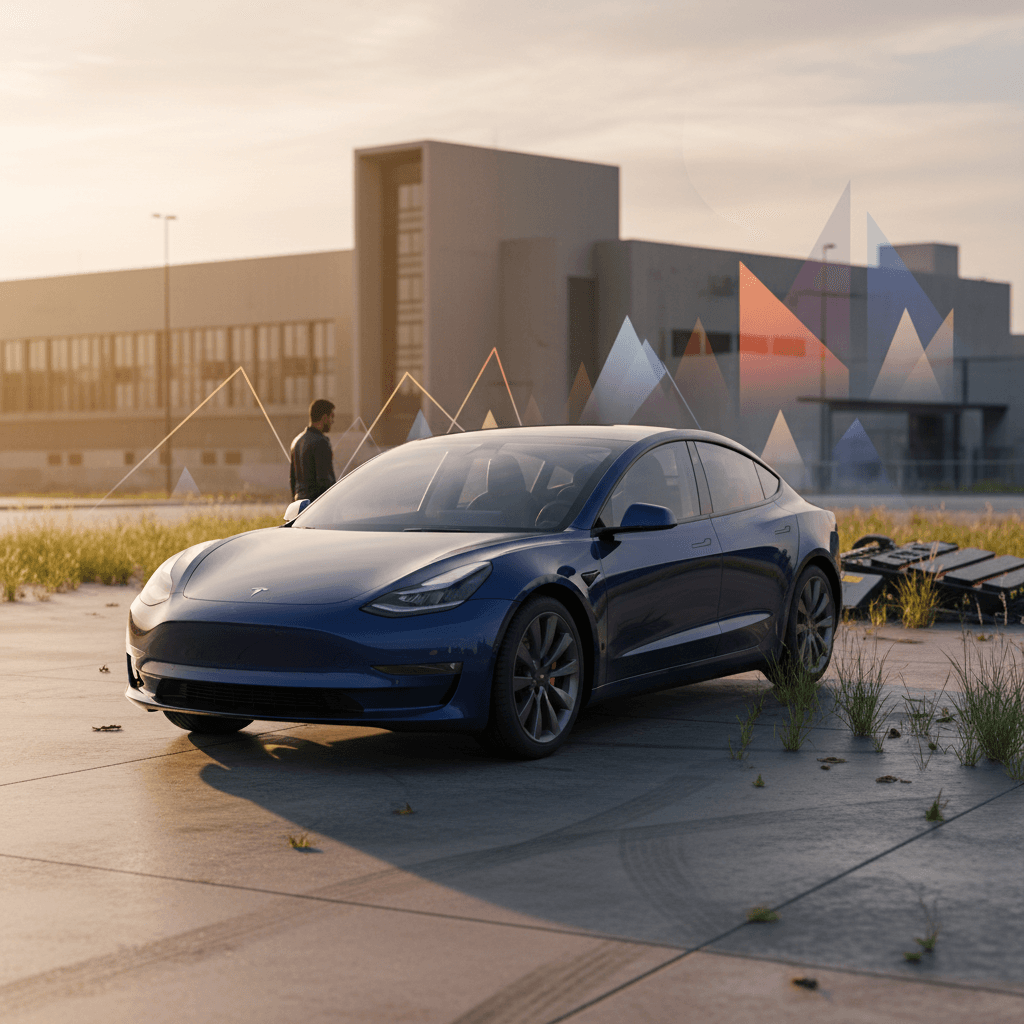
If you’re shopping for a used EV, a 2023 Tesla Model 3 will be on your shortlist. It’s one of the most common electric sedans on the road, with strong range, quick acceleration and direct access to Tesla’s Supercharger network. But by 2026, newer rivals and changing Tesla resale values mean you need to look a little closer before you buy.
Where the 2023 Model 3 Sits Today
2023 Tesla Model 3 at a Glance
Key 2023 Model 3 Numbers
2023 Tesla Model 3 Trims & Core Specs
High‑level look at the main 2023 Model 3 variants. Exact numbers vary slightly by wheel choice and software configuration.
| Trim | Drive | Approx. EPA Range | 0–60 mph (Tesla est.) | Battery category | Supercharging peak |
|---|---|---|---|---|---|
| Rear‑Wheel Drive | RWD | ~270 mi | 5.8 s | Standard‑range pack | 170–190 kW |
| Long Range | Dual‑motor AWD | ~330–358 mi | 4.2 s | Long‑range pack | Up to 250 kW |
| Performance | Dual‑motor AWD | ~315 mi | 3.1 s | Long‑range pack | Up to 250 kW |
All trims use a permanent‑magnet electric motor setup and a single‑speed transmission.
Trim Shopping Tip
What Changed for the 2023 Tesla Model 3?
By 2023, the Model 3 was a mature product. There was no earth‑shattering redesign that year, but Tesla continued its habit of rolling out incremental hardware and software tweaks over the air and on the assembly line. Many changes aren’t tied to an official “2023” label, so the most important thing when you’re buying used is to look at build date and specific features, not just model year on the title.
- Refined cabin materials versus early Model 3s, including quieter glass and better noise insulation on many builds.
- Updated heat pump system (rolled out earlier but present on 2023 cars) that improves winter efficiency and cabin warm‑up.
- Autopilot hardware revisions on some mid‑2023 cars (what you get can vary by build month).
- Continuous over‑the‑air software updates adding new UI layouts, games, safety refinements and efficiency tweaks.
Why Build Date Matters
Range, Battery & Charging Performance
For many buyers, the main reason to choose a 2023 Tesla Model 3 over another compact sedan is its combination of range, efficiency and charging access. Even compared with newer rivals, a well‑cared‑for 2023 car still stacks up well on these fronts.
Realistic Range Expectations by Trim
How far you can actually drive between charges in mixed use.
RWD (Standard Range)
EPA figures land in the high‑200‑mile range, but you should plan around 190–230 miles between charges in normal mixed driving.
Highway speeds, cold temperatures and heavy HVAC use can shave off 15–30% of rated range.
Long Range AWD
The sweet spot for most drivers. Expect roughly 230–280 real‑world miles on a full charge, more in ideal city conditions.
The larger pack gives you a comfortable buffer for road trips.
Performance AWD
You trade a bit of range for speed and stickier tires. Plan on about 210–250 miles between charges in mixed use.
If you drive aggressively, range drops fast.
Battery Chemistry & Degradation
Charging at Home
Like any EV, the 2023 Model 3 is at its best when you can charge overnight. With a 240‑volt Level 2 charger, you’ll typically add 25–40 miles of range per hour depending on trim and circuit amperage.
- Most owners set the charge limit between 70–90% for daily use.
- Scheduled charging lets you take advantage of off‑peak electric rates when available.
- Software makes it easy to see energy use and projected range on each trip.
On the Road: Supercharging
Every 2023 Model 3 can use Tesla’s Supercharger network, which remains a major advantage over rivals. Peak rates on compatible stations are up to 250 kW, though you’ll only see that briefly on a low state of charge.
- Plan around 20–30 minutes to go from a low battery to ~80%.
- Best practice is to hop between chargers more often rather than charging to 100% each stop.
- Public CCS networks are increasingly accessible as NACS becomes the North American standard, but Tesla’s network is still the smoothest experience for most Model 3 drivers.
Used‑Buyer Charging Checklist
On-Road Performance and Comfort
Part of the Model 3’s enduring appeal is how it drives. Even the base Rear‑Wheel Drive model is brisk, and the dual‑motor trims feel legitimately quick by any gas‑sedan standard. Where the 2023 car divides opinions is ride quality and interior noise: earlier Model 3s were criticized for being harsh and loud; later builds, including most 2023s, are noticeably improved but still skew firm.
Driving Impressions by Trim
How each 2023 Model 3 variant feels behind the wheel.
RWD (Standard Range)
Light, responsive steering and a low center of gravity make this trim feel more playful than its price suggests. Power is perfectly adequate for daily commuting, with smooth acceleration up to highway speeds.
If you’re coming from a traditional compact sedan, it’ll feel dramatically quicker and more modern.
Long Range AWD
Dual motors transform the Model 3 into an all‑weather, all‑conditions car. Instant torque and confident passing power are always on tap, and traction in rain or light snow is excellent with the right tires.
This is the sweet spot for drivers who want performance without the harsher suspension of the Performance trim.
Performance AWD
With a 0–60 time just above 3 seconds, the Performance trim will outrun many sports cars. Larger wheels and stiffer suspension sharpen handling but also make bumps and potholes more noticeable.
Great for driving enthusiasts, less ideal if your roads are rough.
Ride & Noise Reality Check
Tech, Autopilot & In‑Car Experience
The 2023 Model 3 lives and dies by its technology. If you like touchscreens and software‑first design, it’ll feel futuristic. If you prefer physical buttons, there’s a learning curve. Virtually every function, from climate control to wiper speed, is run through the central 15‑inch display and a pair of scroll wheels on the steering wheel.
Core Tech Experience
- Large central touchscreen with snappy performance and regular over‑the‑air updates.
- Built‑in navigation that integrates with energy planning and Supercharger stops.
- Native music streaming, Bluetooth phone integration and Tesla app connectivity to pre‑condition the cabin or check charging status.
- Minimalist dashboard with no traditional instrument cluster, your speed and key info live on the center screen.
If possible, spend at least 15–20 minutes parked in a used Model 3 just exploring menus. The interface feels natural to many drivers but distracting to others.
Autopilot & Driver Assistance
- Autopilot (traffic‑aware cruise control and lane keeping) is standard on all 2023 Model 3s.
- Enhanced Autopilot and Full Self‑Driving (FSD) may or may not be enabled depending on how the original buyer spec’d the car.
- These features can be powerful on highways but require constant driver supervision and hands on the wheel.
- Software‑based features can be added or removed by Tesla; don’t assume a listed option will stay if the car is transferred outside Tesla’s ecosystem.
When buying used, treat FSD as a nice‑to‑have bonus rather than a core reason to pick one specific car, its capabilities and pricing have changed multiple times.
Do Not Treat FSD as Self‑Driving
Safety Ratings and Features
The 2023 Tesla Model 3 earns strong crash‑test scores and advanced driver‑assistance tech. For families or high‑mileage commuters, that combination matters as much as range or acceleration.
- Five‑star overall crash‑test rating from federal regulators, with especially strong scores in side‑impact protection.
- Top safety awards from the Insurance Institute for Highway Safety for 2023 models, including solid ratings for crash avoidance and automatic emergency braking.
- Standard Automatic Emergency Braking with pedestrian detection, lane departure warning, blind‑spot monitoring and adaptive cruise control.
- Stiff structure and low center of gravity that help reduce rollover risk versus taller SUVs.
Family‑Friendly Safety
Ownership Costs & Depreciation for 2023 Model 3
When it was new, the 2023 Tesla Model 3 carried pricing similar to other premium compact sedans. Three years later, it’s gone through the steepest part of its depreciation curve. That’s good news for you as a used buyer, but it also means original owners have absorbed sizable losses, which shape today’s pricing and availability.
Depreciation Snapshot: 2023 Model 3
Approximate value trajectory for a typical 2023 Tesla Model 3 over its first three years, based on aggregated market data as of early 2026.
| Year | Approx. value | Change vs. original MSRP |
|---|---|---|
| New in 2023 | ~$40,000–$55,000 | , |
| After 1 year (2024) | Low‑ to mid‑$30,000s | Down roughly 20–25% |
| After 3 years (2026) | ~$22,000–$32,000 | Down roughly 35–45% |
Actual values vary with trim, mileage, condition and local demand.
Running Costs
- Energy: In most U.S. markets, electricity is cheaper per mile than gasoline, especially if you can charge at home overnight.
- Maintenance: No oil changes, fewer wear items than a gas car. Expect periodic tire replacements (heavy EVs can be hard on tires), brake fluid service and cabin air filters.
- Repairs: Out‑of‑warranty repairs on high‑tech EVs can be costly. Battery and drive unit warranties from Tesla typically run 8 years with a mileage cap, so many 2023 cars still carry factory coverage in 2026.
Always check in‑service date and remaining warranty before you buy. Two similar‑mileage cars can have very different warranty timelines.
Insurance & Fees
- Insurance can run higher than for a comparable gas sedan due to repair costs and performance, especially on Performance trims.
- Registration fees in some states are higher for EVs; in others, you can still find incentives or HOV‑lane access.
- Software features like FSD don’t typically add 1:1 value on resale, treat them as sunk cost, not an investment.
Get a few insurance quotes using actual VINs before you commit, particularly if you’re comparing Performance vs. non‑Performance trims.
Depreciation: Risk or Opportunity?
Is the 2023 Tesla Model 3 a Good Used Buy?
Short answer: for many drivers, yes. As a used car in 2026, the 2023 Model 3 offers a mature EV platform, strong safety scores, road‑trip‑ready charging and engaging performance. But it isn’t the right answer for everyone, and there are a few specific pitfalls you need to watch for.
Used 2023 Model 3 Buying Checklist
1. Verify battery health, not just mileage
A low‑mileage car with heavy fast‑charging or lots of 100% charges can show more degradation than you’d expect. Use a professional battery health report, like the <strong>Recharged Score</strong>, to see remaining usable capacity and fast‑charge history.
2. Check build date and hardware version
Look at the build sticker on the door jamb and confirm which Autopilot hardware and camera suite the car has. This affects future feature support and, in some cases, repair costs.
3. Inspect wheels, tires and underbody
Performance and Long Range cars are heavy and quick, which can mean curbed wheels, worn tires and scraped undertrays. On a lift, inspect battery pack shielding and suspension components.
4. Confirm software features actually transfer
If a listing mentions Enhanced Autopilot or FSD, get written confirmation those features will remain after purchase. Treat any software promises cautiously unless the seller can show them tied to the VIN, not their personal account.
5. Test all driver‑assist features
On a test drive, exercise Autopilot, adaptive cruise, lane‑keep and parking sensors. Any warnings, phantom braking or camera errors should be investigated before you sign papers.
6. Evaluate charging history and habits
Ask where the previous owner charged most of the time (home vs. Superchargers), check for frequent DC fast‑charge sessions, and confirm the car will charge at both Level 2 and DC fast‑charge stations without error messages.
Leaning Toward a 2023 Model 3?
How Recharged Evaluates 2023 Model 3s
Recharged was built around one idea: buying a used EV should feel as transparent as checking a Carfax and a home‑inspection report at the same time. The 2023 Tesla Model 3 is one of the most common cars in our marketplace, which means we’ve had to get very good at separating the great examples from the merely average ones.
What’s Inside a Recharged Score for a 2023 Model 3
Beyond a basic visual inspection.
Battery Health Diagnostics
We run specialized tests on each 2023 Model 3’s high‑voltage pack to estimate remaining usable capacity, check for cell imbalances and look for signs of abuse from repeated 100% charges or aggressive fast‑charging.
Charging & Usage Profile
Our technicians review charge data where available, confirming that the car can charge at expected speeds on AC and DC, and watching for patterns, like heavy Supercharger‑only use, that might affect long‑term health.
Pricing & Protection
Every car on Recharged is priced against fair‑market data for trim, mileage, options and condition, so you’re not guessing whether a 2023 Model 3 listing is in the right ballpark. You also get EV‑specialist support if questions come up between browsing and delivery.
Ready to find your next EV?
Browse VehiclesFrom there, you can handle the whole process digitally, get financing, value your trade‑in, choose delivery, or even visit our Experience Center in Richmond, VA if you’d rather see and drive a Model 3 in person.
FAQ: 2023 Tesla Model 3
Frequently Asked Questions About the 2023 Model 3
Bottom Line: Who the 2023 Model 3 Fits Best
If you want a compact sedan that still feels ahead of most gas competitors on performance and charging convenience, the 2023 Tesla Model 3 deserves a serious look. It’s quick, efficient, and backed by one of the most robust fast‑charging networks in North America. The flip side is a firmer ride, a minimalist interior that won’t suit everyone, and resale values that have seen more ups and downs than many traditional brands.
As a used‑EV play in 2026, a 2023 Model 3 makes the most sense if you prioritize range and tech over soft‑touch luxury, and you’re willing to do your homework on battery health, software features and build details. That’s where Recharged comes in, every Model 3 we list includes a Recharged Score battery‑health report, fair‑market pricing, and EV‑specialist support so you can move from research to driveway with a lot less guesswork.