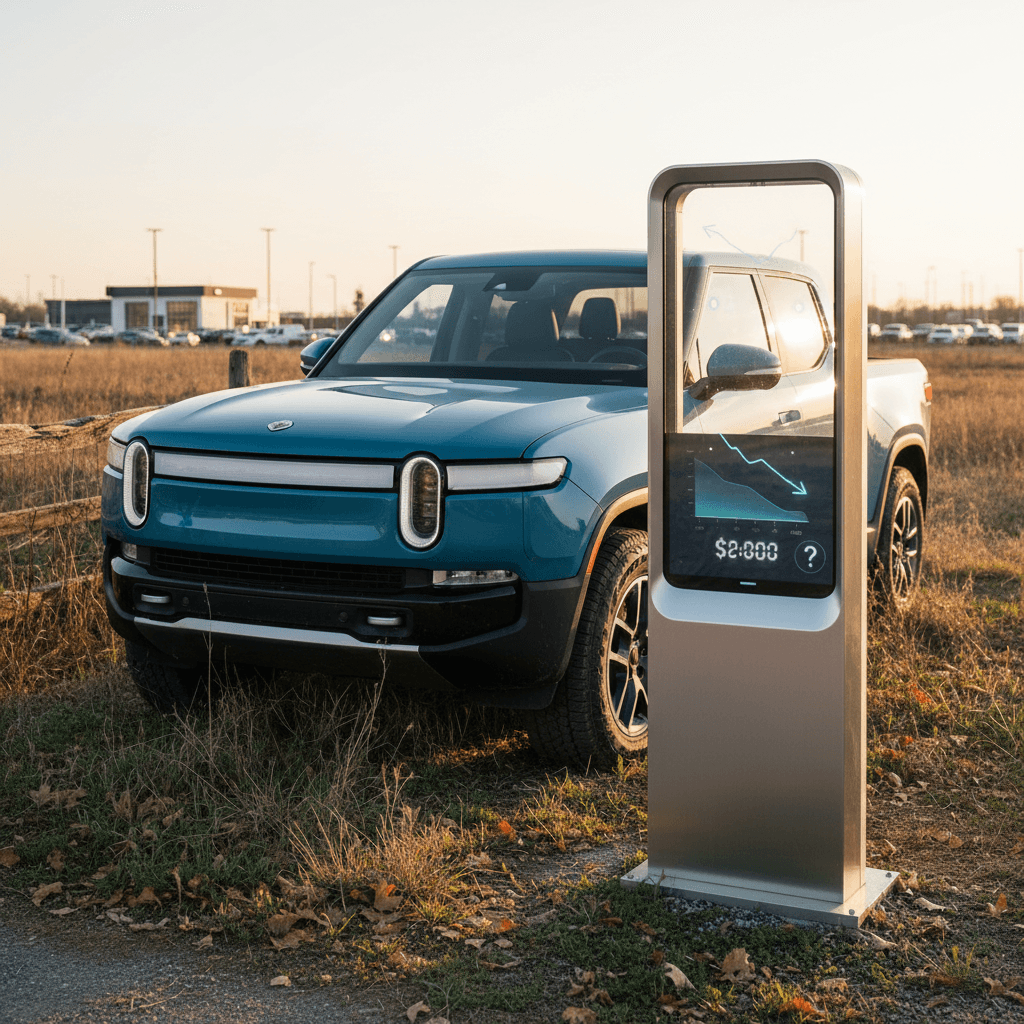
If you own a 2023 Rivian R1T and you’re looking at Gen 2 trucks, new incentives, or just a change of pace, the first question is obvious: what’s my 2023 Rivian R1T trade-in value in 2026? The answer is that it’s held up better than many EVs, but the spread between a strong offer and a weak one can easily be five figures, depending on where and how you sell.
Context: 2023 R1T prices fell fast, then stabilized
How much is a 2023 Rivian R1T worth as a trade-in in 2026?
No single number fits every 2023 R1T, but recent pricing data, trade-in reports, and forecast tools paint a clear range. For a typical 2023 R1T Adventure or similar trim with average miles and clean history in early 2026:
Typical 2023 Rivian R1T values in 2026 (US)
Price trackers and appraisal tools show that an average 2023 R1T has moved from original MSRPs often in the $75,000–$90,000 range into the mid‑$50,000s to low‑$60,000s for clean, normal-mileage examples by 2026. Independent depreciation models put current generic trade-in value around the high‑$40,000s for a base configuration, but real-world offers for optioned trucks often land higher once equipment and demand are factored in.
Wide spread between low and high offers
Why 2023 Rivian R1T trade-in values are so volatile
If you compare trade-in quotes for 2023 R1Ts, you’ll see a huge spread. That’s not a sign the market is broken; it’s a reflection of how unusual Rivian’s first-gen trucks are:
- Young brand, thin data: Appraisal algorithms and dealer playbooks rely on years of sales history. The R1T doesn’t have that yet, so some systems underprice risk, others overprice desirability.
- Price whiplash: Early buyers locked in lower pricing, then Rivian raised prices, then the used market cooled. Two 2023 R1Ts with similar specs may have very different original MSRPs and cost bases.
- Rapid product evolution: Gen 2 R1T updates and new models like R2 shift buyer attention and change what older trucks feel “worth,” even if the hardware is still excellent.
- EV macro swings: Higher interest rates, changing incentives, and broader EV oversupply in 2024–2025 made buyers more price-sensitive, and many dealers more cautious about EV inventory in general.
Compared with other EV trucks
Key factors that move your 2023 R1T trade-in number
What shapes your 2023 R1T trade-in offer
Think beyond just miles and Carfax
1. Mileage & use
2. Trim & options
3. History & condition
4. Battery confidence
5. Region & timing
6. Channel you sell through
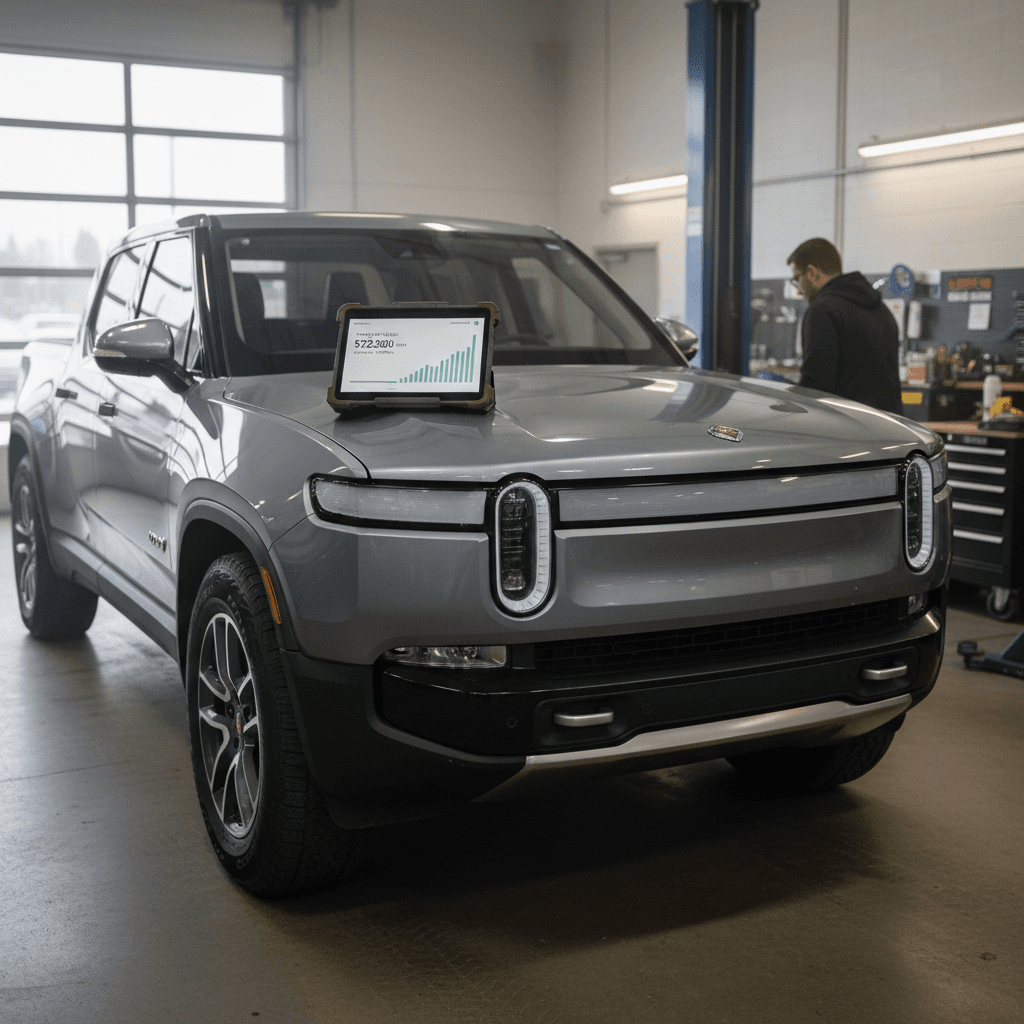
2023 Rivian R1T trade-in value vs. private-party sale
Trade-in is convenient and can reduce sales tax in many states, but you’re paying for that convenience. For a 2023 R1T, the gap between a realistic trade-in and private-party sale is often $3,000–$7,000, sometimes more with the right buyer and documentation.
Ways to sell your 2023 Rivian R1T
How typical 2023 R1T owners see the trade-offs between selling methods in 2026.
| Method | Typical Price vs. Top Market | Time & Effort | Control Over Buyer | Best For |
|---|---|---|---|---|
| Standard dealer trade-in | Lowest (easy to underprice EV risk) | Very low | None | Swapping into a non-EV or different brand quickly |
| Rivian trade-in credit | Low–mid | Low | Low | Moving directly into a new R1T or R1S with factory incentives |
| Instant-offer / national buyers | Low–mid | Low–moderate | None | Owners prioritizing speed and certainty over every last dollar |
| Specialist EV marketplace (like Recharged) | High (often near private-party) | Moderate (photos, documents) | Low–moderate | Owners who want a strong price without private-sale headaches |
| Private-party sale | Highest potential | High (screening, test drives, paperwork) | High | Experienced sellers comfortable with managing an EV sale directly |
Exact numbers vary by truck and market, but the trade-off between price and effort is consistent.
Don’t ignore tax savings
How Rivian’s own trade-in program works
If you’re planning to move from a 2023 R1T into a newer Rivian, the company’s built-in trade-in process is one obvious path. Through your Rivian account, you can enter your truck’s details and get an estimated value that can be applied toward an R1T or R1S purchase or lease.
- Valuation inputs: Rivian uses your VIN, mileage, condition descriptions, photos, and vehicle history (like Carfax) alongside broader market data to generate a number.
- Applied as credit: The trade-in value appears as a credit line on your deal sheet for purchase or lease, handled through Rivian’s finance partner (commonly Chase).
- Lease caps: If your trade-in value is unusually high relative to the lease structure, it may limit how much you can roll into a lease, some owners have found that very high equity doesn’t always slot cleanly into Rivian’s leasing programs.
- Occasional stackable incentives: Periodically, Rivian has run promotions that effectively boost your trade-in’s impact, such as extra “electric refresh” credits or lease credits layered on top of federal EV lease incentives. These programs change over time, so always check current offers before committing.
Don’t assume Rivian’s offer is the ceiling
Battery health: the silent driver of R1T value
For a 2023 Rivian R1T, there’s one asset more important than your paint correction or your wheel choice: a healthy battery pack with proof. Officially, Rivian’s battery warranty still has years and many miles left on it, but markets price confidence, not paperwork.
What buyers and appraisers worry about
- Fast-charging history: Heavy DC fast-charging use can accelerate degradation.
- Extreme climates: Hot deserts plus lots of fast-charging are a red flag for some buyers.
- Range complaints: If the truck no longer gets near its EPA-rated range, buyers know it will show up in their daily use.
How to turn battery health into a premium
- Independent battery health test: A third-party diagnostic that measures usable capacity and projected degradation.
- Charging behavior records: Showing mostly Level 2 home charging with modest DC use is reassuring.
- Recent software and service: Up-to-date software and documented service visits show the truck has been cared for.
Where Recharged fits in
Ready to find your next EV?
Browse VehiclesHow to maximize your 2023 R1T trade-in offer
7 practical steps before you get quotes
1. Get your documentation together
Pull your Rivian service records, any tire or alignment receipts, and your vehicle history report. A neat folder, digital or physical, signals low risk to any appraiser.
2. Consider a battery health report
If you plan to shop the truck to multiple buyers (especially EV‑savvy ones), investing in an independent battery health test can pay for itself in a stronger offer.
3. Fix small cosmetic issues
Curb rash, windshield chips, and minor interior scuffs are cheap to remedy and disproportionately affect first impressions. Save big repairs for negotiation rather than guessing.
4. Detail the truck properly
A clean, de‑cluttered R1T photographs and shows better. Good photos and a well-presented vehicle can be the difference between an algorithmic “average” value and someone stretching for a cleaner example.
5. Get at least three real offers
Compare a Rivian quote, a mainstream instant-offer tool, and an EV‑focused marketplace like Recharged. In a fragmented EV market, triangulating is the only way to know your real number.
6. Time around incentives and launches
New model launches, factory promotions, or policy changes can temporarily skew the market. If new Rivian lease deals are aggressive, trade-in values may soften as shoppers flock to new inventory instead of used.
7. Decide how much effort you’ll invest
A private sale can add thousands, but it also adds risk and time. If you’d rather keep things simple, trading in through a specialist EV marketplace is often the best balance between value and convenience.
Leverage Recharged when you’re on the fence
Real-world 2023 R1T trade-in scenarios
To make all of this more concrete, here are simplified examples based on real-world 2023 R1T owners’ experiences and current market data. Numbers are illustrative, not guarantees, but they show how factors stack up.
Sample 2023 R1T trade-in outcomes
Same model year, very different results
Scenario A: Clean, low miles, strong spec
- 2023 R1T Adventure, Quad-Motor
- 14,000 miles, 1-owner, no accidents
- Mostly home Level 2 charging, battery health verified
- Trade-in offers: low $60,000s
- Private sale through EV marketplace: mid‑$60,000s
Scenario B: High miles, off-road wear
- 2023 R1T Adventure, Dual-Motor
- 42,000 miles, cosmetic trail rash
- Heavy DC fast-charging, no health report
- Trade-in offers: high‑$40,000s to low‑$50,000s
- Private sale: low‑$50,000s with the right buyer
Scenario C: Market timing drag
- 2023 R1T, modest options, 22,000 miles
- Trying to trade right after new Rivian lease promos hit
- Local dealers full of EV inventory
- Dealer trade-in: mid‑$50,000s
- Specialist EV marketplace: several thousand higher, but took a few extra weeks to sell
2023 Rivian R1T trade-in FAQ
Frequently asked questions about 2023 R1T trade-in value
Should you trade in your 2023 R1T or hold?
As of 2026, the 2023 Rivian R1T trade-in value story is surprisingly positive for an early, premium EV truck. Yes, depreciation has bitten, but for most owners, it’s closer to one‑third than the brutal 50–60% drops we’ve seen elsewhere in the EV market. Whether it makes sense to trade now or hold depends on your next move: if a new Rivian lease or a different EV better fits your life, today’s stabilized resale values, layered incentives, and healthy demand for clean, well-documented trucks make this a reasonable exit window.
If you want to explore your options without guessing, Recharged can help you get a battery-verified valuation, compare trade-in, instant-offer, and consignment paths, and set you up with financing and delivery for your next EV. However you decide to move on from your 2023 R1T, go into the conversation with data, documentation, and a clear sense of the market, and you’ll keep more of your truck’s value in your pocket, not someone else’s margin.