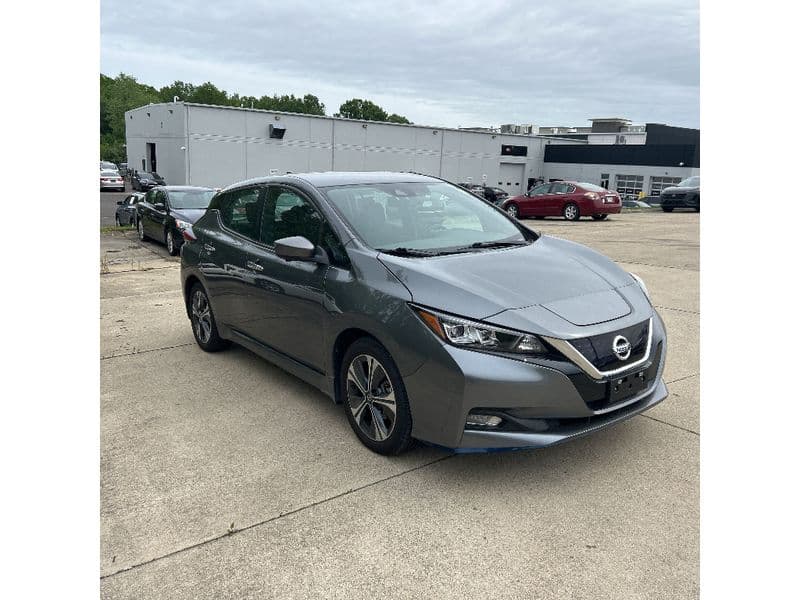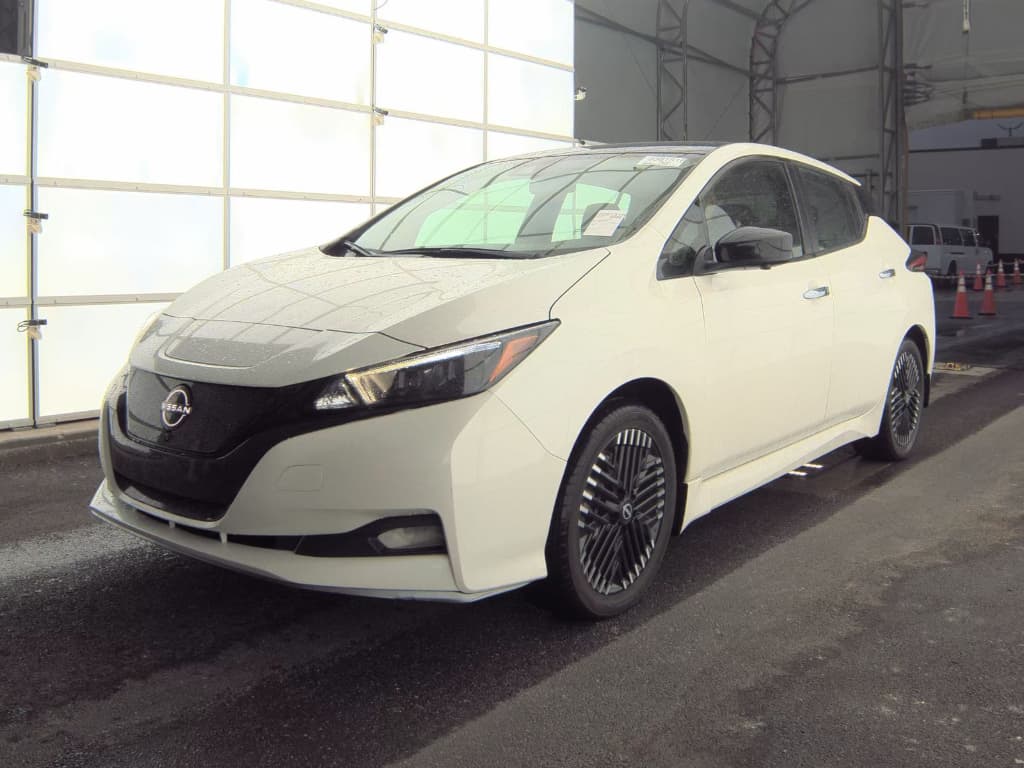
In the used EV world, the 2023 Nissan Leaf is a bit of a paradox. New, it was already behind the tech curve. Used, it’s one of the cheapest ways to get into a modern electric car with usable range, a real warranty, and low running costs. This 2023 Nissan Leaf buying guide walks you through trims, range, charging, depreciation, battery health, and the exact things you should check before you send a cashier’s check or click “buy now.”
Quick take
Why the 2023 Nissan Leaf makes sense used
By 2023, the Leaf was no longer the darling of the EV press. It had an older platform, a smaller battery than many rivals, and a fast‑charging standard, CHAdeMO, that the North American market has largely left behind. All of that is terrible news for resale value, which is exactly why you’re looking at it now.
2023 Nissan Leaf value snapshot (2026 US market)
In other words, someone else already paid for the first few years of depreciation and you’re buying the useful part: cheap, quiet, low‑maintenance miles. The question is which 2023 Leaf you should choose, and how to be sure you’re not inheriting a tired battery.
2023 Nissan Leaf trims, batteries, and key specs
For 2023 in the US, Nissan streamlined the Leaf lineup to just S and SV Plus. Understanding the differences is step one in your buying decision.
2023 Nissan Leaf trim comparison
Key differences between the 2023 Leaf S and SV Plus trims for US buyers.
| Feature | 2023 Leaf S | 2023 Leaf SV Plus |
|---|---|---|
| Battery size (usable) | ~40 kWh | ~60 kWh |
| EPA range (approx.) | 149 miles | 212 miles |
| Onboard AC charger | 6.6 kW | 6.6 kW |
| DC fast‑charge standard | CHAdeMO | CHAdeMO |
| Horsepower / torque | 147 hp / 236 lb‑ft | 214 hp / 250 lb‑ft |
| Wheels | 16-inch steel/alloy | 17-inch alloy |
| Notable features | Cloth seats, basic driver‑assist, smaller screen | ProPILOT Assist, larger infotainment, more comfort & tech features |
| Best for | Short urban commutes, second car duty | Longer commutes, light road trips on CHAdeMO corridors |
If range matters more than price, the SV Plus is the one to chase.
Trim choice in one sentence
Range: what you really get, not just EPA numbers
On paper, the 2023 Leaf looks straightforward: roughly 149 miles of EPA range for the S and about 212 miles for the SV Plus in ideal conditions. Real life is messier. Speed, temperature, elevation, and how the previous owner treated the battery can knock those numbers down in a hurry.
Real‑world 2023 Leaf range expectations
Assuming a healthy battery and mixed driving
City / suburban
Leaf S: 120–140 miles
SV Plus: 180–210 miles
Stop‑and‑go favors EVs; you’ll see the best numbers puttering around town.
Highway at 70–75 mph
Leaf S: 90–115 miles
SV Plus: 140–180 miles
Sustained high speed is the Leaf’s enemy, especially in cold weather.
Winter, below freezing
Leaf S: 70–100 miles
SV Plus: 110–150 miles
Cabin heat and cold‑soaked batteries can shave 25–40% off warm‑weather range.
Watch the guess‑o‑meter
If your daily life fits well inside those real‑world numbers, the Leaf is wonderfully boring transportation: you plug in at home, you never visit a gas station, and your biggest worry is remembering which grocery store has the best parking‑lot chargers.
Charging the 2023 Leaf at home and on the road
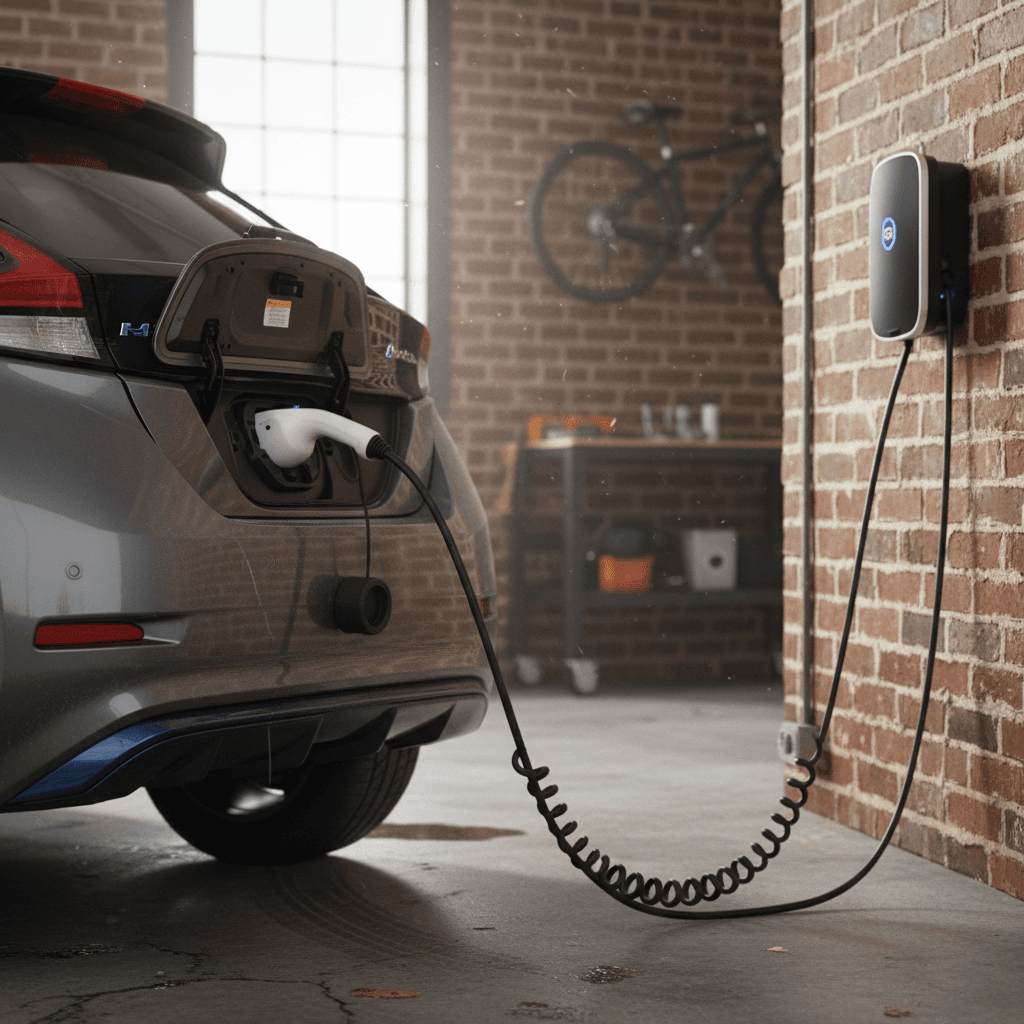
Every 2023 Leaf has the same basic charging hardware: a J1772 port for Level 1 and Level 2 AC charging, and a CHAdeMO port for DC fast charging. The experience, however, depends on where you live and how you charge.
Home charging
- Level 1 (120V): About 4–5 miles of range per hour. Fine for very short commutes.
- Level 2 (240V, 32A–40A): Roughly 20–25 miles of range per hour, enough to refill an SV Plus overnight.
- You can use a wall‑mounted unit or a high‑quality portable Level 2 charger plugged into a NEMA 14‑50 or similar outlet.
If you’re not sure how to size home charging, Recharged can help you think through home EV charger options while you shop for the car itself.
Public charging
- Level 2 public: Everywhere, workplaces, garages, shopping centers. Works great with the Leaf.
- DC fast (CHAdeMO): The Leaf’s weak spot. Networks are thinning as stations shift to CCS and NACS.
- Expect ~70–75 kW peak on a healthy battery, tapering as you approach 80%.
Before you buy, open PlugShare or a similar app and filter for CHAdeMO near your home and along your usual routes. If your area is down to a handful of legacy stations, treat the Leaf as a home‑base commuter, not a road‑trip machine.
Future of CHAdeMO
Depreciation & pricing: how much should you pay?
If you love a bargain, the 2023 Leaf is your kind of economic tragedy. The car bleeds value quickly, often more than 50% of MSRP within just a few years, thanks to limited range, CHAdeMO, and the flood of newer long‑range EVs.
2023 Nissan Leaf used‑market benchmarks (2026)
These are broad ballparks. Condition, mileage, options, geography, and, crucially, battery health will pull an individual car up or down a few thousand dollars. A high‑mileage ride‑share Leaf with a tired pack at $12,000 is no bargain; a low‑mile SV Plus with a strong battery at $19,000 might be.
How Recharged prices a 2023 Leaf
Battery health: what to check before you buy
The Leaf’s battery story is famous by now. Early cars suffered from heat‑related degradation. By 2023, chemistry and thermal management were improved compared with the original generation, but you’re still dealing with an air‑cooled pack. Battery condition is the single most important variable in a used Leaf purchase.
Battery health checks for a 2023 Leaf
1. Look at the capacity bars
On the right side of the Leaf’s dash is a vertical stack of small bars showing battery capacity (not just state of charge). A brand‑new car has 12. Walk away from a 2023 Leaf that’s already down to 10 or fewer unless it’s extremely cheap and you understand the range hit.
2. Use a battery diagnostic tool
If you can, use an OBD‑II dongle and an app such as Leaf Spy Pro to see the pack’s state of health (SoH) in percentage form. Numbers in the mid‑ to high‑90s are ideal on a low‑mile 2023; something in the low‑80s suggests heavy use or lots of DC fast charging.
3. Check the warranty status
US‑market Leafs carry an <strong>8‑year/100,000‑mile</strong> battery warranty against capacity loss below 9 of 12 bars, tied to the original in‑service date. Ask for documentation or have a Nissan dealer run the VIN so you know how much coverage is left.
4. Ask about fast‑charging history
Frequent CHAdeMO fast charging, especially back‑to‑back sessions in hot weather, can accelerate degradation. Light fast‑charging use isn’t a dealbreaker, but a rideshare history with constant DCFC in Phoenix should give you pause.
5. Inspect for heat stress
Look for cars coming from extreme‑heat markets that spent their lives outdoors. Faded paint, baked headlamps, and cracked interior plastics can echo what the pack has endured. A garaged Leaf from a mild climate will almost always age better.
6. Let someone else do the homework
If you’d rather not decode Leaf Spy screenshots, buy from a seller that provides an independent battery report. Every Recharged vehicle includes a <strong>Recharged Score</strong> with a clear, third‑party view of battery health and remaining life.
Why Leaf battery bars matter
Reliability, safety, and known issues
Mechanically, the 2023 Leaf is a known quantity. This platform has been around a long time, and most of the scary surprises were ironed out years ago. As a used bet, it’s closer to an appliance than a science experiment.
2023 Leaf: strengths and weak spots
What owners and data tend to agree on
Generally strong points
- Drivetrain simplicity: Single‑speed reduction gear, no engine, no transmission drama.
- Low routine costs: No oil changes; brake wear is light thanks to regen.
- Mature software: Infotainment and driver‑assist systems are stable, if not cutting‑edge.
- Crash safety: The Leaf earns strong scores in major crash‑test regimes for its class and era.
Things to watch
- Battery degradation: Still the headline concern, especially in hot climates.
- On‑board charger faults: A minority of owners report AC charging issues that may require dealership attention.
- CHAdeMO orphaning: Fewer fast‑chargers over time means less flexibility for road trips.
- Interior wear: Cloth and plastics are economy‑car grade; high‑mile cars can feel tired inside.
Safety is a quiet Leaf strength
Inspection checklist for a used 2023 Leaf
Used EV inspections look a little different from their gasoline cousins. Engine leaks are out; charging behavior and software weirdness are in. Here’s a practical walk‑through you can use on a private‑party car, at a dealer, or when reviewing a vehicle report from a marketplace like Recharged.
Step‑by‑step 2023 Leaf inspection
1. Start with the title, Carfax, and recall check
Verify the car has a clean title (or understand any brand), check for accident history, and confirm all open recalls were addressed. Salvage or flood titles can hide serious battery and high‑voltage damage.
2. Verify trim, options, and wheels
Confirm whether you’re looking at an S or SV Plus by VIN and equipment. Check wheel size, headlight type, ProPILOT buttons, and infotainment screen size against the listing so you aren’t paying SV Plus money for a dressed‑up S.
3. Test both charging ports
Plug into a Level 2 station if possible and confirm the car charges normally and at expected speeds. If you have access to a CHAdeMO DC fast charger, do a short session to ensure the port and communication work properly and that charging power ramps up as expected.
4. Road‑test for noises and alignment
On the drive, listen for front‑end clunks over bumps, highway wind noise from misaligned doors or windows, and any whine from the reduction gear beyond the usual EV hum. The steering should track straight with hands lightly on the wheel.
5. Check every driver‑assist feature
If equipped, test adaptive cruise control, lane‑keep assist, blind‑spot monitoring, and parking sensors in a safe environment. Many of these systems rely on calibrated cameras and radar; prior body repairs can throw them off if not done properly.
6. Confirm software and connectivity
Pair your phone, launch navigation, and use basic connected‑services functions. A 2023 Leaf isn’t a tech showpiece, but you still want Bluetooth, CarPlay/Android Auto, and basic telematics to work smoothly.
7. Get an independent EV‑savvy inspection
For peace of mind, have a shop or marketplace that understands EVs review the car. Recharged’s process, for example, includes a dedicated battery health diagnostic and a <strong>Recharged Score Report</strong> that translates that data into plain language.
Who the 2023 Nissan Leaf is (and isn’t) for
Great fit for
- Urban and suburban commuters with predictable daily mileage under 80–100 miles.
- Households with multiple cars that can dedicate the Leaf to local duty.
- First‑time EV buyers who want a low‑cost, low‑stakes way into electric ownership.
- Drivers with home or workplace Level 2 charging and little need for DC fast charging.
- Budget‑focused shoppers who care more about cost per mile than the latest tech.
Probably not ideal for
- Frequent interstate road‑trippers who need robust fast‑charging coverage.
- Drivers in very hot climates planning to rack up huge mileage quickly.
- Single‑car households that need one vehicle to do everything, everywhere.
- Tech‑obsessed buyers chasing the latest driver‑assist and infotainment toys.
- People eyeing towing or heavy cargo use, this is a compact hatchback, not a workhorse.
2023 Nissan Leaf buying FAQ
Frequently asked questions about buying a 2023 Nissan Leaf
Bottom line: is a 2023 Nissan Leaf a good buy?
If you judge the 2023 Nissan Leaf against the latest long‑range, 800‑volt, 10‑camera EV wunderkinds, it comes up short. But that’s the wrong comparison. As a used compact hatchback with ultra‑low running costs, quiet manners, and enough range for real life, it makes a persuasive case, especially if someone else already ate the depreciation.
The key is honesty about your use case. If your universe is school runs, office commutes, errands, and the occasional cross‑town trip, the Leaf is more than enough car. If your heart longs for cross‑country fast‑charging sprints and over‑the‑air software theatrics, look elsewhere.
When you’re ready to move from research to reality, shopping through Recharged means every candidate Leaf arrives with transparent pricing, a verified Recharged Score for battery health, and EV‑savvy humans on call to answer questions. Do your homework, match the trim and range to your life, and a well‑chosen 2023 Leaf can quietly be one of the smartest financial decisions you make on four wheels.