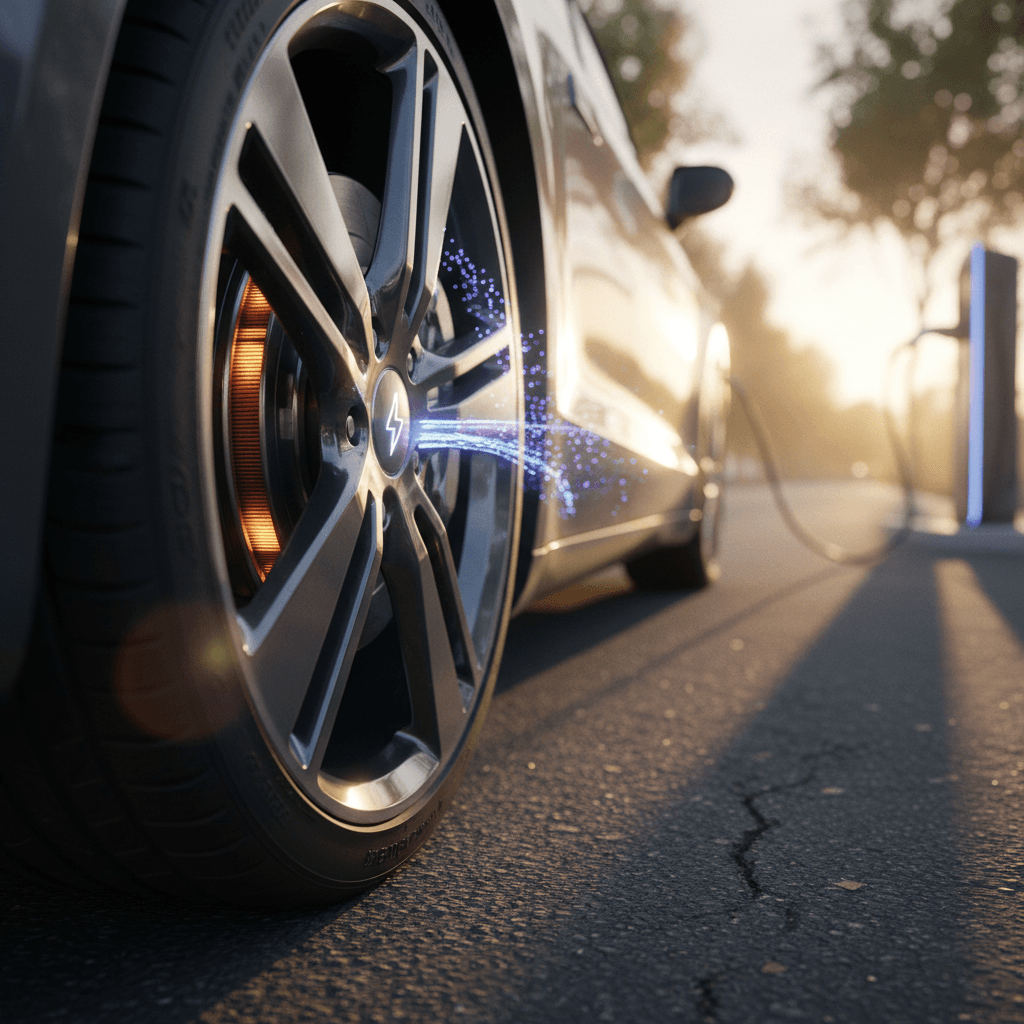
Lift your foot off the accelerator in an electric car and you feel it: that smooth, engine‑braking‑but-not-quite sensation as the car slows and the battery icon lights up. That’s regenerative braking, an energy‑recovery trick that lets EVs claw back some of the energy you just spent getting up to speed. In this guide, you’ll get regenerative braking explained in plain English: how it works, how much it really helps, and what it means for owning or buying a used EV.
In one sentence
What is regenerative braking?
In a conventional gas car, when you hit the brakes, metal pads clamp down on a rotor and turn your kinetic energy (movement) into heat. Once that heat leaves the rotor and the air around it, the energy is gone for good.
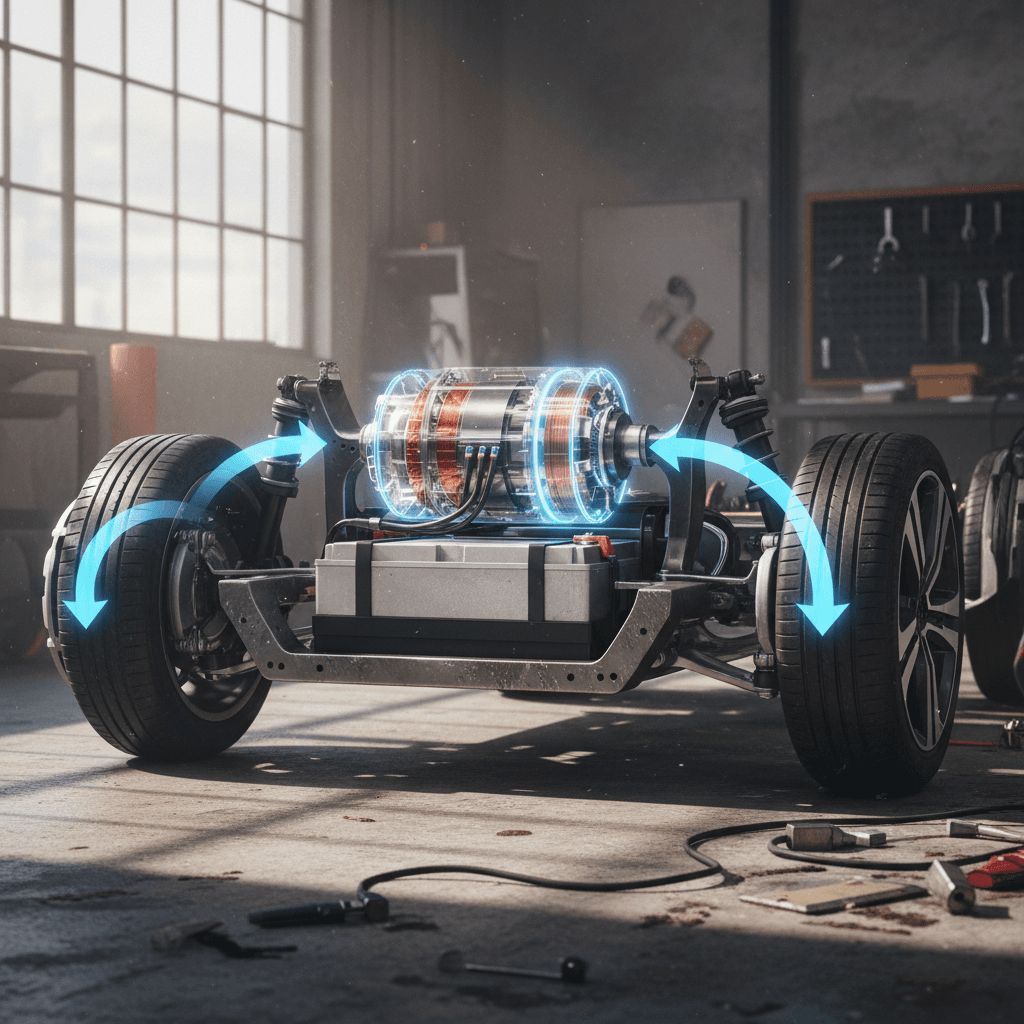
In an EV or hybrid, regenerative braking (often shortened to “regen”) uses the electric motor in reverse. Instead of drawing power from the battery to spin the wheels, the wheels spin the motor, which now behaves like a generator. That generator produces electricity, which flows back into the battery. At the same time, the resistance inside the motor creates a braking force that slows the car.
- You press the brake pedal or lift off the accelerator.
- The car’s computers decide how much deceleration you want.
- The traction motor switches to generator mode.
- Electricity flows back into the battery pack.
- If you need more stopping power than regen can provide, the conventional friction brakes step in.
Think of it like a bicycle dynamo
How regenerative braking works, step by step
Regenerative braking by the numbers
Every brand’s control software is different, but under the skin most EVs follow the same basic script when you slow down. Here’s regenerative braking explained in more detail, from your right foot to the battery cells.
From pedal to battery: what happens when you slow down
A simplified look at how your EV decides how much regenerative braking to use, and when to hand off to the friction brakes.
| Stage | What you do | What the car does | What the energy does |
|---|---|---|---|
| 1. Request | Lift off accelerator or press brake pedal | Brake controller reads pedal position, speed, wheel grip, ABS sensors | Calculates desired deceleration and how much regen is safe |
| 2. Motor swap | Still coasting or lightly braking | Inverter switches the motor from drive mode to generator mode | Current begins flowing from motor back toward the battery |
| 3. Energy recovery | Mild–moderate deceleration | Motor resists rotation, slowing the wheels | Kinetic energy becomes electrical energy stored in the battery |
| 4. Blending | Harder braking or low‑grip road | System ramps in hydraulic friction brakes while keeping regen as high as conditions allow | Extra stopping force comes from pads and rotors, not just regen |
| 5. Safety override | Emergency stop, ABS activation, or full battery | Friction brakes do most or all of the work; regen is reduced or disabled | System prioritizes stability and stopping distance over energy recovery |
Modern EVs constantly blend regenerative and friction braking behind the scenes to keep braking smooth and safe.
Regen isn’t always available
Regenerative braking vs regular friction brakes
Regenerative braking
- Uses the drive motor as a generator.
- Converts motion into electricity, not heat.
- Best at moderate deceleration and city speeds.
- Doesn’t wear pads and rotors.
- Limited by battery temperature, charge level, and traction.
Friction (hydraulic) braking
- Uses calipers, pads, and rotors like any gas car.
- Turns motion into heat and throws that energy away.
- Handles emergency stops and high‑speed braking.
- Components wear over time and need service.
- Always there as a backup if regen can’t help.
In most newer EVs, you never have to think about which system is doing what. The software continuously blends regenerative and friction braking to match your pedal input and road conditions. If you need a gentle slowdown, you may be using mostly regen. If you slam the pedal at highway speed, you’re leaning heavily on good old hydraulic clamps.
Safety first, efficiency second
How much energy can regenerative braking really recover?
You’ll see big numbers tossed around, “up to 70% of braking energy recovered!”, and under very specific conditions, some systems can hit that in a single gentle braking event. But that isn’t the same as saying your car gets 70% better efficiency overall.
Real‑world regenerative braking gains
What the headlines say vs what you actually feel
Per‑brake event
Under ideal conditions, smooth, moderate deceleration from city speeds, advanced regen systems can capture 60–70% of the braking energy that would otherwise become heat.
Whole‑trip impact
Across a full drive cycle, U.S. Department of Energy data suggests around 22% of total energy in a typical EV can be returned to the battery via regeneration in mixed driving.
City vs highway
In stop‑and‑go city driving, regen can cut energy or fuel use by roughly 20% compared with similar non‑hybrid cars. On steady‑speed highway trips, the effect is smaller because you simply brake less.
The catch: physics still wins
Regen settings, one‑pedal driving, and drive modes
Most modern EVs let you adjust how aggressive the regenerative braking feels, either by picking a drive mode (Eco/Normal/Sport), using steering‑wheel paddles, or toggling a dedicated one‑pedal driving setting.
Common regenerative braking modes you’ll see
1. High regen / one‑pedal
Lifting off the accelerator produces strong deceleration. In traffic, you can often drive almost entirely with the right pedal, using the brake pedal mainly for the last few mph or emergency stops.
2. Medium / normal regen
A balanced setting that feels closer to engine braking in a gasoline car. You’ll still harvest energy, but coasting distances are longer and transitions feel more familiar to new EV drivers.
3. Low regen / coasting
The car coasts more freely when you lift off. This can be helpful on the highway or for drivers who prefer a traditional feel, but you’re recapturing less energy from each slowdown.
4. Auto / adaptive regen
Some vehicles watch traffic, map data, and road grade to automatically dial regen up or down. Let off the accelerator near slower traffic or a downhill, and the car increases regen for you.
A good starting point
Benefits of regenerative braking for everyday drivers
Four big wins from regenerative braking
It’s not just about range numbers on a spec sheet
Better efficiency and range
Every time you slow down with regen, you send a little energy back into the battery. Over a week of commuting, that can translate into noticeably fewer kWh from your wall outlet, or more miles per charge.
Lower brake maintenance costs
Because regen handles much of the light and moderate braking, pads and rotors last longer than in comparable gas cars. Many EV owners go well past 60,000 miles before needing their first brake job, depending on climate and driving style.
Smoother, more controlled driving
Strong, predictable regen can make city driving calmer. You modulate your speed with tiny changes to the accelerator instead of a constant shuffle between two pedals.
Less waste, fewer emissions
Even when your electricity comes partly from fossil fuels, reusing energy instead of throwing it away as heat makes every mile cleaner. In hybrids, regen also lets the engine shut off more often, cutting fuel use and tailpipe emissions.
Downsides, limits, and myths about regen
Regenerative braking is impressive technology, but it isn’t magic. There are limits, and a few persistent myths, you should understand.
- Myth: “Regen means brakes never wear out.” Pads and rotors still corrode, especially in wet or salty climates, and they’re still critical in emergencies.
- Myth: “More regen is always better.” Max regen all the time isn’t always the most efficient. Sometimes smooth coasting uses less energy than constantly slowing and re‑accelerating.
- Limit: Battery and temperature. When the pack is cold or nearly full, your car may sharply reduce regen, making the car feel like it coasts more and forcing the friction brakes to work harder.
- Limit: Traction and comfort. On ice or rough pavement, aggressive regen can unsettle the car. That’s why many systems automatically dial it back when ABS or stability control senses trouble.
Winter surprise to watch for
What regen means for brake wear in used EVs
If you’re shopping the used EV market, regenerative braking is a double‑edged sword. Yes, it usually means less pad wear. But because friction brakes in EVs are used less often, they can suffer different kinds of aging than you’re used to seeing on gasoline cars.
How regenerative braking changes brake wear on used EVs
What to ask about, and what to inspect
The upside
- Pads may have lots of material left even at higher mileage.
- Rotors see fewer high‑heat events, which can reduce warping.
- Many owners report going farther between brake jobs compared with similar gas cars.
The gotchas
- Lightly used pads and rotors can still develop surface rust and corrosion, especially in damp or salty regions.
- Caliper slide pins and parking brake mechanisms can stick from underuse.
- Uneven rotor surfaces may cause shudder even if pads are thick.
How Recharged helps here
If you’re buying a used EV privately, ask for recent service records and look for evidence that the friction brakes have been inspected or serviced at least occasionally, especially on older cars from snow‑belt states.
How to use regenerative braking effectively
Practical tips to get the most from regen
1. Look far ahead and plan your slows
Start easing off the accelerator earlier instead of rushing up to traffic lights and stopping hard. Long, gentle decelerations give the regen system more time to capture energy efficiently.
2. Use one‑pedal in the right places
Try high‑regen or one‑pedal mode in city and suburban driving where speeds are lower and stops are frequent. On long highway stretches, a milder setting plus smooth coasting often feels better.
3. Learn how your car signals limited regen
Some EVs show dashed regen bars, a snowflake icon, or a message when regen is reduced. Pay attention to these cues so you’re not caught out by a suddenly more “slippery” feeling car on a cold morning.
4. Don’t be afraid of the brake pedal
Using regen well doesn’t mean never touching the brakes. If in doubt about stopping distance, prioritize safety and brake normally, the car will still do as much regen as conditions allow before leaning on the pads.
5. Occasionally exercise the friction brakes
A few firm-but-safe stops from moderate speed, on an empty road and only when it’s safe, can help clean light surface rust off the rotors and keep the mechanical parts moving.
6. Check drive modes before a road trip
Headed for mountains or heavy traffic? Pick a regen setting that feels natural and test it before you’re threading down a grade with a full car. The right mode can make descents calmer and easier on your brakes.
FAQ: Regenerative braking explained
Frequently asked questions about regenerative braking
Bottom line: Why regen matters when you own or buy an EV
Regenerative braking isn’t a party trick; it’s one of the quiet workhorses that makes electric vehicles feel clever and efficient in daily life. By turning deceleration into a mini charging session, it boosts range in the slog of city traffic, trims your energy bill, and gives your mechanical brakes a much easier life.
For owners, learning how regenerative braking works, and how your specific car behaves in different modes and temperatures, pays off in smoother, safer, more efficient driving. For used‑EV shoppers, it’s also a reminder to look beyond the battery gauge: a car that’s lived on regen alone might have brake hardware that’s aging in different ways than you’d expect.
At Recharged, every EV we sell comes with a Recharged Score Report that pairs verified battery health with a transparent view of the vehicle’s overall condition, including its braking system. That way, when you enjoy that satisfying lift‑off decel on the drive home, you’ll know the tech behind it, and you’ll know the car has been vetted to match.