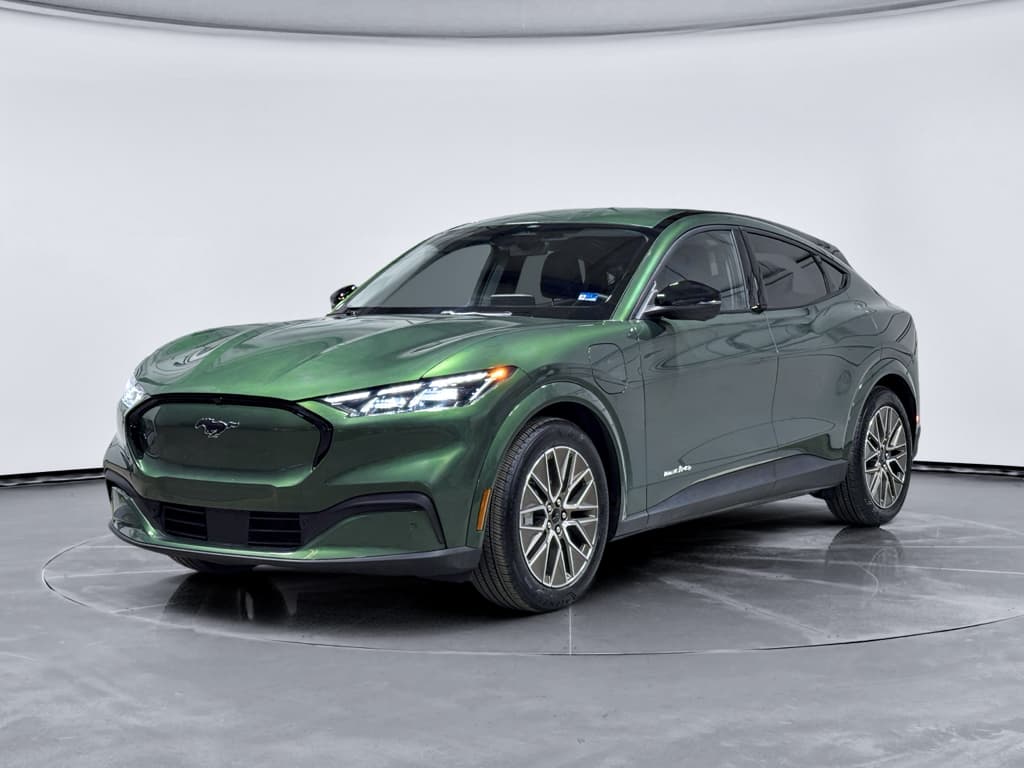
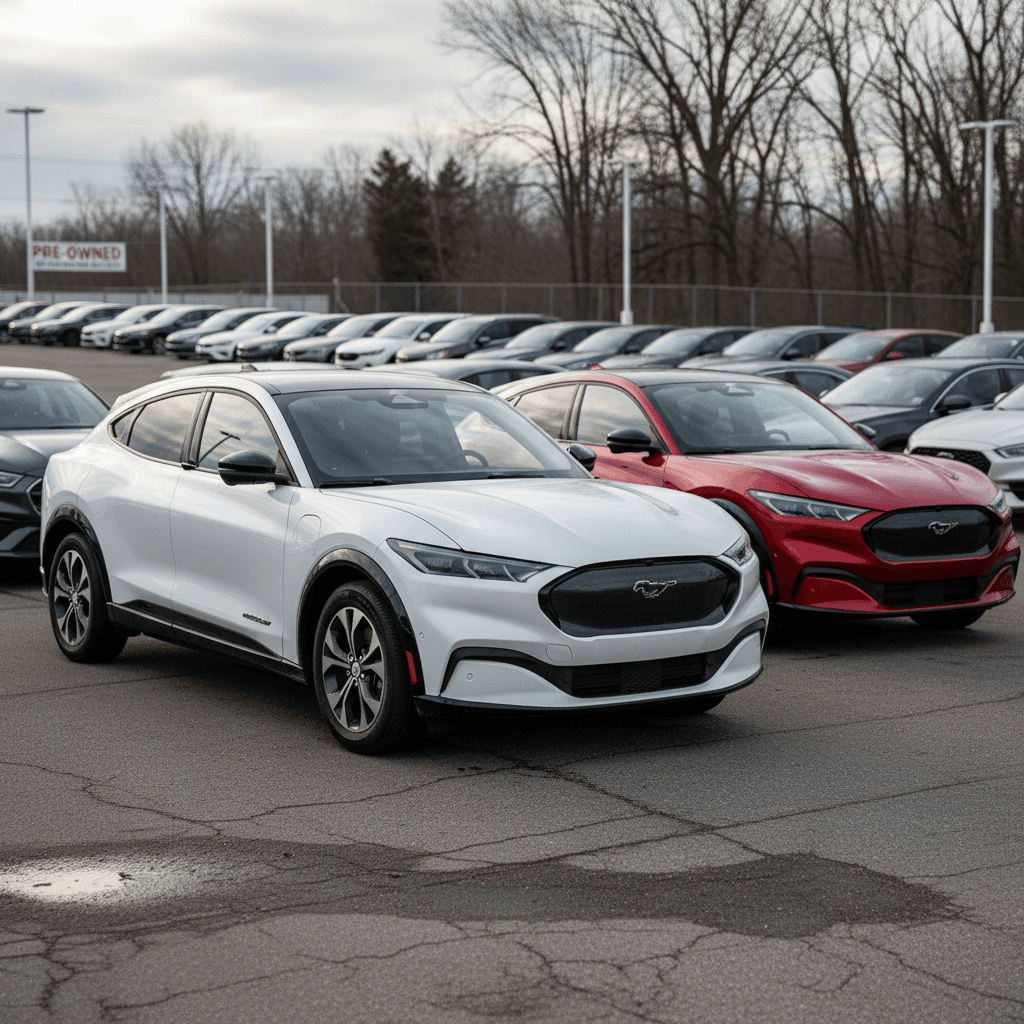
If you’re shopping for a used electric SUV, the 2023 Ford Mustang Mach-E should be high on your shortlist. It blends Mustang-inspired style, strong performance, and practical range, and thanks to EV depreciation, 2023 models are now priced well below their original MSRPs. This 2023 Ford Mustang Mach-E buying guide walks you through trims, range, pricing, reliability, and what to inspect so you can buy confidently.
Who this guide is for
Why the 2023 Mustang Mach-E is a smart used buy
2023 Mustang Mach-E at a glance
For many buyers, the 2023 model year hits a sweet spot: you get the updated hardware that addressed early high‑voltage contactor issues from 2021–2022 builds, along with more mature software and range tuning. At the same time, used prices have come down sharply compared with what first owners paid, partly because EVs in general depreciate faster in their early years than comparable gas SUVs.
Model-year sweet spot
2023 Mustang Mach-E trims, batteries, and range
Understanding the 2023 Mach-E lineup is crucial, because range, performance, and feature content all change with trim and battery choice. For 2023, the core trims in the U.S. were Select, Premium, California Route 1, and GT (including GT Performance), each with rear‑wheel drive (RWD) or all‑wheel drive (eAWD) and either a Standard Range (SR) or Extended Range (ER) battery.
2023 Mustang Mach-E trims, batteries, and approximate EPA range
Key 2023 trims with common battery/drivetrain combinations. Exact range can vary slightly by wheels and options, but these figures will get you oriented.
| Trim (2023) | Battery | Drivetrain | Approx. EPA range |
|---|---|---|---|
| Select SR | Standard Range (~70 kWh usable) | RWD | ~247 miles |
| Select SR | Standard Range | eAWD | ~224 miles |
| Premium SR | Standard Range | RWD | ~247 miles |
| Premium ER | Extended Range (~91 kWh) | RWD | ~306–310 miles |
| Premium ER | Extended Range | eAWD | ~290–300 miles |
| California Route 1 ER | Extended Range | eAWD | ~312 miles |
| GT ER | Extended Range | eAWD | ~260 miles |
| GT Performance ER | Extended Range | eAWD | ~235–250 miles |
Always confirm the original window sticker or EPA label for the exact configuration you’re considering.
Range depends on more than the badge
- Select: Value‑oriented entry trim with cloth seating and simpler audio, but still well equipped for daily use.
- Premium: Sweet spot for many buyers, leather‑like upholstery, larger infotainment feature set, and access to the Extended Range battery.
- California Route 1: Range‑focused configuration with ER battery and eAWD; more of a long‑distance cruiser than a performance model.
- GT / GT Performance: High‑output dual‑motor setups with serious acceleration and sportier suspension tuning, at the cost of some range and ride comfort.
Best all-around pick
Performance and driving experience
Behind the wheel, every 2023 Mach-E feels like a modern EV: instant torque, quiet cabin, and one‑pedal driving in “Untamed” or with strong regenerative braking enabled. Power ranges from roughly the mid‑200‑horsepower neighborhood in base SR RWD versions up to around 480 horsepower and over 600 lb‑ft of torque in GT Performance guise, which can launch the SUV to 60 mph in the mid‑3‑second range when conditions are ideal.
Everyday drivability
- Whisper mode dials back throttle response and keeps things relaxed for commuting.
- Light steering and a relatively small footprint make it easy to maneuver in city traffic and parking decks.
- Available BlueCruise hands‑free driving (on compatible roads) can reduce fatigue on longer trips when equipped and subscribed.
Enthusiast appeal
- Engage and Untamed modes sharpen responses and unlock quicker acceleration.
- Dual‑motor eAWD versions feel planted exiting tight corners, especially GT trims.
- Instant EV torque gives passing power that even many V8 SUVs can’t match from a roll.
Ride and noise
Real-world range and charging expectations
On paper, a 2023 Mach-E can deliver roughly 224–312 miles of EPA-rated range depending on configuration. In our own Recharged testing of Mach-E models in this generation, we’ve consistently seen that drivers who stick to moderate speeds, avoid extreme temperatures when possible, and use preconditioning can come close to, or even slightly beat, EPA figures on ER RWD trims.
What to expect day-to-day
How a 2023 Mach-E behaves in typical U.S. driving
Cold weather hits hardest
Highway vs. city
Charging curve matters
Before you buy: make sure charging fits your life
1. Confirm your home charging plan
Ideally you’ll install a <strong>Level 2 (240V)</strong> charger or use a 240V dryer outlet with a portable unit. Relying on Level 1 (120V) alone will feel slow with a battery this size.
2. Check public charging near you
Look at networks like Electrify America, EVgo, and others along your routes. If CCS infrastructure near you is sparse, consider how often you’ll really need DC fast charging.
3. Understand BlueOval Charge Network access
Ford’s BlueOval network aggregates many providers into one account. Ask the seller whether any charging promotions or credits are still active and transferable.
4. Think about road-trip patterns
If you routinely drive 250–300 miles in a day, prioritize <strong>Extended Range</strong> over Standard Range, and RWD over eAWD for maximum highway distance.
Pricing, depreciation, and what a 2023 Mach-E is worth
When new, well‑optioned 2023 Mustang Mach-E trims commonly stickered from the mid‑$40,000s into the $60,000s. By early 2026, many 2023 models have seen roughly 40–50% depreciation from their original MSRPs, depending on mileage, trim, and condition. That means Select SR examples can sometimes be found in the mid‑$20,000s, while clean low‑mile Premium ER or GT models typically occupy the upper‑$20,000s to mid‑$30,000s range, with especially loaded or low‑mile units higher.
Typical U.S. price bands for 2023 Mach-E (as of 2026)
These are broad ranges to help frame negotiations. Local market, options, and condition will push prices up or down.
| Trim / configuration | Approx. mileage | Typical asking range |
|---|---|---|
| Select SR RWD/eAWD | 20,000–45,000 mi | Mid-$20,000s to high-$20,000s |
| Premium SR | 20,000–40,000 mi | High-$20,000s to low-$30,000s |
| Premium ER RWD | 15,000–35,000 mi | Low-$30,000s to mid-$30,000s |
| Premium ER eAWD | 15,000–35,000 mi | Low-$30,000s to high-$30,000s |
| California Route 1 ER eAWD | 20,000–40,000 mi | Low-$30,000s to high-$30,000s |
| GT / GT Performance ER eAWD | 15,000–35,000 mi | Mid-$30,000s to low-$40,000s |
Always check current listings and valuation tools for your ZIP code; EV prices move quickly based on incentives and inventory.
How depreciation can work in your favor
Watch trade-in vs. private-party spreads
Reliability, known issues, and recalls
Early Mach-E model years had some well‑publicized issues, especially with the high‑voltage battery junction box and contactors on 2021–2022 builds. The 2023s benefit from updated hardware and software, and owner‑reported reliability has generally improved, but you should still go in with eyes open and check that recall and software updates are up to date.
Key reliability points for 2023 Mustang Mach-E shoppers
Most examples are trouble‑free, but here’s what to ask about.
Software & infotainment glitches
Rearview camera recall
Door latch recall
12V battery quirks
Always run a VIN recall check
You shouldn’t be afraid of a 2023 Mach-E, but you should insist on full transparency around software updates, recall history, and battery health before you decide what it’s worth to you.
Buying a used 2023 Mustang Mach-E: Checklist
Pre‑purchase checklist for a 2023 Mach-E
1. Confirm trim, battery, and drivetrain
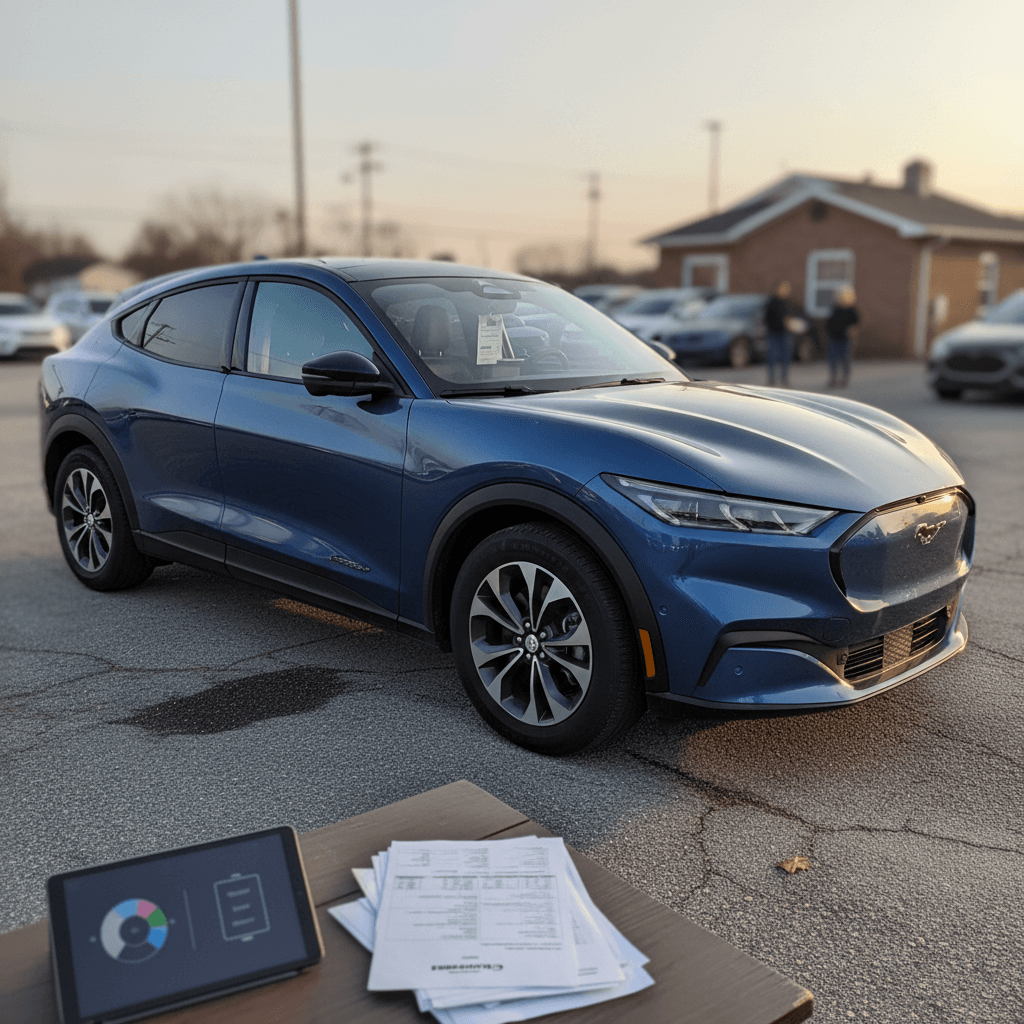
Ask for the original window sticker or build sheet so you know if you’re looking at <strong>Standard Range vs. Extended Range</strong>, and whether it’s RWD or eAWD. This drives both price and your day‑to‑day experience.
2. Review battery health
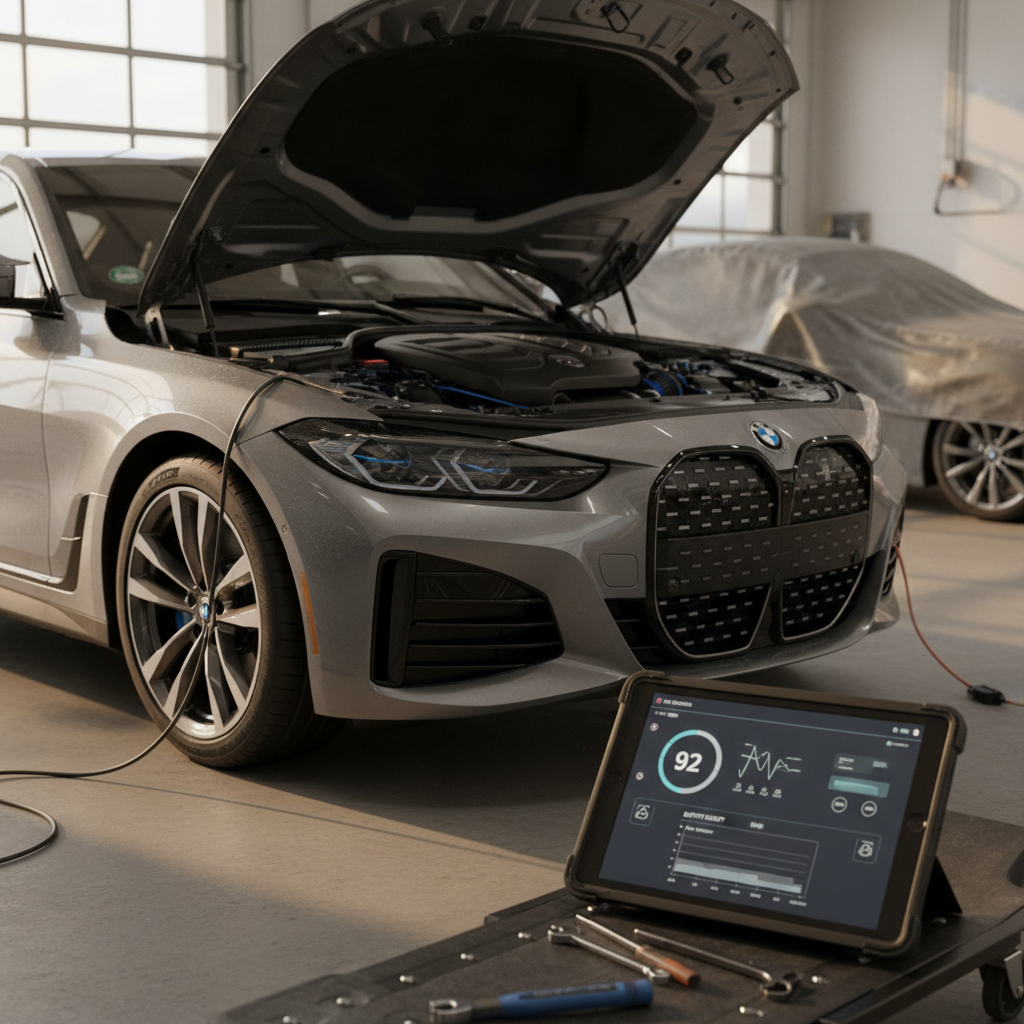
Use an independent battery health report if you can. With Recharged, every vehicle comes with a <strong>Recharged Score battery diagnostic</strong> so you can see usable capacity and fast‑charge history, not just a simple dashboard guess.
3. Check DC fast charging behavior
On a test drive near a CCS fast charger, plug in and watch how quickly the car ramps up to speed and whether charging is stable. Uneven or very slow charging may warrant further diagnosis.
4. Inspect tires and brakes
EVs are heavy and powerful, so they can be harder on consumables. Uneven tire wear or vibration under braking can point to alignment or suspension issues, and justify a lower price or repairs before sale.
5. Test driver-assist tech
Try adaptive cruise control, lane‑keeping, and (if equipped) BlueCruise. A car that won’t reliably center in the lane, or that regularly faults out of hands‑free mode, may need camera/radar calibration or updates.
6. Verify recall and service history
Ask for printouts from a Ford dealer or service records from previous owners. You want documented completion of major recalls and regular maintenance, especially brake fluid changes and cabin filters.
7. Look for signs of hard use
Performance‑oriented GTs, in particular, may have seen hard launches or frequent fast charging. Cosmetic damage, mismatched tires, or unusually worn seats for the mileage can all hint at a tougher life.
8. Plan your exit strategy
EV values move quickly. If you’re worried about future depreciation, look for a <strong>strong price today</strong>, a battery in great health, and a configuration (ER RWD/Premium) that will be easy to resell later.
2023 Mustang Mach-E vs other used EVs
Versus Tesla Model Y
- Pros for Mach-E: Often cheaper trim‑for‑trim on the used market; traditional dealer and independent service network; physical gauge cluster behind the steering wheel.
- Cons for Mach-E: No native access to Tesla’s Supercharger network on 2023 models; CCS fast‑charging infrastructure can be more hit‑or‑miss by region.
Versus Hyundai Ioniq 5 / Kia EV6
- Pros for Mach-E: More familiar Ford brand for many U.S. buyers; Mustang-inspired styling and driving character; strong dealer coverage.
- Cons for Mach-E: Hyundai/Kia’s 800‑volt platforms can charge faster in ideal conditions; some trims offer slightly roomier rear seats.
Who the 2023 Mach-E suits best
How Recharged helps with a 2023 Mach-E purchase
The hardest part of buying any used EV isn’t picking the color, it’s being confident about battery health, pricing, and future value. That’s exactly what Recharged is built to solve for used Mustang Mach-E shoppers.
What you get when you buy a 2023 Mach-E through Recharged
Transparency on the parts of EV ownership that matter most.
Recharged Score battery report
Fair, data-backed pricing
Delivery & Experience Center
Ready to find your next EV?
Browse VehiclesYou can also finance your purchase directly through Recharged, explore trade‑in or consignment options for your current vehicle, and lean on our EV‑specialist support team if you’re transitioning from your first EV or from gas entirely. From first click to keys‑in‑hand, the goal is a more transparent, less stressful way to step into a 2023 Mach-E.
FAQ: 2023 Ford Mustang Mach-E buying guide
Frequently asked questions about buying a 2023 Mach-E
Bottom line: Is a 2023 Mustang Mach-E right for you?
If you’re after a used electric SUV that feels genuinely fun to drive, has serious real‑world range, and now costs far less than it did new, a well‑chosen 2023 Ford Mustang Mach-E is hard to ignore. The key is matching the trim and battery to your lifestyle, verifying battery health and recall history, and buying at a price that reflects market realities, not yesterday’s hype.
By taking a structured approach, using the checklist above, comparing trims carefully, and leaning on objective data instead of guesswork, you can land a 2023 Mach-E that will serve you well for years. And if you’d like that homework largely done for you, Recharged can pair you with inspected vehicles, Recharged Score battery reports, fair market pricing, and EV‑specialist guidance from first click to final signature.