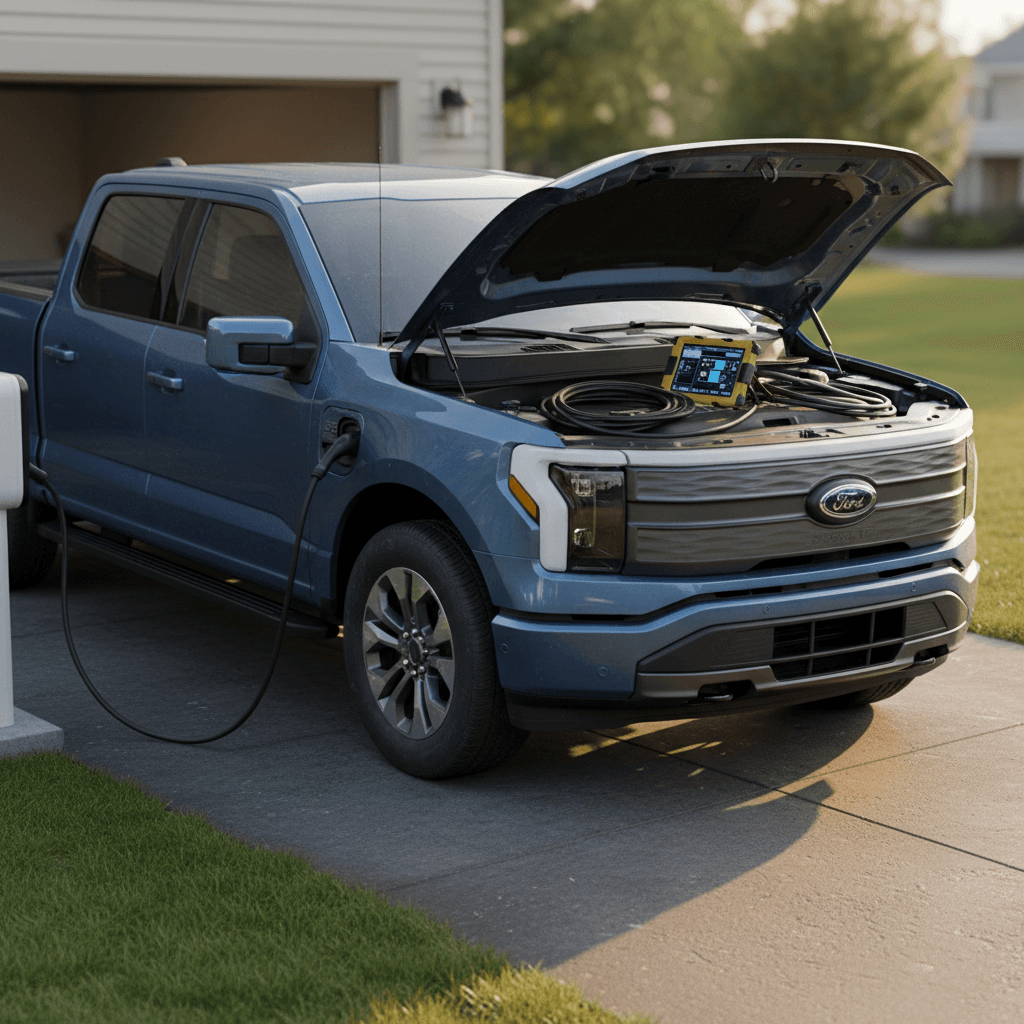
If you’re looking at a **2023 Ford F-150 Lightning**, you’ve probably heard two very different stories. On one hand, owners love the instant torque and quiet, truck‑sized practicality. On the other, the electric F‑150 has landed on lists of the **least reliable vehicles on sale**, with a predicted reliability rating far below the gas F‑150. This guide pulls together what that reliability rating actually means, the real‑world problems we’re seeing, and how to shop a used Lightning with your eyes wide open.
Quick take
Overview: How reliable is the 2023 F-150 Lightning?
Let’s zoom out before we dive into numbers. The 2023 Lightning is a **second model year** vehicle riding on a familiar F‑150 platform but with a brand‑new battery pack, dual‑motor drivetrain, and a mountain of new software. That combination, new tech in an otherwise proven body, is catnip for early adopters and a red flag for conservative buyers who only trade in their trucks every 15 years.
2023 F-150 Lightning reliability snapshot
EV truck reality check
How Consumer Reports and others rate the 2023 Lightning
When shoppers ask about a **2023 Ford F-150 Lightning reliability rating**, they’re usually talking about Consumer Reports. In recent annual reliability surveys, CR has given the Lightning a **predicted reliability score in the teens to 20s out of 100**, landing it on or near the organization’s list of least reliable vehicles. Electric pickup trucks as a group are at the very bottom of CR’s reliability rankings, thanks largely to software bugs and complex electronics rather than catastrophic mechanical failures.
What the low score actually measures
- Predicted reliability, not a guarantee your truck will break.
- Weighted heavily toward problem areas like in‑car electronics, infotainment, and body hardware.
- Early‑production issues on 2022 models drag down the Lightning’s overall score.
What owner reviews add to the story
- Mixed experiences: some owners are trouble‑free, others fight repeat service visits.
- High praise for ride quality, power, and comfort.
- Most frustration centers on range expectations and downtime waiting on parts or battery work.
How to use these ratings
Common 2023 F-150 Lightning problems so far
No two owners’ stories are identical, but patterns are emerging as 2022–2023 F‑150 Lightnings rack up real‑world miles. Here are the issues we see most often in reports, forums, and owner surveys.
Key trouble spots on early Lightnings
Most are fixable, what matters is whether they’ve already been addressed on the truck you’re eyeing.
Software & infotainment glitches
Frozen or rebooting center screens, laggy navigation, Android Auto/Apple CarPlay drops, and odd driver‑assist warnings are among the most common complaints.
These are annoying, but often resolved with over‑the‑air (OTA) updates or dealer software flashes.
High‑voltage battery module issues
A small but significant number of trucks have needed individual battery modules, or entire packs, replaced under warranty due to internal faults or charging problems.
Repairs can sideline a truck for weeks while parts are sourced, but are typically covered by the 8‑year/100,000‑mile battery warranty.
Range drop in cold weather
Owners in northern states routinely report winter range at 50–60% of the EPA estimate, especially on the highway and when towing.
This is normal for EV trucks but can feel like a “reliability” issue if you weren’t expecting it.
Charging speed inconsistency
Some trucks struggle to hit advertised DC fast‑charge speeds, especially in cold conditions or on non‑Ford networks.
Battery preconditioning software has improved this over time, but performance still varies by station.
Body & hardware niggles
Owners mention tailgate latches needing multiple presses, frunk latches out of adjustment, and the occasional water leak or wind noise, typical new‑model teething problems.
Driver‑assist system warnings
Random fault messages for BlueCruise or lane‑keeping, usually cleared by a restart or software update.
Annoying, yes. Dangerous, generally no, as long as you don’t rely blindly on the tech.
Red‑flag problems when buying used
Recalls and service campaigns affecting 2022–2023 Lightnings
The Lightning has already seen its share of recalls, which is common for a high‑tech launch vehicle. Recalls aren’t automatically bad news, what matters is whether the truck you’re considering has had the work done properly.
Notable recalls and campaigns for early F-150 Lightnings
This is not an exhaustive list, but it covers the kinds of issues you should ask about when shopping a 2023 model.
| Issue | Model years | What can happen | Typical fix |
|---|---|---|---|
| High‑voltage battery contactor / pack issues | 2022–2023 | Truck may lose power or fail to start if internal components fail. | Battery module or pack replacement; updated diagnostics and software. |
| Charging system / OBC software | 2022–2023 | Charging stops unexpectedly or won’t initiate with some stations. | On‑board charger and powertrain control module software updates. |
| Electronic stability control (ESC) concerns on previously repaired trucks | 2022–2023 | Improperly completed repair work can leave ESC disabled without a warning light. | Inspection of prior repair; rework and updated procedure where needed. |
| Parking system / roll‑away risk in broader Ford EV recall | 2022–2026 | Vehicle may not fully engage Park under some circumstances, creating roll‑away risk. | Integrated park module software update, often done OTA. |
| Camera / visibility software (Ford‑wide recall) | Various F‑series 2021–2024 | Rear camera image may delay, freeze, or not display when reversing. | Software update at dealer or via OTA. |
Always run the VIN through Ford’s recall checker or NHTSA’s database before you buy.
How Recharged handles recalls
Battery health, range reality, and cold-weather behavior
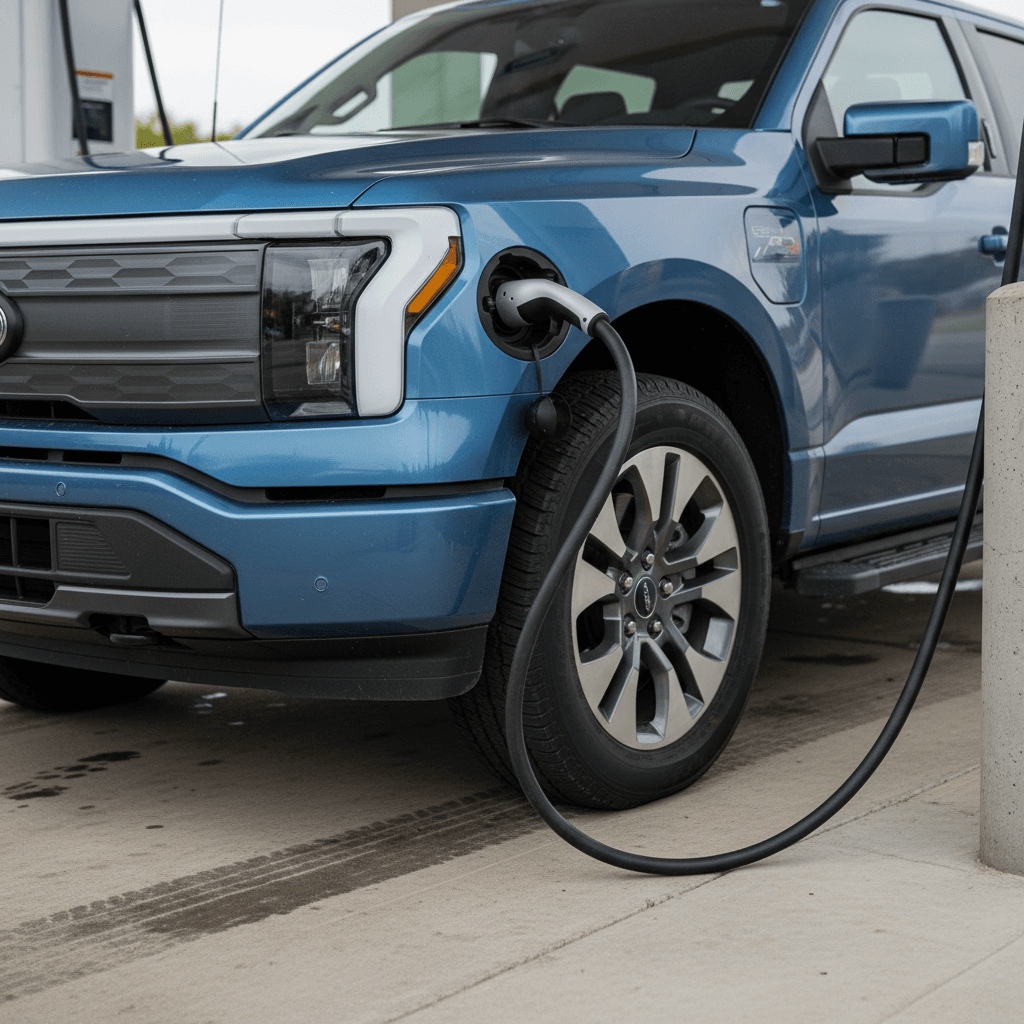
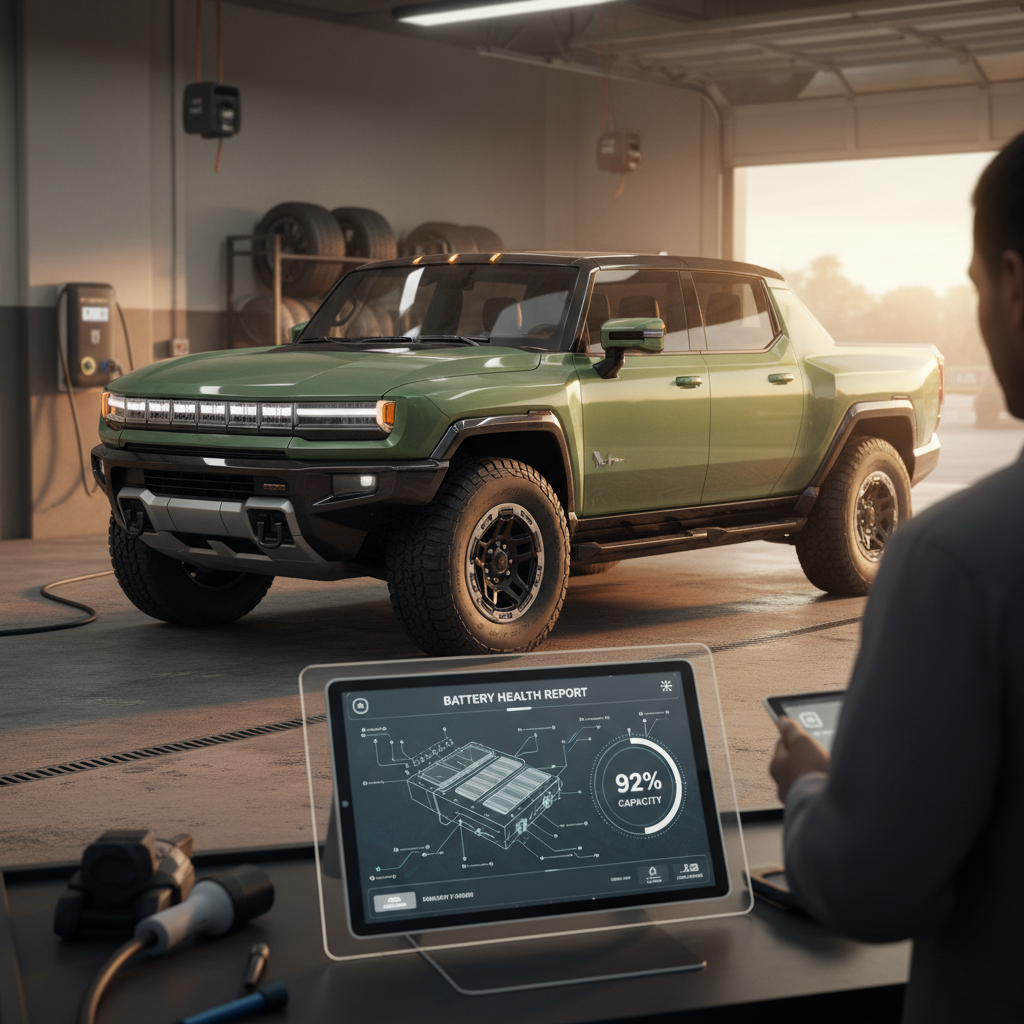
Underneath the headlines, long‑term **battery health** is what will make or break your experience with a used 2023 F‑150 Lightning. The truck’s pack is large, up to 131 kWh usable on extended‑range models, and backed by an 8‑year/100,000‑mile warranty against excessive degradation or failure.
- Most 2022–2023 Lightnings on the road today show **modest degradation** so far, often in the single‑digit percentage range, when driven and charged normally.
- You will see a **huge swing in effective range** between summer and winter, city and highway, towing and empty, this is physics, not necessarily a defect.
- Fast charging heavily from very low state of charge, frequent towing at high speed, and parking fully charged in high heat can all accelerate wear over time.
Why winter range feels like a reliability problem
At Recharged, every Lightning gets a **Recharged Score battery health diagnostic**, which measures usable capacity and looks for out‑of‑pattern cell behavior. That’s the kind of data you want in hand before you decide whether a particular low‑mile 2023 truck is a keeper or a time bomb.
How the Lightning’s rating compares to other trucks
The Lightning doesn’t live in a vacuum. Its rough reliability rating makes more sense when you see it stacked against the rest of the truck world.
Gas F-150 (non‑hybrid)
- Historically average to slightly below average reliability in surveys.
- Issues cluster around turbos, transmissions, and electronics.
- Much better predicted reliability scores than the Lightning.
F-150 PowerBoost Hybrid
- Has ranked as one of the least reliable vehicles overall in some CR lists.
- Complex combination of gas, hybrid, and truck systems.
- Shows how adding complexity tends to hurt scores.
Other EV trucks (Rivian, etc.)
- Rivian R1T and early EV pickups are also rated below average for reliability.
- Software, air suspensions, and accessories generate many complaints.
- Owner satisfaction often remains high despite issues.
The upside of being early
What the reliability rating means if you’re buying used
So what do you actually do with the knowledge that the 2023 F‑150 Lightning has a low predicted reliability score? You don’t have to swear off the truck. You just approach each candidate like a pilot running a pre‑flight checklist instead of a shopper kicking tires on a ten‑year‑old Camry.
- Expect **more quirks and service visits** than a simple gas half‑ton, especially in the first couple of years.
- Put extra weight on a **clean, well‑documented service history** at a Ford EV‑certified dealer.
- Budget time, not just money: if a battery module fails, your truck could be gone for weeks while parts ship and high‑voltage techs are scheduled.
- Prioritize trucks that have already had major **recalls and software updates** completed, you’re letting the first owner debug it for you.
- Treat a third‑party battery‑health report (or Recharged Score) as non‑negotiable, the way you’d insist on an inspection for a used diesel.
Don’t rely on the window sticker
Checklist: shopping a used 2023 F-150 Lightning
Essential checks before you sign for a 2023 Lightning
1. Pull a full Ford service & recall history
Ask for a printout from a Ford dealer by VIN. Confirm all open recalls are addressed and look for repeated visits for the same complaint, especially battery or charging issues.
2. Get a real battery‑health report
Request data on usable capacity and cell balance, not just “battery OK.” A Recharged Score report, for example, translates raw diagnostics into an easy‑to‑understand health rating.
3. Review how the truck was used
Fleet trucks that towed heavy trailers at highway speeds daily or fast‑charged constantly on road trips may show more battery wear than a lightly used commuter that mostly charged at home.
4. Confirm charging behavior in the real world
If possible, plug the truck into both a Level 2 charger and a DC fast charger. Watch for errors, slow ramp‑up, or charge sessions that cut out unexpectedly.
5. Inspect for water leaks and body issues
Check the frunk, rear cab, and bed for signs of water intrusion. Test the tailgate, frunk latch, and all doors and windows multiple times.
6. Test every screen and driver‑assist feature
On a long test drive, run navigation, phone mirroring, camera views, adaptive cruise, lane‑keeping, and BlueCruise (if equipped). Note any warnings or glitches.
7. Verify home‑charging compatibility
Make sure your home electrical panel and parking situation can support a proper Level 2 charger, or factor the cost of installation into your budget.
8. Understand remaining warranty coverage
Verify in writing how much is left on the bumper‑to‑bumper and battery warranties, and whether any modifications (like aftermarket wheels or lift kits) could complicate future claims.
Where Recharged fits in
Tips to live happily with a 2023 Lightning
If you decide the Lightning is worth the risk‑reward trade, you can stack the deck further in your favor by treating it like the high‑tech tool it is, not a 1995 farm truck.
Ownership habits that help the Lightning feel more reliable
Most are free, just a little attention and planning.
Build your life around home Level 2 charging
A reliable 240‑volt Level 2 charger at home turns the Lightning into a predictable daily driver, even if public charging is hit‑or‑miss.
- Charge overnight instead of “topping off” constantly.
- Set charge limits around 80–90% for everyday use.
Give yourself a bigger range buffer
Plan trips as if you have about 60–70% of the EPA rating available in bad weather, especially if you tow or drive 70+ mph.
That mindset turns unpleasant surprises into pleasant ones.
Stay on top of software updates
Accept OTA updates promptly and skim the release notes. Many Lightning quirks, from charging behavior to BlueCruise, improve quietly in the background.
Drive it like an EV, not a trophy truck
Smooth acceleration, moderate speeds, and smart use of one‑pedal driving are easier on the battery and make range much more predictable.
Document and address issues early
If you notice repeated faults or warnings, get them logged at the dealer while under warranty. A paper trail helps both with repairs and potential buyback discussions if things go really sideways.
Match the truck to your use case
A Lightning is easiest to live with as a daily driver, light hauler, or short‑range tow rig. If you routinely tow heavy at long distances through remote areas, you’ll fight charging infrastructure as much as truck quirks.
2023 F-150 Lightning reliability FAQ
Frequently asked questions about 2023 F-150 Lightning reliability
Bottom line: should you trust a 2023 F-150 Lightning?
The **2023 Ford F-150 Lightning reliability rating** is not pretty on paper. Consumer Reports and other surveys put it near the back of the pack, and early trucks have had more than their share of software drama and battery‑system recalls. But that’s only half the story. Many owners report trouble‑free daily driving, high satisfaction, and a truck that quietly redefines what a pickup can be, provided you set realistic expectations and keep up with updates.
If you’re the kind of driver who trades in a truck the first time a warning light appears, a used Lightning may not be your match. If you’re comfortable doing your homework, verifying battery health, checking recall status, and embracing the quirks of first‑generation EV trucks, a carefully chosen 2023 Lightning can be a lot of truck for the money. And if you’d rather have a guide in your corner, working with **Recharged** means those reliability questions are front‑and‑center, not an afterthought when you’re already parked in the service bay.