The Mercedes EQS is a rolling five‑star hotel with a battery pack. It’s also heavy, powerful, and dressed in every watt‑hungry luxury known to Stuttgart. That combination makes the Mercedes EQS charging cost per mile a bit higher than the Insta‑fantasy of “cheap EV miles forever,” especially if you live on public DC fast chargers.
What you’ll learn in this guide
Mercedes EQS efficiency and why cost per mile is higher than you think
Underneath the aromatherapy and Burmester audio, the EQS is still obeying physics. It’s a ~6,000‑pound luxury liftback with a big battery (about 108 kWh usable on many trims) and generous power. EPA and owner data put real‑world energy use for common models like the EQS 450+ and EQS 580 in the 2.2–2.8 miles per kWh range for mixed driving, call it roughly 3.0–3.6 miles per kWh on the dash, 2.5–3.0 in the real world once you factor in weather, speed, and charging losses.
That’s less efficient than a smaller sedan like a Tesla Model 3, but it’s on‑par for a flagship luxury EV. The upside is that once you know your miles per kWh and your electricity price, cost per mile falls straight out of the math:
- Take your energy price in $/kWh (for example, $0.18 at home).
- Multiply by kWh used per mile. If your EQS averages 2.7 miles per kWh, that’s 1 ÷ 2.7 ≈ 0.37 kWh per mile.
- Cost per mile = 0.37 × $0.18 ≈ $0.07 per mile.
Quick mental shortcut
Mercedes EQS charging cost per mile: key numbers
Typical Mercedes EQS charging costs in 2026 (U.S.)
These are national ballparks, not gospel. Electricity in the U.S. averaged around $0.17–$0.19 per kWh for homes in late 2025, but your bill might be closer to 12 cents in parts of the Midwest or well over 30 cents in coastal cities with steep time‑of‑use rates. That’s why it’s worth running your own numbers once you understand the formula.
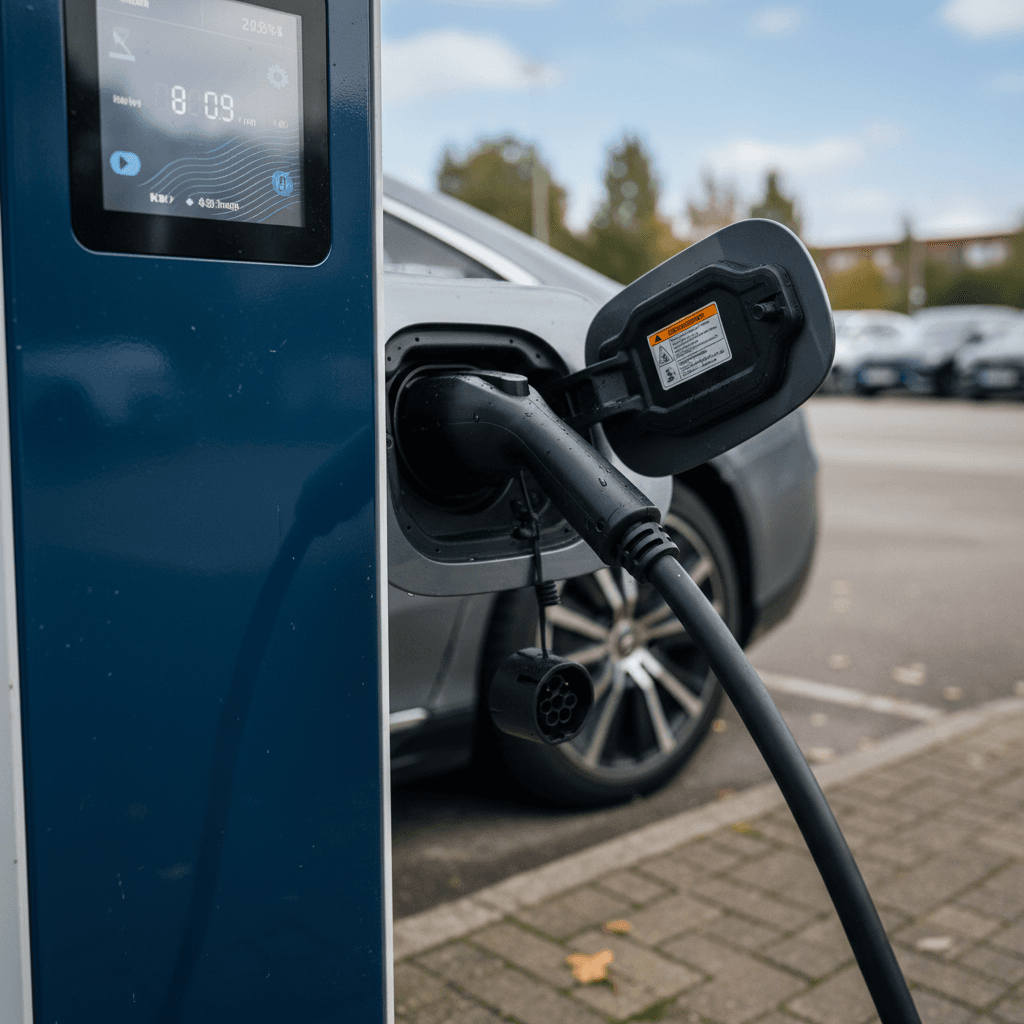
Cost per mile charging a Mercedes EQS at home
Home is where EQS ownership actually makes sense financially. As of early 2026, typical U.S. residential electricity prices hover in the $0.17–$0.19/kWh range nationally, with cheap‑power states dipping into the low‑teens and high‑cost states climbing above 25 cents. Many utilities also offer lower off‑peak overnight rates ideal for EVs.
Scenario 1: Average U.S. homeowner
Let’s assume:
- Electricity price: $0.18/kWh
- Real‑world efficiency: 2.7 miles per kWh (mixed driving)
kWh per mile = 1 ÷ 2.7 ≈ 0.37 kWh
Cost per mile = 0.37 × $0.18 ≈ $0.067/mile
Drive 1,000 miles in a month and you’re around $67 in electricity.
Scenario 2: Off‑peak TOU rate hero
Now imagine you’re on a time‑of‑use plan with a cheap overnight rate of $0.12/kWh and you schedule your EQS to charge after midnight.
Using the same 2.7 miles per kWh:
0.37 × $0.12 = $0.044/mile
At 1,000 miles per month, you’re paying about $44, which is closer to Prius‑money in a car with a full spa menu in the armrest.
Don’t forget charging losses
If you install a Level 2 charger at home, you’ll pay a one‑time equipment and installation cost, but after that your per‑mile cost is dominated by the price of electricity. Heavy drivers, 20,000+ miles a year, can see thousands in annual fuel savings versus a thirsty gas sedan.
DC fast charging and road‑trip cost per mile
On road trips the EQS is in its natural habitat: three‑zone climate control running, massaging seats kneading away, everyone blissfully oblivious to the DC fast‑charging bill. But DCFC is the luxury‑tax line of your electric life.
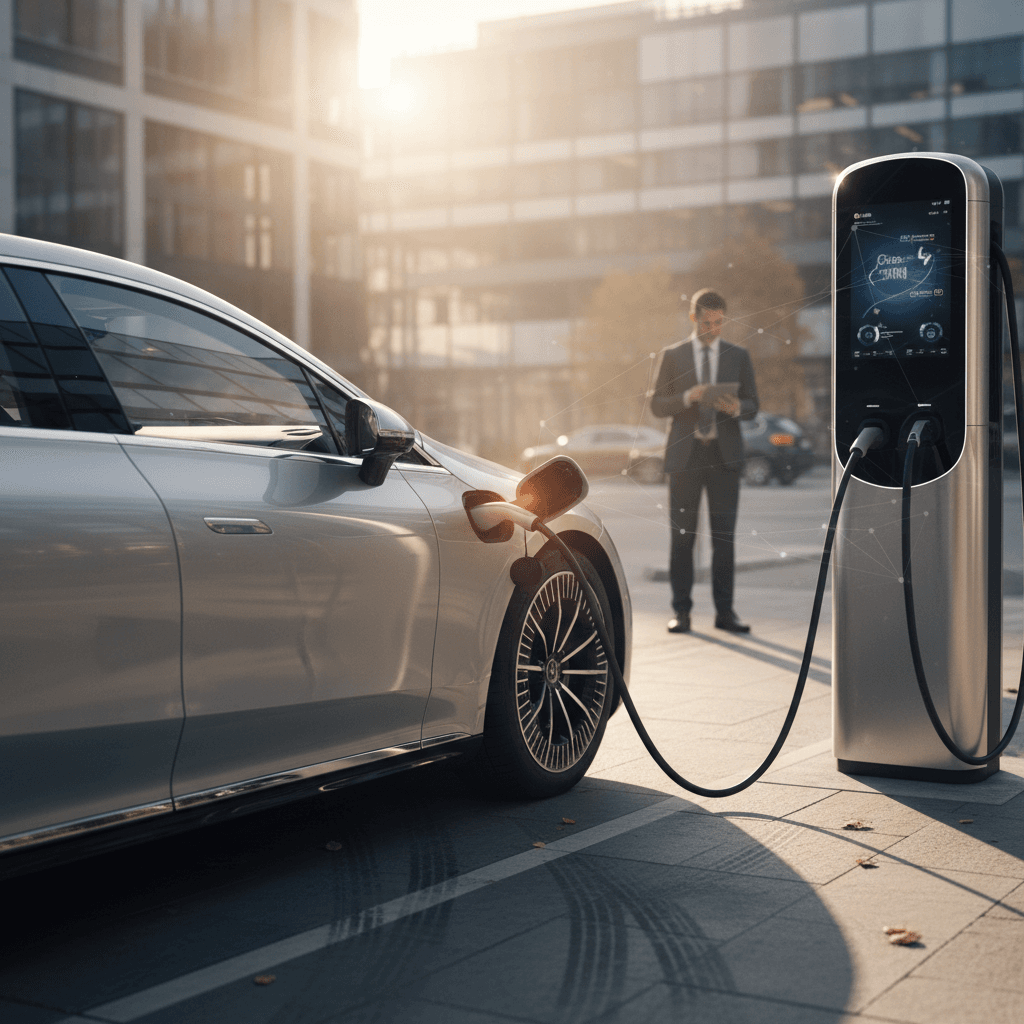
Big public networks like Electrify America and others commonly land in the $0.35–$0.60 per kWh range in 2025–2026, depending on state, station, and membership plans. Some metro areas are now flirting with $0.64/kWh peak prices on busy corridors. Meanwhile, independent highway DC fast chargers often cluster around the high‑30s to mid‑40s cents per kWh.
Mercedes EQS cost per mile on DC fast charging
Examples assume 2.5 miles per kWh real‑world efficiency at highway speeds (0.40 kWh per mile).
| DCFC price ($/kWh) | kWh per mile (EQS highway) | Cost per mile | $40 of energy buys… |
|---|---|---|---|
| $0.35 | 0.40 | $0.14/mile | ≈ 285 miles |
| $0.45 | 0.40 | $0.18/mile | ≈ 222 miles |
| $0.55 | 0.40 | $0.22/mile | ≈ 181 miles |
| $0.60 | 0.40 | $0.24/mile | ≈ 167 miles |
If you drive faster or in winter, your cost per mile on DCFC will sit at the high end of these ranges.
Smart EQS road‑trip strategy
If your life is mostly road‑trip miles on DC fast chargers, say you live in a condo with no reliable parking, your EQS can easily cost as much or more per mile than a gas luxury sedan. The car’s character doesn’t change, but the economic story does.
EQS cost per mile vs a gas S‑Class
Gas S‑Class: the old benchmark
A gas S 500 4MATIC today tends to deliver 20–25 mpg in real‑world mixed driving if you’re not a complete hooligan.
- Gas price example: $3.50/gallon
- At 25 mpg: 3.50 ÷ 25 = $0.14/mile
- At 20 mpg: 3.50 ÷ 20 = $0.18/mile
That’s your rough cost‑per‑mile range for a modern S‑Class on regular driving.
EQS: when it’s cheaper – and when it isn’t
Best case (home, off‑peak)
At 4.4 cents per mile, our earlier off‑peak EQS example undercuts even a 40‑mpg hybrid by a wide margin.
Average home charging
At ~6.7 cents per mile, you’re closer to a 50‑mpg compact car than a full‑size luxury sedan.
All DCFC, high price markets
At 22–24 cents per mile, your EQS is now more expensive per mile than a gas S‑Class at $3.50/gal, and you’re still paying luxury‑car insurance and tires.
Where the EQS still wins
How your driving and climate control change cost per mile
The EQS is efficient for its size, but it’s still a brick through the air once you pass 75 mph. Speed, temperature, and accessory use all move the cost‑per‑mile needle.
Four factors that move EQS cost per mile
Same car, same battery, very different electricity bills.
High speed
Cold weather
Extreme heat
Weight & roof racks
EQS driving sweet spot
Six ways to cut your Mercedes EQS charging costs
Practical steps to lower your EQS cost per mile
1. Get on an EV‑friendly rate plan
Call your utility or check your online account for <strong>time‑of‑use (TOU)</strong> or EV‑specific rates. Many utilities now offer cheaper overnight kWh prices if you shift charging to low‑demand hours.
2. Let the EQS charge while you sleep
Use the EQS’s charge scheduling or your wallbox app to target the low‑price window automatically. Set it once and you’ll quietly reduce your cost per mile every month.
3. Prefer home or workplace Level 2
Every mile you charge at home for 6–8 cents instead of on DC fast charging at 18–22 cents is money in your pocket. Think of DCFC as your emergency or road‑trip tool, not your daily diet.
4. Match speed to your wallet
Driving 10 mph slower on the highway can trim your energy use by a double‑digit percentage. Over a long trip, that can mean skipping an entire charging stop and materially lowering your cost per mile.
5. Precondition while plugged in
Use the EQS’s pre‑entry climate and battery conditioning while the car is still plugged in. You’ll arrive at your trip using <strong>grid power instead of battery power</strong> for the worst of the heating or cooling load.
6. Keep tires and alignment in check
Under‑inflated tires and bad alignment rob range and money. Check tire pressures monthly and align the car when you notice pulling or uneven wear. In a heavy EV, small inefficiencies get expensive.
If you rely 100% on DC fast charging
Buying a used EQS? How battery health affects cost per mile
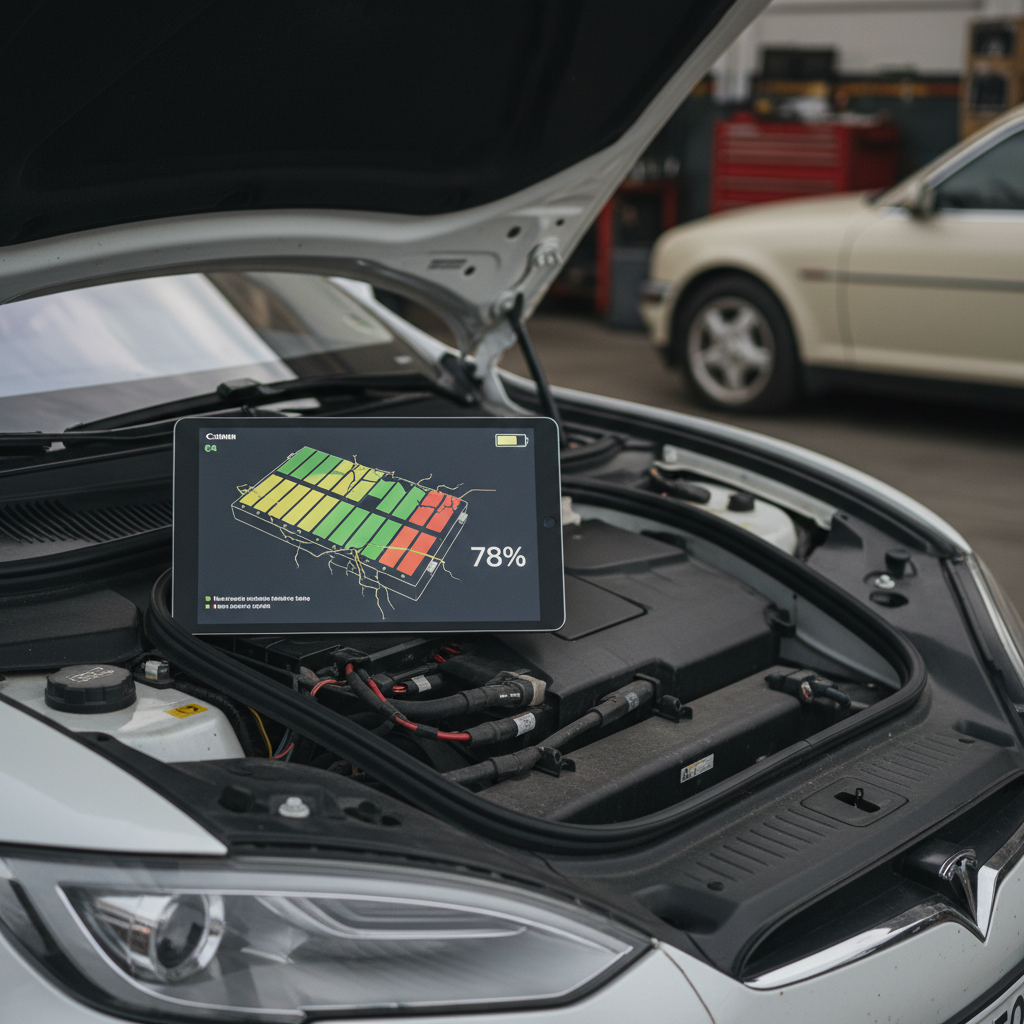
In a used Mercedes EQS, your energy cost per mile depends on two things: how efficient the car is and how much usable battery capacity is left. As the pack ages and loses capacity, you’re still paying the same price per kWh, but you get fewer miles per full charge, and you may find yourself relying more often on pricey DC fast charging to cover the same trips.
That’s where objective battery data matters. A strong EQS pack that’s lost, say, 5–10% of its original usable capacity will still deliver near‑new range and cost per mile. A heavily fast‑charged or abused pack with steeper degradation can quietly turn your cost per mile into something closer to a gas sedan, just with more charging stops.
How Recharged helps with used EQS costs
Ready to find your next EV?
Browse VehiclesIf you’re comparing two used EQS sedans, one with a healthier pack and one with more fast‑charge miles on the clock, the healthier‑battery car is often the better buy even if it’s a bit more expensive on day one. Over years of ownership, lower cost per mile and fewer high‑priced charging stops add up.
FAQ: Mercedes EQS charging cost per mile
Frequently asked questions about EQS charging cost per mile
The bottom line on Mercedes EQS charging cost per mile
The Mercedes EQS is not a hyper‑miler; it’s an electric lounge on wheels. Treat it like that, and the charging cost per mile makes a lot of sense, so long as you anchor your charging at home or another cheap power source. Most owners can expect 4–9 cents per mile under sane conditions, with DC fast charging pushing that into gasoline territory when overused.
The levers are simple: know your local kWh price, mind your average speed, plug in where electrons are cheapest, and pay attention to battery health, especially if you’re buying used. If you’re window‑shopping for an EQS, a transparent used‑EV marketplace like Recharged can help you compare real battery condition, estimated range, and fair pricing side‑by‑side, so you’re not just buying a gorgeous cabin, you’re buying predictable, manageable running costs for years to come.