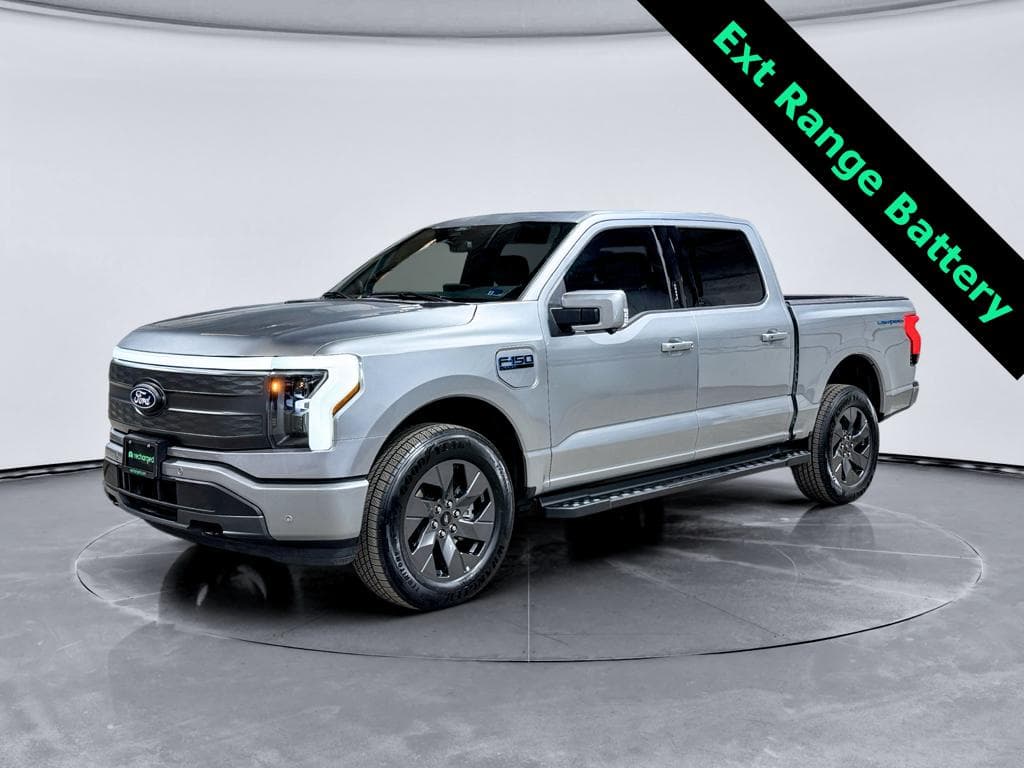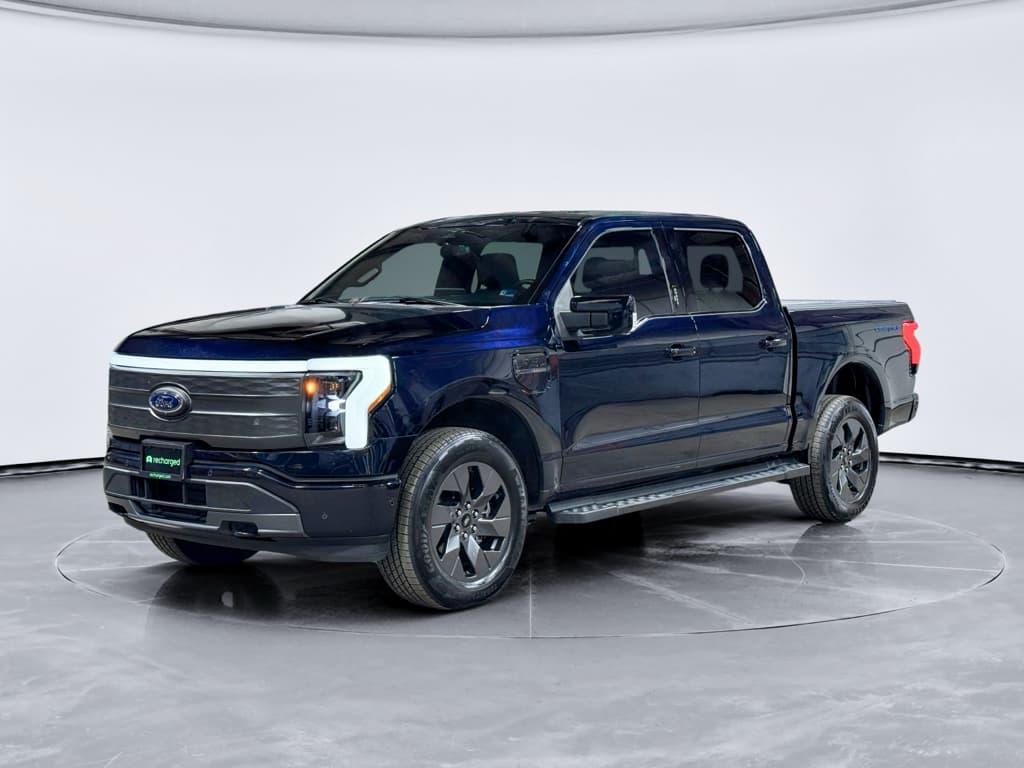
If you’re looking at a 2023 Ford F-150 Lightning, you’re probably hearing two stories at once: it’s a game‑changing electric truck, and it’s had some teething problems. This guide pulls together the most common 2023 Ford F-150 Lightning problems and fixes so you can separate noise from real risk, whether you already own one or you’re shopping used.
Quick take
2023 F-150 Lightning problems at a glance
How 2023 Lightning problems tend to show up
Like a lot of first‑wave EV trucks, the 2023 Lightning blends a relatively proven F‑150 shell with a lot of new software and electronics. That means most real‑world issues cluster around 12‑volt battery health, body and chassis recalls, and software behavior rather than the big high‑voltage pack simply failing out of the blue.
- 12V battery and electrical system warnings ("Electrical system drain, service required")
- Software glitches: BlueCruise, error messages, stuck drive modes
- Charging hiccups: mobile charge cord overheating, DC fast‑charge failures
- Chassis and hardware recalls: suspension fasteners, off‑road mode behavior, high‑voltage junction box issues
- Typical truck stuff: rattles, minor trim issues, occasional sensor failures
Start with software
Most common 2023 F-150 Lightning owner complaints
Where 2023 Lightning owners report the most pain
Four problem areas that come up again and again in owner forums and service visits
1. 12V battery failures and warnings
2. Software bugs and random errors
3. Charging equipment and DC fast charging
4. Recalls and hardware campaigns
Those headline complaints don’t mean every Lightning will experience them, but they’re the issues you’re most likely to hear about from other owners, and the ones you’ll want to rule out when you’re looking at a used 2023 truck.
High‑voltage battery problems and fixes
The million‑dollar question with any used EV is the big pack. With the 2023 F‑150 Lightning, high‑voltage battery problems have been much rarer than the online rumor mill might make it sound, but there are still a few important things to understand.
- Isolated module or cell failures, sometimes preceded by fault codes and reduced power
- A formal recall on a subset of 2023 trucks for issues inside the high‑voltage battery junction box / bussed electrical center
- Normal range loss from cold weather or heavy towing that gets misinterpreted as battery failure
Pay attention to high‑voltage warnings
High‑voltage battery issue vs normal EV behavior
Use this quick comparison to tell the difference between serious battery trouble and quirks that come with any work‑truck EV.
| What you see | Likely cause | How serious? | Typical fix |
|---|---|---|---|
| Range drops 20–30% in winter or towing heavy | Temperature and load | Low | Plan for it; use pre‑conditioning and slower speeds |
| Truck won’t go into drive or shows “Stop safely now” | High‑voltage system fault | High | Dealer diagnosis; possible HV contactor, module, or junction‑box repair under warranty |
| Repeated DC fast‑charge failures across multiple stations | Software or battery management issue | Medium–High | Update software; if persistent, have dealer check pack and contactors |
| One‑time warning that clears and doesn’t return | Transient sensor or software glitch | Low | Document it; monitor and check for software updates |
When in doubt, have the truck scanned by a Ford EV‑certified dealer or a third party that knows high‑voltage diagnostics.
If you’re shopping used, don’t just rely on the dash to tell you the battery’s healthy. Ask for a third‑party battery health report or an OEM‑level scan that shows state of health (SoH) for the pack and modules, not just the displayed range estimate.
How Recharged checks Lightning batteries
Ready to find your next EV?
Browse Vehicles12V battery and electrical drain issues
The single most common practical problem owners talk about on forums isn’t the big battery, it’s the little one. The 12‑volt battery powers the truck’s computers, latches, and contactors. If it’s weak, your Lightning can be effectively “dead,” even if the main pack is full.
- 14–24‑month 12V battery life in some climates, especially cold regions
- Warning messages like “Electrical system drain, service required” or “Low 12V battery”
- Truck failing to wake up, or needing a jump despite a healthy state of charge
- Symptoms resolving temporarily after disconnecting the 12V battery for 30–60 seconds
Why the 12V struggles
- High standby load: Always‑on connectivity, security, and control modules keep a baseline draw on the battery.
- Short trips, lots of key‑cycles: Frequent starts without long drives can mean the DC‑DC converter doesn’t fully recharge the 12V.
- Small AGM battery: The Lightning uses a relatively compact 12V AGM, which can be less forgiving if frequently undercharged.
Practical fixes and prevention
- Have the 12V tested annually at a dealer or battery shop, especially before winter.
- Ask about updated 12V parts or BMS software, Ford has revised low‑voltage hardware and calibrations over time.
- Avoid leaving the truck parked for weeks at very low or very high state of charge; a mid‑range SoC plus occasional driving is easiest on both batteries.
- If you see drain warnings repeatedly, get it looked at under warranty instead of repeatedly clearing codes yourself.
Don’t DIY high‑voltage work
Software bugs, BlueCruise, and infotainment glitches
Software is both the Lightning’s superpower and its Achilles’ heel. Owners of 2023 trucks frequently report glitches that come and go, especially after an update, rather than permanent hardware failures.
- Center screen freezing or rebooting mid‑drive
- Apple CarPlay / Android Auto connection problems
- Random driver‑assist warnings even when sensors are clean
- BlueCruise disengaging unexpectedly or refusing to engage on mapped highways
- Drive mode stuck in Off‑Road on certain VIN ranges (subject of a Ford recall)
Best practice after an update
Triage steps for Lightning software weirdness
1. Reboot the infotainment system
Press and hold the power/volume knob until the screen goes black, then wait for it to fully reboot. This clears many transient bugs without touching the 12V battery.
2. Check for pending OTA updates
In the truck’s settings, look for pending or recently failed updates. A partially applied update can cause flaky behavior until it’s completed or restarted.
3. Verify driver‑assist sensor health
Confirm that cameras and radar modules aren’t blocked by dirt, wraps, or accessories. The Lightning is sensitive to obstructions around the front bumper and windshield.
4. Disconnect 12V only as a last resort
A short 12V disconnect can clear stubborn faults, but if you find yourself doing this repeatedly, you’re masking a problem Ford should address under warranty.
Charging problems: home and DC fast
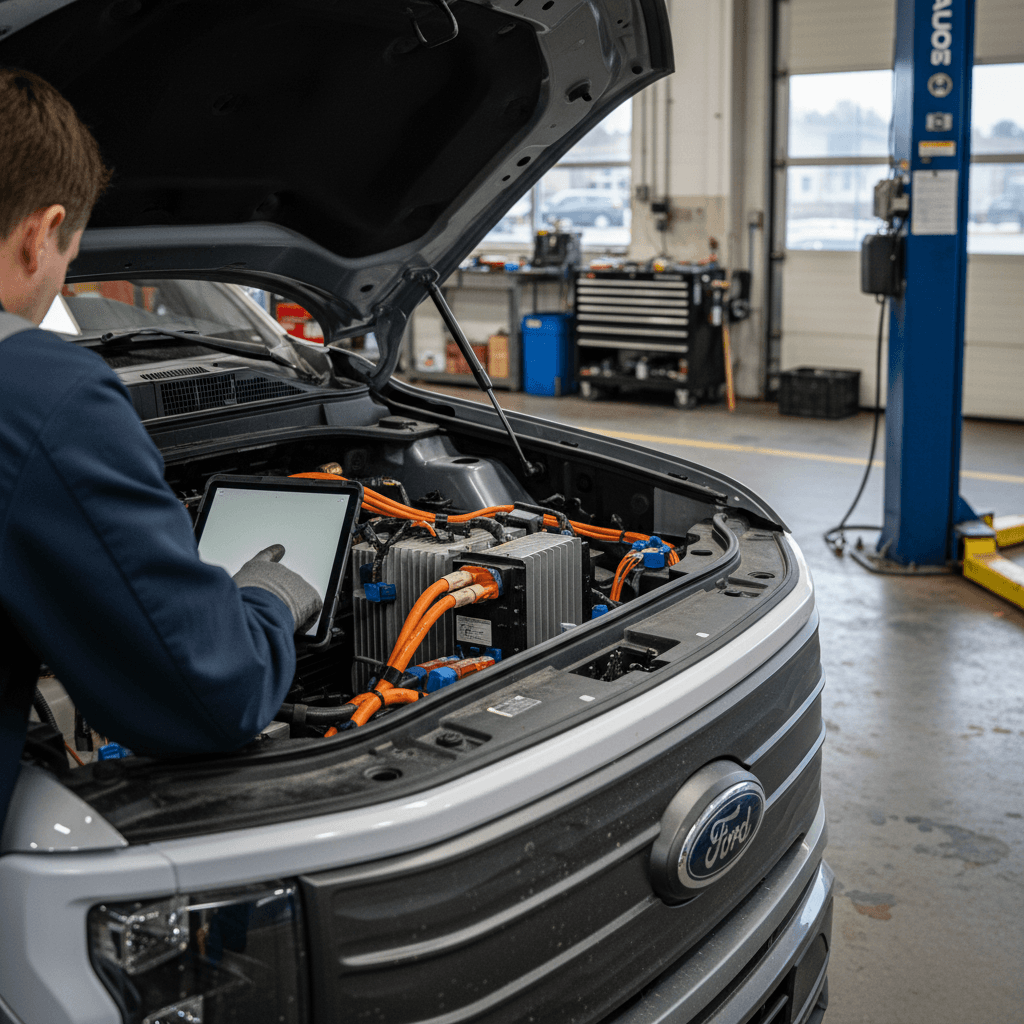
Charging problems on the 2023 Lightning usually fall into two buckets: hardware limits or defects in the charging equipment, and handshake issues between the truck and a public DC fast‑charger.
Typical 2023 Lightning charging issues and what to try
Rule out the simple stuff before you assume a bad onboard charger or HV pack.
Mobile charge cord overheating
Home Level 2 hiccups
DC fast‑charging errors
Watch your towing and fast‑charge pattern
Major recalls affecting the 2023 F-150 Lightning
Ford has issued a series of recalls that include 2023 F‑150 Lightning trucks. Many are software‑only and handled via OTA or a quick dealer visit; a few involve physical parts that need inspection or replacement.
Key recall themes for 2023 F‑150 Lightning
Exact recall numbers and production dates change as Ford and NHTSA issue new actions. Always run a fresh VIN check.
| Recall type (summary) | What can happen | How it’s fixed | What you should do |
|---|---|---|---|
| Off‑Road drive mode stuck on | ESC and stability control may be less effective on‑road. | Software update to drive‑mode logic. | Confirm recall completion on the VIN before high‑speed highway use. |
| Suspension fastener torque (front upper control arm ball‑joint nut) | Steering feel and alignment can degrade; in the worst case a separation could occur. | Inspect and re‑torque or replace affected components. | Listen for front‑end clunks and have any used truck’s front suspension inspected. |
| High‑voltage junction box / bussed electrical center inside the battery pack | Potential internal damage that can trigger HV faults or prevent the truck from driving. | Dealer inspection and, where necessary, pack‑level repair or replacement under HV warranty. | If a used truck falls in the affected build window, confirm this recall has been completed. |
| Integrated park module (select 2022–2026 Ford EVs including Lightning) | Vehicle may not hold Park reliably in rare cases, creating roll‑away risk. | Module software update. | Make sure the truck has current firmware and set the parking brake on grades. |
You can check any truck’s open recall status for free by entering its VIN on NHTSA’s website or Ford’s owner portal.
Always run the VIN
What fixes cost, dealer vs warranty vs DIY
Costs on a 2023 F‑150 Lightning are a tale of two worlds. If your truck is still in its 3‑year/36,000‑mile basic warranty and 8‑year/100,000‑mile EV component coverage, most serious problems are the manufacturer’s problem. Outside warranty, a few of the "small" issues can still sting.
Typical out‑of‑pocket costs once you’re out of warranty
Rough ballpark estimates for planning purposes, actual prices vary by dealer, region, and whether you use independent shops.
| Issue / repair | Where it’s fixed | Typical cost range | Notes |
|---|---|---|---|
| 12V battery replacement | Dealer or independent | $250–$450 | AGM battery plus labor and reset; some owners proactively replace every 2–3 years in harsh climates. |
| Infotainment or screen replacement | Dealer | $1,200–$2,500 | Big center screens are expensive; intermittent issues are often software, not hardware. |
| Onboard charger or DC‑DC converter | Dealer | $1,500–$3,500+ | Usually covered under EV component warranty for 8yr/100k miles. |
| HV pack module or junction‑box repair | Dealer | $5,000+ if out of warranty | In practice, failures have been very rare and usually repaired under warranty or recall. |
| Suspension and steering issues related to recall parts | Dealer | Typically $0 under recall | If ignored until damage occurs, you may pay out‑of‑pocket for non‑covered wear items. |
Always get a written estimate and ask if Ford will offer goodwill assistance on near‑warranty failures.
Leverage Ford and dealer goodwill
Used 2023 F-150 Lightning checklist
Because used Lightning prices have come down sharply since launch, a 2023 truck can be a compelling value, if you avoid the problem children. Here’s a focused checklist to use when you’re evaluating a used example.
2023 Lightning pre‑purchase inspection checklist
1. Scan for open recalls and campaigns
Before you fall in love with the truck, run the VIN through NHTSA and Ford. Confirm in writing that all <strong>Lightning‑specific recalls</strong> have been completed, especially those tied to suspension and high‑voltage components.
2. Get a real battery health report
Ask for documentation of high‑voltage battery state of health, not just a screenshot of the range at 100% charge. A <strong>Recharged Score</strong> or equivalent report uses deeper data to show how the pack has actually aged.
3. Ask about 12V battery history
Has the truck already had its 12V battery replaced? In cold climates, multiple replacements in a short time can hint at underlying drain or usage issues that need attention.
4. Test charging at home level and DC fast
If possible, plug into a Level 2 station and a DC fast‑charger during the test drive. Watch for warnings, failures to start charging, or large differences from expected charge speed.
5. Exercise all software and driver aids
On the test drive, use BlueCruise (if equipped), lane‑keep, blind‑spot monitoring, cameras, and parking sensors. Confirm you don’t get persistent warnings or system‑fault messages.
6. Inspect front suspension and tires
Look and listen for clunks, wandering steering, or unusual tire wear that could indicate unresolved suspension recall work or alignment problems.
7. Confirm OTA update history
Ask the seller or dealer to show when the last <strong>over‑the‑air update</strong> succeeded. A truck stuck on very old software may have been parked for long periods or have communication issues.
How Recharged helps F-150 Lightning buyers
The 2023 F‑150 Lightning is a complex truck, and traditional used‑car shopping habits don’t quite cut it anymore. That’s where a specialized EV retailer makes life easier.
Transparent battery and pricing data
- Every Lightning on Recharged comes with a Recharged Score report that includes verified battery health, odometer, and usage insights.
- We benchmark pricing against the broader EV truck market so you can see whether a given 2023 Lightning is truly a good deal.
End‑to‑end EV‑savvy support
- EV‑specialist advisors can walk you through trims, tow ratings, and how the Lightning’s range behaves under load.
- Financing, trade‑in, and nationwide delivery are all handled in a fully digital process, or you can visit our Experience Center in Richmond, VA.
Thinking about selling your Lightning?
FAQ: 2023 Ford F-150 Lightning problems and fixes
Frequently asked questions
Bottom line: should 2023 Lightning problems scare you off?
The 2023 Ford F‑150 Lightning isn’t problem‑free, but neither is any first‑generation, high‑tech truck. The most talked‑about issues, 12V battery failures, software glitches, and a handful of recalls, are real, yet mostly manageable with good maintenance, current software, and careful shopping. The underlying EV platform, when paired with a healthy pack, remains a capable and genuinely useful tool.
If you go in with clear eyes, insist on solid documentation, and lean on EV‑specific expertise, a 2023 Lightning can deliver a lot of truck for the money. Whether you’re buying or selling, Recharged is built around exactly that kind of transparency, so you can spend less time worrying about hidden problems and more time putting your electric pickup to work.