
If you’re trying to figure out how to sell a 2020 Tesla Model 3 for the best value, you’re not alone. In 2026, this car sits in a strange place: new-car price cuts, EV tax credits, and a flood of off-lease Teslas have pushed used prices down, but good 2020 cars are still desirable if you present them right. This guide walks you through what your car is realistically worth and how to sell it without leaving money on the table.
Context: the whiplash Tesla market
2020 Model 3 value in 2026: the quick answer
Typical 2020 Tesla Model 3 values in early 2026 (U.S.)
Exact numbers depend heavily on mileage, battery health, options, region, and Carfax history, but in early 2026 most 2020 Model 3s in good shape land somewhere in the high teens to mid‑20s. Finance and valuation sites still show a lot of 2020s advertising in the low‑ to mid‑20s, with trade‑in appraisals often a few thousand dollars lower for the same car.
Reality check
What buyers are actually paying for a 2020 Model 3 today
Online guides and instant offers are useful, but they lag the real market by weeks or months. To understand the real selling value of a 2020 Tesla Model 3 right now, think in ranges rather than a single magic number:
Illustrative price bands for 2020 Tesla Model 3 (U.S., early 2026)
These are realistic asking-price ranges for clean-title cars. Expect dealer trade-in offers to run 10–25% lower, depending on condition and how badly they want inventory like yours.
| Trim / configuration | Odometer range | Realistic private-party ask | Dealer / instant-offer range |
|---|---|---|---|
| Standard Range / SR+ RWD | 40k–60k miles | $20,000–$22,000 | $16,000–$19,000 |
| Standard Range / SR+ RWD | 80k–100k miles | $17,000–$19,000 | $14,000–$16,500 |
| Long Range AWD | 40k–60k miles | $22,000–$25,000 | $18,000–$21,000 |
| Long Range AWD | 80k–100k miles | $19,000–$22,000 | $15,500–$19,000 |
| Performance AWD | 40k–60k miles | $24,000–$27,000 | $19,000–$22,000 |
| Performance AWD | 80k–100k miles | $21,000–$24,000 | $17,000–$20,000 |
Your specific car can sit above or below these bands based on mileage, battery health, options, and history.
How to sanity-check these numbers
5 factors that move your 2020 Model 3’s price up or down
What actually moves your 2020 Model 3’s value
MSRP and old forum screenshots don’t sell your car. These do.
1. Mileage
By now, many 2020 Model 3s sit between 50,000 and 100,000 miles. Value falls noticeably in 20k–30k mile steps. The difference between 49k and 79k miles can easily be $2,000–$3,000 to a private buyer.
2. Battery health & range
Range is the new compression test. A car that still shows healthy estimated range and hasn’t been supercharged to death simply feels safer to buy. We’ll unpack this more in the next section.
3. Title & accident history
A clean Carfax is worth real money. Any structural repair, airbag deployment, or branded title can push your 2020 Model 3 down into wholesale territory, even if it looks fine in photos.
4. Options & software
Long Range, Performance, premium wheels, Premium Interior, and transferable software upgrades (like Acceleration Boost) all help. Full Self-Driving adds some value to some buyers, but nowhere near its original sticker price.
5. Region & season
EVs tend to sell for more in coastal metros and less in rural markets. Values also firm up heading into fall/winter in snow states where AWD and preconditioning suddenly make sense.
6. Sale channel
The same car can be worth thousands more or less depending on whether you trade it in, sell privately, or list it on an EV-focused marketplace like Recharged.
Where Recharged fits in
Ready to find your next EV?
Browse VehiclesHow battery health impacts what you can ask
With a 2020 Tesla Model 3, you’re not just selling a six‑year‑old car, you’re selling a six‑year‑old high-voltage battery. The good news: real‑world data from high‑mileage Model 3s suggests many packs lose on the order of 10–15% capacity over their first 100,000–150,000 miles when treated reasonably well. That’s not catastrophic. But it shows up in your range, and range shows up in your price.
What buyers actually see
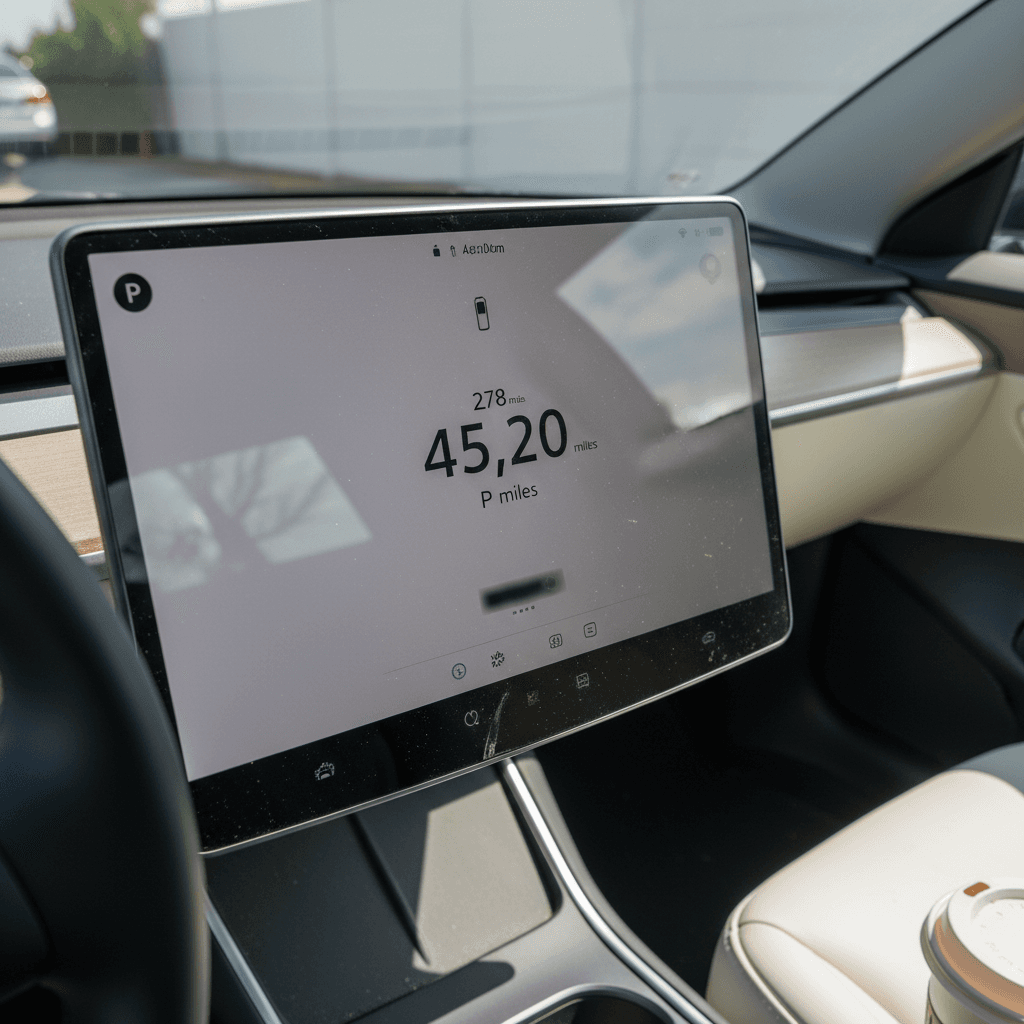
Most shoppers don’t know kilowatt-hours from kilowatts. They care about one thing: “How far can I go on a charge?” When they sit in your 2020 Model 3 and see 260–280 miles at 100% on a Long Range car, they relax. When they see 220 on that same car, they start mentally subtracting dollars.
Your battery’s apparent health is now as important as cosmetic condition, and many buyers will accept a few rock chips if the range number looks strong.
How to prove your battery is healthy
- Charge to 90–100% once shortly before listing and photograph the rated range.
- Grab screenshots from the Tesla app showing long-term efficiency and charging behavior.
- If you list on Recharged, our Recharged Score includes battery diagnostics so buyers aren’t guessing, or lowballing, based on fear.
Having documentation turns speculative “What if the battery is tired?” fear into a concrete selling point.
Don’t obsess over 3–5%
Trade-in vs private sale vs marketplace: which gets best value?
You don’t just have a 2020 Tesla Model 3 value, you have three or four different values depending on where you sell it. Think of them as layers of convenience tax.
Sale channels for your 2020 Model 3, compared
Each path has a different balance of money, time, and hassle.
| Sale channel | Typical money outcome | Time & effort | Best for |
|---|---|---|---|
| Franchise dealer trade-in | Lowest; often at or near wholesale auction values | Fastest and easiest; just sign and hand over keys | Busy sellers focused on tax savings and simplicity |
| Online instant-offer site | Slightly better than many dealer trades, still below private sale | Quick but may require inspection, paperwork, and a trip to a hub | Sellers who want a firm number within hours |
| Private-party sale | Highest upside if priced right, especially for rare specs | Takes time: photos, messages, test drives, paperwork | Sellers comfortable screening strangers and handling payment |
| EV-specific marketplace (like Recharged) | Often close to private‑party money with more serious, educated buyers | Moderate effort; platform helps with pricing, screening, and logistics | Sellers who want strong value without becoming a full-time car dealer |
You can leave thousands on the table in exchange for convenience, or keep more of the car’s value if you’re willing to do a bit more work.
Don’t ignore sales tax math
Recharged sits in the middle ground: you’re not handing your car to an auction block, but you’re also not fielding midnight DMs from people offering a gaming laptop and three dirt bikes. You get EV‑specialist support, nationwide reach, and a Recharged Score report that does a lot of the explaining for you.
How to price your 2020 Tesla Model 3: step-by-step
6-step process to set a smart asking price
1. Decode your exact spec
Verify your trim (Standard Range/SR+, Long Range, Performance), drive configuration, and options in the Tesla app or original window sticker. A mis-labeled Long Range as a Standard Range can underprice you by several thousand dollars, or scare away buyers when they realize the mismatch.
2. Benchmark with valuation tools
Pull values from 2–3 sources (KBB-style guides, dealer offer tools, and EV marketplaces). Use them as a ballpark, not gospel. Focus on figures that match your mileage and trim, not just a generic 2020 Model 3 number.
3. Study live listings in your region
Search used 2020 Model 3 listings with similar miles and spec within a few hundred miles of you. Note what’s sitting stale for 40+ days versus what disappears in a week. Real sellers, not algorithms, set the true market floor and ceiling.
4. Adjust for mileage & condition
If you’re significantly below local average miles, lean toward the upper end of the range. Above average or cosmetically tired? Aim closer to the middle or slightly under. Think in $500–$1,000 moves, not $100 nibbles.
5. Decide your strategy: speed vs dollars
If you want it gone this weekend, undercut similar cars by $500–$1,000 and be firm. If you’re willing to wait, price near the top of the fair range but be emotionally prepared to negotiate down a bit.
6. Revisit after 10–14 days
If you’ve had plenty of views but no serious bites after two weeks, the market is telling you something. Drop your ask modestly or sweeten the deal with new tires, an included home charger, or free delivery within a reasonable radius.
Anchor to a real number, not your payoff
Prep checklist: small moves that raise your sale price
A 2020 Tesla Model 3 is fundamentally a tech product on wheels. People buy it with their eyes and their phones. Your job is to make both experiences frictionless and reassuring.
Pre-sale prep that pays real money
Detail the car like it’s going on a date
Buyers expect some wear at six years, but they don’t expect dirty door pockets and gunked-up cupholders. A proper interior detail and exterior wash, plus a quick clay and wax, can easily add perceived value far beyond the $150–$300 it costs.
Fix the easy, cheap stuff
Touch up obvious curb rash, replace missing aero caps, swap dead key fob batteries, and address any cracked windshield chips. These are all low-cost signals that say, “I took care of this car,” which justifies your asking price.
Gather records and screenshots
Compile service invoices, tire receipts, and screen grabs from the Tesla app showing typical charging patterns and recent software versions. Organized documentation helps buyers feel they know the car’s story.
Verify software and account status
Make sure the car is on the latest stable software, remove any personal profiles you don’t need, and confirm there are no outstanding recalls. A clean digital slate makes the handoff smoother and more confident.
Stage great listing photos
Shoot in soft morning or evening light, in a clean location. Capture full exterior, interior, close-ups of the screen with range and odometer, wheels, tires, and any cosmetic flaws. Honesty plus good photography beats heavy filters every time.
Write a description that answers fears
Call out battery health, where it’s been charged most, accident history, and why you’re selling. A 3–4 paragraph story beats a one-line “2020 Model 3, runs great” and justifies a stronger price.
Common mistakes that quietly cost sellers thousands
- Pricing off what you want rather than what comparable 2020 Model 3s are actually selling for.
- Hiding prior damage or issues, then acting surprised when pre-purchase inspections or reports blow up the deal.
- Ignoring battery health questions, which just encourages lowball offers and walkaways.
- Letting the car sit filthy in photos and assuming “people can see past that.” They often can’t or won’t.
- Accepting the very first dealer or instant offer without at least checking alternatives like private sale or an EV marketplace such as Recharged.
Be careful with payment
FAQ: 2020 Tesla Model 3 resale value
Frequently asked questions about selling a 2020 Model 3
So…is it a good time to sell your 2020 Model 3?
If you bought a 2020 Tesla Model 3 at the height of the hype cycle, the depreciation sting is real. But viewed as a six‑year‑old premium EV, it still has strong fundamentals: modern tech, solid efficiency, and plenty of life left in the pack if it’s been treated well. That combination remains attractive, if you present the car clearly and price it where the market actually is, not where it was in 2021.
To maximize the value of your 2020 Model 3 when you sell, focus on three levers: prove your battery health, tell a transparent story about how the car has been used, and choose the right sale channel for your priorities. If you want help with valuation, battery diagnostics, and nationwide buyer reach, listing through Recharged gives you a clear, data‑backed way to show why your particular 2020 Model 3 is worth every dollar you’re asking.