If you’re eyeing a 2023 Audi e-tron GT, you’re probably wondering how reliable this low‑volume, high‑performance EV really is now that it’s a few years old. The short answer: the 2023 e-tron GT delivers strong performance with generally decent reliability so far, but it’s not trouble‑free, there are important recalls, heater and electronic issues, and battery considerations you should understand before you buy used.
Quick take
Overview: 2023 e-tron GT reliability at a glance
2023 Audi e-tron GT reliability snapshot
Unlike mass‑market EVs, the 2023 e-tron GT is a niche, premium model that shares its platform with the Porsche Taycan. That means limited long‑term data, but it also means a robust 800‑volt architecture that’s been in the field for a few years. Most owners report smooth day‑to‑day driving with only minor issues, while a small number have faced extended repair times for specific components like the coolant heater or complex electronics.
Key reliability takeaway
Reliability data: what we actually know so far
Traditional rating outlets like J.D. Power and Kelley Blue Book still don’t publish robust reliability scores for the e-tron GT because sales are low and the sample size is small. That pushes us toward a mix of NHTSA complaints, recall activity, and owner reports to understand how the 2023 model is holding up.
- No formal reliability score yet: Some industry roundups list the e-tron GT with “N/A” reliability ratings because there isn’t enough hard data from survey panels.
- NHTSA complaints are modest: When you roll up the last several model years, e-tron GT complaints are still in the low double digits, far from class‑leading, but nowhere near a problem‑plagued outlier either.
- Owner forums are mixed but not alarming: Many drivers report zero issues beyond recalls and routine service, while a minority have logged more significant electrical, suspension, or HVAC problems, sometimes with long waits for parts.
How Recharged looks at reliability
Major recalls affecting 2023 Audi e-tron GT
The 2023 e-tron GT has been included in several significant recalls. None of them are automatic deal‑breakers, if they’ve been fixed, but you absolutely want proof of completed work before you buy a used car.
Key recalls touching 2023 Audi e-tron GT models
Always run the VIN through NHTSA and ask for service records to confirm these have been addressed.
| System | Concern | Model years affected (incl. 2023) | Typical remedy |
|---|---|---|---|
| High-voltage battery modules | Potential internal short circuit and fire risk due to defective battery modules or sealant; some 2022–2023 cars share this issue with the Porsche Taycan. | 2022–2023 | Inspect battery, replace affected modules or the full pack; temporary guidance to limit charging to ~80% until fixed. |
| Front brake hoses | Brake hoses on the front axle can tear and leak, potentially increasing stopping distance. | 2022–2024 | Replace front brake hoses with updated parts. |
| Rearview camera software | Rear camera image can fail to display consistently due to software glitches, affecting compliance with backup‑camera rules. | 2022–2026 | Dealer software update for the infotainment/camera system. |
| Misc. software updates | Early cars occasionally needed patches for infotainment, charging logic, and driver‑assist behavior. | 2022–2023 | Install latest firmware during dealer service visit. |
Recall coverage can vary by exact build and market. Use this table as a starting point, then verify by VIN.
Don’t ignore battery‑related recalls
Common 2023 e-tron GT issues reported by owners
Because the 2023 Audi e-tron GT is a performance EV with sophisticated electronics and air suspension, the most common complaints cluster around HVAC, software, and chassis hardware, not the core electric drivetrain. Here’s what shows up repeatedly in forums, repair write‑ups, and owner anecdotes.
Most frequently mentioned problem areas
What 2023 e-tron GT owners actually talk about
Cabin heat / inline heater failures
Infotainment & camera glitches
Suspension & squeaks
Less common but notable complaints
Issues to ask about on a test drive
Wind & tire noise, fast tire wear
12V battery and electrical gremlins
Is that noise normal?
How to separate normal from abnormal
Battery health, degradation and warranty coverage
The 2023 e-tron GT uses a roughly 93 kWh gross (mid‑80s kWh usable) battery pack on an 800‑volt architecture, shared with the Porsche Taycan. So far, there’s no widespread evidence of dramatic degradation, most owners report slow, steady capacity loss, but the sample size is still small.
- Typical degradation: Early data points and owner reports suggest roughly 1–2% capacity loss per year under normal mixed use. Heavy DC fast charging or extreme heat/cold can nudge that higher.
- Battery warranty: In the U.S., Audi backs the high‑voltage battery for 8 years or 100,000 miles against excessive capacity loss and manufacturing defects, whichever comes first.
- Battery recall overlap: Some 2022–2023 cars were swept into the high‑voltage battery recall. If modules were replaced under warranty, that can actually be a positive, your pack has newer hardware and fresh documentation.
- Charging behavior: The car is capable of rapid DC charging, but living on DC fast chargers will stress the pack over time. Prioritize Level 2 charging at home or work when possible.
Why a battery health report matters
Maintenance and running costs vs other EVs
When it comes to regular servicing, the 2023 Audi e-tron GT is actually one of Audi’s cheaper performance models to maintain because it has no oil changes, no spark plugs, and far fewer moving parts than a gas RS model. But it’s still an expensive German luxury car when something big breaks.
Where the e-tron GT is affordable
- Routine service is light: Cabin filters, brake fluid, tire rotations, and inspections dominate the schedule.
- Brake wear can be low: Strong regenerative braking means pads and rotors often last longer than on gas sports sedans.
- No emissions hardware: No turbos, injectors, catalytic converters, or exhaust to service or replace.
Where costs can spike
- HVAC and coolant components: Inline heaters, coolant valves, and heat‑pump components are specialized and labor‑intensive to replace.
- Suspension and steering parts: Adaptive dampers, air suspension, and control arms are pricey if they fail out of warranty.
- Body and trim: E-tron GT‑specific bodywork, lights, and glass are premium‑priced, and collision repairs add up quickly.
Think in terms of total cost of ownership
Used 2023 e-tron GT buying checklist
If you’re shopping the 2023 Audi e-tron GT on the used market, you can do a lot to de‑risk the purchase up front. Use this checklist as your roadmap, whether you’re buying locally, online, or through a marketplace like Recharged.
Pre-purchase checklist for a 2023 Audi e-tron GT
1. Verify recall completion by VIN
Run the VIN through the NHTSA database and ask for dealer records. Confirm battery‑module, front brake hose, and rear‑camera software recalls (and any regional campaigns) have been performed.
2. Get objective battery health data
Don’t rely on the dash range estimate. Request a battery health report or buy from a seller who provides one, Recharged includes a Recharged Score Report with pack diagnostics for every vehicle we list.
3. Review charging and usage history
Ask how often the car has been DC fast‑charged versus Level 2 at home or work, and in what climate. Heavy fast‑charging in hot regions is harder on the battery than occasional road‑trip use.
4. Inspect HVAC and cabin heat
On a cold start, test the climate system thoroughly. Make sure the cabin heats up quickly and the defroster works. Any hesitation, error messages, or persistent cold air could hint at heater or coolant issues.
5. Test electronics and driver aids
Cycle the infotainment system, cameras, parking sensors, and driver‑assist features. Look for reboots, frozen screens, camera dropouts, or unexplained warning lights.
6. Listen for suspension and steering noises
On rough pavement and low‑speed turns, listen for clunks, creaks, or squeaks from the suspension and steering column. These noises often precede bushing or component replacement.
7. Check tires, wheels and alignment
Inspect for uneven tire wear, curb rash on the large wheels, and any pulling or vibration at highway speeds. Performance tires aren’t cheap, and uneven wear can hint at suspension or alignment problems.
8. Consider an extended warranty or protection plan
If you plan to keep the car beyond the factory coverage window, price out extended coverage from Audi or a reputable third party. With complex EV systems and luxury‑grade parts, one big repair can pay for the plan.
How Recharged can simplify the process
Ready to find your next EV?
Browse Vehicles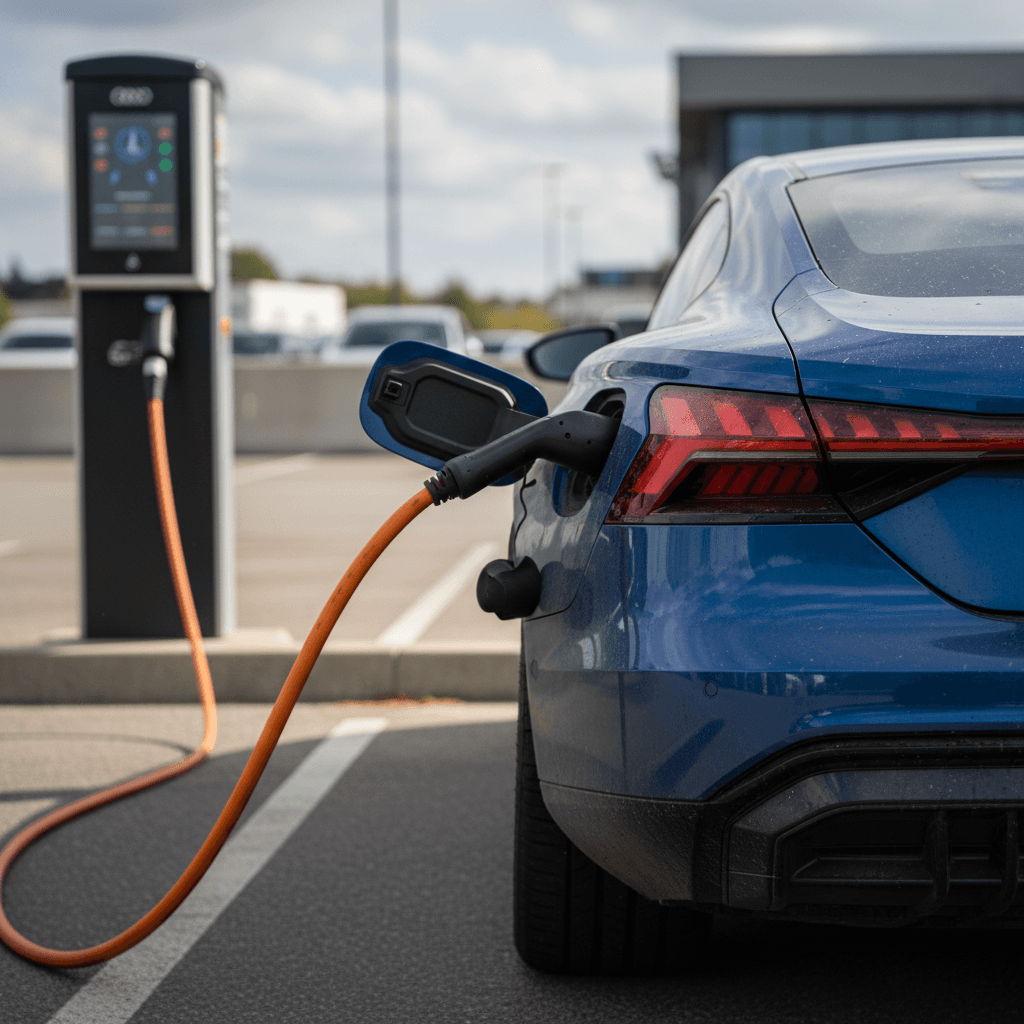
Is the 2023 Audi e-tron GT the right used EV for you?
Great fit if you want…
- High-performance EV dynamics: Instant torque, an 800‑volt platform, and quattro all‑wheel drive that rivals a Taycan for everyday excitement.
- Audis’ design and cabin quality: If you like Audi interiors and tech, the e-tron GT feels familiar, just quieter and quicker.
- Reasonable reliability for a halo car: The car doesn’t appear plagued by systemic failures, especially if recalls and updates are up to date.
Think twice if you’re worried about…
- Out-of-warranty risk: Complex HVAC, suspension, and electronic repairs can run into the thousands on a premium EV.
- Parts availability and repair times: Some owners have experienced long waits for specific components like inline heaters or steering parts.
- Budget constraints: Even if you find a great price, insurance, tires, and occasional high‑end repairs make this a costly daily driver compared with a mainstream EV.
Taken in full, the 2023 Audi e-tron GT looks like a solid, if not flawless, choice in the performance‑EV space. It’s more reliable than some social‑media horror stories suggest, but you can’t treat it like an ordinary compact EV either. If you’re comfortable with premium‑car ownership costs and you do your homework on recalls, battery health, and service history, a well‑vetted 2023 e-tron GT can be a thrilling, livable used EV. And if you’d rather have experts help you sort the good cars from the risky ones, browsing Recharged’s curated used EV inventory is a smart place to start.