If you’re looking at a 2022 Volkswagen ID.4, you’ve probably noticed a wide gap between the official EPA numbers and what owners report in real‑world **range tests**. Understanding how far the 2022 VW ID.4 really goes on a charge, and what affects that range, is essential whether you’re planning road trips or shopping a used ID.4 today.
Key takeaway
EPA range ratings for all 2022 VW ID.4 trims
Volkswagen nudged range up across the ID.4 lineup for 2022. All U.S. models share an 82 kWh battery pack (about 77 kWh usable) but differ in efficiency and rated range depending on drive and trim. Here’s how the EPA numbers shake out for 2022:
2022 VW ID.4 EPA‑rated range by trim
Official EPA combined range ratings for the 2022 ID.4 lineup in the U.S.
| Model year 2022 trim | Drive | EPA combined range (mi) | Combined efficiency (MPGe) |
|---|---|---|---|
| ID.4 Pro | RWD | 280 | 112 |
| ID.4 Pro S | RWD | 268 | 106 |
| ID.4 AWD Pro | AWD | 251 | 101 |
| ID.4 AWD Pro S | AWD | 245 | 95 |
Remember: these are laboratory ratings, not guarantees. Real‑world range will vary.
Those extra miles over the 2021 model came largely from software and efficiency tweaks rather than a bigger pack. For buyers, the important point is this: **RWD Pro models give you the longest rated range**, while the added traction and power of AWD trims cost you roughly 10–15% of that range.
Which trim offers the best range value?
Real‑world range tests: highway and mixed driving
Range tests from independent outlets show a consistent pattern with the 2022 ID.4: it’s efficient and predictable, but conditions matter. Let’s look at what you can realistically expect at U.S. highway speeds and in mixed driving.
Typical 2022 ID.4 real‑world range expectations
Approximate numbers from multiple tests and owner reports, assuming a healthy battery at 100% charge.
65–70 mph highway, mild weather
RWD Pro: ~210–240 miles
AWD Pro: ~190–220 miles
Flat terrain, 60–70°F, light wind, no roof box.
Mixed city/suburban driving
RWD Pro: ~240–270 miles
AWD Pro: ~220–250 miles
Stop‑and‑go helps efficiency if you accelerate smoothly.
Cold weather, 70+ mph
RWD Pro: ~170–210 miles
AWD Pro: ~160–200 miles
Below freezing with heater on; pre‑conditioning helps.
For example, one well‑documented highway test of a rear‑drive ID.4 at a constant 75 mph in near‑freezing temperatures saw about **190 miles** before the pack reached a low state of charge, considerably below the 268–280‑mile ratings, but in line with how cold weather and high speeds hurt efficiency.
Don’t plan to zero
City vs. highway: how driving style changes your range
The ID.4 is a great reminder that EVs don’t behave like gas cars when it comes to city vs. highway efficiency. At steady, higher speeds, aerodynamic drag eats into range. In slower city and suburban driving, regenerative braking and lower drag let the ID.4 stretch its miles.
Why city driving can help
- More regen: Each time you slow down, the motors recover energy instead of wasting it as heat in the brakes.
- Lower drag: At 25–45 mph, the wind isn’t fighting you nearly as hard as it does at 70 mph.
- Gentler acceleration: Smooth throttle inputs make a bigger difference than you might think.
Why high‑speed highway tests look worse
- Drag rises quickly: Pushing an ID.4 through the air at 75 mph takes much more power than at 65 mph.
- Fewer regen opportunities: Cruise control on a flat interstate doesn’t give the car many chances to recover energy.
- Climate loads constant: Cabin heat or A/C stays on continuously, further trimming range.
Easy way to improve your test range
Weather and temperature: how much range you lose
Every EV suffers in the cold, and the 2022 ID.4 is no exception. The battery prefers moderate temperatures, and in winter the cabin heater can draw as much power as a small space heater in your house. That combination can make a big dent in range tests.
Typical weather impact on 2022 ID.4 range
Heat pump advantage (if equipped)
You can’t change the weather, but you can work with it. Pre‑conditioning the cabin while plugged in, using heated seats and steering wheel instead of cranking the cabin temperature, and planning shorter legs between fast‑charge stops all help tame winter range swings.
Charging strategy and speed: keeping range consistent
The 2022 ID.4 received a bump in DC fast‑charging capability, from about 125 kW to roughly **135 kW peak**, which modestly shortens charging sessions. At home, it can charge at up to 11 kW on Level 2, taking around 7–8 hours for a full charge. Smart charging habits won’t increase your pack’s capacity, but they’ll make your range tests more predictable.
Smart charging habits for consistent range tests
Charge to 100% only when needed
For daily use, stick to ~80–90% max to prolong battery life. Before a range test or road trip, charge to 100% right before departure so the pack doesn’t sit at full.
Start driving soon after fast charging
A hot battery right off a DC fast charge can show slightly less projected range. If you’re testing, build in a few minutes of slower driving after a fast charge to stabilize things.
Use the same starting SOC every time
For apples‑to‑apples comparisons, begin each personal range test at the same state of charge, ideally 100%, and note conditions like temperature and speed.
Rely on kWh used, not just miles left
Range estimators are educated guesses. Tracking **energy used (kWh/100 mi)** on the ID.4’s display gives you a clearer picture of how efficiently you’re driving.
Free fast charging on many 2022 ID.4s
How the 2022 ID.4’s range compares to Model Y and Mach‑E
If you’re cross‑shopping, you’ve noticed that Tesla’s Model Y and Ford’s Mustang Mach‑E generally post higher EPA range numbers than the 2022 ID.4. But raw range isn’t the only part of the story.
2022 ID.4 range vs. key rivals
Approximate EPA combined range figures for comparable 2022 models.
| Model & trim (2022) | Drive | EPA range (mi) | Notes |
|---|---|---|---|
| VW ID.4 Pro | RWD | 280 | Best‑range ID.4; comfort‑focused tuning |
| VW ID.4 AWD Pro | AWD | 251 | More traction, slightly less range |
| Tesla Model Y Long Range | AWD | ~330 | Class‑leading range, higher price |
| Ford Mustang Mach‑E California Rt. 1 | RWD | ~305 | Long‑range trim, smaller cargo area than ID.4 |
Exact range depends on wheel size, battery, and trim, these are representative configurations.
On paper, the ID.4 trails the top trims from Tesla and Ford. In practice, owners and testers often find that it delivers **honest, repeatable numbers** and remains efficient at reasonable highway speeds. If your daily routine is under 150–180 miles, the difference between 250 and 300+ EPA miles matters less than charging access and comfort.
Shopping a used 2022 ID.4: what range to expect today
By now, many 2022 ID.4s are on their second owner. The big question for a used buyer is how much range the car has lost compared with when it was new. The good news: most modern EV packs, including Volkswagen’s, show relatively modest degradation over the first few years when properly cared for.
Typical used‑market range expectations (2022 ID.4)
Assuming normal use and basic charging care after 3–4 years.
Healthy RWD Pro example
New EPA: 280 miles
Likely today: ~260–270 miles at 100% in mild weather
Small capacity loss plus real‑world conditions explain the difference.
Heavily used AWD Pro example
New EPA: 251 miles
Likely today: ~220–240 miles at 100% in mild weather
Frequent fast‑charging and high mileage can trim usable range faster.
Range guesswork isn’t enough on a used EV
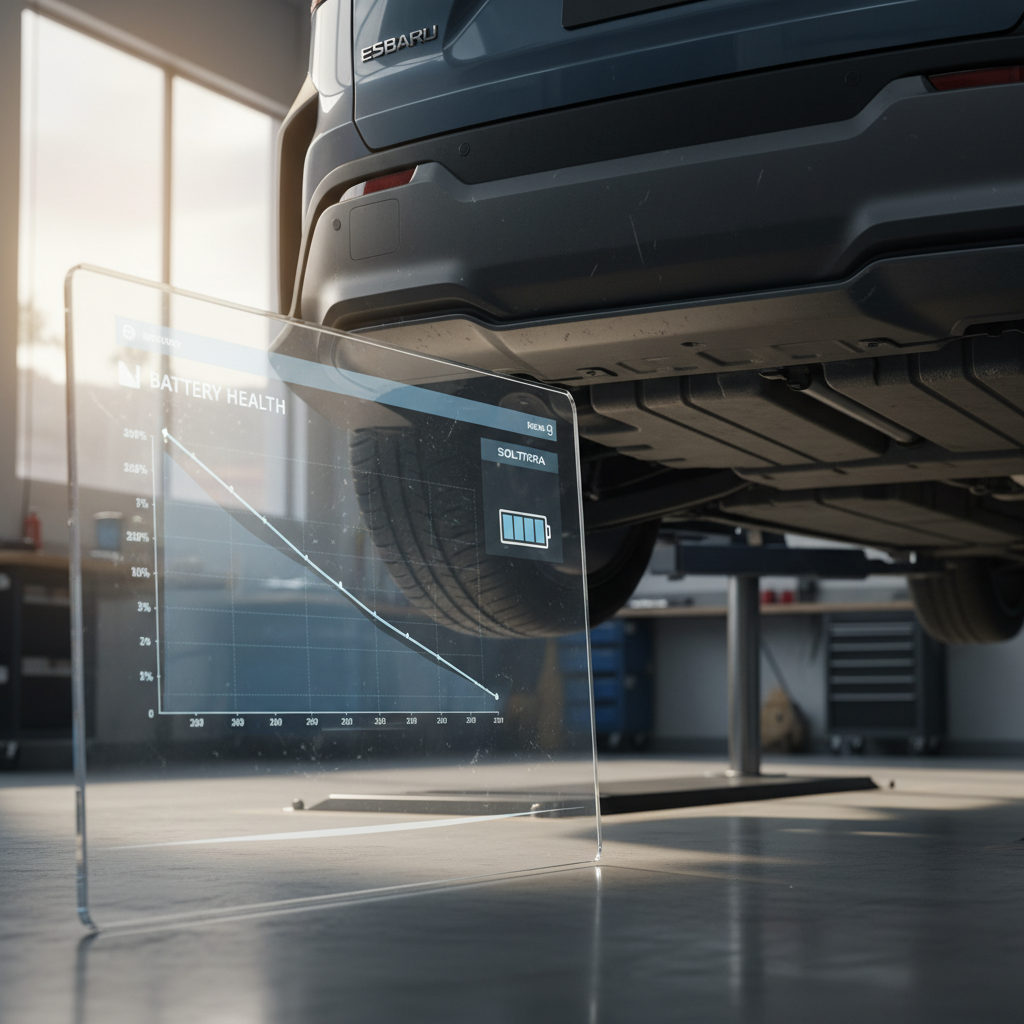
That’s where Recharged comes in. Every EV sold through Recharged includes a **Recharged Score Report** with a verified battery‑health reading, real‑world range estimates, and pricing data that already accounts for the pack’s condition. If you’re comparing multiple 2022 ID.4s, that kind of transparency can make the difference between a confident purchase and an expensive guess.
Test‑drive checklist: evaluating real‑world ID.4 range
When you test‑drive a 2022 ID.4, whether at a dealer, a private seller, or through an online retailer, you can do your own mini range test in under an hour. Here’s a simple checklist to follow.
Quick on‑road range and efficiency check
1. Note starting SOC and projected range
Before you drive, write down the **state of charge (SOC)** and the car’s estimated miles remaining. Make sure climate settings are at your normal comfort level.
2. Reset trip and efficiency meters
Use the ID.4’s trip computer to reset trip distance and energy consumption (kWh/100 mi). This lets you see exactly how efficient your test drive was.
3. Drive a mixed loop of at least 20–30 miles
Include some 45–55 mph roads and a short stretch of highway. Maintain steady speeds and avoid full‑throttle acceleration so your results reflect how you’ll actually drive.
4. Record ending SOC, miles driven, and consumption
At the end of the loop, note SOC, total miles, and average kWh/100 mi. A healthy 2022 ID.4 in mild weather often sits in the **28–33 kWh/100 mi** range in mixed driving when driven reasonably.
5. Sanity‑check against EPA numbers
Multiply the battery’s usable capacity (~77 kWh) by your observed efficiency. For example, 77 ÷ 0.30 kWh/mi ≈ 256 miles. That’s a realistic full‑charge expectation in similar conditions.
6. Ask for battery‑health documentation
If the seller has service records, software‑update notes, or an independent battery‑health report (like a <strong>Recharged Score</strong>), review them. Consistent fast‑charging every day or frequent 100% storage are yellow flags.
FAQ: 2022 VW ID.4 range questions answered
Frequently asked questions about 2022 VW ID.4 range
Bottom line: is the 2022 ID.4’s range enough?
Taken in context, the 2022 VW ID.4 delivers exactly what most EV‑curious shoppers need: **honest, repeatable range** that comfortably covers a typical American commute, plus enough real‑world highway range for well‑planned road trips. You won’t see Tesla‑like EPA numbers, but you also won’t have to stretch as far on price to get into a practical, roomy electric SUV.
If you’re considering a used 2022 ID.4, focus less on the original window‑sticker range and more on the **current battery health, your daily mileage, and your charging options**. A thorough test drive combined with an objective battery‑health report, like the Recharged Score included with every EV sold through Recharged, can tell you far more than any single range test ever will.