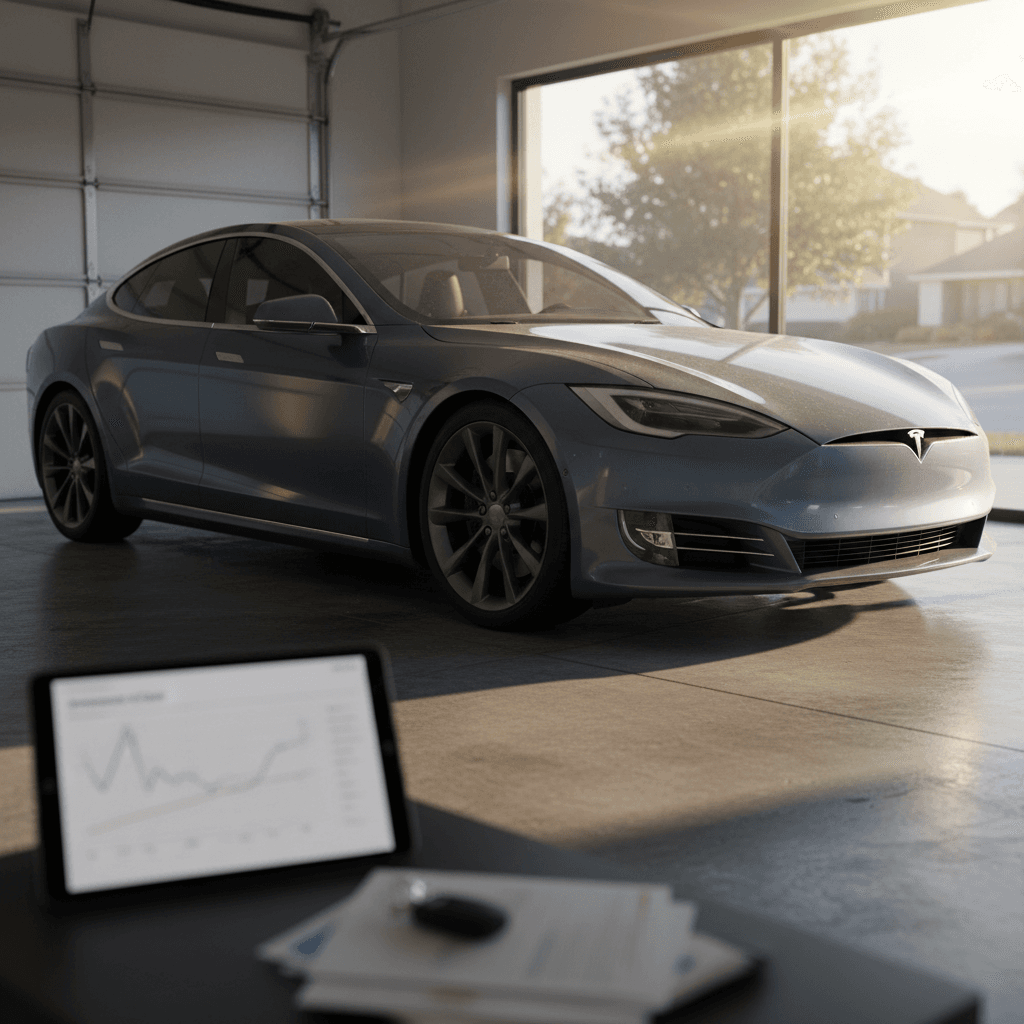
If you own a 2022 Tesla Model S, you’ve lived through one of the wildest used‑EV markets in history. Values surged, then fell hard, and in early 2026 many owners are still trying to figure out what a fair 2022 Tesla Model S trade in value really looks like. The good news: with the right prep and the right buyer, you can still get strong money for your car.
Quick snapshot for 2026
Overview: What 2022 Model S Trade‑In Looks Like in 2026
2022 Tesla Model S Value at a Glance (U.S., Early 2026)
Tesla refreshed the Model S for the 2021 model year, and your 2022 falls into that desirable "refresh" era with the updated interior, yoke or round wheel, and the current‑gen battery and motor setup. That helps value. What hurts is that luxury EVs like the Model S have seen faster depreciation than mass‑market EVs, and Tesla itself has cut new‑car prices multiple times since 2022, dragging used values down along the way.
Why your offer might feel low
How Much Is a 2022 Tesla Model S Worth Today?
Let’s anchor the conversation with realistic ranges for early 2026 in the U.S. market. Exact numbers will vary by region and equipment, but these bands reflect where 2022 Model S cars are actually changing hands, not just wishful asking prices.
2022 Tesla Model S Value Ranges (U.S., Early 2026)
Broad value bands for a 2022 Model S based on trim and condition. Your specific car may fall above or below these depending on options, mileage, and battery health.
| Trim / Condition | Typical Mileage | Retail Listing Range | Likely Trade‑In Range* |
|---|---|---|---|
| Long Range – Clean, average miles | 30,000–45,000 | $42,000–$50,000 | $38,000–$45,000 |
| Long Range – High miles or cosmetic wear | 60,000+ | $35,000–$42,000 | $30,000–$38,000 |
| Plaid – Clean, lower miles | 25,000–40,000 | $50,000–$60,000+ | $45,000–$53,000 |
| Plaid – Higher miles or needs reconditioning | 50,000+ | $45,000–$55,000 | $40,000–$48,000 |
| Exceptional spec (low miles, great options, spotless) | Under 25,000 | $55,000–$65,000+ | $50,000–$58,000+ |
Use this as a starting point, then layer in mileage, battery health, and local demand.
Understanding the gap
Online valuation tools are a useful gut check, but they tend to lag fast‑moving EV markets. The best way to sanity‑check a trade‑in offer is to compare it to actual used listings for similar 2022 Model S cars in your region, same trim, mileage, and features, then expect a trade number roughly 10–20% below that retail price, depending on the buyer and how clean your car is.
What Dealers Look At When Pricing Your 2022 Model S
Key Factors That Move Your Trade‑In Number Up or Down
These are the levers every wholesale buyer or retailer is quietly pulling.
Mileage & usage
For a 2022 luxury EV, anything around 30,000–45,000 miles looks "normal" in 2026. A car with 70,000+ miles will be priced more like an older model year, even if it’s the same age.
Accident & repair history
Clean Carfax/AutoCheck and original paint command the strongest values. Structural damage, airbag deployment, or multiple accidents can chop thousands off a trade offer.
Battery & charging behavior
How the pack has aged, measured in usable range and DC fast‑charge history, is critical. A pack that’s lost 10% of range is normal. A car down 20%+ will be priced accordingly.
Region & climate
Cars from harsh winters or salty coastal areas may face extra underbody corrosion checks. Sun‑baked paint and interiors in hot states can also ding value.
Options & color
Desirable specs, black/white/gray exterior, black or white interior, 19‑inch wheels, popular Autopilot packages, tend to sell faster and support stronger offers.
Market & incentives
When Tesla cuts new‑car prices or rolls out aggressive financing, used values soften. When new inventory is tight, the opposite happens. Trade‑in values move with that tide.
A modern buyer isn’t just eyeballing your car on the lot. They’re running VIN‑level history reports, checking auction data, looking at live retail listings, and modeling how long it might sit before selling. That’s why two 2022 Model S sedans with the same mileage can get very different offers: one is an easy retail sale, the other is a risk.
Bring your paperwork
Tesla Trade‑In vs Dealer vs Private Sale
When you talk about "trade‑in value," you’re really choosing between three different paths: trading directly to Tesla, selling or trading to a third‑party retailer, or taking on a private‑party sale yourself. Each has its own math and its own headaches.
Where to Sell Your 2022 Model S: Pros, Cons & Typical Value
How common sale channels stack up for a 2022 Tesla Model S owner in 2026.
| Channel | Convenience | Typical Value vs Retail | Best For |
|---|---|---|---|
| Trade‑in to Tesla | Very high – one‑stop when buying another Tesla | Low to medium (often near bottom of range) | If you’re already ordering another Tesla and prioritize simplicity over every last dollar |
| Trade‑in / instant‑offer to EV‑focused retailer (like Recharged) | High – online offers, digital paperwork, pickup available | Medium (often stronger than generic dealers) | If you want EV‑savvy pricing and an easy process without selling it yourself |
| Trade‑in to general dealer | High – especially if buying another brand | Low to medium | If your priority is moving quickly into a different brand and you’re not chasing top dollar |
| Private‑party sale | Low – you handle ads, test drives, paperwork | High (often top of range) | If you’re comfortable meeting strangers and handling the process for more money |
Dollar ranges assume a clean‑title car with average miles; your specifics will vary.
Where Recharged fits in
Ready to find your next EV?
Browse VehiclesTesla’s own trade‑in calculator is a good reality check if you plan to buy another Tesla, but it’s not the ceiling on what your car is worth. In many cases, EV‑specialist buyers or a clean private‑party listing will beat Tesla’s offer, sometimes by several thousand dollars, especially if your car has a strong spec or unusually low miles.
How Battery Health Impacts Your 2022 Model S Value
For a gasoline luxury sedan, buyers obsess over transmission shifts and oil leaks. For a 2022 Model S, the biggest invisible value driver is battery health. Two cars with identical mileage and options can be separated by thousands of dollars if one has clearly stronger real‑world range than the other.
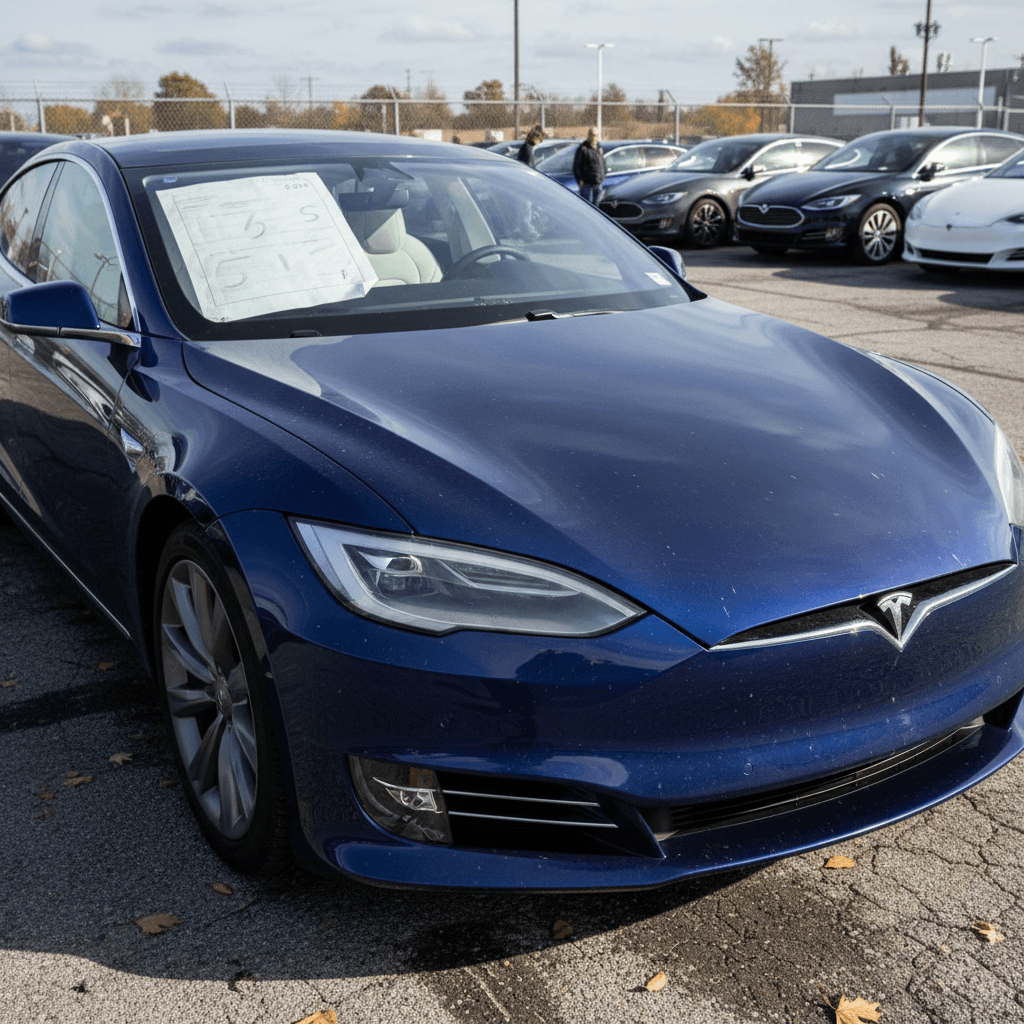
- A healthy 2022 Long Range that still delivers ~380–400 miles at 100% is behaving normally for its age and mileage.
- A car that only shows ~320–340 miles at 100% with similar usage may have seen heavier DC fast‑charging or harsher use, and buyers will price in that future risk.
- Plaid models tend to be driven harder; a Plaid that still shows strong range and has modest Supercharger usage can stand out and support a better offer.
How to check your pack before you get offers
Most mainstream dealers still don’t know how to read Tesla battery data beyond a guess at range. EV‑focused buyers and marketplaces are more likely to reward a documented, healthy pack with a stronger trade‑in value, especially on a car as expensive to replace as a Model S.
Steps to Maximize Your 2022 Model S Trade‑In Offer
Pre‑Trade‑In Checklist for a 2022 Tesla Model S
1. Get a realistic value baseline
Pull a few online trade‑in estimates, then look at real 2022 Model S listings that match your trim and mileage. Assume your trade will land 10–20% below those asking prices and you’ll walk into negotiations with open eyes.
2. Deep‑clean and de‑Tesla your car
Detail the interior, wash and decontaminate the paint, remove clutter, and reset personal settings. Buyers respond to a car that feels cared for, and minor reconditioning savings can justify a stronger offer.
3. Fix cheap, obvious issues
A fresh windshield chip repair, new wiper blades, and replacing a cracked wheel cover or missing floor mat are small dollars that remove big psychological objections. Skip major cosmetic repairs unless the buyer requires them.
4. Document software, options, and charging history
Print or screenshot your spec from the Tesla app, highlight paid packages like Enhanced Autopilot or Full Self‑Driving (if still attached), and be ready to discuss how often you Supercharged versus home‑charged.
5. Gather service records & recalls
Save evidence of tire rotations, alignments, brake service, and any warranty work. Confirm that open recalls or service bulletins are addressed before you ask for top‑of‑market money.
6. Shop multiple offers in a short window
Get numbers from Tesla, at least one EV‑savvy buyer like <strong>Recharged</strong>, and one or two local dealers. Collect them within a few days so you’re comparing an honest snapshot of the same market moment.
Make financing work for you
Real‑World 2022 Model S Trade‑In Scenarios
Scenario 1: 2022 Model S Long Range, typical miles
Spec: Long Range, 2022 build, 38,000 miles, dual motor, 19" wheels, standard paint, basic Autopilot, clean history.
- Similar retail listings in region: ~$45,000–$48,000
- Expected trade‑in to general dealer: $38,000–$42,000
- Expected trade‑in to EV‑specialist buyer: $40,000–$44,000
- Well‑marketed private sale: $44,000–$47,000
If battery health checks out and cosmetics are strong, this car should trade near the upper half of the Long Range ranges we outlined earlier.
Scenario 2: 2022 Model S Plaid, higher miles
Spec: Plaid, 2022, 63,000 miles, 21" wheels, upgraded interior, two minor cosmetic accidents on record, mostly Supercharger use.
- Similar retail listings in region: ~$50,000–$55,000
- Expected trade‑in to general dealer: $40,000–$45,000
- Expected trade‑in to EV‑specialist buyer: $43,000–$48,000
- Private sale if marketed well: $48,000–$52,000
High miles and heavier DC fast‑charging pull this Plaid back toward the middle of the Plaid range even though it was the top trim new.
How Recharged would price it
Common Mistakes When Trading In a Tesla Model S
- Anchoring to your original purchase price. What you paid in 2022, especially if you bought near the peak, has no bearing on what the market will pay in 2026.
- Relying on one instant‑offer box. Algorithms can be conservative with EVs they don’t fully understand. A single lowball number is not "the market."
- Ignoring cosmetic issues you could fix cheaply. A $150 paintless dent repair or wheel refinish can sometimes swing a borderline car from auction‑only to retail‑worthy in a buyer’s eyes.
- Misrepresenting battery or accident history. Buyers will run reports and, in some cases, pull logs. Surprises can tank value, or make someone walk away entirely.
- Trading in at the wrong time. Trying to trade in during a flood of new‑car incentives or right after a big Tesla price cut usually yields softer numbers. When possible, time your move for calmer waters.
Be honest about FSD
FAQ: 2022 Tesla Model S Trade‑In Value
Frequently Asked Questions About 2022 Model S Trade‑Ins
Should You Trade In Your 2022 Model S or Hold?
Choosing Your Path: Trade Now or Keep Driving
If you’re eyeing another EV soon
Gather offers from Tesla, at least one EV‑specialist buyer, and one local dealer within the same week.
Compare net cost of your next car after trade, tax savings, and any incentives.
If an EV‑focused offer is within a few percent of what you’d hope to get privately, the saved time and hassle may be worth taking the deal now.
Use pre‑qualification tools (like Recharged’s financing options) to see your monthly payment picture before you say yes.
If you’re leaning toward keeping the car
Evaluate how well your 2022 Model S still fits your daily life, range, comfort, and software support are all still competitive in 2026.
Price out upcoming wear items like tires and brakes so you’re not blindsided later.
Keep the car cosmetically and mechanically strong; a well‑kept Model S will always be easier to sell when you’re ready.
Revisit values every 6–12 months. If depreciation has clearly slowed and the market looks stable, that can be an ideal time to make a move.
Your 2022 Tesla Model S may not be worth what you hoped when you drove it home, but it’s still a desirable, long‑range luxury EV in a market that finally understands used Teslas better than it did a few years ago. If you understand where 2022 Tesla Model S trade in value really sits, document your car’s strengths, and collect a few smart offers, especially from EV‑savvy buyers like Recharged, you can walk into any negotiation with confidence. Whether you trade now or hold for another few years, the key is the same: let real market data and verified battery health, not guesses or old expectations, guide your next move.