If you’re eyeing a used 2022 Nissan Leaf, you’re probably wondering whether the low operating costs outweigh the risk of headaches down the road. The Leaf has been around long enough to build a reputation, good and bad, and the 2022 model year is no exception. This guide breaks down the most common 2022 Nissan Leaf problems, key recalls, and what to check before you buy so you can make a confident, data‑driven decision.
Good news, before the bad
2022 Nissan Leaf reliability at a glance
2022 Nissan Leaf: snapshot for used buyers
From a high level, the 2022 Leaf is a relatively simple EV compared with newer models, no complex thermal battery management like some rivals, modest power output, and a proven platform. That simplicity helps reliability, but it also brings well‑known tradeoffs: more noticeable battery degradation in hot climates and quicker range loss as the pack ages.
Tip for shoppers
Major 2022 Nissan Leaf recalls you should know about
As of early 2026, the 2022 Leaf has been subject to multiple federal safety recalls. Two are especially important if you’re considering a used example.
Key recalls affecting 2022 Nissan Leafs
Always verify recall status by VIN; not every 2022 Leaf is affected by every campaign.
| Issue | Model years affected | Risk | Remedy highlights |
|---|---|---|---|
| Rearview camera harness damage | 2018–2022 Leaf | Loss or distortion of backup camera image, reduced rear visibility | Dealers inspect the camera and harness, repair or replace if damaged, or add protective tape and reroute the harness. |
| Battery overheating on DC fast charging (Level 3) | 2021–2022 Leaf with quick‑charge port | Potential lithium‑ion battery overheating during Level 3 charging | Battery software update at the dealer; owners are advised not to use Level 3 chargers until the fix is completed. |
| Unintended acceleration after cruise control disengagement | 2018–2023 Leaf | Vehicle may continue to accelerate briefly after cruise control is turned off under specific conditions | Software update to correct the drive‑control logic in affected vehicles. |
| Additional minor campaigns | Select 2018–2022 Leaf | Various compliance or minor safety issues | Dealer inspection and software/parts updates as specified by Nissan. |
Recall campaigns impacting 2018–2022 Leafs, including the 2022 model year.
Fast-charging recall matters for road‑trippers
Most common 2022 Nissan Leaf problems reported by owners
Where 2022 Leaf owners report the most trouble
Not every car will experience these, but they show up frequently in surveys and forums.
Battery & range
Reports of state‑of‑health (SOH) dropping faster than expected, especially in hotter climates or with frequent fast charging. Some owners worry about losing their first capacity bar within the first few years.
Charging quirks
Intermittent failures to initiate charging at home or at certain public stations, and charge ports that can be finicky about cable insertion or latching.
Infotainment & electronics
Crackling audio, Bluetooth or Android Auto dropouts, and occasional frozen screens. A few owners report dealer software updates that don’t fully resolve the problem.
Camera & sensors
Backup camera image loss or distortion tied directly to the rear camera harness recall, plus occasional parking sensor glitches.
Noises & leaks
Wind noise from the mirrors or doors at highway speeds, and squeaks/rattles from the hatch area over rough pavement.
Warning lights & messages
Random traction control, ABS, or EV‑system warning lights that turn out to be minor sensor or software issues but still require dealer visits.
It’s important to separate nuisance issues from truly serious defects. A bit of wind noise or a rattling cargo cover is annoying but rarely a deal‑breaker. Repeat charging failures, rapid range loss, or unresolved warning lights, on the other hand, can undermine the whole ownership experience, and the value of the car when you go to sell.
Battery health, range loss and fast-charging concerns
The Leaf’s lithium‑ion pack doesn’t use an active liquid cooling system, and that design choice has been debated ever since the first‑generation car. On earlier Leafs, owners in hot regions saw noticeable capacity loss within a few years. The chemistry in later packs has improved, but 2022 owners are still reporting faster‑than‑hoped drops in state‑of‑health, especially where temperatures and freeway speeds are high.
- SOH dropping into the low 90s or high 80s within 25,000–35,000 miles, sometimes triggering worries about losing the first capacity bar early.
- Range that feels 10–20% lower than the original EPA estimate after a few years, particularly on highway commutes.
- Inconsistent range in cold weather, where cabin heating can noticeably cut into usable miles.
- Anxiety about using DC fast chargers frequently because of the overheating recall and concerns about long‑term degradation.
How to quickly gauge Leaf battery health
What’s “normal” degradation?
For most modern EVs, losing roughly 5–10% of capacity in the first few years is considered normal, with the curve flattening later. In a 2022 Leaf, that might mean a Plus model going from about 215 miles of rated range down to 190–200 miles in typical mixed driving.
Red flags to watch for
- One or more capacity bars missing on the dash cluster within the first 4–5 years.
- SOH readings below the mid‑80% range at modest mileage.
- A history of frequent DC fast charging in hot climates without cool‑down periods.
If you see more than one of these, price negotiations, or walking away, are on the table.
Charging problems: Home and public station issues
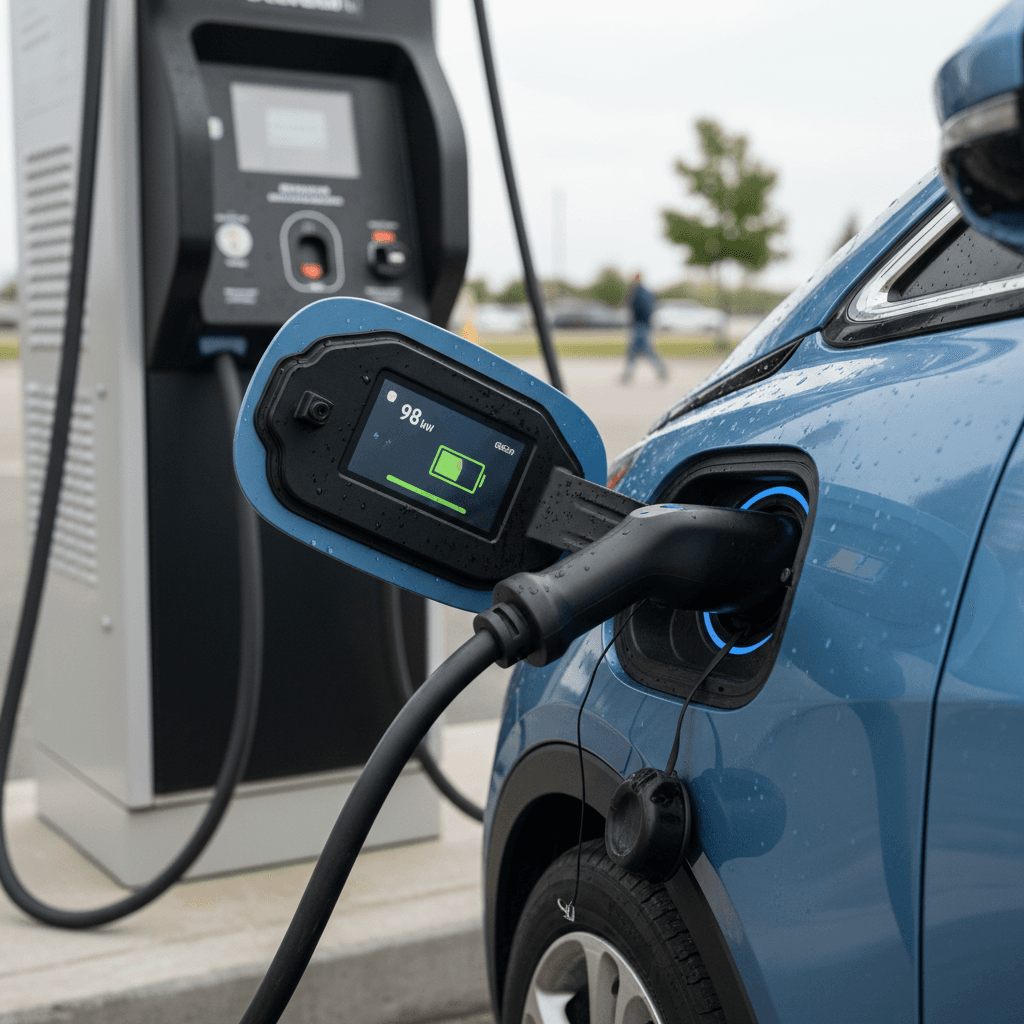
Several 2022 Leaf owners report intermittent charging issues: the car refuses to start charging even though the station is live, charging stops unexpectedly, or certain public DC fast chargers won’t handshake with the vehicle. In many cases, the fix is straightforward, software updates, a flaky EVSE, or a worn connector, but a pattern of repeat failures is a warning sign.
Level 3 caution
Charging system checks during a test drive
1. Test Level 2 home-style charging
Ask the seller if you can plug into a Level 2 station or portable EVSE. Confirm the Leaf begins charging promptly, shows the expected charge rate, and doesn’t stop unexpectedly.
2. Inspect the charge ports and doors
Look for bent pins, corrosion, broken charge‑port doors, or misaligned latches. Damage here can cause intermittent or failed charging sessions.
3. Try a public station if possible
If you can, visit a nearby public Level 2 or DC fast charger. A single failed handshake could be station‑related; multiple failures at different stations are a red flag.
4. Watch for warning lights or messages
During and after charging, look for EV‑system warning messages, overheating warnings, or anything advising reduced power. Screenshot or photograph anything unusual.
5. Ask about charging history
How often did the previous owner fast‑charge? Do they mostly charge to 100% or stop at 80–90%? Consistent, gentle charging habits are better for long‑term battery health.
Infotainment and in-car electronics issues
Electronics are another recurring complaint area on the 2022 Leaf. Owners on forums describe crackling audio, Bluetooth and Android Auto audio cutting out, and media playback dropping across multiple sources (USB, Bluetooth, CarPlay) while basic radio and satellite audio remain fine. In some cases, dealers suggest paid software updates without guaranteeing a fix, frustrating if you’re out of warranty.
- Frozen or laggy infotainment screen that requires a reboot.
- Audio cutting out or crackling, especially over Bluetooth or Android Auto.
- Occasional backup camera glitches that may be tied to the recall harness issue.
- Random illumination of ABS, traction control or EV warning lights caused by sensors or software rather than major mechanical failures.
How to stress‑test the Leaf’s infotainment
How these problems affect ownership costs and value
Where the Leaf saves you money
- No engine, transmission, or exhaust system to maintain.
- Lower routine maintenance: no oil changes, fewer wear items.
- Electricity is usually cheaper per mile than gasoline, especially if you can charge at home on off‑peak rates.
Where costs can sneak up
- Out‑of‑warranty infotainment repairs if the head unit or audio hardware fails.
- Potentially high cost of pack replacement if battery degradation becomes severe outside the factory warranty window.
- Resale value hit if open recalls, warning lights, or fast‑charging limitations aren’t resolved.
When you buy through Recharged, battery health and major systems are independently evaluated, and pricing reflects real‑world condition, not just mileage and trim level.
Why used Leafs can still be bargains
Buying a used 2022 Nissan Leaf: Inspection checklist
Pre‑purchase checklist for a 2022 Nissan Leaf
1. Pull the full recall and service history
Run the VIN through NHTSA’s database and ask for dealer service records. Confirm completion of the rear camera harness, fast‑charging, and unintended‑acceleration software recalls where applicable.
2. Verify battery health with data
Don’t rely only on the 12‑bar display. Use an app or third‑party report to confirm SOH and look at charge‑cycle counts. At Recharged, this data is summarized for you in the Recharged Score Report.
3. Inspect tires, brakes and suspension
Test for abnormal noises, vibrations, or pulling under braking. While the Leaf is easy on brakes thanks to regen, worn tires or alignment issues are still common on used cars.
4. Test all charging scenarios you can
Hook up to Level 2 at minimum; ideally also try a public charger. Confirm there are no charging interruptions or warning messages during or after the session.
5. Put the electronics through their paces
Test every button: windows, locks, mirrors, climate control, heated seats/wheel, all lighting, ADAS features, and both the digital cluster and center screen.
6. Listen and look on the road
Drive at highway speed and on rougher pavement. Pay attention to wind noise around doors and mirrors, and look for hatch rattles or interior squeaks.
7. Compare price to condition, not just mileage
A Leaf with slightly higher mileage but strong battery health and clean records can be a better buy than a low‑mile example with unexplained range loss or unresolved charging issues.
When to walk away, or consider legal help
Most 2022 Leafs will never see a courtroom, but a small number of owners have pursued lemon‑law buybacks after repeated, unresolved battery and charging issues. The pattern is usually the same: early‑life charging failures or range loss, multiple unsuccessful dealer repair attempts, and long periods where the car isn’t usable.
Serious red flags
“By the time a late‑model EV qualifies as a lemon, the owner has usually been back to the dealer several times for the same battery or charging defect, with no permanent fix.”
If you already own a 2022 Leaf and are facing repeat failures under warranty, document every visit and keep copies of all repair orders. Depending on your state, lemon‑law or warranty‑rights attorneys may offer free consultations to evaluate your case.
2022 Nissan Leaf problems: FAQ
Frequently asked questions about 2022 Nissan Leaf problems
Bottom line: Is a 2022 Nissan Leaf still worth it?
For the right driver, a 2022 Nissan Leaf can still be a smart, budget‑friendly EV in 2026. It’s simple, proven, and statistically more reliable than the average 2022 car, but it isn’t problem‑free. Battery health, charging behavior, and infotainment quirks are the big variables that separate a great used Leaf from one you’ll regret.
If you go in with clear eyes, armed with real battery data, recall records, and a thorough test drive, you can find a Leaf that quietly does the job for years. If you’d rather not navigate that alone, Recharged builds those checks into every purchase: verified battery diagnostics, transparent pricing, and EV‑specialist support from search to delivery. However you shop, treat this problems guide as your checklist, and let the car’s condition, not just the price tag, make the final argument.