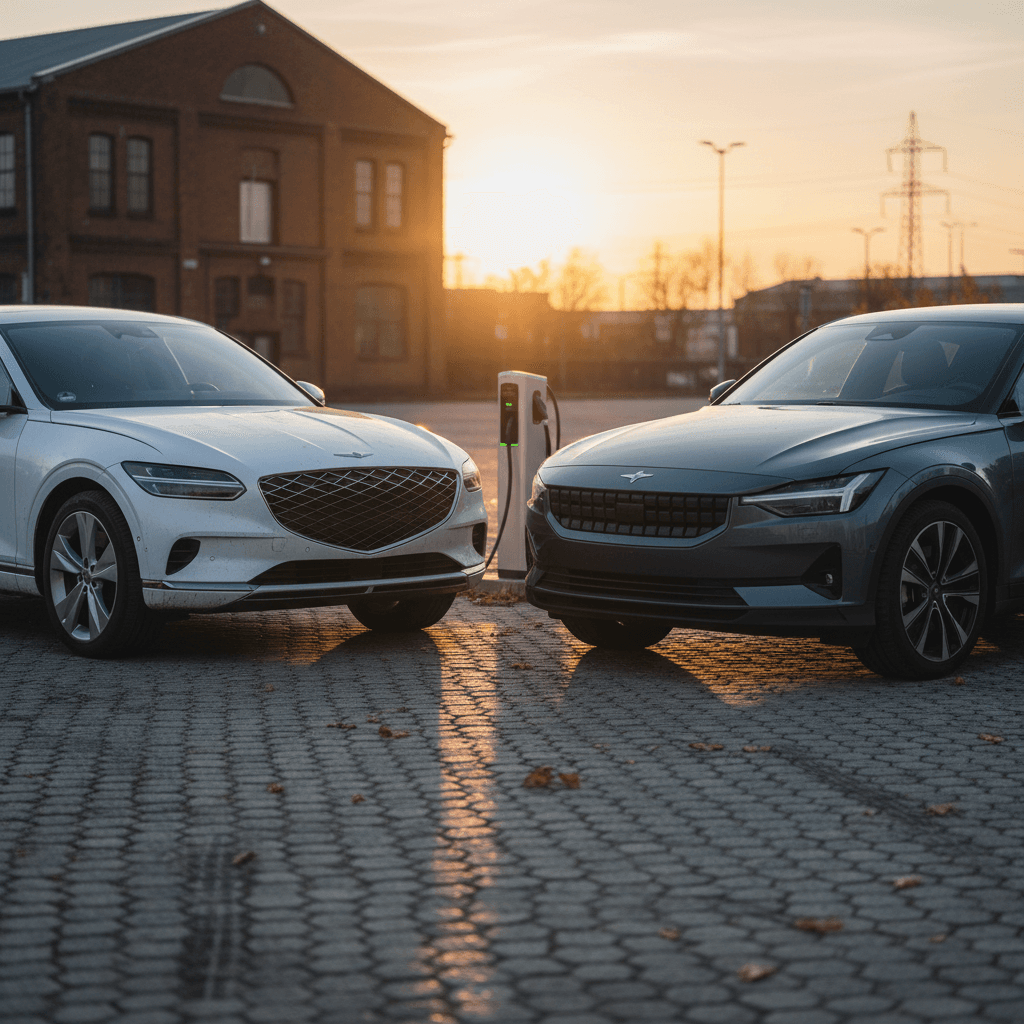
Choosing between the Genesis GV60 and Polestar 2 means deciding what kind of premium EV experience you want. Both are stylish, tech-forward electric cars that show how quickly legacy brands can catch up to Tesla, but they take very different approaches to range, packaging, and driving feel. This guide walks through Genesis GV60 vs Polestar 2 in plain language so you can pick the one that actually fits your life, especially if you’re shopping the used market.
Two formats, one segment
Genesis GV60 vs Polestar 2: overview
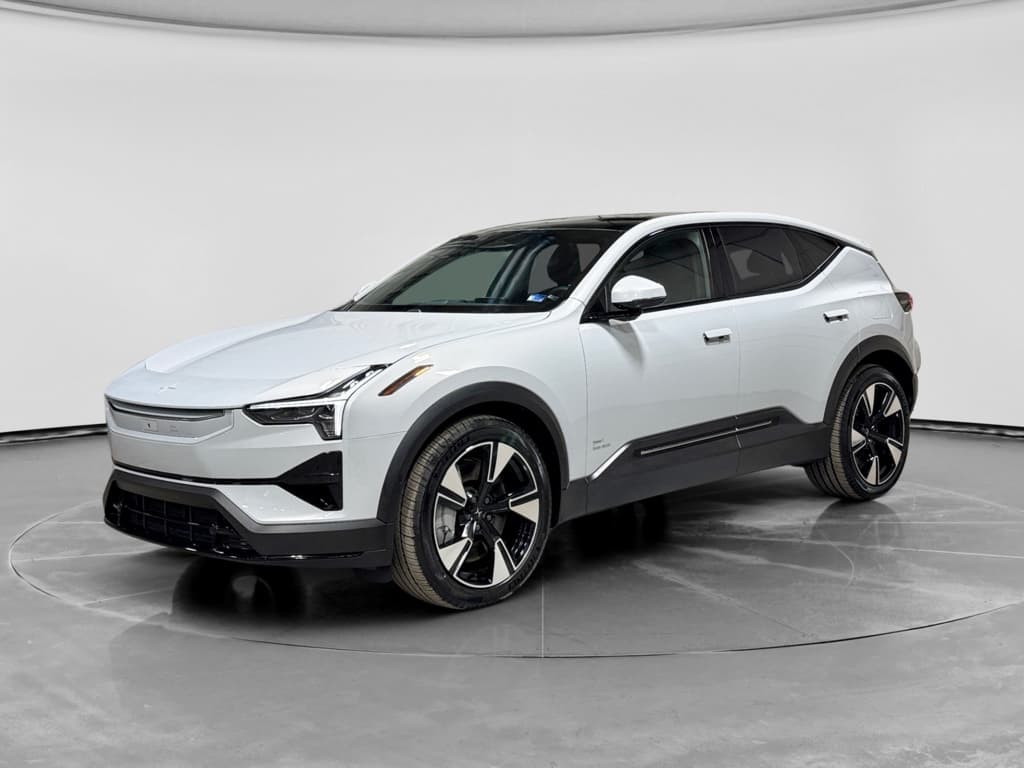
Under the skin, the GV60 rides on Hyundai Motor Group’s dedicated E‑GMP EV platform, sharing its 77.4‑kWh pack and 800‑volt hardware with the Hyundai Ioniq 5 and Kia EV6. The 2024–2025 U.S. lineup centers on single‑motor rear‑wheel‑drive and dual‑motor all‑wheel‑drive trims with EPA ranges typically in the mid‑200‑mile band, depending on wheels and equipment.
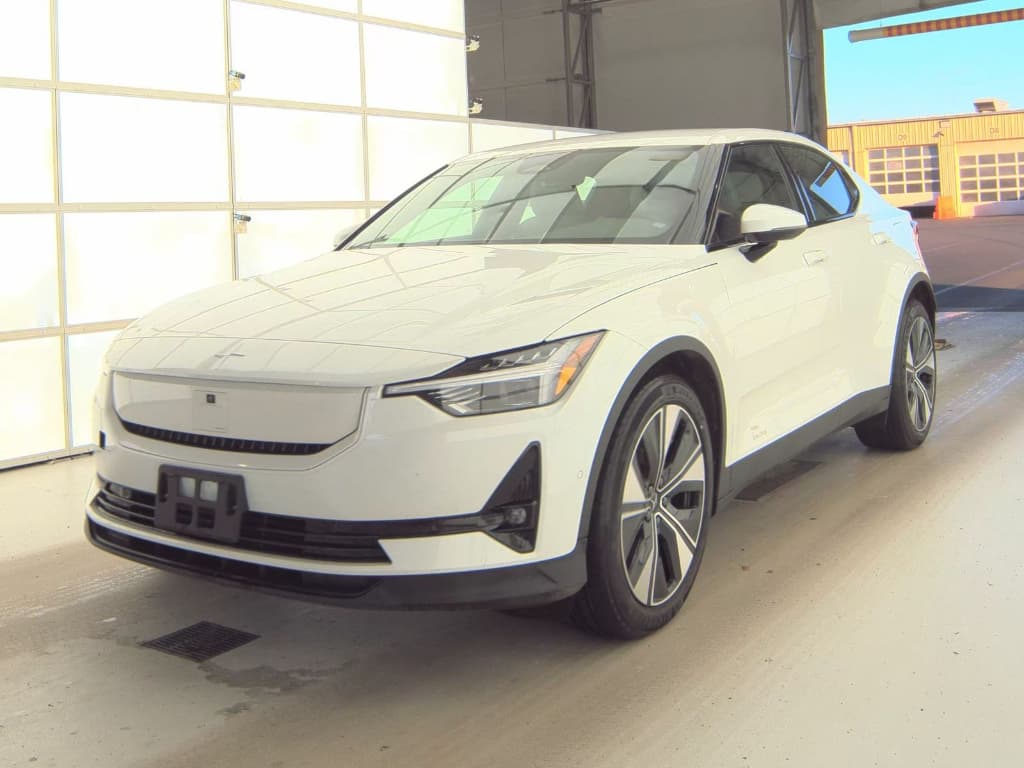
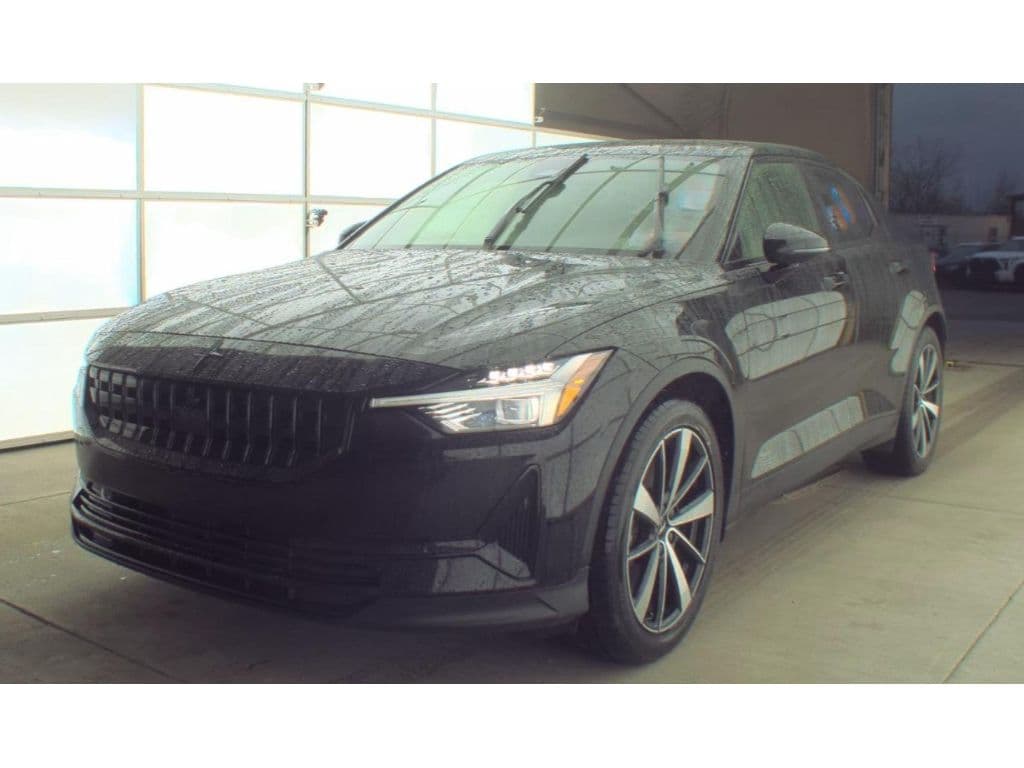
The Polestar 2 started life as a front‑wheel‑drive compact liftback, but for 2024+ it pivots to more efficient rear‑wheel drive for single‑motor versions and updated dual‑motor hardware, paired with battery packs around 70 kWh (Standard Range) and 82 kWh (Long Range). In U.S. spec, most shoppers will see Long Range Single Motor and Long Range Dual Motor cars, with EPA ratings often between roughly 270 and 320 miles depending on configuration and year.
Model year matters
Key specs: Genesis GV60 vs Polestar 2
Core specs: Genesis GV60 vs Polestar 2 (recent U.S. models)
High‑level snapshot of how the GV60 and Polestar 2 stack up on paper. Exact numbers vary by model year and trim; always verify a specific VIN before you buy, especially on the used market.
| Spec | Genesis GV60 (typical U.S. trims) | Polestar 2 (typical U.S. trims) |
|---|---|---|
| Body style | Compact luxury crossover (higher ride height) | Compact liftback sedan (lower, sportier) |
| Battery (usable/nominal) | ≈77.4 kWh pack on U.S. models | ≈70 kWh (Standard Range) / ≈82 kWh (Long Range) |
| Drivetrain | RWD (single motor) or AWD (dual motor) | RWD (single motor) or AWD (dual motor) |
| EPA range (most common trims) | Roughly mid‑200s miles; RWD trims can stretch higher | Typical 270–320 miles depending on battery and motor count |
| DC fast‑charge peak | Up to ~235 kW on 800‑V E‑GMP hardware | Up to ~155–205 kW depending on model year and pack |
| 0–60 mph (quicker trims) | Low‑4‑second range in Performance AWD | Mid‑4‑second range in Long Range Dual Motor Performance |
| Seating / cargo | 5 seats, SUV‑style hatch, more rear headroom | 5 seats, liftback trunk; rear headroom tighter |
| Ride & character | Quiet, plush, upscale; slightly softer | Taut, Scandinavian minimalism; more "driver’s car" feel |
Specs shown here are approximate for 2024–2025 U.S. models, focused on the most common trims you’ll see used.
Always double‑check a specific car
Range and efficiency
When people compare Genesis GV60 vs Polestar 2, range tends to be the first filter. On paper, Polestar 2 often wins the numbers game, especially in Long Range Single Motor form. In favorable trims and conditions, it can comfortably crest the high‑200s and into the 300‑mile ballpark, whereas many GV60 configurations cluster closer to the mid‑200‑mile mark.
Real‑world range: what most drivers actually see
Paper specs are one thing; daily commuting is another.
Genesis GV60
On the E‑GMP platform, the GV60’s 77.4‑kWh pack and efficient motors make it very livable day to day.
- Daily usability: For typical mixed driving, many owners can comfortably cover 80–100 miles in a day and recharge overnight on Level 2 without anxiety.
- Trade‑off: Higher, SUV‑like stance and larger frontal area mean it’s slightly less efficient at highway speeds than sleek sedans.
Polestar 2
With Long Range batteries and a slippery shape, Polestar 2 tends to be more efficient at speed.
- Highway friendliness: In Long Range Single Motor trims, highway drivers can often stretch farther between stops than in a comparable GV60.
- Caveat: Dual‑motor and Performance Pack versions sacrifice some range for power and wider tires.
How to think about range
If maximum single‑charge distance is your top priority and you’re cross‑shopping recent model years, Polestar 2 Long Range Single Motor is generally the safer bet. If you like the GV60’s higher seating position and design, you can offset its slightly shorter range by planning a few more fast‑charge stops on road trips.
Charging speed and road‑trip ability
Charging is where the Genesis GV60 quietly punches above its weight. Thanks to its E‑GMP underpinnings and 800‑volt architecture, it can take full advantage of 350‑kW DC fast chargers. In ideal conditions, you’re looking at roughly 10–80% in under 20 minutes on a strong station, about as good as anything this side of a Porsche Taycan in real life.
Genesis GV60: ultra‑fast when the charger cooperates
- Hardware advantage: 800‑V system designed for very high peak rates and a strong charging curve.
- Sweet spot: If you have access to reliable 250–350‑kW stations (Electrify America, EVgo, etc.), GV60 can be exceptionally quick on road trips.
- Home charging: 11‑kW onboard AC charger means a 240‑V Level 2 setup can easily refill the pack overnight.
Polestar 2: improved but conservative
- Solid but slower: Updated Polestar 2 models can reach up to ~205 kW on DC, but their charge curves tend to taper earlier and more conservatively than GV60’s.
- Practical reality: You’ll still road‑trip comfortably, but typical 10–80% times are more in the 25–30‑minute range.
- Home charging: Similar 11‑kW onboard AC capability; daily use at home feels much like the GV60.
When charging speed really matters
For most owners who charge primarily at home, charging parity is closer: both cars recharge overnight on a 40‑A (or similar) Level 2 unit, and both are comfortable with public 50–150‑kW stations. The bigger story is that the GV60 is closer to “next‑gen fast” hardware, while Polestar 2 is more “solid and safe” in its charging behavior.
Performance and driving character
On paper, both Genesis GV60 and Polestar 2 can be very quick. In practice, they deliver that performance in slightly different flavors: GV60 leans toward smooth, luxurious thrust, while Polestar 2 channels more of a taut, European sport‑sedan vibe.
Performance lineup at a glance
Quick, quicker, and "I can’t believe this is a family car."
Genesis GV60 trims
- RWD / Standard range: Smooth, efficient, plenty of power for daily use.
- AWD / Advanced: All‑weather traction, stronger acceleration; the sweet spot for many buyers.
- Performance AWD: Boost modes and launch‑control theatrics; 0–60 mph in the low‑4‑second range can embarrass older sports cars.
Polestar 2 trims
- Standard Range Single Motor: Balanced, adequate power and good efficiency.
- Long Range Single Motor: More battery and range, still rear‑drive; feels lighter on its feet than you’d expect.
- Long Range Dual Motor + Performance: Serious punch with an engaging, slightly firmer chassis tune and optional performance bits.
Steering and feel
Ride quality is another key separator. The GV60’s suspension tuning and higher‑profile tires on many trims make it relaxed and quiet over broken pavement, very much in line with Genesis’s luxury positioning. Polestar 2, especially with larger wheels or the Performance Pack, can feel firmer and more communicative. Some drivers love that; others will find the GV60 less tiring on long commutes.
Interior tech and user experience
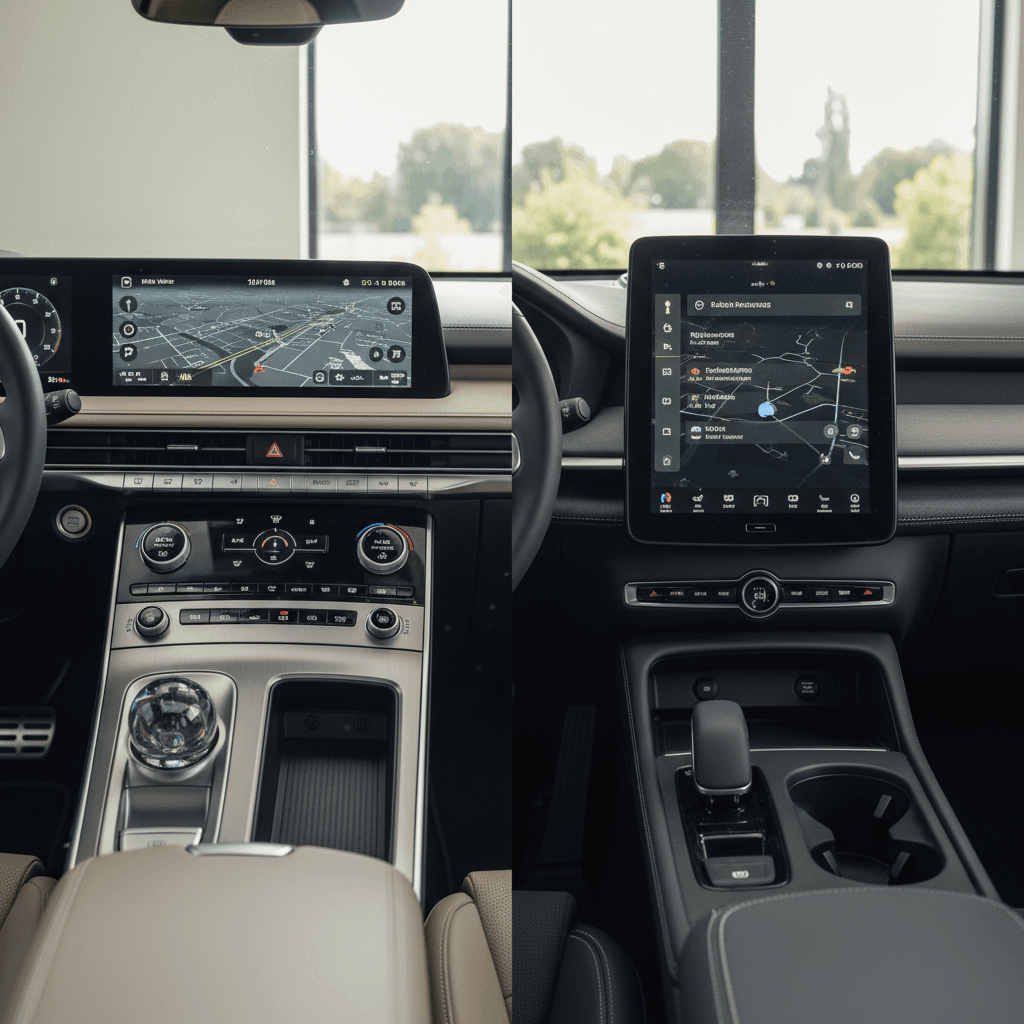
Tech may be where their personalities diverge the most. Genesis leans into a more expressive, almost concept‑car interior with floating consoles, a crystal "sphere" shifter, and rich materials. Polestar 2 is pure Scandinavian minimalism, dominated by a portrait‑oriented center screen and a clean dash.
Genesis GV60: luxury gadgetry
- Design: Soft curves, bold color options, and distinctive details like the rotating crystal sphere drive selector.
- Infotainment: A wide landscape display with a familiar Hyundai/Genesis UI that’s quick and well‑sorted, plus a separate digital cluster.
- Features: Available facial recognition entry, fingerprint start, robust driver‑assistance suite, and typically strong audio systems.
Polestar 2: clean and connected
- Design: Calm, minimalist cabin that feels like a high‑end Scandinavian living room on wheels.
- Infotainment: Google‑built software with native Google Maps, Assistant, and app ecosystem. If you live in Android world, it’s a huge plus.
- Features: Polestar UI is straightforward and fast, with good over‑the‑air update support and a strong emphasis on sustainability materials.
Try the software before you decide
Both EVs offer strong active‑safety suites and highway‑assist features, but Genesis tends to layer on more comfort features, heated everything, ambient lighting, and a more cocooning vibe. Polestar 2 counters with a simpler, focused interface that’s ideal if you hate cluttered dashboards.
Practicality, space, and ride comfort
This is where the body‑style difference in Genesis GV60 vs Polestar 2 really shows up. The GV60’s higher roofline, upright seating, and SUV‑style hatch make it the more practical family hauler. The Polestar 2’s low roof and more sedan‑like stance are great for style and efficiency but can feel tight for tall rear passengers.
Everyday usability comparison
From car seats to Costco runs, consider how you’ll really use your EV.
Genesis GV60
- Seating position: Higher, more crossover‑like view out, easier entry/exit for many adults.
- Rear space: Better rear headroom and a more upright bench, friendlier for adults and child seats.
- Cargo: Wide opening hatch makes bulkier cargo and dogs easier to manage.
- Ride comfort: Softer tuning and more isolation, ideal for rough urban roads.
Polestar 2
- Seating position: Lower, more car‑like seating that some drivers prefer for long highway stints.
- Rear space: Adequate legroom but tighter headroom; tall adults will notice.
- Cargo: Hatchback and split‑folding rear seats still make it usefully practical, though not as box‑friendly as the GV60.
- Ride comfort: Firmer and more controlled; excellent on smooth highways, less forgiving on broken pavement.
Road‑trip comfort check
Ownership costs and used‑EV value
Both Genesis GV60 and Polestar 2 are now appearing in meaningful numbers on the used market, often at substantial discounts versus original MSRP. That opens an opportunity: you can step into a genuinely premium EV experience while letting the first owner absorb the heaviest depreciation.
Used‑market realities (high level)
Insurance and maintenance costs should be broadly similar: these are premium European‑ and Korean‑branded EVs with plenty of sensors and tech. Tires (especially on performance trims with large wheels) can be expensive, and both cars benefit from proper alignment and rotation to avoid premature wear.
How Recharged can help
Checklist for comparing used Genesis GV60 and Polestar 2
1. Confirm battery health
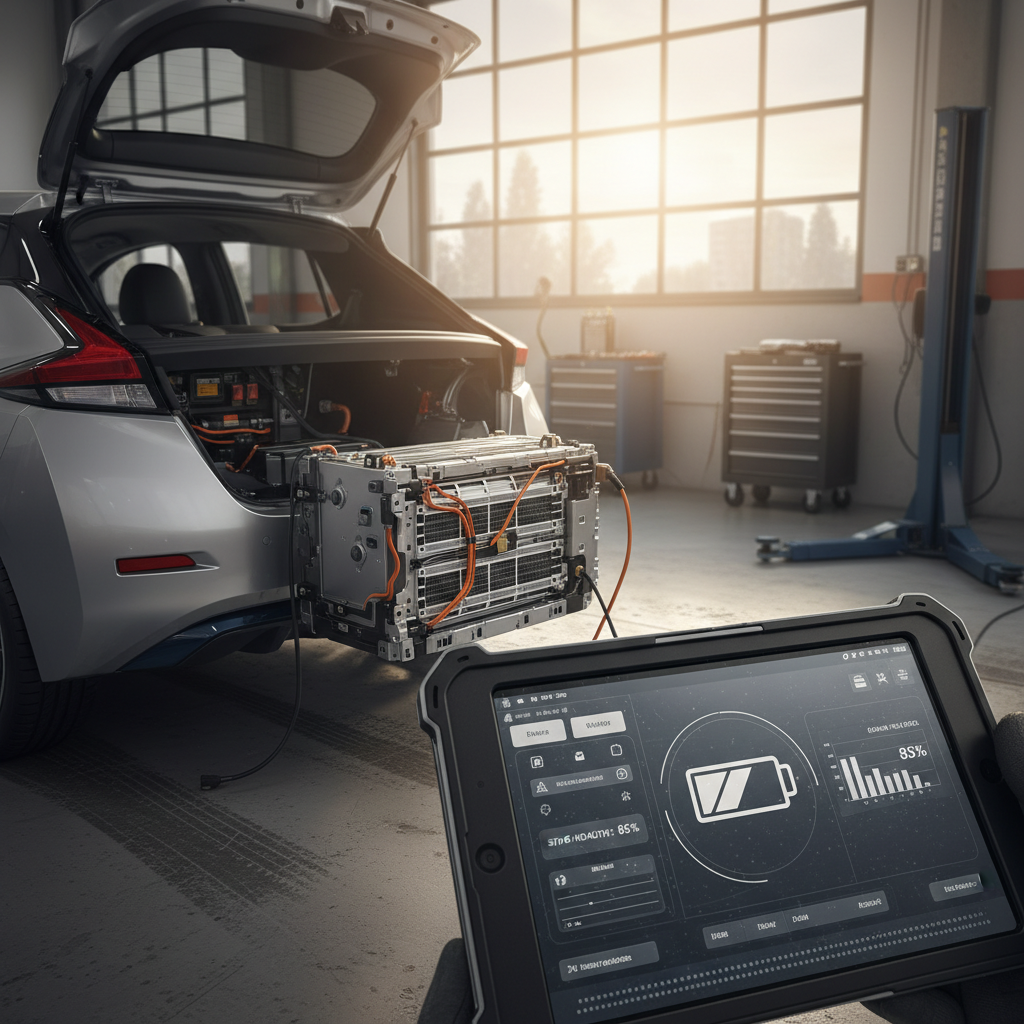
Ask for a recent battery report or have the car scanned. You want to understand current usable capacity and whether it still supports the kind of range you need.
2. Match trim to your priorities
On GV60, decide if you truly need Performance AWD versus a more efficient trim. On Polestar 2, balance Single vs Dual Motor and Standard vs Long Range packs.
3. Look at charging history
Frequent DC fast charging isn’t an automatic deal‑breaker, but a mixed diet of home Level 2 and occasional road‑trip fast charging is generally best for long‑term pack health.
4. Examine wheels and tires
Oversized wheels and sticky tires may look great but hurt range and comfort. If you’re range‑sensitive, consider trims with more modest wheel sizes.
5. Test the software experience
Spend time with infotainment, driver‑assistance, and app integration. You’ll interact with this every day, so make sure it feels natural to you.
6. Factor in support ecosystem
Consider local dealer/service coverage for Genesis and Polestar in your region, as EV expertise and appointment availability can vary.
Which EV is right for you?
Genesis GV60 vs Polestar 2: quick recommendations
Choose Genesis GV60 if…
You want a <strong>compact luxury crossover</strong> with a higher seating position, easier ingress/egress, and better rear headroom.
Ride comfort and cabin quiet matter more than ultimate handling feel.
You road‑trip enough that the <strong>800‑V ultra‑fast charging</strong> advantage will save you meaningful time at DC fast chargers.
You like expressive design, rich materials, and a more cocooning, gadget‑rich interior.
You’re planning to use this as a family car with kids, car seats, or pets in the back.
Choose Polestar 2 if…
You prefer a <strong>sporty, sedan‑like driving experience</strong> with firmer suspension and more feedback through the wheel.
Range and efficiency are top priorities, especially in <strong>Long Range Single Motor</strong> form.
You love a <strong>minimalist, Scandinavian design</strong> ethos and value Google‑based infotainment with native Maps and Assistant.
Most of your driving is solo or with one passenger, and you don’t regularly need SUV‑level rear space.
You value a more understated, design‑studio aesthetic over a traditional luxury‑crossover look.
There isn’t a wrong choice, only the wrong fit
If you want cushy ride quality, fast charging and crossover practicality, the GV60 will probably win your heart. If you’re drawn to clean Scandinavian design, crisp steering, and strong range in a compact package, the Polestar 2 is tough to beat. Either way, buying used can make these premium EVs surprisingly attainable. And if you’d like a second set of eyes on battery health, pricing, or trade‑in options, Recharged’s EV specialists can walk you through the details so you drive away in the right car for the way you really live.
FAQ: Genesis GV60 vs Polestar 2
Frequently asked questions about Genesis GV60 vs Polestar 2
Ultimately, Genesis GV60 vs Polestar 2 is a choice between two compelling visions of what a premium EV should be: one a plush, fast‑charging crossover, the other a crisp, minimalist liftback with excellent efficiency. If you’d like help comparing specific used examples, understanding battery reports, or lining up financing and delivery, Recharged is built to make that process transparent and low‑stress from your first search to the moment the car lands in your driveway.