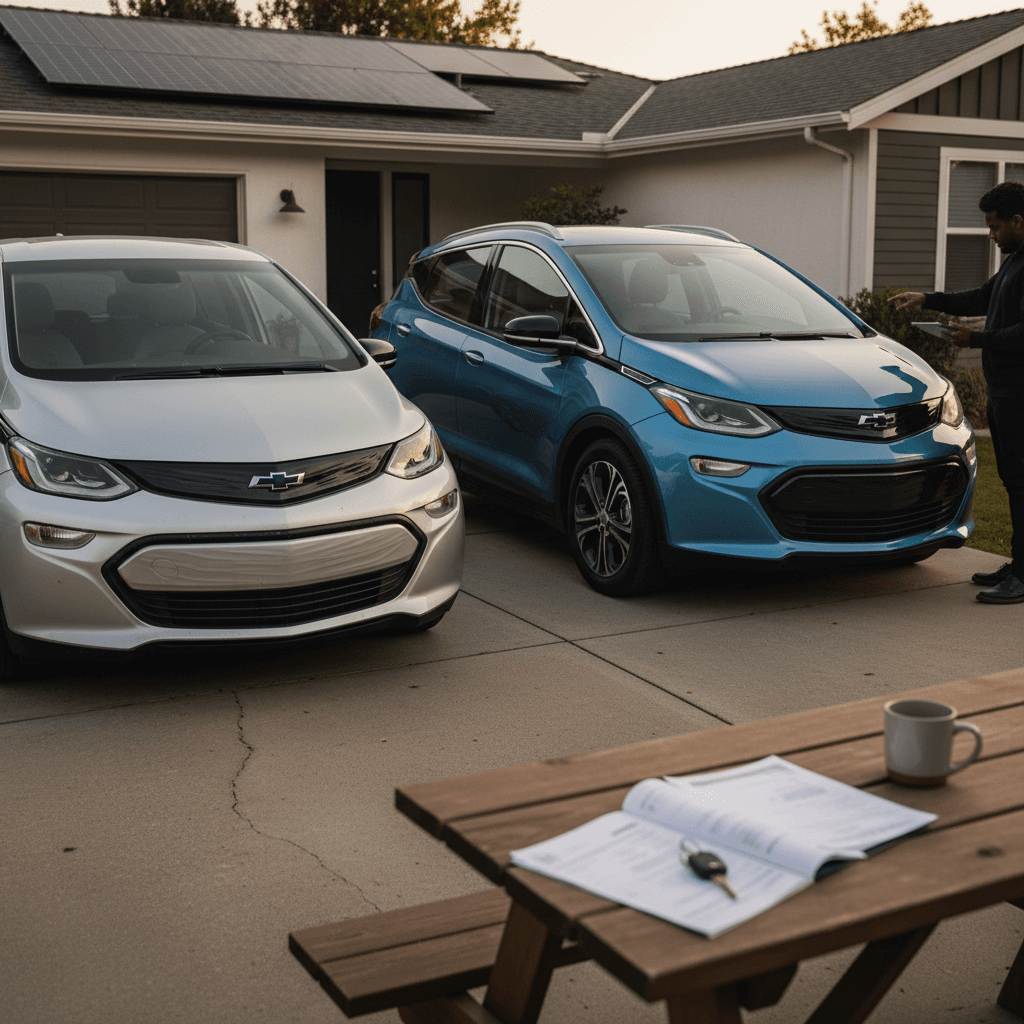
The 2021 Chevy Bolt EV is a bit like a brilliant student with a disciplinary record: high marks in the subjects that matter, range, efficiency, packaging, shadowed by a thick file labeled **battery recall**. If you’re shopping for a used electric hatchback today, this car will keep popping up in your search results. This 2021 Chevy Bolt EV review walks through how it drives, how far it really goes, what that recall means in 2026, and whether it’s still a smart buy, or something to skip.
The headline numbers
2021 Chevy Bolt EV at a glance
Key 2021 Chevy Bolt EV specs
What the 2021 Bolt EV gets right
- Excellent range for the size and price, 259 miles beats many small EVs of the era.
- Instant, eager acceleration around town and up to highway speed.
- Small footprint, big interior: genuinely adult‑usable back seat and good cargo for a subcompact hatch.
- Low running costs: cheap energy, minimal maintenance, and strong warranty coverage on the battery.
- Now very affordable used thanks to heavy depreciation and the recall hangover.
Where it stumbles
- Battery recall history spooked the market and still requires due diligence.
- Slow DC fast charging by modern standards, peaks around 55 kW.
- Choppy ride and road noise on broken pavement; this is no luxury pod.
- Interior plastics are hard and shiny, short on visual warmth.
- Front‑wheel‑drive only, with modest highway refinement.
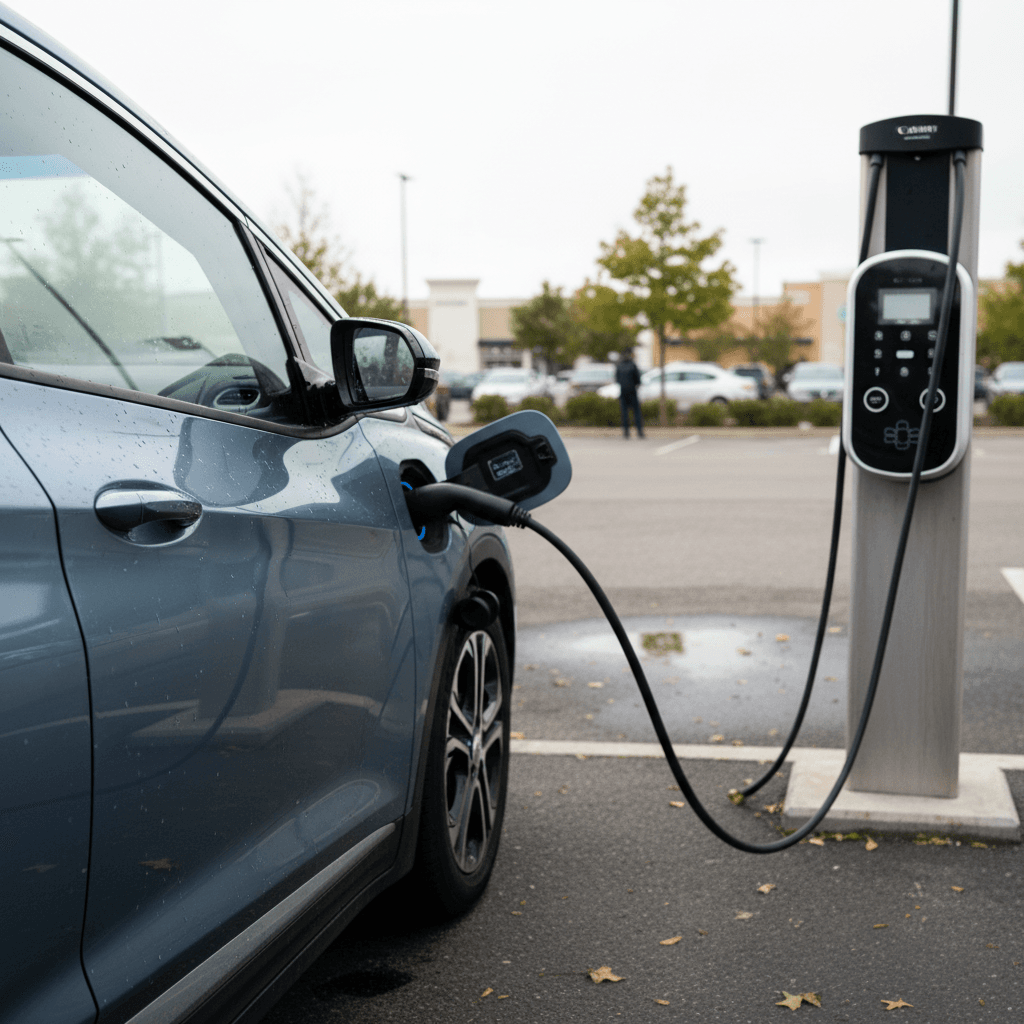
Real-world range and efficiency
On paper, the 2021 Chevy Bolt EV’s **259‑mile EPA range** is the party trick. In practice, it’s the rare EV that can more or less back it up if you drive like a sentient adult and the weather cooperates. Independent tests have seen around **102 MPGe on the highway** and roughly 180 miles at a steady 75 mph, which means the full 259 is most achievable in mixed or urban driving at lower speeds.
- Around town, you can easily see **4.0–4.5 miles per kWh** if you aren’t drag‑racing between stoplights.
- On the freeway at 70–75 mph, think closer to **3.0 miles per kWh**, which yields real‑world highway range in the low‑200s.
- Cold weather and strong headwinds will knock range down; some tests in nasty conditions have undershot the EPA estimate.
Range reality check
One‑pedal driving with strong regenerative braking also helps you squeeze more miles from each kWh, especially in traffic. Once you acclimate, you’ll rarely touch the brake pedal, lift to slow, press to go. It’s the EV equivalent of discovering power steering after a lifetime of manual racks.
Battery recall, fire headlines, and reliability
We can’t talk about a 2021 Chevy Bolt EV review without addressing the elephant that briefly kept its distance in the garage: **battery‑fire recalls**. GM and LG identified rare manufacturing defects in some cells that could, under specific conditions, lead to thermal events. GM responded by recalling **all 2017–2022 Bolt EV and 2022 Bolt EUV models** for inspection and battery module replacement where needed.
What the recall actually involved
In late 2024 GM flagged a much smaller follow‑up issue with **diagnostic software not always being installed correctly** on some 2020–2022 cars. That campaign is about making sure the car’s battery monitoring software is actually doing its job, not about new hardware defects. Practically, this means you want to verify two things on a used 2021 Bolt EV: that the main battery recall is completed, and that all subsequent software updates are current.
Battery warranty coverage
Beyond the battery saga, the Bolt’s reliability record is decent: simple single‑motor front‑drive layout, no transmission to speak of, and minimal consumables. The big question isn’t “will it explode?” but **“has the recall been handled correctly?”** That’s where buying from a seller who can document battery health and repair history, rather than rolling the dice on a vague private‑party listing, starts to matter.
Charging the 2021 Bolt EV: Home and on the road
Charging is where the 2021 Chevy Bolt EV shows its age. It was never a charging sprinter, and the industry has moved on. You still get a perfectly livable experience for daily use, but you need to understand the numbers, especially for road trips.
2021 Chevy Bolt EV charging options
How long it takes to charge a 2021 Bolt EV depends heavily on the outlet or charger you’re using.
| Charging type | Connector | Typical power | What it means in real life |
|---|---|---|---|
| Level 1 (120V outlet) | J1772 | ~1 kW | Adds only a few miles of range per hour; emergency use or very short commutes. |
| Level 2 (240V home / public) | J1772 | Up to 7.2 kW | Roughly 20–25 miles of range per hour; 0–100% in about 10 hours. |
| DC fast charging (public) | CCS1 (if equipped) | Peak ~55 kW | Roughly 90–100 miles of range in 30 minutes, then slows as the pack fills. |
Think of Level 2 as your nightly refuel and DC fast charging as your occasional road‑trip espresso shot.
Check for DC fast charging
At home, the sweet spot is a **Level 2 charger on a 240V circuit**. Plug in at night, wake up to a full battery, it’s like having your own mini gas station attached to the house. If you don’t yet have a 240V outlet in your garage or driveway, expect an electrician visit and some planning. For apartment dwellers, the Bolt pairs nicely with workplace Level 2 or reliable public stations, but frequent DC fast charging isn’t ideal for battery longevity in any EV.
Pairing the Bolt with home charging
Interior, comfort, and tech
If the Hyundai Kona Electric is a tidy studio apartment done up in Ikea birch, the 2021 Bolt EV is more like a graduate‑student rental: functional layout, durable surfaces, and just enough design to keep despair at bay. The **hard plastics are unashamedly hard**, and even top‑trim Premier models lean utilitarian. But the packaging is clever, this little hatch fits adults where other subcompacts fold them like carry‑ons.
How the 2021 Bolt’s cabin really feels
Not premium, but surprisingly practical for its size
Space efficiency
The tall roof and upright seating position make the Bolt feel larger than its footprint. There’s good **headroom front and rear**, and adults can actually sit behind adults.
Driving position
High, almost crossover‑like perch with excellent visibility. Seats are a common nitpick: some find them too narrow and firm on long drives.
Tech layout
A large central touchscreen and digital gauge cluster give the cabin some visual drama. Native infotainment is straightforward, and phones plug in for familiar apps.
Cargo space is competitive for a small hatchback, think groceries, strollers, and the detritus of modern life rather than full‑on IKEA conquest. Fold the rear seats and you’ve got enough room for bikes with some wheel‑removal Tetris. Noise isolation is merely adequate; at highway speeds you’ll hear tire roar and wind more than in newer EVs, which have evolved into rolling sound studios.
Climate control and range
Performance and driving feel
A spec sheet never mentions it, but the 2021 Chevy Bolt EV’s greatest performance attribute is **instant torque in urban traffic**. With 200 hp and 266 lb‑ft delivered through a single‑speed drive unit, the Bolt springs off the line and zips through gaps with a kind of quiet glee. Independent testing has clocked 0–60 mph between roughly **6.3 and 6.7 seconds**, putting it squarely in warm‑hatch territory.
- Steering is light but accurate, tuned more for ease than for feedback.
- The suspension can feel busy over sharp impacts; blame the short wheelbase and curb weight rather than any malice from the engineers.
- Regenerative braking has a strong **one‑pedal mode** plus a left‑paddle “regen on demand” that will haul the car down to a stop without touching the friction brakes.
City car, not sports car
On the highway, the Bolt tracks straight but can feel a bit light and susceptible to crosswinds. Driver‑assistance tech like lane‑keeping and adaptive cruise helps, but this is fundamentally a compact hatch with an upright stance and eco‑focused tires, not a long‑legged grand tourer.
Used pricing, depreciation, and value
If the driving dynamics are the Bolt’s charm, **depreciation is its dowry**. Between the recall headlines and relentless progress of newer EVs, the 2021 Bolt EV has taken a sizable value haircut. According to recent market guides, a 2021 Bolt EV has lost roughly **44% of its original value in three years**, with typical resale values around the low‑ to mid‑teens and trade‑in values even lower.
2021 Chevy Bolt EV value snapshot
Approximate U.S. pricing as of early 2026; actual numbers vary by mileage, condition, and region.
| Condition | Odometer | Typical retail ask | What that gets you |
|---|---|---|---|
| Clean, one‑owner, LT | 30k–40k miles | Low–mid $10,000s | Basic spec, may or may not have DC fast charging. |
| Nicely optioned Premier | 25k–40k miles | Mid–high $10,000s | Leather, more safety tech, DCFC almost always included. |
| High‑mileage commuter | 60k+ miles | Often under $10,000 | Possible bargain if battery recall is fully documented and pack health is strong. |
The recall stigma that hurt resale value can work in your favor, if you buy carefully.
Why the math favors informed buyers
Relative to rivals, a used 2021 Bolt EV undercuts most Tesla Model 3s and newer long‑range subcompact EVs while offering similar or better range than many. Where the Tesla buys you faster charging and a richer ecosystem, the Bolt counters with **low entry price and hatchback practicality**.
Who the 2021 Bolt EV is (and isn’t) for
Is a 2021 Chevy Bolt EV right for you?
Match the car to your actual daily life, not your aspirational road trip.
Great fit if…
- You drive **40–80 miles a day** and can charge at home or reliably at work.
- You want **EV range without Tesla pricing**, and you don’t care about brand flex.
- You like compact cars that still fit adults and full grocery runs.
- You mostly travel within a metro area, with only occasional long trips.
Probably not for you if…
- You regularly do **multi‑state road trips** and need the fastest possible DC charging.
- You’re expecting a plush, luxury‑quiet interior and air‑suspension ride.
- You live where public charging is sparse and can’t install home charging.
- You need all‑wheel drive and extra ground clearance for weather or dirt roads.
Pre‑purchase checklist for a used 2021 Bolt EV
1. Confirm recall completion
Ask for documentation that the **main battery recall and any follow‑up software campaigns** were performed. A GM dealer can run the VIN and confirm status.
2. Review battery health
Look for a recent **battery health or range report**, such as a Recharged Score battery diagnostic. Sudden or severe range loss is a red flag.
3. Verify DC fast charging hardware
Physically inspect the charge port door and confirm the car has the **CCS fast‑charge connector** if you plan to road‑trip.
4. Test one‑pedal driving and regen
On a test drive, switch into one‑pedal mode, feel for smooth, predictable regen, and listen for any odd drivetrain noises under load.
5. Check tires and brakes
EVs are heavy; tires and brakes work harder. Uneven wear or budget replacements may hint at corner‑cutting maintenance.
6. Match the car to your charging reality
Be honest about where you’ll plug in most nights. A Bolt without convenient charging is like a smartphone without Wi‑Fi, technically usable, but frustrating.
How Recharged helps you shop a used Bolt EV
The 2021 Chevy Bolt EV can be a fantastic used‑EV value, but it’s also a car where **details matter**: which recalls were done, how the battery is aging, whether DC fast charging is on board, and how the previous owner actually used it. That’s exactly the kind of nuance Recharged is built to surface instead of leaving you to decode dealer copy and blurry photos.
Buying a used Bolt EV through Recharged
Less guesswork, more verified data.
Recharged Score battery diagnostics
Fair market pricing & financing
Trade‑in, consignment, and delivery
Ready to find your next EV?
Browse VehiclesIn the end, the 2021 Chevy Bolt EV is a study in second chances, both for the car and for shoppers. GM’s little electric hatch went from darling to cautionary tale to something rarer: a deeply sorted, deeply discounted used EV with **serious range and honest practicality**. If you go in with clear eyes, verify its battery story, and pair it with the right charging setup, the 2021 Bolt EV can be one of the smartest, least flashy EV purchases you can make in 2026.