If you’re looking at a 2021 Chevy Bolt EV, the headline number you’ll see everywhere is its 259‑mile EPA range rating. That sounds impressive on paper, but what does it actually look like in a real‑world range test on U.S. roads, at highway speeds, in winter, or when you’re shopping used with 50,000+ miles on the odometer?
Key spec at a glance
2021 Chevy Bolt EV range basics
Core 2021 Bolt EV range and efficiency specs
On paper, the EPA combined range of 259 miles assumes mixed city and highway driving in mild conditions. Under the hood is a liquid‑cooled pack of 288 lithium‑ion cells, with roughly 65 kWh of usable energy. That means that, in ideal conditions, the EPA test cycle is effectively assuming around 3.9 mi/kWh of efficiency.
In the real world, the number you care about isn’t the lab rating; it’s **“How far can I go, at my speeds, in my climate, with my passengers and cargo?”** That’s where disciplined range testing, and understanding how the Bolt behaves in different scenarios, really matters, especially if you’re considering a used 2021 example.
How to think about a 2021 Bolt EV range test
Test like an engineer, not a marketer
To make sense of the 2021 Bolt EV’s range, you want to think in energy terms, not just miles. The equation is simple:
Range ≈ usable battery (kWh) × efficiency (mi/kWh)
GM gives you the first number (about 65 kWh). Your driving style, speed, temperature, and terrain determine the second. A thoughtful range test focuses on how those variables change efficiency.
What matters most for real-world range
- Speed: Jumping from 60 mph to 75 mph can easily add 20–30% energy use.
- Temperature: Cold batteries and cabin heating both cut range.
- Elevation & wind: Long climbs and headwinds quietly eat into your buffer.
- HVAC use: Heat is expensive in an EV; A/C is cheaper but still noticeable.
When you see any Bolt EV "range test" online, filter it through those four factors before comparing to your own situation.
Pro tip: think in mi/kWh
EPA rating vs real-world 2021 Bolt EV range
The EPA numbers are a useful baseline, but they’re not a guarantee. Many owners report **beating the 259‑mile figure** in city‑heavy or slower mixed driving, while others see closer to 200 miles when they drive fast on the interstate or in winter.
EPA vs typical real-world 2021 Bolt EV range
Approximate numbers for a 2021 Bolt EV with a healthy battery, starting near 100% charge. Real-world values assume one‑way trips without deep reserves and will vary with conditions.
| Scenario | EPA reference | Typical efficiency | Estimated usable range |
|---|---|---|---|
| Mixed driving, mild weather (suburban + highway 65 mph) | 259 mi combined | 3.6–3.9 mi/kWh | 230–260 mi |
| City‑heavy, mild weather (under 45 mph, lots of regen) | 278 mi city | 4.0–4.5 mi/kWh | 260–290+ mi |
| Interstate 70–75 mph, mild weather | 235 mi highway | 3.0–3.3 mi/kWh | 190–220 mi |
| Cold weather, mostly city (20–35°F, cabin heat on) | N/A | 2.4–3.0 mi/kWh | 150–210 mi |
| Cold weather, 70–75 mph highway | N/A | 2.0–2.5 mi/kWh | 130–180 mi |
Use this as a directional guide, not an absolute promise. Your driving style and conditions matter more than the calendar year.
Notice how the **same car** can realistically span from about **130 miles to nearly 300 miles** depending on use. That spread isn’t a flaw of the Bolt; it’s how physics, weather, and HVAC loads work on any EV. The takeaway for a 2021 Bolt EV range test is that context matters more than the single EPA label on the window sticker.
City and commuter driving: where the Bolt shines
If your life is mostly urban and suburban, the 2021 Bolt EV is extremely forgiving on range. With its strong regeneration and efficient drivetrain, it tends to beat its EPA rating at lower speeds. Many owners report **4.0–4.5 mi/kWh** in mild temperatures in stop‑and‑go driving, which translates to well over 250 miles of usable range if you were to run the pack down close to empty.
Why the 2021 Bolt EV loves city duty
These factors help you exceed the EPA range rating in urban use.
Regenerative braking
Lower aero drag
Flexible charge windows
Commuter reality check
Highway range test: what you can expect at speed
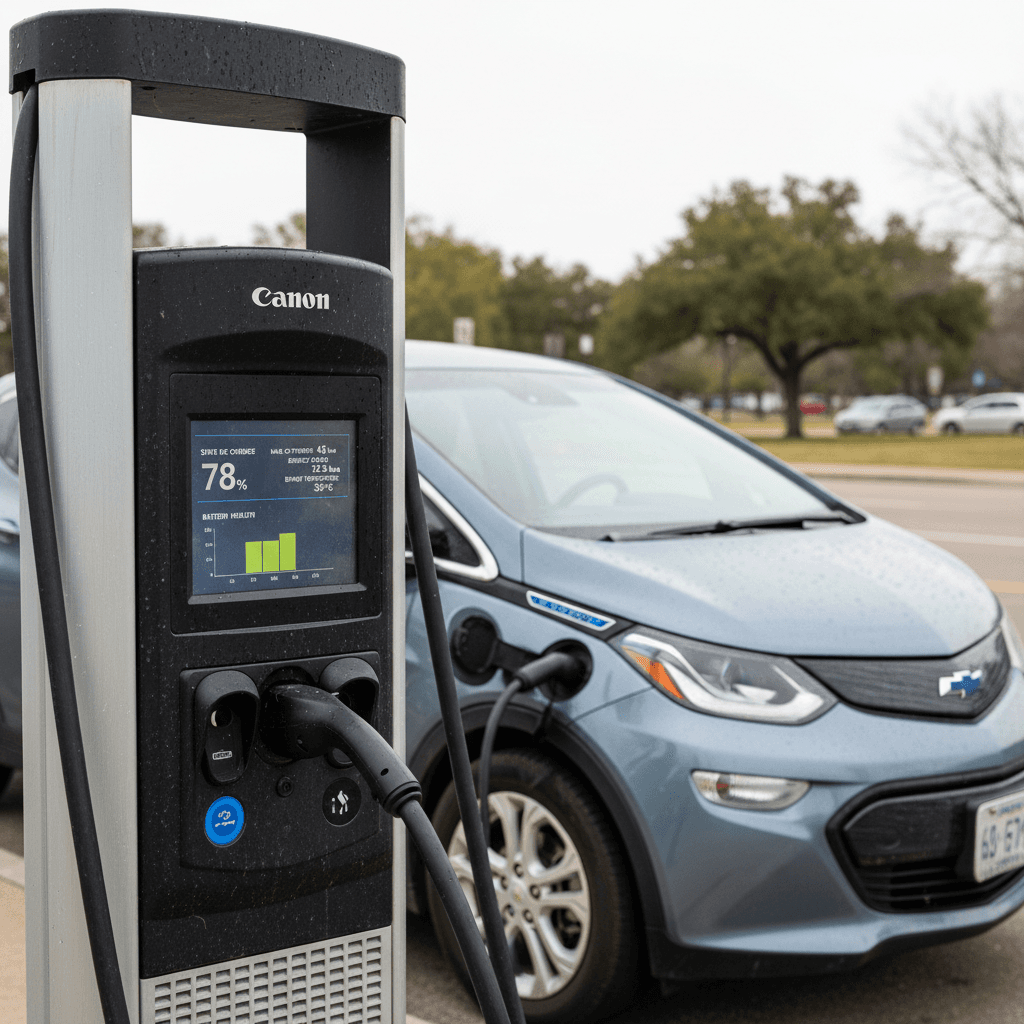
Where most 2021 Chevy Bolt EV range tests diverge from the EPA label is on **sustained highway runs at 70–75 mph**. The Bolt’s tall hatchback profile and relatively narrow tires are optimized for efficiency at moderate speeds, not triple‑digit Autobahn runs. Push it fast into headwinds, and the energy use climbs quickly.
Sample real-world highway range test setup
1. Start at a known state of charge
Begin around 90–100% after the battery has preconditioned and rested. Note the indicated percentage more than the mile estimate.
2. Set cruise between 65–70 mph
Pick a realistic speed for your region. In many U.S. states, 70 mph is a good compromise between traffic flow and efficiency.
3. Drive a simple out-and-back route
Choose a relatively flat highway and turn around at half your targeted distance. This naturally cancels out wind and small elevation changes.
4. Track mi/kWh over the full run
Reset the trip computer at the start, and at the end write down trip distance, mi/kWh, and remaining state of charge (SOC).
5. Leave a 10–15% buffer
Plan your leg so you arrive with at least 10–15% battery remaining. That’s your insurance against unexpected detours, weather shifts, or traffic.
What different highway speeds do to 2021 Bolt EV range
Approximate numbers for a healthy battery in mild weather on flat ground, no heavy winds.
| Cruise speed | Typical efficiency | Approx. usable range from ~100% to 10% SOC |
|---|---|---|
| 60 mph | 4.0 mi/kWh | ~230 mi |
| 65 mph | 3.6 mi/kWh | ~205 mi |
| 70 mph | 3.2 mi/kWh | ~180 mi |
| 75 mph | 2.9 mi/kWh | ~165 mi |
Use these as directional examples when planning trips in a 2021 Bolt EV.
Why YouTube range tests can mislead
Cold-weather and winter range performance
If you live in a northern climate, the most important 2021 Chevy Bolt EV range test isn’t in June, it’s in January. Like every EV without a heat pump in early model years, the 2021 Bolt has two winter penalties: **a cold battery** and **energy‑hungry cabin heat**.
How winter driving cuts 2021 Bolt EV range
Two main effects stack on top of each other in the cold.
Cold battery chemistry
Cabin heat load
- In light winter around 40–50°F, many owners still see around 3.0–3.5 mi/kWh in mixed driving, translating to ~190–230 miles of real‑world usable range.
- In deep winter around 0–25°F with highway speeds and cabin heat, efficiency can drop into the low‑2s mi/kWh or worse, pushing real‑world usable range closer to 130–170 miles.
- Short trips hurt most in winter, because you keep reheating the cabin and never warm the battery fully. Long continuous drives are easier on efficiency than many stop‑and‑go errands.
Winter range survival kit
Charging speed, efficiency, and trip planning
Range is only half of the story; the other half is how quickly you can add that range back. On Level 2 (240‑volt) charging, the 2021 Bolt EV’s onboard charger can add roughly **25–30 miles per hour of charge** from a typical 32–40‑amp home station, going from empty to full in about ten hours.
On DC fast charging, the 2021 Bolt EV tops out around the mid‑50 kW range when the battery is warm, giving you roughly **90 miles in 30 minutes** under good conditions from a low state of charge. For road trips, that makes it more of a steady, modest‑pace cruiser than a "splash‑and‑dash" champion, and your realistic leg planning should aim for **150–180‑mile hops** in mild weather rather than trying to drain the pack to 0%.
Planning with public DC fast charging
Battery health, degradation, and used 2021 Bolts
Because GM’s battery recall led to many Bolts receiving newer replacement packs, the usual worry about a 5‑year‑old EV’s battery isn’t as straightforward here. For a 2021 Chevy Bolt EV that has its original or recall‑replacement pack, real‑world experience suggests **modest degradation under normal use** when paired with sane charging habits.
What a healthy 2021 Bolt EV battery typically looks like
Signals to look for when you’re evaluating a used car or your own long‑term experience.
Predictable range window
Gradual, not sudden change
Active warranty coverage
Don’t judge battery health from one cold range test
How to test range on a used 2021 Bolt EV
If you’re shopping for a used 2021 Chevy Bolt EV, you don’t need lab equipment to run a meaningful range test. What you do need is a consistent route, consistent conditions, and some basic discipline about recording the numbers. This is exactly the kind of work Recharged bakes into our Recharged Score battery health report, but you can approximate it yourself as a buyer.
DIY real-world range check on a 2021 Bolt EV
1. Pick a mild day if possible
Aim for 50–75°F weather to avoid extreme HVAC loads and cold‑battery penalties. If you must test in winter, lower your expectations accordingly.
2. Fully charge and note starting SOC
Charge to 90–100%, let the car rest for 30–60 minutes, and record the state of charge (SOC) and the odometer. Ignore the guess‑o‑meter’s projected miles for now.
3. Choose a 40–60 mile loop
Use a route that mixes city and highway similar to your daily use. Reset the trip meter so you can clearly see miles driven and mi/kWh when you’re done.
4. Drive normally, not hypermiling
Use the speeds, acceleration, and HVAC settings you’d live with day‑to‑day. The goal is to see realistic behavior, not a record‑breaking efficiency run.
5. Record end SOC and efficiency
At the end of the loop, note miles driven, remaining SOC, and average mi/kWh. From that, you can estimate total usable capacity and compare it to what you’d expect from a healthy pack.
6. Normalize for conditions
If it’s cold, windy, or very fast driving, expect lower mi/kWh. Compare your results to other Bolts tested in similar conditions rather than to the EPA number alone.
How Recharged does it for you
2021 Chevy Bolt EV range test FAQ
Frequently asked questions about 2021 Chevy Bolt EV range
Bottom line: is the 2021 Bolt EV’s range enough?
Viewed through the lens of real‑world testing rather than a single EPA number, the 2021 Chevy Bolt EV still holds up remarkably well. In balanced everyday use, you’re looking at roughly 200–250 miles of usable range on a healthy pack in mild weather, with excellent city efficiency and acceptable highway legs so long as you respect physics and plan your charging stops.
If your routine is a daily commute under 80 miles, school runs, and weekend errands, the Bolt’s range is frankly overkill. For longer road trips, it demands a bit more planning than newer long‑range EVs, but it pays you back with lower purchase prices on the used market and modest running costs. The real trick is knowing the health of the specific car you’re buying.
That’s where a partner like Recharged changes the game. Every used Bolt EV we list comes with a Recharged Score that includes objective battery diagnostics, transparent pricing, financing options, and nationwide delivery. So instead of guessing from one improvised range test, you can shop a 2021 Chevy Bolt EV with clear, data‑driven insight into how much real‑world range you’ll have on day one, and years down the road.