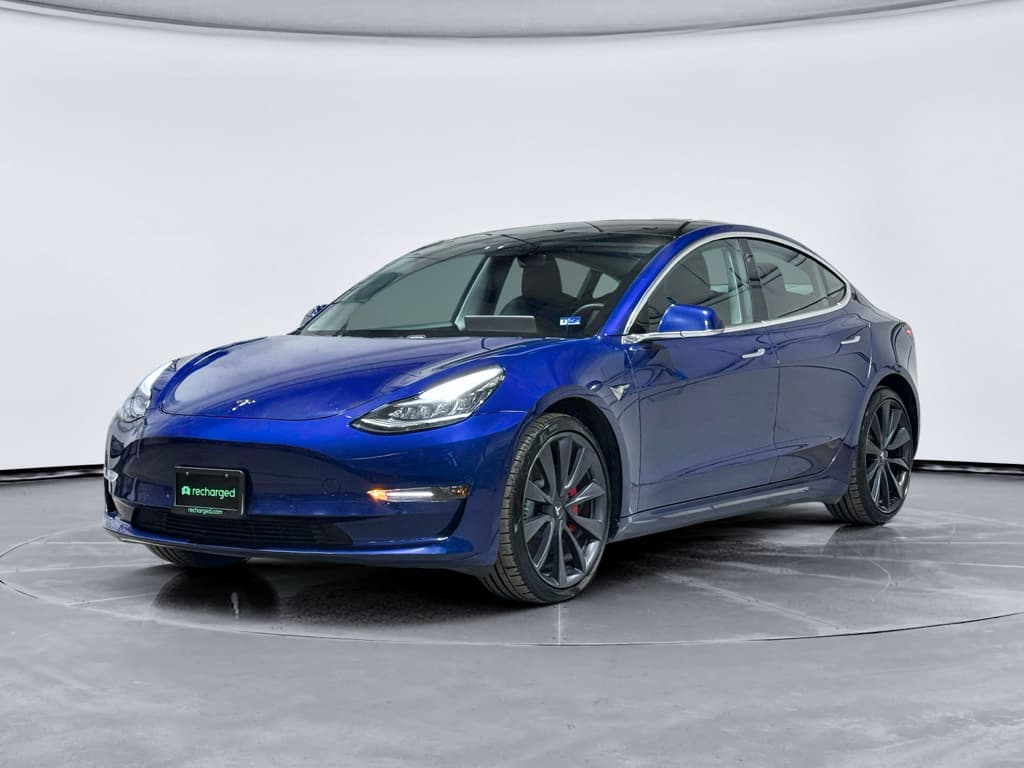
If you own or are eyeing a used 2020 Tesla Model 3, you’ve probably heard about software updates, trunk wiring issues, and big Autopilot recalls. This guide pulls together the latest 2020 Tesla Model 3 recalls list, explains what each one actually fixes, and, most importantly, what it means for you as an owner or shopper in 2026.
First things first
Overview: Why 2020 Model 3 recalls matter
By 2026, most 2020 Model 3s have 40,000–80,000 miles on the clock. That’s right in the window where early design quirks and long-term durability issues start to show up. Tesla and the National Highway Traffic Safety Administration (NHTSA) have issued several safety recalls that specifically include the 2020 Model 3, some for physical components like trunk wiring and latches, others for driver-assistance software like Autopilot and Full Self-Driving (FSD) Beta.
The good news: recall repairs are free, regardless of mileage or age. The catch: you still need to make sure they’re actually done on your car. If you’re shopping used, you also want to know which recalls applied and whether they were addressed before you sign anything.
Key recall context for 2020 Model 3 owners
Quick-glance: 2020 Tesla Model 3 recalls list
Here’s a simplified overview of the major recalls that typically include the 2020 Tesla Model 3. Exact eligibility depends on your specific VIN and build date, so always confirm with Tesla or NHTSA before assuming your car is covered.
Major recalls that may apply to 2020 Tesla Model 3
Summary only. Use your VIN to confirm which recalls apply to your specific car.
| Recall area | Typical issue addressed | Fix type | Commonly affects 2020 Model 3? |
|---|---|---|---|
| Rear trunk wiring harness / backup camera | Trunk lid harness can wear over time, causing intermittent or failed rear-view camera feed when reversing. | Physical service visit | Yes – 2017–2020 Model 3 built with original harness design. |
| Trunk/hood latch (front or rear) | Latch or cable routing may allow unintended opening or reduce visibility if the hood opens while driving. | Physical service visit | Some 2017–2020 Model 3 cars within specified VIN ranges. |
| Autopilot / Autosteer safety behavior | Driver may be able to misuse or over-rely on Autopilot; system may not provide enough warnings or restrictions. | Over-the-air software update | Yes – broad recall covering nearly all Autopilot-equipped Teslas through 2023. |
| Full Self-Driving (FSD) Beta behavior | FSD Beta could in rare cases behave unexpectedly at intersections or speed changes. | Over-the-air software update | Yes, if your 2020 Model 3 is enrolled in FSD Beta or has FSD package. |
| Instrument cluster / warning visibility | Certain warnings or telltales might not be displayed as clearly or consistently as required by regulations. | Over-the-air software update | Some 2020 Model 3 cars, depending on software version when recall was issued. |
Recall eligibility varies by VIN, configuration, and software version.
This is a guide, not a VIN check
Major physical recalls: trunk harness and latches
Rear trunk harness / backup camera recall
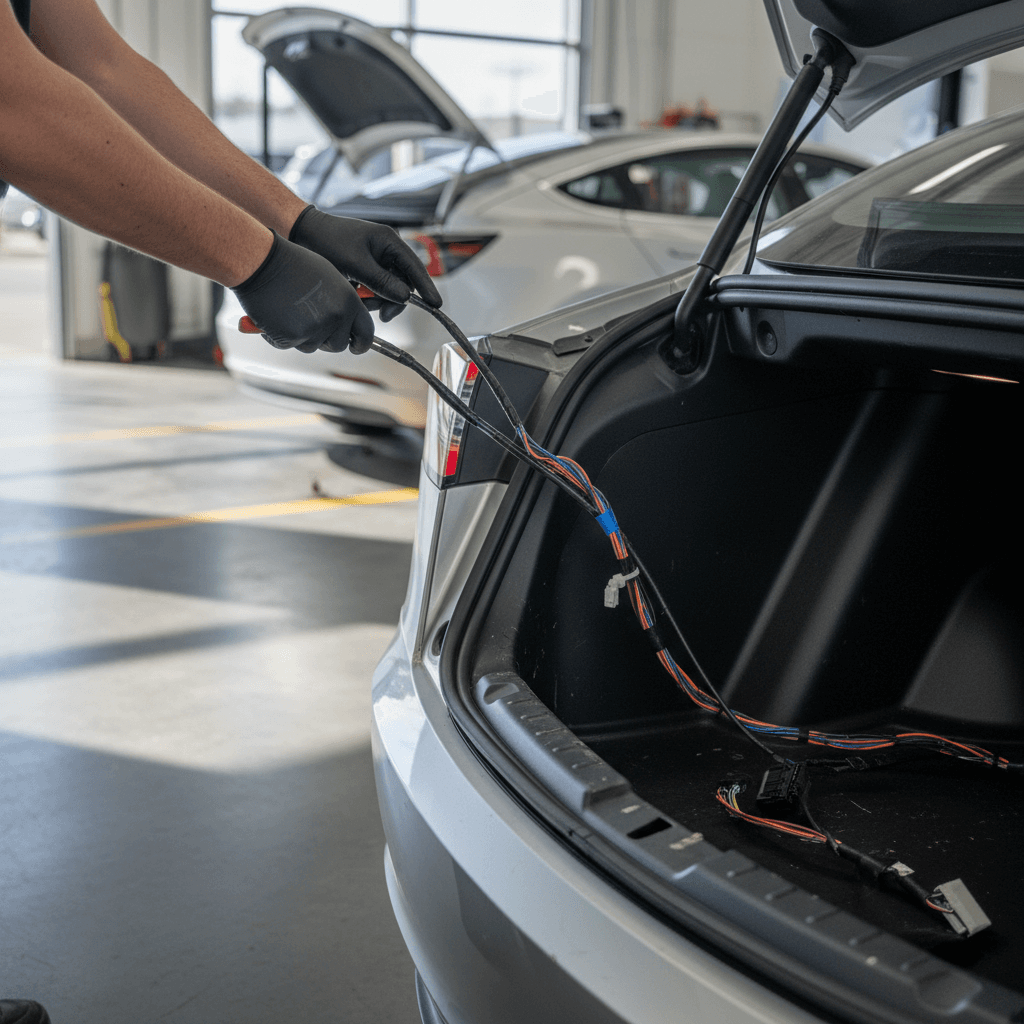
One of the most important physical recalls for 2017–2020 Model 3 owners involves the rear trunk wiring harness. In early Model 3s, the cable bundle that powers the rear-view camera runs through the trunk lid and bends every time you open or close the trunk. Over thousands of cycles, that cable can fatigue and eventually fail.
- Risk: You can lose the rear-view camera image when backing up, which makes it harder to see obstacles and pedestrians.
- Symptoms: Flickering or black camera view in reverse, intermittent “Camera unavailable” warnings, or total camera failure.
- Fix: Tesla inspects the harness and, if necessary, replaces it with an improved design and revised routing to reduce strain.
Your trunk use matters
Front or rear trunk latch recalls
Some earlier Model 3s also fall under recalls involving front and rear trunk latching hardware. In certain VIN ranges, the cable routing or latch components could allow the hood or trunk to open improperly, or could compromise visibility if the hood opens while driving.
- Risk: On the front trunk (frunk), an unlatched hood can pop up at speed and obstruct your view. On the rear, a compromised latch can allow water ingress or unexpected opening.
- Symptoms: Hood/trunk not closing cleanly, repeated warnings that a trunk is open, or visible damage or misalignment around latch hardware.
- Fix: Tesla replaces or adjusts latches, adds clips or guides, and reroutes cables as needed based on the specific recall campaign.
Never drive with a questionable frunk latch
Software safety recalls: Autopilot and FSD
Since 2020, Tesla has also issued broad software-based recalls covering Autopilot’s Autosteer function and the optional Full Self-Driving (FSD) Beta. These campaigns cover millions of Teslas, including 2017–2023 Model 3 vehicles, which means virtually every 2020 Model 3 with driver-assistance features is included.
Autopilot / Autosteer recall
Regulators found that drivers could misuse Autosteer or that the system didn’t always provide enough alerts or restrictions when its conditions weren’t met.
- Risk: Over-reliance on Autopilot in situations it wasn’t designed to handle.
- Fix: An over-the-air update that tightens driver monitoring, changes when/where Autosteer can be engaged, and adjusts warnings.
Full Self-Driving (FSD) Beta recall
Separate campaigns targeted FSD Beta behavior at intersections, lane changes, and speed transitions.
- Risk: In rare cases, FSD Beta could behave unexpectedly when approaching stops, signals, or lane splits.
- Fix: Multiple OTA updates that change decision logic, speed control, and how the system responds to traffic controls.
“Recall” doesn’t always mean service visit
How to check if your 2020 Model 3 has open recalls
Because Tesla continuously rolls out new campaigns, and sometimes narrows or expands VIN ranges, the only way to get an accurate 2020 Tesla Model 3 recalls list for your exact car is to run a VIN check. Here’s how to do it in a few minutes.
Step-by-step: Check your 2020 Model 3 for open recalls
1. Grab your VIN
You’ll find your 17-digit VIN on the lower driver’s side of the windshield, on the door jamb sticker, and in the Tesla app under your vehicle details.
2. Use Tesla’s recall lookup
Go to Tesla’s official recall/annual service page and enter your VIN. This will show any open recalls Tesla has on record for your car and may link to repair info.
3. Cross-check with NHTSA
Go to the NHTSA recall lookup site, enter the same VIN, and confirm there are no additional open safety recalls listed under federal records.
4. Check your in-car software
On your center screen, go to <strong>Controls > Software</strong>. If a recall-related software update is pending, you’ll see it waiting. Install updates when you’re parked and on a reliable connection.
5. Review your service history
In the Tesla app, open your Service history. Look for entries mentioning trunk harness inspection, harness replacement, latch repair, or safety-related software updates.
6. Ask the seller (if shopping used)
If you’re buying from a private party or non-EV dealer, ask for screenshots of the Tesla recall page and service records, or have them install pending updates before purchase.
Good news for used shoppers
What the repairs look like: time, cost, and downtime
On paper, a recall sounds intimidating, especially if you’re buying a used EV and trying to keep downtime low. In practice, most 2020 Model 3 recall work is straightforward, and software-only recalls can update while you sleep.
What to expect from common 2020 Model 3 recall fixes
Rough, real-world expectations based on owner experience and typical Tesla procedures.
Software-only recalls
Examples: Autopilot / Autosteer, FSD Beta behavior, some warning telltale updates.
- Fix is delivered via over-the-air update.
- You choose installation time.
- Car usually unavailable for 15–30 minutes.
Trunk harness & camera
Examples: Rear harness inspection and replacement.
- Requires service center or mobile tech visit.
- Plan on roughly half a day of downtime.
- Repair cost to you: $0 under recall.
Latch and hardware
Examples: Frunk or trunk latch, cable routing, hardware updates.
- Typically an in-shop visit.
- Work time is often 1–3 hours.
- May be combined with other service items.
Stack your errands
Shopping used: how recalls affect 2020 Model 3 buyers
If you’re considering a used 2020 Tesla Model 3, recalls shouldn’t scare you off by themselves. In fact, a car that’s had its recall work done can be a better bet than an identical car built later that hasn’t yet been updated.
Why recalls aren’t always bad news
- They show that real-world issues are being found and corrected.
- Trunk harness replacements and latch fixes usually improve durability vs. the original design.
- Software recalls can tighten up driver monitoring and safety margins.
When recalls are a red flag
- Multiple safety recalls remain open on the same car for months or years.
- Seller can’t or won’t provide a VIN-based recall printout or app screenshot.
- You see obvious physical symptoms (like a glitchy backup camera) that match known recall issues but haven’t been addressed.
Watch for mismatched stories
The Recharged advantage: verified battery health & recall status
Used Teslas are different from used gas cars. Battery health, software history, and recall status all matter as much as paint and tires. That’s why every car on Recharged comes with a Recharged Score Report that goes beyond a basic history check.
What Recharged checks on a 2020 Tesla Model 3
You get more than a promise, you get documentation.
Verified battery health
Recall & service review
EV-specialist guidance
Ready to find your next EV?
Browse VehiclesIf you’re trading in or selling your own 2020 Model 3, Recharged can provide an instant offer or help you consign the car, making sure open recalls are clearly understood and factored in without killing your deal.
FAQ: 2020 Tesla Model 3 recalls
Frequently asked questions about 2020 Model 3 recalls
Bottom line on 2020 Model 3 recalls
A laundry list of bulletins and recall campaign numbers can make any 2020 Tesla Model 3 look scary on paper. In reality, most of the big 2020 Model 3 recalls either strengthen the car’s hard parts, like the trunk harness and latches, or tighten up its driver-assistance behavior through software. What matters isn’t that recalls exist; it’s whether the car in front of you has had them done.
If you already own a 2020 Model 3, take ten minutes this week to run your VIN through Tesla and NHTSA, then schedule anything that’s still outstanding. If you’re shopping for one, treat recall status the way you’d treat a pre-purchase inspection: a basic requirement, not a luxury. And if you’d rather not decode it all yourself, Recharged can help you find a 2020 Model 3 with verified battery health, clear documentation, and a transparent look at its recall and repair history, so you can enjoy the car, not worry about what’s hiding in its past.