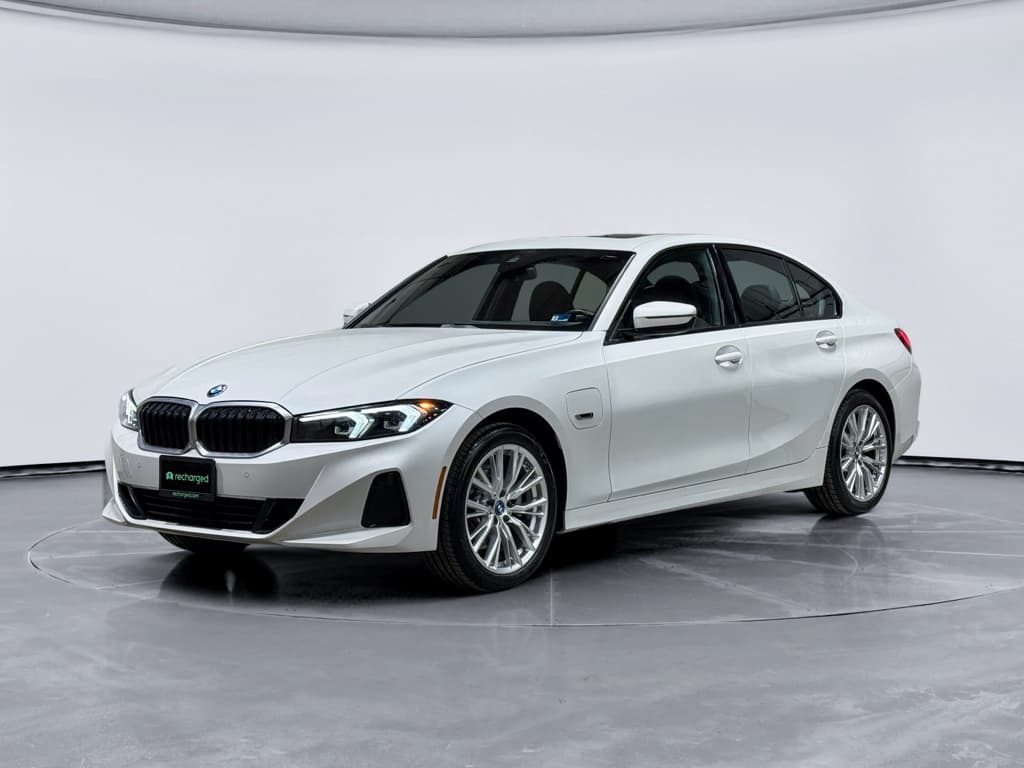
If you’re cross‑shopping a BMW i4 vs BMW 3 Series in 2026, you’re really asking one question: will going electric actually save you money, or will the classic gas 3 Series still be cheaper once everything is added up? This guide walks through the full cost picture, purchase price, fuel vs electricity, maintenance, incentives, and resale, so you can decide which BMW makes more financial sense for how you drive.
Context: 2026 pricing and assumptions
BMW i4 vs 3 Series: Who this article is for
- Drivers comparing a new or lightly used BMW i4 (eDrive35/eDrive40/xDrive40/M50) against a BMW 3 Series (330i/330e/M340i).
- Commuters who want to know how much they’ll really spend on fuel vs electricity over 5 years.
- Shoppers debating whether to stretch for an EV now or stick with a familiar gas 3 Series and maybe switch later.
- Used‑car buyers who want to understand how depreciation and battery health affect long‑term costs.
To keep things apples‑to‑apples, we’ll mostly compare a BMW i4 eDrive40 to a BMW 330i, both well‑equipped, driven about 12,000 miles per year in the U.S. We’ll note where numbers change a lot for heavier drivers or different trims.
Headline cost takeaways for 2026
BMW i4 vs BMW 3 Series: cost snapshot (typical U.S. owner, 5 years)
Fast answer
Purchase price and financing: i4 vs 3 Series
On paper, the BMW 3 Series is still the cheaper car to buy. For the 2025–2026 model years in the U.S., a base 330i stickers in the mid‑$40,000s, while a base i4 eDrive35 starts in the low‑$50,000s and popular trims like the eDrive40 push closer to $60,000. Real‑world transaction prices tend to be a bit lower than MSRP for both, especially when BMW runs seasonal programs.
Representative 2025 U.S. starting MSRPs (before discounts)
Approximate starting stickers for core trims that most shoppers cross‑shop.
| Model (2025 MY) | Approx. starting MSRP | Typical well‑equipped street price (2025–2026) |
|---|---|---|
| BMW 330i Sedan | ≈$46,000 | Low‑to‑mid $40Ks |
| BMW 330i xDrive Sedan | ≈$48,000 | High $40Ks |
| BMW i4 eDrive35 Gran Coupe | ≈$54,000 | Low‑$50Ks |
| BMW i4 eDrive40 Gran Coupe | ≈$59,000 | Mid‑to‑high $50Ks |
| BMW i4 xDrive40 Gran Coupe | ≈$62,000 | High‑$50Ks to low‑$60Ks |
Actual pricing varies by options, destination fees, and late‑cycle adjustments.
Why 2026 cost comparisons use 2025 MSRPs
Financing the 3 Series
The 3 Series’ lower MSRP means a smaller loan amount up front. At typical U.S. rates, dropping from a $55,000 i4 to a $47,000 330i can easily trim $100–$150/month off your payment, assuming similar terms and down payment.
If you’re primarily payment‑sensitive and plan to keep the car for only a few years, this initial gap matters more than the long‑term fuel and maintenance savings.
Financing or leasing the i4
With the i4, you’re usually financing a higher sticker, but EV incentives and manufacturer support often narrow the gap. In recent years BMW has layered on lease credits worth several thousand dollars on the i4, effectively mimicking a federal EV tax credit even when buyers don’t qualify directly.
For buyers planning to keep the car 5–8 years, it’s worth running the full ownership math instead of just comparing payments.
Fuel vs. electricity: day-to-day energy costs
This is where the BMW i4 starts to claw back its higher purchase price. The 330i is efficient for a luxury sport sedan, but gasoline remains the big recurring expense. The i4 trades that for electricity costs that are usually lower, and much more predictable, especially if you can charge at home.
Typical annual energy costs: BMW i4 vs BMW 330i (2026, U.S. averages)
Assumes 12,000 miles/year and mixed city/highway driving.
| Model & scenario | Energy use | Effective cost per mile | Approx. annual energy cost |
|---|---|---|---|
| BMW 330i (gas) | ~30 mpg combined | ≈$0.125/mi | ≈$1,500/year |
| BMW i4, mostly home charging (80% home, 20% public) | ~3.0 mi/kWh | ≈$0.07–$0.08/mi | ≈$850–$950/year |
| BMW i4, heavy DC fast charging (20% home, 80% public) | ~3.0 mi/kWh | ≈$0.10–$0.11/mi | ≈$1,200–$1,350/year |
Gas at $3.75/gal, home electricity at $0.16/kWh, and public DC fast charging at $0.35/kWh.
How to estimate your own electricity cost
For many U.S. households, that means an i4 owner will spend $500–$700 less per year on energy than a 330i driver, assuming typical mileage and mostly home charging. Over five years, that’s $2,500–$3,500 in fuel savings, before gas prices spike again.
Watch your public fast‑charging habit
Maintenance and repairs: BMW i4 vs gas 3 Series
Viewed through a traditional BMW lens, the i4 is pleasantly boring to maintain. There’s still the usual premium‑car wear and tear, tires, brakes, alignments, but far fewer moving parts than a turbocharged 4‑cylinder. That typically translates to lower and more predictable maintenance bills than an equivalent 3 Series.
5‑year maintenance snapshot: BMW i4 vs BMW 3 Series
Based on Recharged cost‑to‑own research, public TCO data, and typical U.S. dealer pricing as of 2025–2026.
| Item (5‑yr view) | BMW i4 (EV) | BMW 3 Series (gas) |
|---|---|---|
| Oil changes & engine service | $0 | $800–$1,400 |
| Brake service (pads/rotors) | Often $0–$500 (regenerative braking extends pad life) | $800–$1,600 |
| Fluids (brake, coolant, etc.) | $600–$900 | $700–$1,000 |
| Tires (similar performance sizes) | $1,800–$2,400 | $1,600–$2,200 |
| Misc. maintenance & wear items | $1,000–$1,500 | $1,400–$2,000 |
| Estimated 5‑yr maintenance total | ≈$3,500–$4,000 | ≈$5,000–$7,000 |
Real costs vary by mileage, region, and how often you visit the dealer versus an independent shop.
Put differently, most U.S. owners can expect BMW i4 maintenance to average roughly $600–$750 per year over the first five years. A similar‑age 3 Series often lands closer to $1,000–$1,400 per year, especially once you’re past the free or discounted service period.
Battery warranty eases the big‑ticket fear
Insurance, taxes, and fees
Insurance is one of the squishier parts of a cost comparison because it depends heavily on you: age, driving record, ZIP code, and credit tier. That said, most insurers still rate the i4 and 3 Series similarly, premium sports sedans with above‑average repair costs and theft risk.
How non‑energy ownership costs typically compare
These won’t make or break the decision, but they nudge the math at the margins.
Insurance
On average, expect broadly similar premiums for the i4 and 3 Series when trims are matched. In some markets EVs rate slightly higher due to repair complexity; in others, lower accident statistics or incentives narrow the gap.
Taxes & registration
Some states add EV registration surcharges to make up for lost gas‑tax revenue. Others discount registration for EVs. Check your state’s DMV or DOT site before you assume either car is always cheaper here.
Fees & extras
Dealer doc fees, acquisition fees (for leases), and extended warranties are usually comparable between i4 and 3 Series. These don’t shift the EV vs gas equation much, but they matter to your total out‑the‑door price.
Incentives and tax credits in 2026
By 2026, federal EV incentives are more complex than the simple $7,500 credit era, with eligibility depending on battery sourcing, MSRP caps, and your income, or, on leases, how much of a commercial credit the captive finance arm chooses to pass through. The 3 Series, as a conventional gas model, doesn’t qualify for any EV‑specific federal support.
Key incentive questions to ask about a BMW i4 in 2026
1. Does this specific VIN qualify for a federal EV credit?
Ask the dealer to show you how the car appears in the official IRS VIN lookup tool or equivalent. Some trims or build dates may qualify while others do not.
2. How much EV support is baked into the lease?
BMW has frequently used <strong>lease credits and subvented money factors</strong> to make i4 payments more attractive. Even if you can’t claim the federal credit yourself, the lease may embed much of that value.
3. Are there state or local EV rebates?
Many states and utilities still offer <strong>rebates or bill credits</strong> for EVs and home chargers in 2026. These can add $500–$2,000 of effective value on top of any federal benefits.
4. Any gas‑car penalties coming?
A few metro areas experiment with congestion pricing, low‑emission zones, or parking discounts for EVs. They won’t make or break the deal, but they can tilt the equation away from the 3 Series over time.
Don’t assume the full $7,500
Resale value and used market trends
Historically, the 3 Series has been a resale value benchmark among luxury sport sedans. The i4 doesn’t have as many model years under its belt, but early data suggests that premium German EVs with strong brand equity hold value better than mainstream EVs, especially once the sharp first‑owner depreciation is over.
Used 2025 pricing snapshot: BMW 3 Series vs BMW i4
Based on U.S. listings for late‑model used cars as of early 2026.
| Vehicle (used 2025 MY) | Typical price range |
|---|---|
| BMW 3 Series | ≈$39,000–$62,000 |
| BMW i4 | ≈$50,000–$72,000 |
Actual asking prices depend heavily on mileage, options, and region.
In other words, you pay more for an i4 up front and it still tends to sit higher in the used‑market hierarchy. Over a 5‑year window, that means a lot of the extra sticker price eventually comes back to you in resale, especially if the battery tests healthy and the car has a clean service history.
Sample 5‑year cost comparison: BMW i4 vs 330i
Let’s pull this together with a simple, realistic 5‑year scenario for a U.S. driver doing 12,000 miles annually. These are ballpark numbers, not a quote, but they show how the i4’s higher sticker interacts with lower running costs.
Illustrative 5‑year cost of ownership (12,000 mi/year, 2026 U.S. conditions)
Assumes moderate discounting on both cars and typical energy and maintenance costs.
| Category (5 yrs) | BMW i4 eDrive40 | BMW 330i |
|---|---|---|
| Purchase price after discounts | $56,000 | $48,000 |
| Estimated incentives/lease support value | −$3,000 | $0 |
| Net effective acquisition cost | $53,000 | $48,000 |
| Fuel/electricity | $4,500 | $7,500 |
| Maintenance (routine & wear) | $3,700 | $6,000 |
| Tires (similar performance use) | $2,100 | $2,000 |
| Insurance, taxes, fees (incremental difference) | ≈$0–$1,000 higher than 330i | Baseline |
| Estimated 5‑yr total outlay before resale | ≈$63,300–$64,300 | ≈$63,500 |
| Residual value after 5 yrs (healthy car) | $27,000 | $22,000 |
| Estimated 5‑yr net cost (cash burned) | ≈$36,300–$37,300 | ≈$41,500 |
All numbers rounded for simplicity; your exact costs will differ.
What this table is really saying
How your driving pattern changes the math
Three driver types, and which BMW usually wins on cost
High‑mileage commuter (15,000–20,000 miles/year)
Fuel is your biggest variable cost. At this mileage, the i4’s fuel‑plus‑maintenance advantage stacks fast.
Home or workplace charging access is critical, if you have it, the i4 almost always wins on 5–8 year cost.
If you commute long distances daily, factor in DC fast‑charging availability along your route.
Average driver (10,000–13,000 miles/year)
At typical mileage, the i4 and 330i often end up <strong>within a few thousand dollars</strong> of each other over 5–7 years.
If you value instant torque and quiet refinement, you’re effectively getting that for little or no extra money with the i4.
If you prioritize manual control, sound, and long‑distance refueling speed, the 3 Series’s intangibles may justify a small cost penalty.
Low‑mileage city driver (under 8,000 miles/year)
At low annual mileage, energy savings don’t pile up fast, so the cheaper 3 Series may be the better financial choice.
On the other hand, if you live in a city with EV perks, HOV access, cheap night‑time electricity, parking discounts, the equation can flip back toward the i4.
In this use case, your decision may lean more on driving feel, charging convenience, and emissions than pure dollars.
Run your own numbers
Buying new vs used, and where Recharged fits in
The most efficient way to hack BMW cost of ownership is often to let someone else eat the steep first‑owner depreciation. That’s true for both the i4 and 3 Series, but the details are different.
Used BMW i4: what to watch
With any used EV, the big unknown is battery health. A seemingly cheap i4 with a weak pack isn’t a bargain. You’ll also want to understand software update history, DC fast‑charging exposure, and tire condition, heavy EVs can be hard on rubber.
Every used EV at Recharged comes with a Recharged Score Report that includes verified battery diagnostics, fair‑market pricing, and a plain‑English explanation of what that battery health means in practical range terms. That makes it much easier to compare a used i4 against a used or CPO 3 Series on equal footing.
Used BMW 3 Series: the usual suspects
On a used 330i or M340i, you’re back in familiar territory: oil leaks, cooling systems, timing‑chain concerns, and suspension wear as the miles climb. These cars can be wonderfully rewarding to own if they’re maintained on time, and money pits if they’re not.
When you’re comparing a used gas 3 Series to a used i4, think about where you want to spend your money over the next 5–8 years: preventing and fixing combustion‑engine issues, or budgeting for EV‑specific wear items and (eventually) out‑of‑warranty battery coverage.
How Recharged can simplify the decision
Ready to find your next EV?
Browse VehiclesBMW i4 vs 3 Series: FAQ
Frequently asked questions about BMW i4 vs BMW 3 Series costs
Bottom line: which BMW is cheaper to own?
If you strip away the emotions and look purely at dollars, the pattern in 2026 is clear: for most U.S. drivers who can charge at home and plan to keep the car at least 5 years, the BMW i4 is likely to be cheaper to own than a comparable 3 Series. Lower fuel and maintenance costs, plus solid resale and available incentives, usually offset the higher sticker price over a normal ownership cycle.
The 3 Series still makes financial sense if you drive very little, live in a place where charging is inconvenient or expensive, or simply prefer the feel and refueling speed of a gas sports sedan enough to accept somewhat higher running costs. But if you’re BMW‑curious about EVs and your daily life fits the charging reality, the i4 lets you keep the core 3 Series experience while quietly bending the cost curve in your favor.
If you want to see how this looks with real cars and real numbers, explore used BMW i4s and other EVs on Recharged. Every listing includes a Recharged Score Report with battery health, fair‑market pricing, and projected ownership costs, plus expert help with financing, trade‑ins, or consigning your current BMW so you can switch to the right car on your terms.