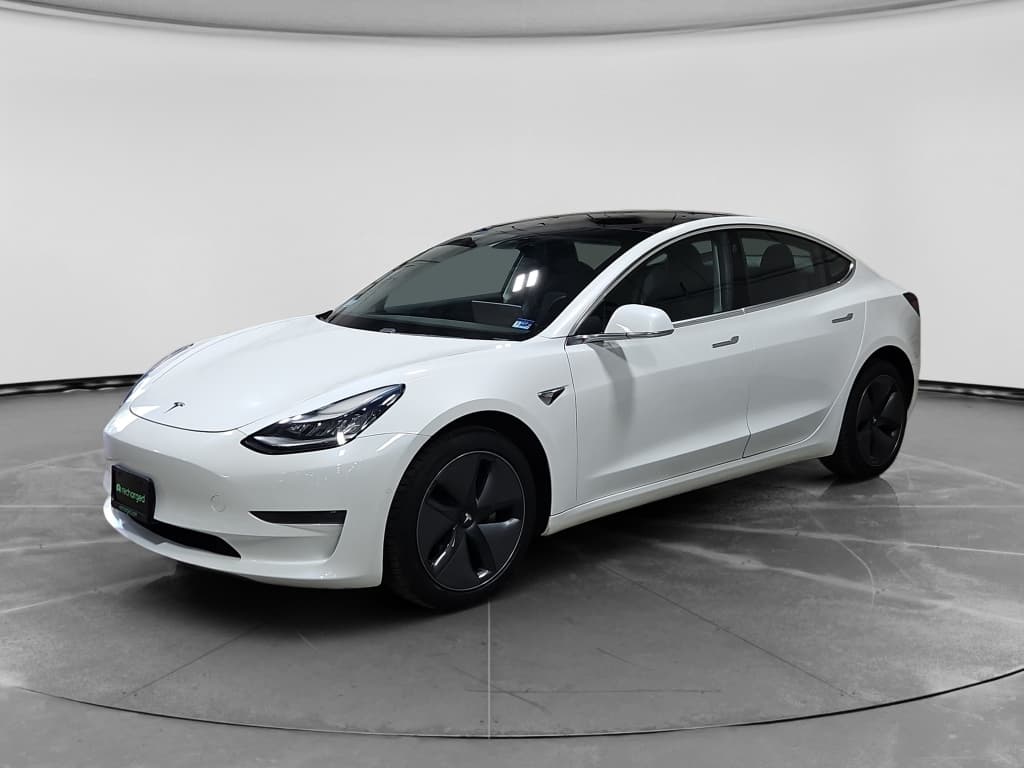
If you’re shopping for a used electric car, the 2018 Tesla Model 3 (often searched as “2018 Tesla 3”) is probably near the top of your list. It was Tesla’s breakthrough mass‑market sedan, and today it offers a lot of performance and range for the money, if you know what you’re looking at. This guide walks you through trims, real‑world range, reliability, and the key checks to make before you buy.
Quick take
Why the 2018 Tesla Model 3 Still Matters
The 2018 model year was the first full year of Model 3 production. This is the car that turned Tesla from a niche luxury maker into a mainstream EV brand. For used buyers, that first full year is appealing because you get much of the modern Tesla experience, strong acceleration, long range, over‑the‑air software updates, and access to the Supercharger network, without paying new‑car money.
2018 Tesla Model 3 at a Glance
Model years vs. software
2018 Model 3 Trims, Batteries, and Key Specs
For 2018 in the U.S., the Model 3 lineup centered on the Long Range battery with rear‑wheel drive, then expanded with the Dual Motor and Performance variants, plus a short‑lived Mid Range pack. Understanding which version you’re looking at is crucial, because range, performance, and value vary a lot.
2018 Tesla Model 3 Trims & Key Specs
Approximate U.S. specs when new; exact numbers vary slightly by wheel choice and software calibration.
| Trim (2018) | Drive | Approx. Battery | EPA Range (new) | 0–60 mph (approx.) | Notable Traits |
|---|---|---|---|---|---|
| Standard / “Software-Limited”* | RWD | ~50–54 kWh | ~220 mi | 5.6 sec | Rare in 2018, limited range, budget choice |
| Mid Range | RWD | ~62 kWh | ~260 mi | 5.6 sec | Short‑run pack, decent range at lower price |
| Long Range RWD | RWD | ~75 kWh | 310 mi | 5.1 sec | Most common 2018 car; great blend of range & price |
| Long Range Dual Motor | AWD | ~75 kWh | 310 mi | 4.5 sec | All‑weather traction, stronger acceleration |
| Performance | AWD | ~75 kWh | 310 mi | 3.3 sec | Track‑capable, larger brakes and sport tuning |
Use this table to identify which 2018 Tesla 3 you’re considering and how it compares.
Watch for software‑locked cars
How to Tell Which 2018 Model 3 You’re Looking At
A few clues can help you decode trims even if the listing is vague.
Check the badging
Some Performance cars have a underline under the dual-motor badge on the trunk. Earlier Long Range RWD cars often have no specific trim badge at all.
Look at 0–60 estimates
If a listing claims around 3-second 0–60, it’s almost certainly a Performance. Mid Range and Long Range RWD live in the mid–5 second range.
Use rated range at 100%
A fully charged Long Range car will typically show around 290–310 mi when new. Today it’s usually lower; use it to sanity‑check the claimed trim.
Real-World Range for a 2018 Tesla 3 in 2025
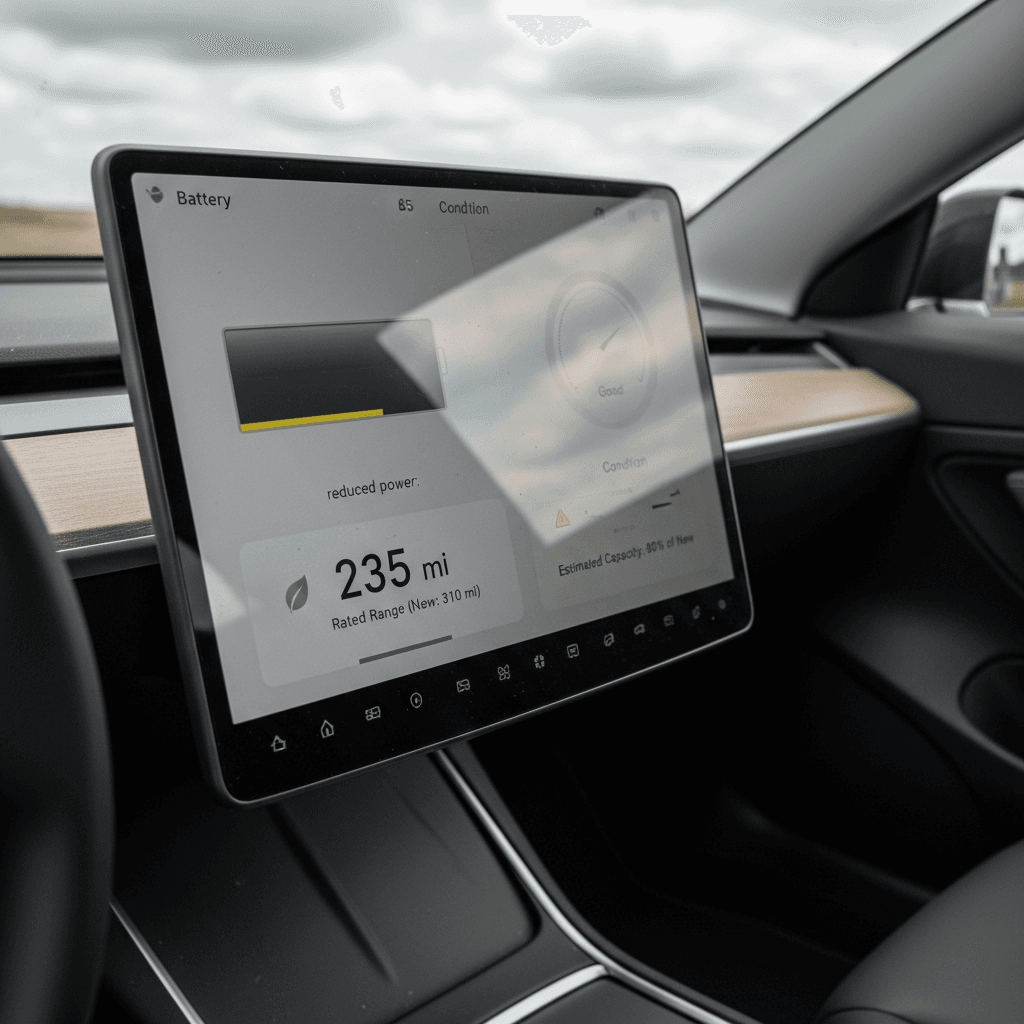
The natural question with any 7‑year‑old EV is: how much range is left? Tesla batteries have generally aged better than early skeptics predicted, but usage patterns matter. Frequent fast‑charging, extreme climates, and lots of full‑to‑empty cycles all accelerate degradation.
Typical Long Range owner experience
Industry data and real‑world owner reports suggest that a well‑cared‑for 2018 Long Range Model 3 often retains roughly 85–90% of its original range after several years. In practical terms, that means a car that started at 310 miles might realistically deliver something in the 250–270 mile neighborhood on a mild‑weather highway trip at 70 mph.
Factors that shrink (or preserve) range
- Driving style: High speeds and hard acceleration eat range quickly.
- Temperature: Very cold or very hot climates reduce usable range.
- Charging habits: Keeping the car between about 20–80% helps long‑term health.
- Wheel/tire choice: 19" wheels and sticky tires can cost noticeable efficiency compared with 18" Aeros.
Cold-weather rule of thumb
Charging a 2018 Tesla Model 3
Every 2018 Tesla 3 uses Tesla’s NACS (North American Charging Standard) connector and can use the Supercharger network, plus Level 2 charging at home or on public networks with the right adapter. Understanding how you’ll charge is crucial to deciding whether this car fits your lifestyle.
Your Main Charging Options
Think in terms of daily charging at home and fast charging on the road.
Level 2 at home
On a 240V circuit (like a dryer outlet) and a 32–48A wall connector, expect roughly 30–40 miles of range per hour of charging, more than enough to refill a typical commute overnight.
Tesla Supercharging
On a V2 or V3 Supercharger, a 2018 Model 3 can recover hundreds of miles of range in under an hour, especially from a low state of charge. This is what makes road trips practical.
Public Level 2 with adapter
With a J1772 adapter (commonly included with the car when new), you can charge at many non‑Tesla stations, handy if you live in an apartment or frequently park in public garages.
Verify charger access before you buy
Safety Ratings and Driver-Assistance Tech
One of the strongest selling points of the 2018 Tesla Model 3 is its safety record. It earned top ratings in both U.S. government and independent crash tests, and even early cars were available with an advanced suite of driver‑assistance features.
2018 Model 3 Safety Highlights
Autopilot vs. Full Self‑Driving
2018 Tesla 3 Reliability and Common Issues
If there’s a knock against early Model 3s, it’s reliability. As a first‑generation, high‑volume Tesla, the 2018 Model 3 saw more than its share of teething issues. Industry surveys have noted higher‑than‑average problem rates for EVs overall, and the Model 3 has contributed to that reputation, mostly through build‑quality and hardware concerns rather than the electric powertrain itself.
Areas that tend to cause headaches
- Interior rattles & trim: Squeaks, rattles, and wind noise are among the most common complaints on early cars.
- Paint and panel alignment: Inconsistent gaps, chipping paint, and minor corrosion on exposed areas can show up in harsher climates.
- Suspension & bushings: Some owners, especially in rough‑road regions, report premature wear of control‑arm bushings and other suspension parts.
- Electronics glitches: Center screen reboots, intermittent cameras, and minor software quirks are not unusual, though many are fixable via updates.
What usually holds up well
- Battery pack: Most 2018 packs show gradual, predictable range loss rather than sudden failures.
- Electric motors: The drive units are generally robust compared with complex gasoline engines.
- Brakes: Regenerative braking means physical brakes often wear very slowly when used normally.
- Basic running costs: No oil changes, timing belts, or emissions hardware to maintain.
Pay attention to recalls and service history
What to Look For When Buying a Used 2018 Model 3
Essential Inspection Checklist for a 2018 Tesla 3
1. Confirm the exact trim and battery
Use the VIN decode, in‑car menus, and rated range at 100% charge to confirm whether the car is a Standard, Mid Range, Long Range, Dual Motor, or Performance. Don’t rely solely on the listing headline.
2. Get objective battery health data
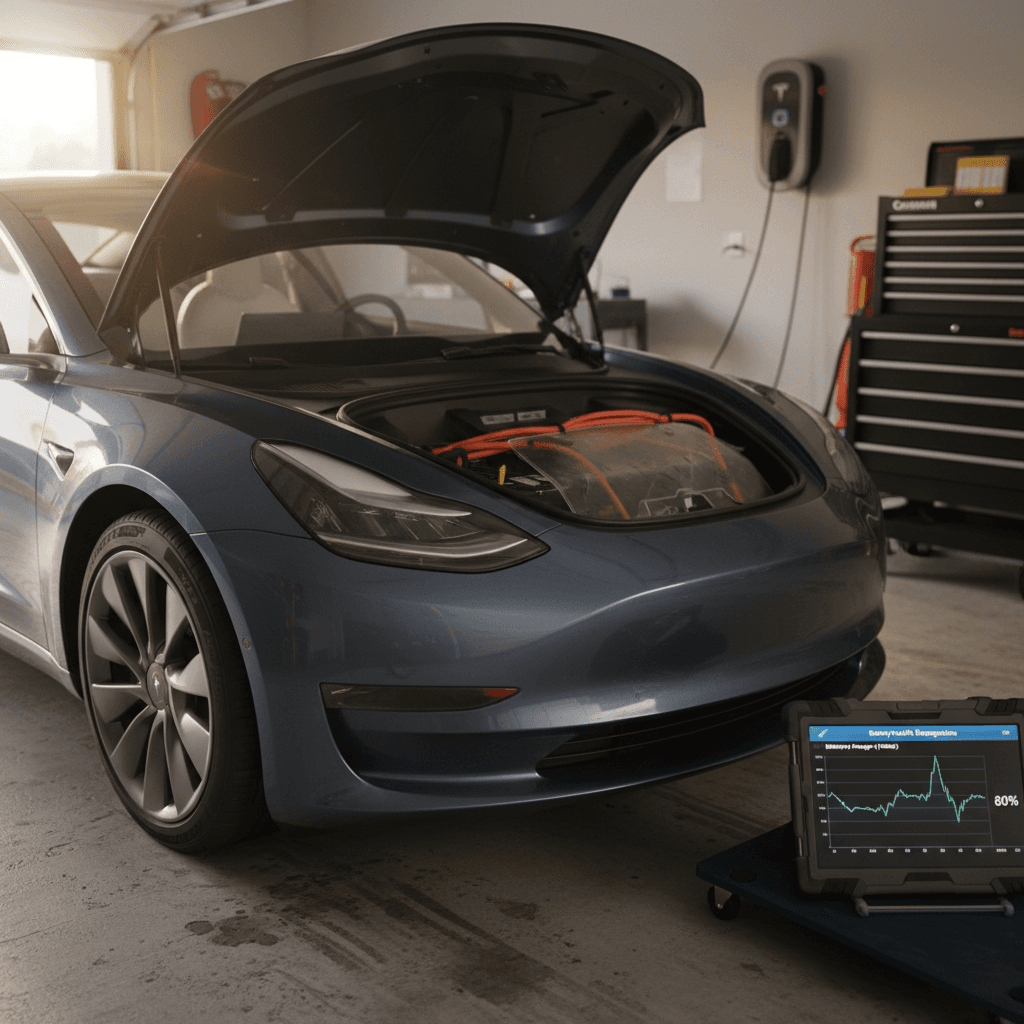
Ask for a professional battery‑health report, not just a screenshot of the range estimate. At Recharged, every vehicle comes with a <strong>Recharged Score battery diagnostic</strong> that quantifies remaining capacity and fast‑charging behavior.
3. Inspect wheels, tires, and brakes
Check for uneven tire wear (which can hint at suspension or alignment issues), curb rash on wheels, and brake rotor condition, especially on low‑mileage cars where brakes can rust from lack of use.
4. Drive over rough pavement
On the test drive, listen for clunks, creaks, or rattles over bumps. Noises from the front suspension can indicate worn control arms or bushings, which are more common on older cars in tough climates.
5. Test all electronics and cameras
Verify that the center screen is responsive, that the rear and side cameras work, and that Autopilot or cruise control engages as expected. Glitches here can be annoying and sometimes costly.
6. Check bodywork, glass, and seals
Look closely at panel gaps, paint consistency, windshield and glass edges, and door seals. Water leaks, wind noise, or previous body repairs can show up here before anywhere else.
Why a structured report matters
Pricing, Value, and Total Cost of Ownership
Used pricing for a 2018 Tesla 3 varies widely across the U.S. depending on trim, mileage, condition, and options like Autopilot or Full Self‑Driving. Long Range and Dual Motor cars command a premium over Mid Range and Standard Range examples, and Performance models sit at the top of the heap.
Where the 2018 Model 3 saves you money
- Fuel vs. gas: Even at higher electricity rates, most drivers see a clear fuel‑cost advantage compared with a similarly quick gasoline sports sedan.
- Maintenance: No oil changes, spark plugs, or emissions systems. Basic maintenance focuses on tires, brakes, wipers, and occasional coolant or filter service.
- Depreciation curve: Much of the steep initial depreciation has already happened, especially as newer Model 3 variants enter the market.
Costs you’ll want to plan for
- Tires: Instant torque and heavier EV weight mean tires can wear faster, especially on Performance models.
- Potential suspension work: On rough roads or high‑mileage cars, budget for possible control‑arm or bushing replacement.
- Out‑of‑warranty repairs: At this age, many 2018 cars are beyond basic factory warranty. Extended coverage from reputable providers can make sense if the price is right.
Consider total monthly cost, not just sticker price
How Recharged Makes Buying a 2018 Tesla 3 Easier
Shopping for a used EV shouldn’t feel like a science experiment. Recharged is built specifically around electric vehicles, so you’re not left guessing about battery health, fast‑charging behavior, or fair pricing on a 2018 Tesla Model 3.
What You Get With a 2018 Tesla 3 from Recharged
Designed from the ground up around used EVs, not gas cars.
Recharged Score battery report
Every vehicle includes a Recharged Score Report with verified battery health, charging performance, and pricing benchmarks. You see how your 2018 Model 3 compares to similar cars on the market.
Flexible buying and trade‑in options
Whether you’re trading out of a gas car or another EV, Recharged offers trade‑in, instant offer, or consignment, plus financing options tailored to used EVs.
Nationwide delivery & EV‑savvy support
Shop and complete your purchase fully online, then have your car delivered. EV specialists walk you through charging, software, and ownership basics so you’re comfortable from day one.
Ready to find your next EV?
Browse VehiclesA 2018 Tesla Model 3 can be a smart, exciting way to go electric, provided you buy with your eyes open. Focus on the right trim and battery, insist on verified battery health, and pay attention to suspension, body, and electronic systems. Combine that homework with transparent data and EV‑savvy support from a company like Recharged, and you’ll be in a much better position to enjoy the strengths of the 2018 Tesla 3 while minimizing surprises down the road.