If you’re eyeing a used 2018 Chevy Bolt EV, you’ve probably seen its 238‑mile EPA range rating and wondered what that actually looks like in the real world. This 2018 Chevy Bolt EV range test guide pulls together official data, independent tests, and owner experience to show how far the car really goes on a charge, and what that means if you’re buying used today.
Key takeaway up front
2018 Bolt EV range at a glance
2018 Chevy Bolt EV range & efficiency snapshot
On paper, the 2018 Bolt EV is still competitive with many newer EVs. A 60 kWh pack, an EPA‑rated 238 miles of range, and strong efficiency make it an attractive used buy, especially now that prices have fallen compared with when it was new.
EPA vs. your reality
Test methods: how range tests are done
When you read about a “2018 Chevy Bolt EV range test,” the methodology matters as much as the result. The same car can deliver wildly different numbers depending on how you test it. Broadly, you’ll see three common types of tests:
- EPA lab cycle: Standardized city/highway simulations at moderate speeds, used to produce the official 238‑mile rating.
- Constant‑speed highway tests: Media outlets and YouTubers often run the Bolt at 65–70 mph until low state of charge to see real‑world highway range.
- Mixed real‑world loops: A blend of city streets, suburban arterials, and highway, sometimes with elevation changes and weather thrown in.
Highway range tests
Independent 70 mph tests on first‑gen Bolts typically return around 200–210 miles from 100% to near empty in calm, mild conditions. That’s about 3.1–3.4 mi/kWh, which lines up with owner reports.
Owner trip data
In owner forums, many drivers report ~170–200 real miles at 70+ mph with a comfort buffer left in the pack, and 220+ miles when they keep speeds closer to 60–65 mph.
Why methods matter
Real-world results: city, highway, and mixed driving
Let’s translate the numbers into scenarios you’ll actually care about. Below are realistic expectations for a healthy‑battery 2018 Bolt EV in mild temperatures (roughly 60–80°F), on relatively flat terrain, with no extreme winds.
2018 Chevy Bolt EV real-world range expectations
Approximate ranges assume a healthy battery and 100% to near‑empty usage. Most drivers will use only 70–90% of the pack day‑to‑day, which tightens the numbers accordingly.
| Scenario | Typical Speed / Conditions | Efficiency (mi/kWh) | Usable Energy Assumed | Approx. Realistic Range |
|---|---|---|---|---|
| City & suburban mix | 35–50 mph, light to moderate traffic, gentle acceleration | 3.8–4.4 | ~56 kWh | 210–245 miles |
| Balanced highway + city | 60–65 mph highway, some surface streets | 3.4–3.8 | ~56 kWh | 190–215 miles |
| Pure highway, 70 mph | 70 mph set on cruise, calm winds | 3.1–3.4 | ~56 kWh | 175–200 miles |
| Aggressive 75–80 mph | Fast traffic, frequent passing | 2.6–3.0 | ~56 kWh | 145–170 miles |
Use these as planning guidelines, not promises, local topography, wind, and your driving style can easily swing results by ±10–15%.
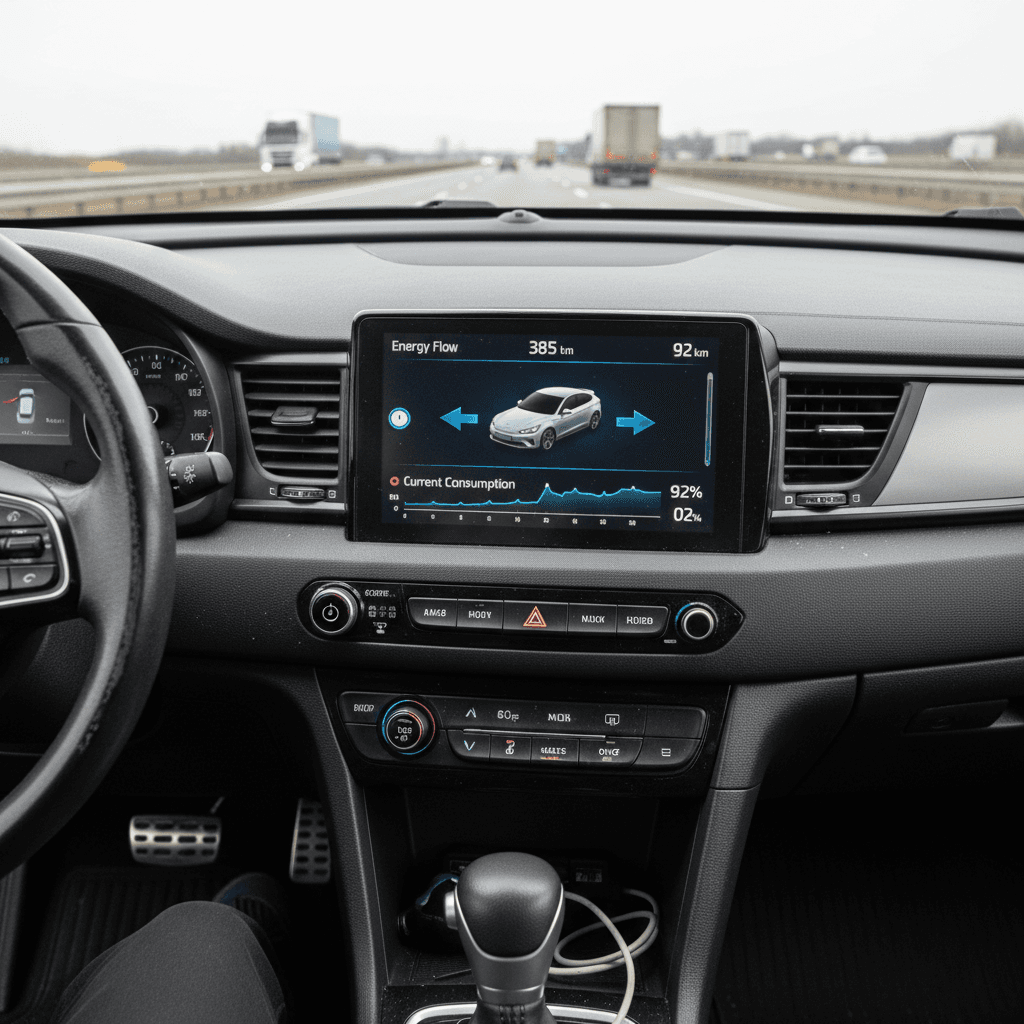
Notice how the range shrinks as speed climbs. Aerodynamic drag goes up roughly with the square of speed, so the energy cost of jumping from 65 mph to 75 mph is bigger than it looks on paper. That’s why a Bolt that can comfortably do a 200‑mile highway leg at 65 mph might feel tight for the same distance at 80 mph.
The upside in daily use
Weather and winter range in a 2018 Bolt EV
Temperature is the silent killer, or savior, of EV range. The 2018 Bolt’s liquid‑cooled pack helps in both summer heat and winter cold, but there’s no getting around physics: cold batteries and cabin heat both eat energy.
How seasons change your 2018 Bolt EV range
Assuming the same 60–65 mph mixed highway driving route
Warm weather (70–85°F)
With no A/C or light use, you can often match or beat the EPA rating in mixed driving. Expect 210–240 miles from a full charge if you’re not hammering the throttle.
Mild weather (45–65°F)
Using moderate cabin heat trims efficiency. A well‑driven Bolt still delivers around 180–210 miles on mixed routes.
Cold weather (20–35°F)
In true winter, running the resistive heater at highway speeds can cut range by 20–35%. Real‑world range can drop to 140–180 miles on longer highway stretches.
Short trips in deep cold
The 2018 Bolt has cabin preconditioning and heated seats/steering wheel, which are much more efficient than blasting the HVAC. If you can pre‑heat the car while it’s still plugged in, and rely more on seat heat than full cabin heat, you can recover a meaningful chunk of winter range.
Battery health on used 2018 Bolts: why it matters for range
Most 2018 Bolts on the road today have already had their packs replaced under GM’s fire‑risk recall or have at least undergone a software update. That’s good news for range: a fresh or lightly cycled pack should still deliver very close to original capacity if it’s been treated reasonably well.
Typical degradation
The bigger risk in the used market isn’t slow, normal degradation, it’s outliers: cars with miscalibrated battery management, poorly repaired recall work, or extreme fast‑charge and high‑mileage histories. Those can show dramatically reduced real‑world range or odd behavior, like a full charge reading only 30–60 miles on the guess‑o‑meter.
Quick battery health checks before you buy a 2018 Bolt EV
1. Look at the full‑charge range estimate
Fully charge the car and note the displayed range. In mild weather, a healthy 2018 Bolt that’s been driven normally should estimate well north of <strong>170–180 miles</strong>. A number like 60–100 miles with no obvious cause is a red flag.
2. Check energy usage history
Use the energy/efficiency screen to see recent mi/kWh. Very low efficiency (under ~2.5 mi/kWh) might just be harsh winter or very fast driving, but if it’s year‑round, ask why.
3. Take a real test drive
Drive at 60–65 mph for 20–30 miles and watch how quickly the range estimate falls. A drop of ~20 miles after driving 20 is normal; a much larger drop suggests a problem.
4. Ask for recall and service records
Confirm that all battery recalls and software updates were done at a Chevy dealer. If the pack was replaced, request documentation with dates and mileage.
5. Use a professional battery report
A diagnostic like the <strong>Recharged Score battery health report</strong> uses verified data to estimate remaining capacity. That’s far more reliable than guessing from the dash alone.
How Recharged helps
Ready to find your next EV?
Browse VehiclesDriving style, tires, and other factors you control
Even with a perfect battery, your right foot and your setup can add or subtract dozens of miles of range. The 2018 Bolt is efficient enough that small changes in consumption have a multiplicative effect on total range.
Four big levers that change your 2018 Bolt’s range
Think of these as tuning knobs, not strict rules
Speed
The sweet spot for the Bolt is typically 60–65 mph. Above ~70 mph, aero drag climbs fast, cutting you into the 170‑ish mile range for a full battery.
Acceleration
Hard launches feel great with 266 lb‑ft of torque, but frequent jack‑rabbit starts use noticeable extra energy, especially in stop‑and‑go traffic.
Climate control
Use seat and wheel heaters first, full cabin heat second. In summer, moderate A/C is fairly efficient; resistive heat in winter is not.
Tires & pressure
Low‑rolling‑resistance tires and proper inflation keep efficiency high. Oversized wheels or sticky tires can noticeably reduce range.
Easy highway efficiency win
Charging strategy: how often you really need to plug in
In day‑to‑day life, range matters less than your charging rhythm. With a 2018 Bolt EV, the most relaxed ownership experience comes from pairing the car with dependable Level 2 charging, either at home or at work, so you start most days with a comfortable buffer.
Home Level 2 (240 V)
On a typical 32–40 amp Level 2 charger, you’ll add ~25–30 miles of range per hour. That means filling from 20% to 80% overnight is trivial, and even big commuting days don’t require 100% charges.
If you can plug in most nights, a realistic 2018 Bolt range of even 160–180 miles is massive overkill for a 40–80 mile daily commute.
DC fast charging (road trips)
The 2018 Bolt’s DC fast charging tops out around 50–55 kW, which is slower than newer EVs but adequate for occasional trips. From a low state of charge, expect roughly 70–90 miles added in 30 minutes, tapering as you get past 60–70%.
On long routes, it’s often quicker overall to make more frequent, shorter stops between 10–70% state of charge rather than waiting for a full 100% at each station.
Don’t plan around 0%
Range checklist for shopping a used 2018 Bolt EV
If your main question is “Will this specific 2018 Bolt EV go far enough for my life?”, frame your shopping process around your actual use case, not just the 238‑mile brochure number.
Used 2018 Bolt EV range planning checklist
Clarify your longest regular drive
List your longest typical day: maybe a <strong>120‑mile round‑trip commute</strong> or a weekly 160‑mile visit to family. A healthy Bolt with 180+ miles of real‑world range covers that with buffer; if you routinely do more, think about public charging options along the way.
Map your charging access
Can you install Level 2 at home? Is there workplace charging? Access to overnight or all‑day charging often matters more than raw range, especially with a Bolt‑class battery.
Test in your real conditions
If you live in a cold climate, try to test drive in similar weather. A car that feels fine in 70°F might feel tight at 20°F if your daily route is already near its winter range limit.
Ask for a battery health report
Look for quantified battery data, not just “feels fine.” On Recharged, your 2018 Bolt listing includes a <strong>Recharged Score report</strong> so you can see whether the pack still holds capacity close to new.
Factor in future needs
If you expect your commute to grow or you’re planning more road trips, leave a margin. A Bolt that’s comfortable now but always flirting with your maximum daily distance will feel stressful in a few years.
FAQ: 2018 Chevy Bolt EV range questions
Common 2018 Bolt EV range questions
Bottom line: is the 2018 Bolt EV’s range enough?
For most drivers, a healthy 2018 Chevy Bolt EV still offers more real‑world range than they’ll use on a typical day. Think of it as roughly a 180–220 mile car in honest, mixed conditions, with the ability to stretch further in city driving and shrink somewhat in fast winter highway use. If your routine fits inside that envelope and you have reliable Level 2 charging, the 2018 Bolt delivers a lot of real capability for the money.
The key when you’re shopping used isn’t chasing the original 238‑mile window sticker, it’s understanding what this specific car can do today. That’s exactly where thoughtful test drives, clear service history, and objective battery diagnostics like the Recharged Score come in. Together, they turn a generic “2018 Bolt EV range test” into a personalized answer: will this Bolt comfortably handle your life, your roads, and your weather for years to come?