If you’re eyeing a Mercedes EQE, you’re not just buying a car, you’re buying a long-term financial relationship. Between steep luxury-car depreciation, above‑average insurance, and whisper‑low “fuel” bills, the Mercedes EQE long term ownership cost is a study in contrasts. The trick is knowing which numbers matter, and how to use them to your advantage, especially if you’re shopping used.
Context: the EQE is in flux
5-year cost to own: what the numbers look like
Estimated 5-Year Cost to Own – New EQE (U.S.)
Third‑party cost‑to‑own models put a new Mercedes EQE at roughly $100,000 all‑in over five years in the U.S. That figure bakes in depreciation, financing, insurance, electricity, maintenance, minor repairs, and taxes. It’s a sobering number, but remember: it assumes you bought new, at or near sticker, and kept the car for only five years. The real opportunity with an EQE is to let someone else eat that first owner’s share, then step in at the right moment.
Illustrative 5‑Year Cost Breakdown – New Mercedes EQE
Approximate ranges based on recent EQE cost‑to‑own data and luxury EV benchmarks. Your exact costs will depend on options, location, driving profile, and how you buy.
| Category | 5‑Year Estimate (New EQE) | What Drives This Cost |
|---|---|---|
| Depreciation | ~$42,000 | High MSRP, aggressive discounting on new EQE models, and a shrinking EV tax‑credit window. |
| Electricity | ~$6,500 | Energy use around 94 MPGe and 12,000–15,000 miles per year at average U.S. utility rates. |
| Insurance | ~$23,000 | Luxury badge, aluminum body, and complex sensors; premiums sit above gas E‑Class levels. |
| Financing | ~$9,500 | Assumes a conventional 60‑month loan with typical rates on a $70k–$80k vehicle. |
| Maintenance | ~$6,000 | Bi‑annual service visits and wear‑and‑tear items like tires and cabin filters. |
| Repairs | ~$2,500 | Out‑of‑warranty odds and ends: rattles, electronics, trim, and the occasional sensor. |
| Taxes & Fees | ~$9,000 | Sales tax, registration, luxury surcharges in some states, and other state fees. |
These are directional, not promises, use them to frame your expectations, not to balance your checkbook.
Used flips the script
Depreciation: how fast does the EQE lose value?
Let’s be blunt: the EQE depreciates like a German luxury EV that launched a little ahead of the market. High MSRPs, rapid price cuts on new models, and evolving Mercedes EV strategy all push used values down faster than, say, a Tesla Model 3 or a gas E‑Class. That’s bad news for the first owner, and fantastic news for the person who buys that car at three years old.
- Early EQE 350 sedans had MSRPs around $77,000–$80,000; recent price cuts now put comparable new cars closer to the mid‑$60,000s.
- Five‑year depreciation for a new EQE is tracking around $40,000–$45,000, roughly half its original value gone by year five.
- Because Mercedes is pausing U.S. EQE orders after 2025, remaining inventory is already seeing aggressive discounts, which pulls used values down behind it.
Watch for "orphan" trims
If you buy new
- Expect a sharp value drop in the first 2–3 years, especially as newer Mercedes EVs arrive.
- Heaviest hit comes if you finance heavily and trade in early.
- Financially sensible only if you keep the car 8–10 years or value being first owner above cost.
If you buy 2–3 years used
- You’re letting someone else pay for the ugly part of the curve.
- Purchase price can be 30–45% below original MSRP depending on mileage and condition.
- Five‑year depreciation from your entry point can be closer to a conventional E‑Class.
Charging costs vs. gas: what you’ll spend to power an EQE
On energy costs, the EQE is the revenge of the spreadsheet nerd. With efficiency around 90–100 MPGe depending on trim, and a battery in the mid‑90 kWh range, its appetite is modest for a 5,000‑plus‑pound luxury barge. Where you charge, not what you drive, is what sets your monthly bill.
Typical Annual Energy Spend for an EQE
Assuming ~12,000 miles per year in the U.S.
Mostly Home Charging
Level 2 at home, average U.S. residential rate.
- Effective cost often around $500–$700/year.
- Smart charging overnight can push it even lower in TOU‑rate markets.
Mixed Home + Public
Home for daily use, DC fast charging on road trips.
- Budget roughly $700–$1,000/year.
- Fast charging is convenient but pricier per kWh.
Heavy Fast-Charging
Apartments, frequent highway miles, public DC fast charging.
- Expect $1,000–$1,400/year or more.
- Still often cheaper than fueling a V6 E‑Class driven similarly.
Where you win big
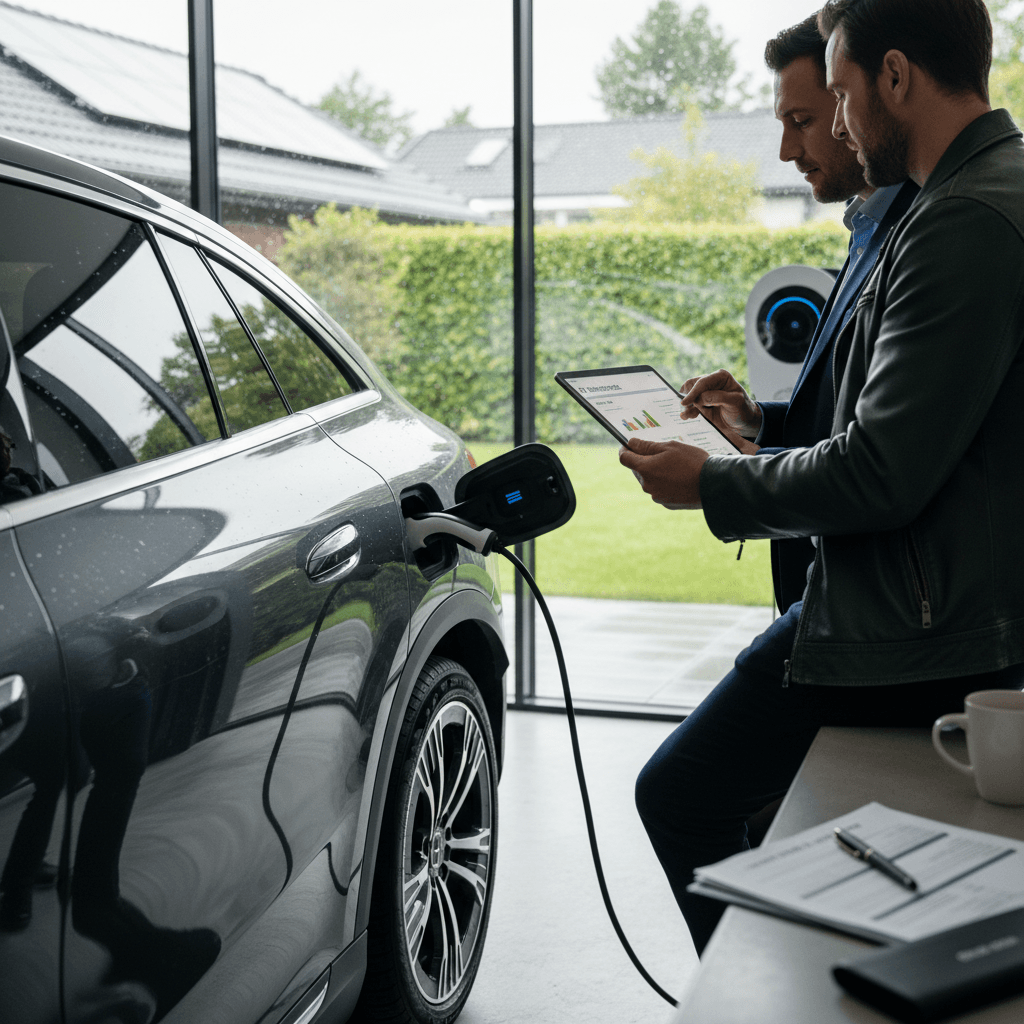
Maintenance and repairs: luxury Benz without the oil changes
The EQE trades oil changes and exhaust systems for software updates and brake‑fluid intervals. The vibe is familiar Mercedes, structured, not cheap, but the line items look different from what E‑Class owners are used to.
- Mercedes schedules EQE service roughly every 2 years or 20,000 miles, typically covering cabin filter, brake‑fluid change, inspections, and software updates.
- Average scheduled‑maintenance spend over five years often lands in the $1,000–$1,500 per year range for dealer service, a bit lower with a good independent EV‑literate shop.
- You’ll almost certainly spend more on tires than you’re used to. Heavy curb weight, instant torque, and big wheels mean premium replacements could run $1,000+ a set.
- Regenerative braking dramatically reduces pad and rotor wear, especially if most of your driving is suburban or highway.
Beware out-of-network experiments
The EQE isn’t a maintenance‑free spaceship; it’s a modern Mercedes. You skip oil changes, but you don’t skip the cost of premium parts and precise labor.
Insurance, taxes, and fees: the “soft” costs that add up
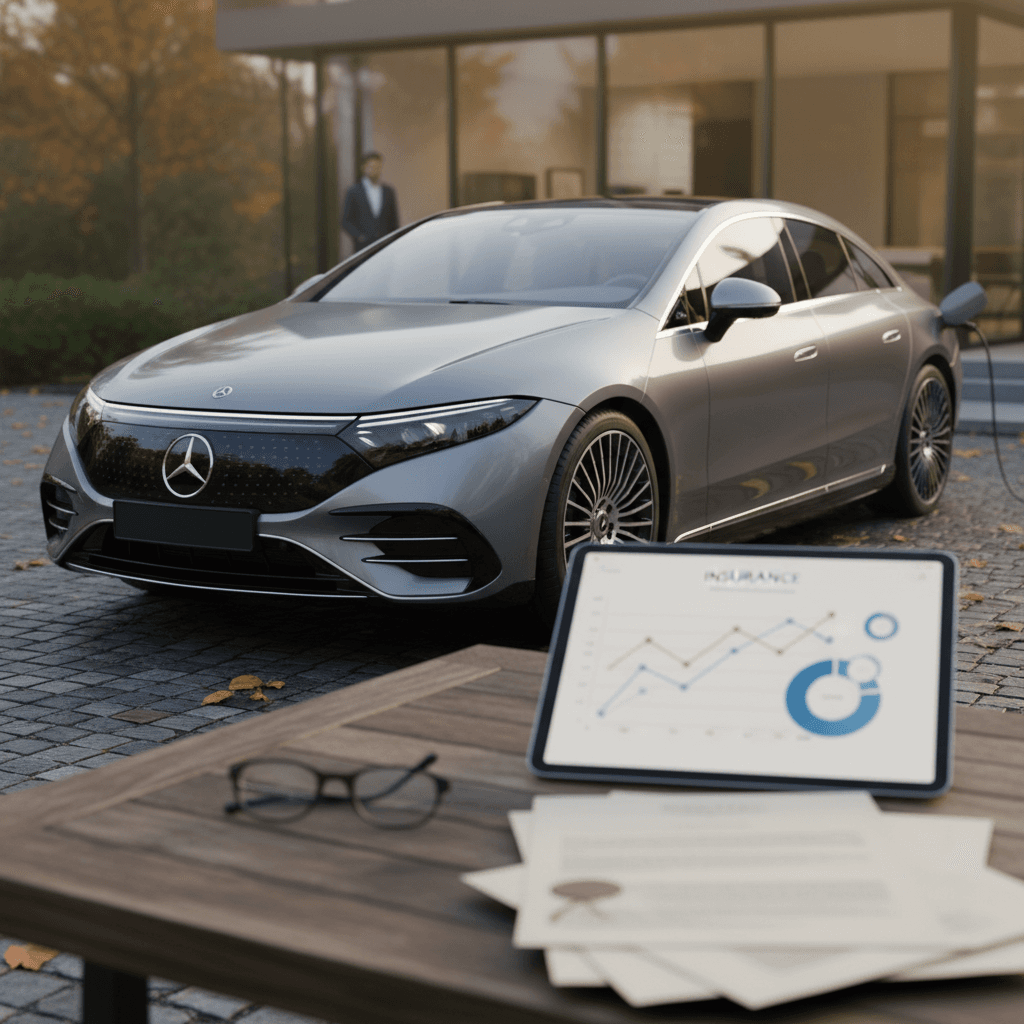
Insurance is where the EQE quietly reasserts its status as a high‑end Mercedes. Between the aluminum‑intensive body, expensive headlights, and ADAS sensor arrays, insurers price in the cost of making one right again after a crash.
What to Expect Beyond Purchase Price
Insurance
Many owners see 15–25% higher premiums than a comparable gas E‑Class.
Shop multiple quotes and ask specifically how they rate EV repairs and battery damage.
Taxes & Registration
High MSRPs mean hefty sales tax in many states.
Some states also add EV surcharges to make up for lost gas‑tax revenue.
Financing Cost
A $70,000–$80,000 sticker financed over five years can add nearly $10,000 in interest at typical rates.
Buying used, or putting more money down, shrinks that line item dramatically.
Pre-qualify before you fall in love
Battery health and warranty: what really matters long term
Under all the leather and OLED lies the single most expensive component you’ll ever own on the EQE: its high‑voltage battery. The good news is that Mercedes, like other premium brands, stands behind it with long warranties and conservative thermal management. The bad news is that a neglected or abused pack can still turn a bargain into a boat anchor.
- Mercedes typically backs the EQE’s battery for 8 years or around 100,000–125,000 miles, whichever comes first, against excessive capacity loss or outright failure.
- Normal degradation, think 5–15% range loss over 8 years in real‑world use, is expected and usually not covered unless it crosses a defined threshold.
- Fast‑charging heavy use, extreme heat, or leaving the pack at 100% for long periods can accelerate degradation, just as with any EV.
- A healthy EQE battery should still comfortably support daily commuting and road trips well past 100,000 miles if it’s been charged and stored thoughtfully.
How Recharged de-risks the battery question
New vs. used Mercedes EQE: where the smart money goes
New EQE buyers are effectively underwriting Mercedes’ EV learning curve. If you value being on the bleeding edge and spec exactly what you want, that may be worth it. But if your primary question is, “What does this really cost me to live with?” the math tilts heavily toward a well‑chosen used car.
Buying New EQE
- Pros: Full warranty, latest software and safety features, your choice of color and options.
- Cons: Steep first‑owner depreciation, highest insurance and tax hit, tied to Mercedes’ evolving EV strategy.
- Best for: Long‑term keepers (8–10+ years), corporate leases, or buyers who prioritize being first over total cost.
Buying Used EQE (2–4 Years Old)
- Pros: Huge discount vs. original MSRP, much flatter depreciation ahead, many years of battery and drivetrain warranty left.
- Cons: You inherit someone else’s spec and any cosmetic sins; need to verify battery health and service history.
- Best for: Value‑focused luxury buyers, high‑mileage commuters, and anyone who wants S‑Class quiet without S‑Class payments.
Where a used EQE shines
How buying a used EQE with Recharged changes the math
Luxury EVs live and die on information asymmetry. The seller usually knows how the car has been treated; the buyer usually doesn’t. Recharged exists to close that gap, especially for cars like the EQE where battery health, software history, and pricing can be opaque.
Recharged Advantage for Mercedes EQE Buyers
Lower risk, clearer numbers, calmer decision‑making.
Battery Health, Quantified
Every EQE on Recharged comes with a Recharged Score, including detailed battery diagnostics.
You see real state‑of‑health data, not just a hopeful range readout.
Fair Market Pricing
Our pricing tools factor in mileage, options, battery health, incentives, and live market data.
You can quickly see whether an EQE is priced like a deal or a donation.
EV-Specialist Support
From trade‑in to delivery, you work with EV‑savvy specialists, not generic sales scripts.
Need to compare an EQE to a Model 3 or i5? We speak all three fluently.
Ready to find your next EV?
Browse VehiclesYou can finance through Recharged, sell or trade your current vehicle, and even handle everything fully online. Prefer to touch metal first? Visit our Experience Center in Richmond, VA, where EQEs and other used EVs live in the real world, not just in configurators.
Checklist before you commit to EQE ownership
Pre‑Purchase Checklist: Mercedes EQE
1. Decide how long you’ll keep it
If you’re a 2‑ to 3‑year flipper, the EQE’s front‑loaded depreciation may sting. If you’re a 7‑ to 10‑year keeper, you can amortize that hit and enjoy years of low running costs.
2. Run realistic energy-cost math
Estimate your annual miles and charging mix (home vs. public). Check your local kWh rate and compare it to what you currently spend on gas. This grounds the “EV savings” conversation in real dollars.
3. Get multiple insurance quotes
Quote the EQE against a gas E‑Class and maybe a Tesla or BMW i5. This will show you the premium for EQE body and battery repairs in your ZIP code.
4. Inspect battery health and charging history
On a used EQE, don’t guess. Use a battery‑health report (like the Recharged Score) to see state of health, historical fast‑charge usage, and any trouble codes.
5. Check warranty in calendar years and miles
Confirm exactly when the high‑voltage battery warranty expires and how many miles are left. This matters far more than the original in‑service date alone.
6. Look closely at tires and brakes
Uneven wear can hint at alignment issues; cheap replacement tires can tell you how the previous owner thought about maintenance. On a heavy EV, good rubber is non‑negotiable.
7. Confirm software and recall status
Ask for proof that over‑the‑air updates and recalls have been applied. Modern Benzes live or die on software; you want the car current, not frozen three updates ago.
Mercedes EQE long-term costs: FAQ
Mercedes EQE Long-Term Ownership Cost – Frequently Asked Questions
Bottom line: is the Mercedes EQE worth owning long term?
The Mercedes EQE is a quietly brilliant way to do luxury EV ownership, as long as you don’t volunteer to be the depreciation test pilot. New, it’s an expensive experiment in a shifting EV landscape. Used, especially with verified battery health and honest pricing, it’s a deeply comfortable, whisper‑quiet sedan with running costs that can embarrass a gas E‑Class.
If you approach the EQE with your eyes open, understanding depreciation, checking insurance, doing the charging math, and confirming battery health, it can be a smart long‑term play. And if you want help finding the right one, Recharged can guide you through battery diagnostics, fair pricing, financing, and delivery, so the only surprise you get is how relaxing your commute suddenly feels.