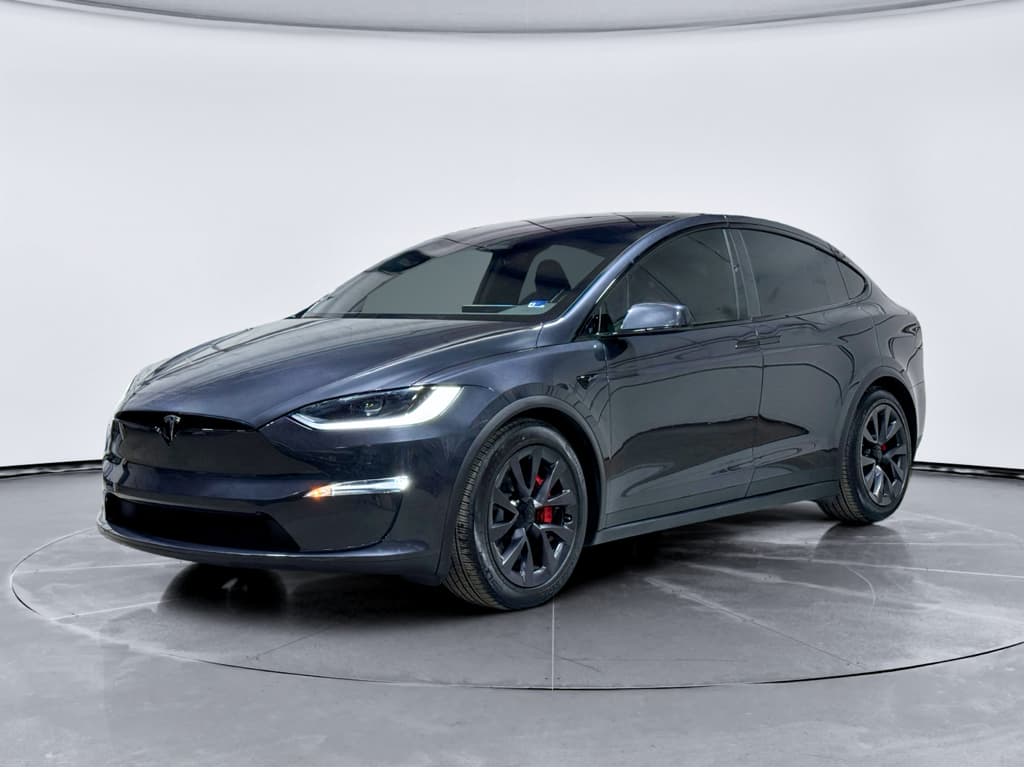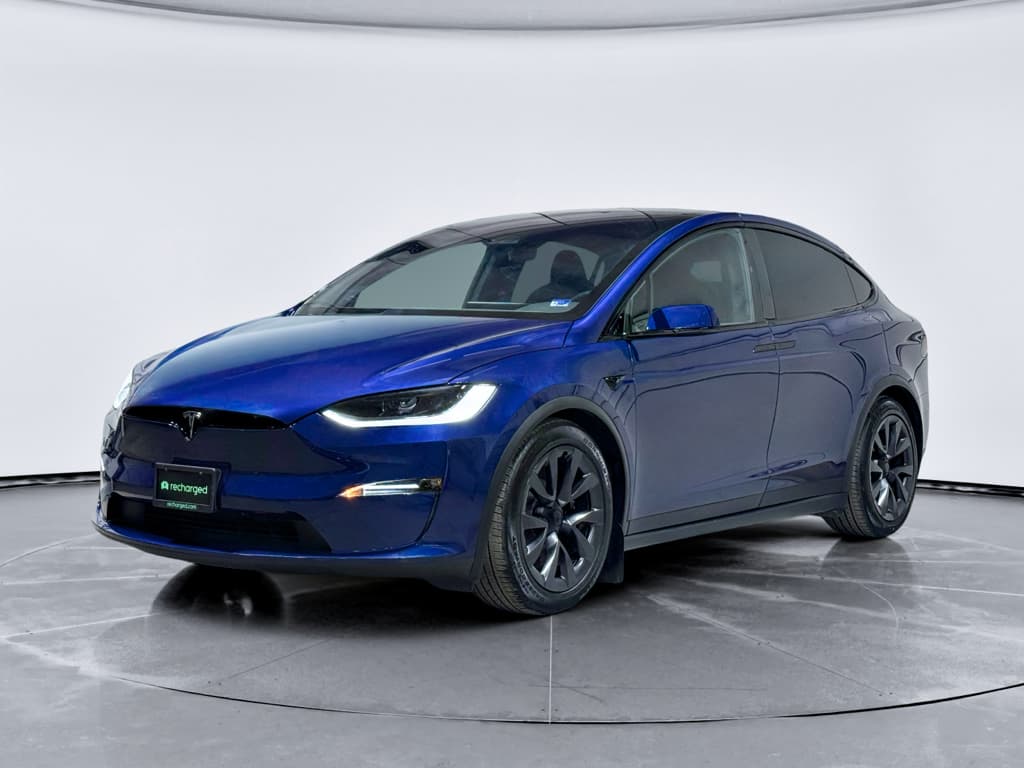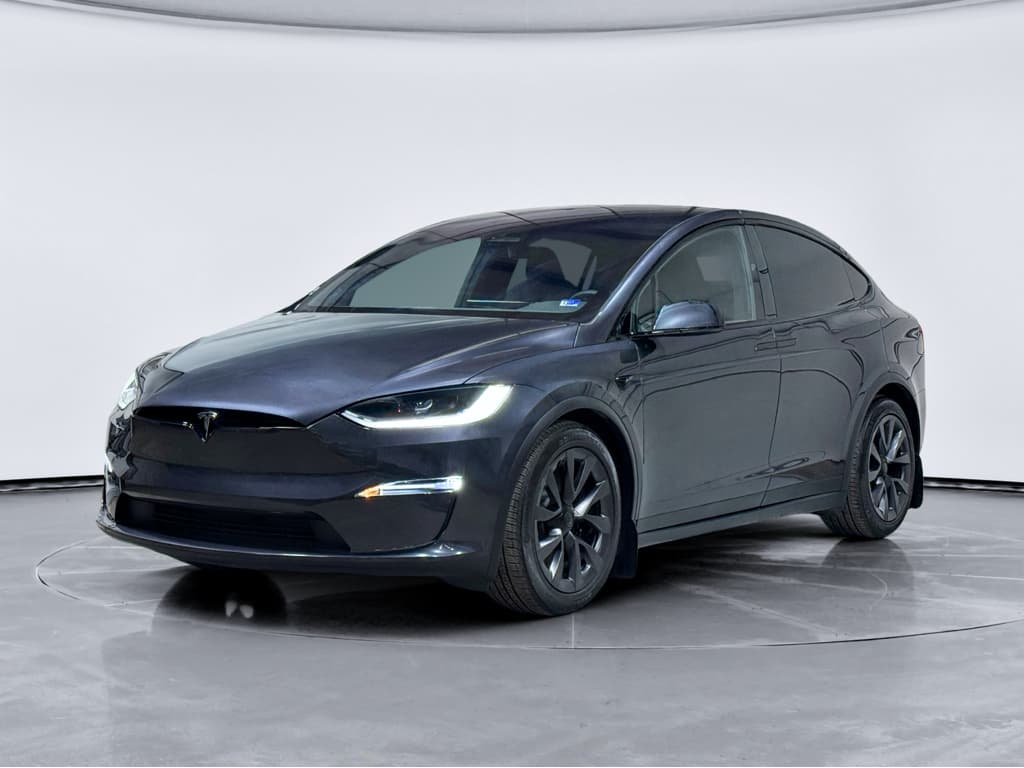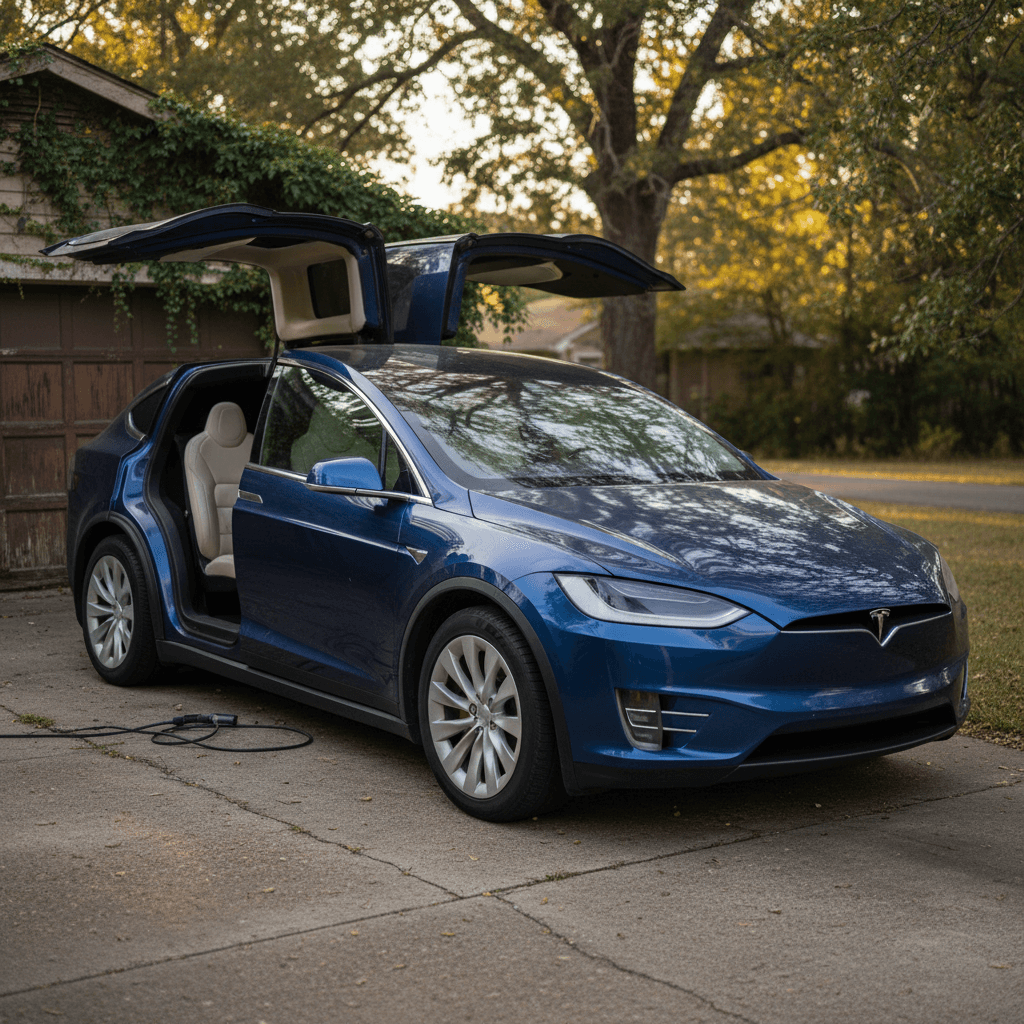
The 2017 Tesla Model X is the electric SUV that made minivan duty glamorous: falcon-wing rear doors, supercar acceleration, and a windshield that seems to arc into the stratosphere. Nearly a decade on, used 2017 Model Xs are now priced like mid‑range gas SUVs, which raises the obvious question: is a 2017 Tesla Model X still a smart buy today?
What this 2017 Tesla Model X review covers
2017 Tesla Model X at a Glance
Key 2017 Tesla Model X Specs & Owner Sentiment
At launch, the 2017 Model X lineup ran from the 75D (dual‑motor, smaller battery) through 90D and 100D up to the ballistic P100D. All models share a massive glass windshield, seating for up to seven, and access to Tesla’s Supercharger network. Trim differences mainly affect range, acceleration, and standard features like air suspension and upgraded interiors.
- 75D: Dual‑motor AWD, smaller battery, slower but adequate performance, lower price and range.
- 90D: Mid‑pack battery, strong performance, solid range; now rare and sometimes more degradation‑prone than 100D.
- 100D: Best mix of range and performance for most buyers.
- P100D: Ludicrous‑mode rocket ship; amazing straight‑line speed, higher tire and maintenance costs.
Quick recommendation
Driving Experience: Effortless Speed, Heavy Physics
Even in 2026, the 2017 Tesla Model X feels indecently quick. Instant torque, dual‑motor all‑wheel drive and a low center of gravity make this tall, heavy 3‑row SUV feel more like a performance wagon. The ride is generally comfortable, especially on the available air suspension, but you’re always aware of the mass, particularly under hard braking or quick transitions.
What still impresses
- Instant torque: effortless highway merging even in 75D; 100D and P100D feel legitimately fast.
- Quiet cabin: near‑silent EV powertrain turns up road and wind noise but overall refinement is high.
- One‑pedal feel: strong regenerative braking makes city driving smooth once you adapt.
- Supercharger access: long‑trip capability that many rival 2017 EVs simply didn’t have.
Where age shows
- Steering feel: light and somewhat numb; fine for commuting, less inspiring on a back road.
- Mass in corners: weigh it down with seven passengers and you feel every pound.
- Road noise: early build cars, especially on 22‑inch wheels, can transmit more tire thump.
- Brake feel: good stopping power but the handoff between regen and friction can feel inconsistent on some examples.
Wheel & tire caution
Real-World Range & Charging on a 2017 Model X
On paper, a 2017 Model X offered roughly 238–295 miles of EPA range when new, depending on battery size and trim. In the real world, in 2026, you’re dealing with an 8–9‑year‑old battery, changing weather, and modern highway speeds. The question is not what the car did in 2017, but what it will do for you now.
What Range to Expect Today
Ballpark, real‑world figures for a healthy 2017 battery
75D
Original EPA: roughly mid‑200s miles.
Today (healthy pack): budget for ~180–210 miles on the highway, more in city use.
90D
Original EPA: upper‑200s miles.
Today: estimates vary more here; look closely at battery health and degradation history.
100D / P100D
Original EPA: close to 295 miles.
Today: many owners still report 230–260 miles usable depending on conditions and charge habits.
Battery warranty basics
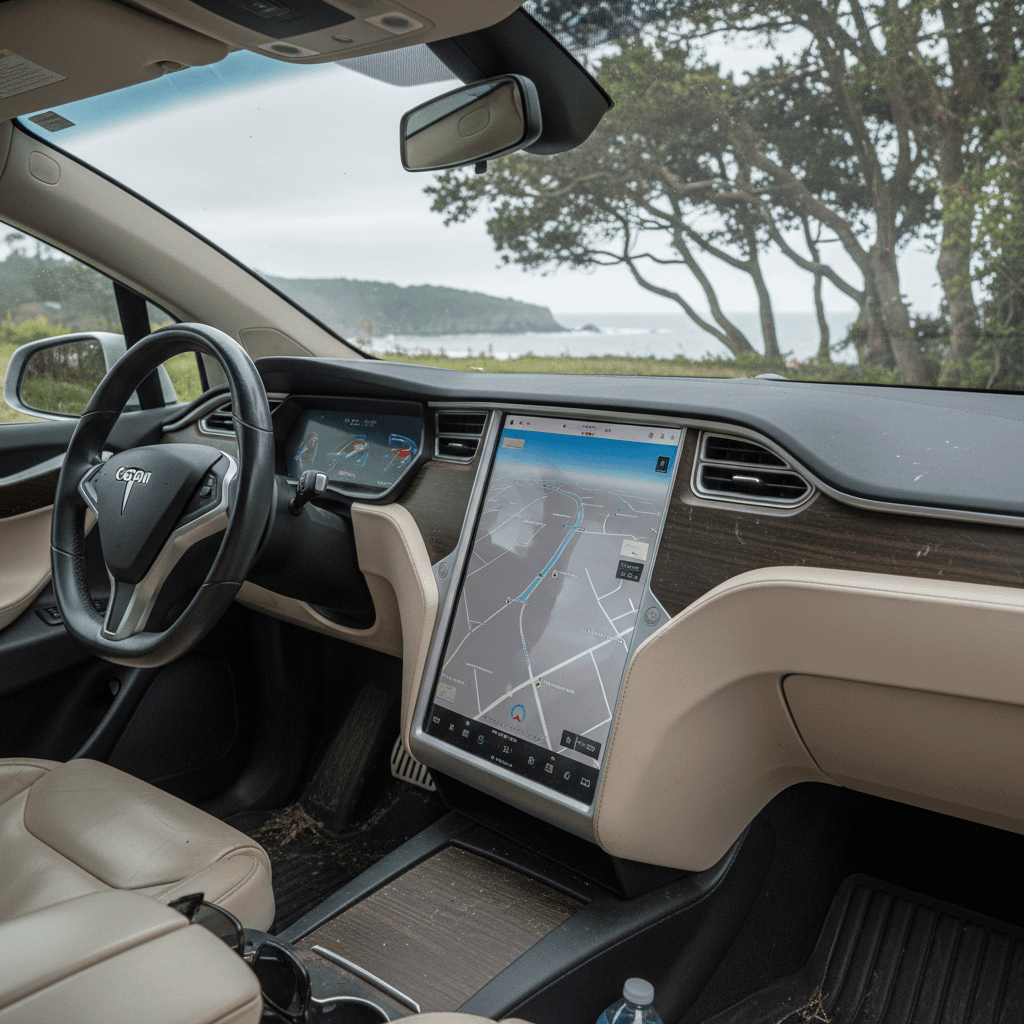
Charging is where the Model X still shines. You get seamless access to Tesla Superchargers for road trips, and you can charge at home via Level 2 just like any other EV. Older cars may not get the highest peak rates of newer Teslas, but for most owners the ability to sleep while it charges overnight dwarfs minor differences in plug‑to‑100% times.
- At home on a 240V Level 2 charger, expect roughly 25–30 miles of range per hour of charge depending on trim and settings.
- At Tesla Superchargers, 10–80% can be done in well under an hour, often in 30–40 minutes in good conditions.
- Cold weather, high speeds, big wheels and rooftop cargo boxes can all chop meaningful range from these estimates.
Interior, Seating & Practicality: Brilliant and Baffling
Inside, the 2017 Model X is an object lesson in Tesla’s early minimalism: a giant central screen, almost no buttons, and that dramatic sweeping windshield. Build quality improved over the early 2016 cars but can still feel inconsistent compared with today’s best luxury SUVs. The real story is space and flexibility.
Seating Configurations on the 2017 Model X
Know which layout fits your family before you shop
5‑seat
Two rows only. Simplest, lightest, most cargo room with seats up. Rarest on the used market.
6‑seat (captain’s chairs)
Most desirable layout for many families. Two individual middle seats with a pass‑through to the third row.
7‑seat bench
Most people‑moving capacity but slightly trickier third‑row access. Great if you routinely carry lots of passengers.
Why families love it
- Massive space: with seats folded, cargo room rivals large crossovers and some minivans.
- Kid spectacle factor: falcon‑wing doors and the huge windshield turn every school run into a spaceship ride.
- Flat floor: the EV platform provides good legroom and easy movement inside.
- Quiet, smooth operation: low NVH is great for sleeping kids and long drives.
Where it annoys
- Falcon‑wing doors: dramatic, but slow to open and problematic in low garages, tight spaces, or snow.
- Limited small-item storage: fewer traditional bins and pockets than many rival SUVs.
- Fit & finish inconsistencies: misaligned trim, squeaks and rattles are not unheard of on 2017 builds.
Falcon‑wing door realities
Tech, Infotainment & Autopilot Limitations
The 2017 Model X was an early flagship for Tesla’s streamlined software‑centric approach: a huge touchscreen running nearly everything, over‑the‑air updates, and the promise of ever‑improving Autopilot. In 2026, that promise has aged unevenly. Some cars have had their media control units (MCUs) upgraded; others are still on older hardware that can feel slow and is known for eventual failure.
- Early Model X vehicles use MCU1 hardware, which is more failure‑prone; many owners have upgraded to MCU2 for better performance and ongoing software support.
- Autopilot hardware levels (AP1, AP2, etc.) vary widely by 2017 build date and options, don’t assume every car can get the same features or future updates.
- The basic UX still feels modern but screen responsiveness and app support are clearly behind brand‑new Teslas.
Check Autopilot hardware & software
Reliability, Common Issues & Running Costs
The 2017 Model X has a split personality on reliability. Owners who’ve had trouble‑free cars are fiercely loyal; others have endured multiple service visits for falcon‑wing door alignment, MCU failures, or suspension issues. On the upside, drivetrain durability and basic EV running gear are generally solid, and ongoing maintenance is lower than a comparable gas SUV. But you must go in with open eyes.
Common 2017 Model X Issues to Watch For
Not every vehicle will have these problems, but they show up frequently enough in owner reports and service histories to deserve close attention.
| System | Typical Symptoms | What to Ask / Check |
|---|---|---|
| MCU / Touchscreen | Black screen reboots, laggy UI, total failure | Has the MCU been replaced with MCU2? Any history of screen replacements or recall work? |
| Falcon‑wing doors | Noisy, misaligned, failing to latch or open fully | Do doors open/close smoothly in different environments? Check repair history for repeated door work. |
| Front suspension components | Clunks, vague steering, uneven tire wear | Any suspension arm or fore‑link replacements? Listen for noises on test drive over bumps. |
| Weather seals & trim | Wind noise, water leaks, creaks | Inspect door and window seals, especially around the falcon‑wing doors and windshield. |
| 12V battery & misc. electronics | Random warnings, accessory failures | When was the 12V battery last replaced? Any history of electrical gremlins? |
| HVAC & HEPA filter (if equipped) | Weak airflow, noisy fan | Service records for cabin filters and HVAC service; check climate control performance. |
Use this as a starting list when you review service records or a pre‑purchase inspection report.
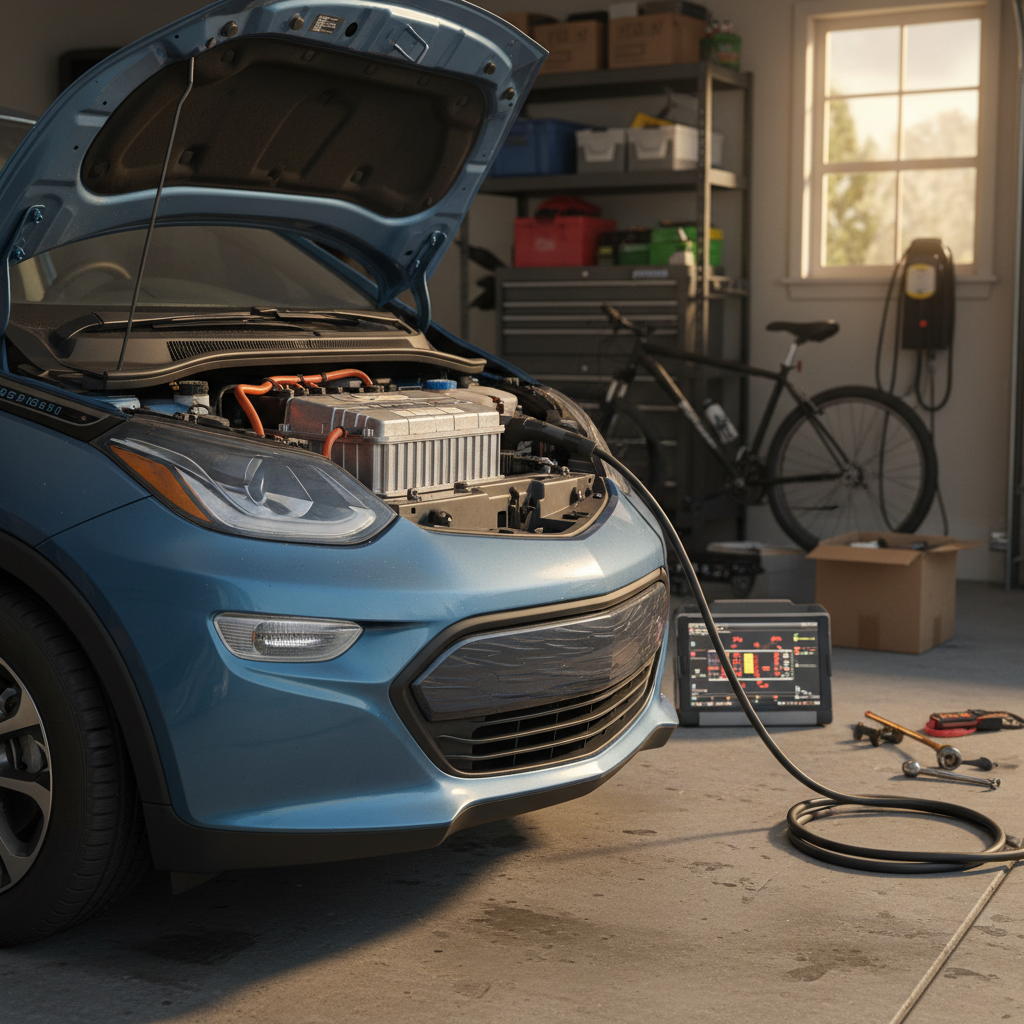
Don’t skip a specialist EV inspection
Running costs, once you’re in a good example, are typically far lower than a comparable German luxury SUV. There’s no oil to change, far fewer moving parts in the powertrain, and regenerative braking stretches out brake life. Your biggest cost items tend to be tires, potential suspension work, and any out‑of‑warranty electronics repairs, plus electricity, which is often cheaper per mile than gasoline, especially if you can charge at home off‑peak.
Depreciation, Pricing & Value for Money
The Model X has come off its early‑adopter pedestal. Recent market data shows that a 2017 Model X has depreciated roughly 45% over just the last three years, with current resale values in the low‑$20,000s for average mileage examples. It sits in the 75th to 100th percentile for depreciation among 2017 SUVs, that is, it loses value faster than most peers.
2017 Model X Value Snapshot
The upside of heavy depreciation
In 2026, broader used‑Tesla pricing has softened as more supply hits the market and new EV competition intensifies. For a shopper, that means you should compare multiple vehicles nationally, not just locally, and factor shipping into the equation. A cleaner, well‑documented Model X from another region can easily be worth the added logistics.
Who the 2017 Model X Still Makes Sense For
Great fit if you...
- Need three rows and real cargo space but hate the idea of a minivan.
- Do most of your miles within 100–150 miles of home with occasional road trips.
- Can charge at home reliably (garage or dedicated outdoor setup).
- Value fast, quiet performance as much as practicality.
- Are comfortable being slightly hands‑on with software updates, minor quirks, and the Tesla service model.
Might want to look elsewhere if you...
- Frequently tow heavy loads or drive in remote areas with sparse fast‑charging.
- Have a low or narrow garage that will constantly fight the falcon‑wing doors.
- Need bulletproof dealer support in every small town.
- Are extremely sensitive to squeaks, rattles, or the occasional software quirk.
- Expect modern driver‑assist features and infotainment identical to brand‑new Teslas.
Pre-Purchase Checklist for a Used 2017 Model X
10 Essential Checks Before You Buy a 2017 Model X
1. Verify battery health
Use a proper <strong>battery diagnostic</strong> rather than guessing from the dash estimate. You want clear data on pack capacity, cell balance, and fast‑charge history.
2. Confirm remaining warranties
Check in‑service date and mileage to see if the <strong>8‑year/150,000‑mile battery and drive unit warranty</strong> is still active, or recently expired.
3. Inspect MCU and infotainment history
Look for documentation of <strong>MCU replacements or upgrades</strong>. Avoid cars with recurring black‑screen issues or unexplained reboots.
4. Test falcon‑wing doors thoroughly
Open and close them multiple times in different positions, on an incline, and with people in the second and third rows. Listen for grinding or binding.
5. Check suspension and tires
Inspect for uneven tire wear, clunks or knocks over bumps, and any record of <strong>front suspension arm/fore‑link</strong> replacements.
6. Confirm Autopilot hardware & options
Verify Autopilot hardware version and whether it has basic Autopilot, Enhanced Autopilot, Full Self‑Driving, or none, and if those options transfer.
7. Review software status
Ensure the car is on a <strong>current, supported firmware</strong> and isn’t stuck on an outdated build due to hardware or account issues.
8. Look for water leaks and wind noise
Inspect for staining near the windshield and falcon‑wing doors. On test drive, pay attention at highway speeds for whistling or excessive noise.
9. Evaluate charging behavior
Supercharge if possible, or at least do a high‑power AC session. Watch for unexpected drops in charging speed or error messages.
10. Get a specialist EV inspection
Have an independent <strong>EV‑savvy technician</strong> or a trusted service provider review battery data, underbody, and suspension before you commit.
How Recharged Helps With a Used Model X
A 2017 Tesla Model X can be a phenomenal value, or an expensive education. At Recharged, our goal is to tilt the odds in your favor. Every vehicle we list comes with a Recharged Score Report that includes verified battery health, fair‑market pricing analysis, and an inspection focused on EV‑specific systems like high‑voltage components and charging hardware.
- Expert EV advisors who can help you decide whether a 2017 Model X, or a newer or smaller EV, actually fits your driving pattern.
- Transparent pricing that reflects real‑world depreciation and current used‑EV market conditions.
- Financing options tailored to used EVs, plus trade‑in or instant offer support if you’re coming out of a gas vehicle or older Tesla.
- Nationwide delivery and a fully digital buying experience, with the option to visit our Experience Center in Richmond, VA if you prefer to see vehicles in person.
Make the range and battery decision easy
Ready to find your next EV?
Browse Vehicles2017 Tesla Model X Review: FAQs
Frequently Asked Questions About the 2017 Tesla Model X
Verdict: Is the 2017 Tesla Model X Still Worth It?
The 2017 Tesla Model X is a rolling contradiction: an aging tech product and a still‑futuristic family hauler; a depreciated asset and a screaming deal; a spaceship with a few loose rivets. If you choose carefully, you’re getting access to flagship‑EV performance, huge space and Tesla’s charging ecosystem at mainstream‑SUV prices.
The key is discipline. Skip cars with vague battery histories, rough suspension, glitch‑prone MCUs or endlessly tweaked falcon‑wing doors. Prioritize clean service records, verified battery health and a spec that genuinely fits your family. Do that, and a 2017 Model X can still feel like you’ve cheated the system, buying someone else’s $100,000 dream car for a fraction of the price, with most of the magic intact.
If you’d rather not navigate all of that alone, Recharged exists precisely for this use case. With data‑backed Recharged Scores, EV‑savvy inspections and support from specialists who live and breathe used electric vehicles, you can decide whether a 2017 Model X is the right move, or whether another used EV will serve you better for the years ahead.