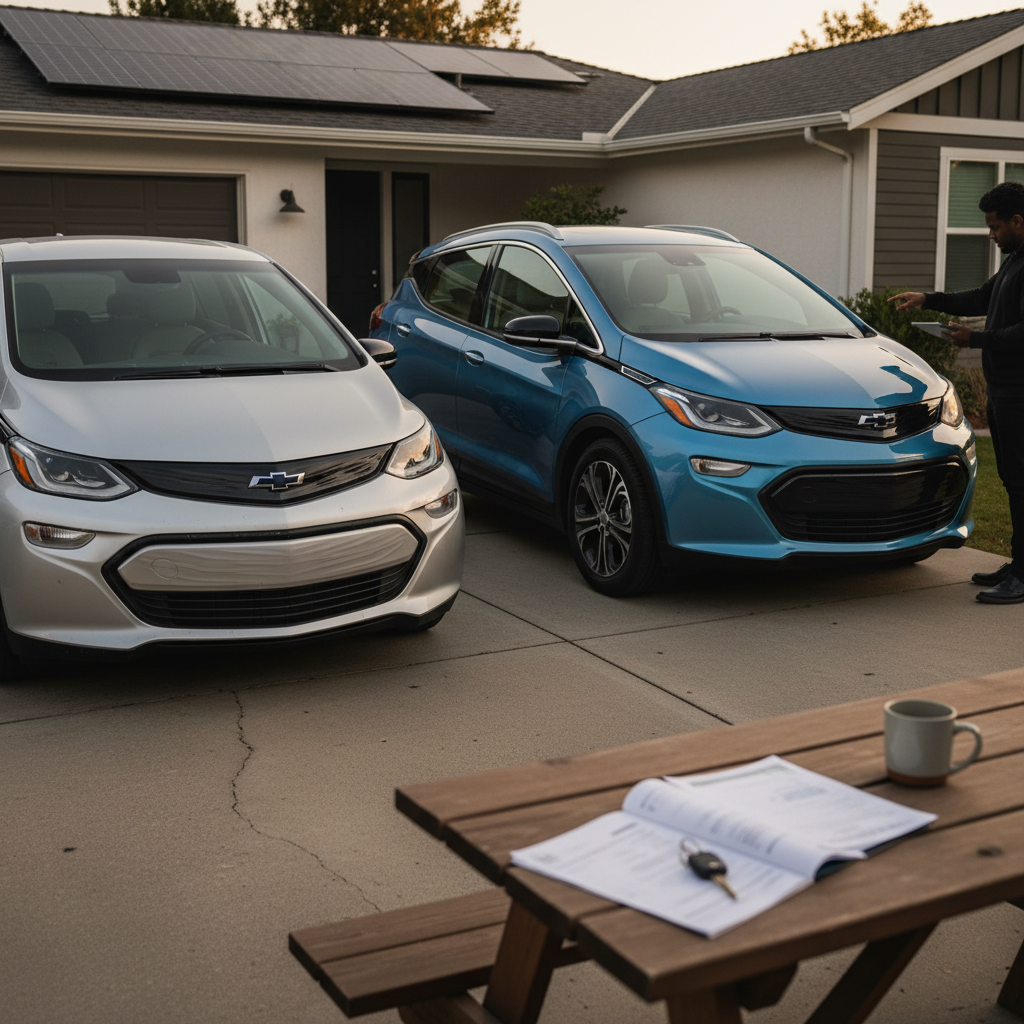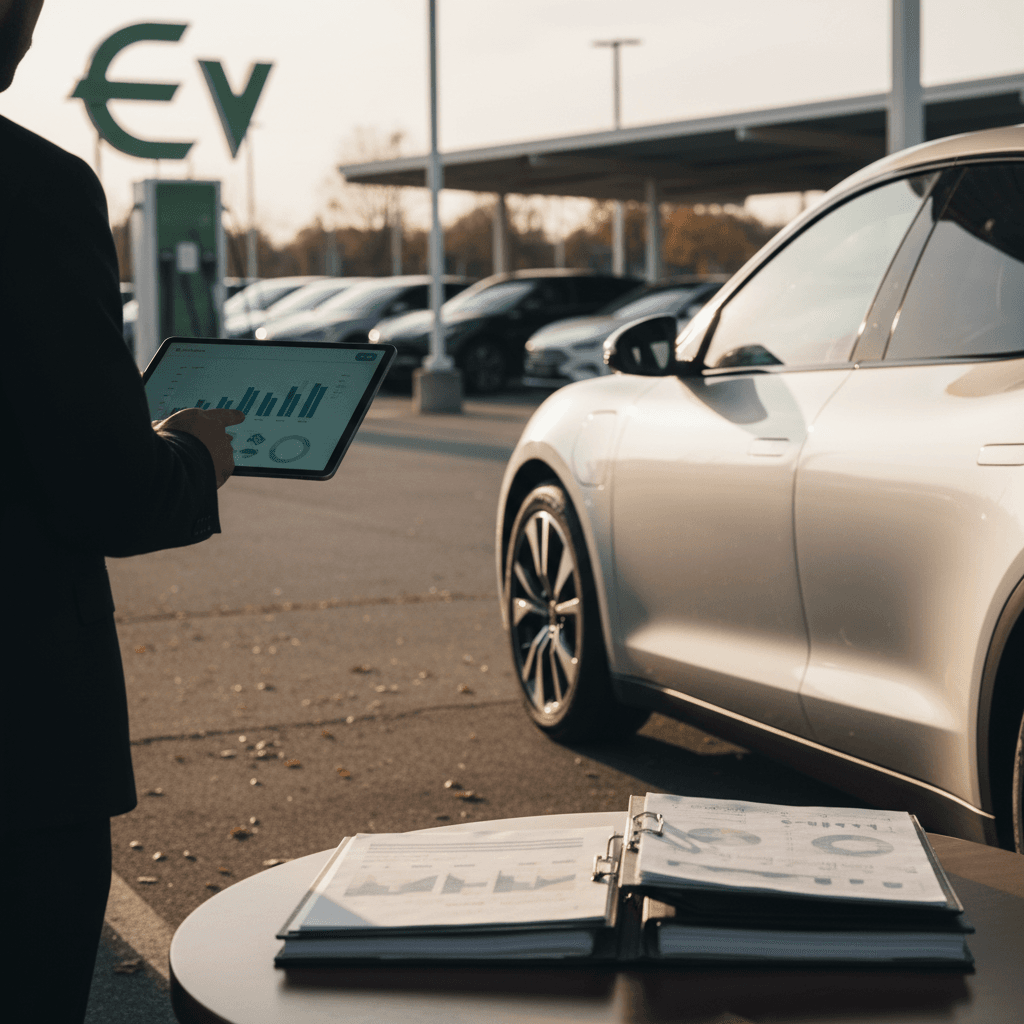
If you’ve looked at used listings lately, it’s hard to miss: many electric cars depreciate fast, sometimes shockingly fast. A three-year-old EV that cost $60,000 new might be sitting at half that price today, while a comparable gas SUV is still holding strong. So why do electric cars depreciate so fast, and what does that mean if you’re thinking about buying or selling one?
Quick takeaway
EVs and depreciation: the big picture
How EV depreciation compares to gas cars
That doesn’t mean every EV is a lost cause. Some models hold their value extremely well, while others fall off a cliff. The trick is understanding what’s driving those resale numbers so you can spot the winners, and take advantage when a good EV has already done its steepest depreciating on someone else’s dime.
8 reasons electric cars depreciate so fast
1. Battery health, range anxiety, and buyer fear
Batteries are to EVs what engines are to gas cars, but they’re newer, less familiar, and more expensive to replace. Many shoppers still assume a used EV battery is a ticking time bomb, even though most real‑world packs degrade gradually and many carry 8–10‑year warranties. That fear alone can knock thousands off resale value.
- Shoppers worry the battery will suddenly fail just after they buy the car.
- Even modest range loss (say 10–15%) feels scarier than a little engine wear in a gas car.
- Stories about expensive battery replacements loom large, even though they’re still relatively rare.
Perception vs. reality
2. Tech moves fast, used EVs look old
Think of the smartphone you were using five years ago. It still works, but compared with the latest model, it feels slow and dated. EVs are on a similar technology curve. In just a few model years, we’ve seen big jumps in range, charging speed, driver‑assist tech, and in‑car software.
- Newer EVs often add 50–150 miles of extra range versus earlier versions of the same model.
- The industry is moving from 400‑volt to 800‑volt electrical architectures, slashing fast‑charge times.
- Software features, driver assistance, infotainment, app integration, improve so quickly that a three‑year‑old car can feel "old" even if it’s mechanically sound.
The tech‑obsolescence penalty
3. Tax credits, discounts, and fleet dumps
For years, many new EVs have effectively been sold at a discount thanks to generous tax credits, rebates, and aggressive manufacturer price cuts. When a new EV is $7,500–$10,000 cheaper on paper than its sticker suggests, the used market has to follow suit.
New EV buyer’s math
- Sticker price: $50,000
- Federal tax credit: −$7,500
- State/local rebates: −$2,000 (varies)
- Dealer/manufacturer discounts: −$3,000+
Real out‑the‑door price can be closer to $37,500.
Used EV buyer’s expectation
When shoppers know a new example of the same EV can be bought effectively in the high‑$30Ks, a two‑year‑old version has to be significantly cheaper to feel worthwhile. That drags resale values down, even for solid cars.
Add in lease returns and rental fleets dumping EVs all at once, and you get temporary gluts of nearly identical vehicles competing with one another, driving down prices fast in certain segments.
4. Luxury pricing and high MSRPs
Most of the early EV wave was positioned as premium or luxury: big battery SUVs, high‑spec sedans, and tech‑halo models. Historically, luxury vehicles depreciate faster than mainstream cars because there’s a smaller pool of used‑car shoppers willing to pay for that extra performance and equipment.
- A $90,000 luxury EV that falls to $40,000 still looks expensive next to a $28,000 used hybrid.
- Luxury features, massaging seats, big wheels, complex air suspensions, can scare off used buyers worried about repair costs.
- As more affordable new EVs arrive, older luxury‑priced ones have to cut deeper to stay competitive.
5. Charging infrastructure and compatibility
Charging is improving quickly, but it’s still uneven. A used EV buyer isn’t just buying a car, they’re buying into whatever charging ecosystem that car can access. If the car charges slowly, uses an older connector, or doesn’t play nicely with newer high‑power stations, shoppers will walk away or demand a lower price.
- Older models may top out at 50–100 kW DC fast charging, while newer ones handle 200–350 kW.
- Connector standards are shifting as more brands adopt Tesla’s NACS plug; buyers worry about long‑term compatibility.
- Apartment dwellers or driveway‑less owners are especially wary about being “stuck” with a car that’s hard to keep charged.
Look beyond the window sticker
6. Supply, demand, and market sentiment
Depreciation isn’t just about engineering; it’s also pure psychology. EV sentiment swings hard. In one year, used Teslas were resale darlings; a few years later, price cuts on new cars, negative headlines, and a flood of used inventory slammed values. More broadly, in 2025 and into 2026, the U.S. is living through a bit of an "EV hangover", slower new‑EV demand, but plenty of lightly used ones looking for homes.
- Automakers cutting EV prices make existing used cars suddenly look overpriced.
- Shifting political winds and changing incentives spook some buyers and embolden others.
- Media narratives, "EV winter" one month, "EV resurgence" the next, whipsaw shopper confidence.
7. Insurance, repair costs, and warranty coverage
Insuring and repairing EVs can be more expensive today, especially for low‑volume models. Body shops may replace rather than repair components like battery housings or complex sensors, which inflates claim costs. Higher insurance premiums and stories of borderline total‑loss EVs after minor accidents weigh on the minds of used buyers, and on resale values.
- High repair estimates can push insurers to total out an EV sooner than a comparable gas car.
- Shoppers pay close attention to what's still under warranty, especially the battery and high‑voltage components.
- Out‑of‑warranty luxury EVs are particularly hard to sell without steep discounts.
8. Leasing and the coming off‑lease EV glut
Leasing became a huge part of the new‑EV market in 2024–2025. That’s great for monthly payments, but it means a wave of off‑lease EVs all hit the used market two to three years later. When thousands of similar cars land on auctions and dealer lots at the same time, prices inevitably soften, especially for models that were already heavily incentivized when new.
What this means for owners
Do all EVs depreciate quickly? Models that buck the trend
Just like gas cars, not every EV follows the same script. Some models are holding value impressively well because they offer long range, strong brand reputation, robust charging access, or simply hit the sweet spot of price and practicality.
Traits of EVs that hold value better
If you see these, depreciation is usually gentler
Long usable range
EVs with 300+ miles of EPA range and proven real‑world efficiency appeal strongly to second owners. A little battery fade still leaves plenty of cushion.
Strong charging story
Models that charge quickly and plug into large, reliable networks, often with native access to big fast‑charging providers, attract more buyers and hold higher prices.
Brand and warranty confidence
Respected brands, solid reliability data, and long battery warranties calm shoppers’ nerves and support higher resale values.
On the flip side, small‑battery city cars with modest range, slow DC charging, or thin support networks often show the steepest drops. That doesn’t automatically make them bad buys; it just means the original owner took a larger hit than the second one will.
How fast is “fast”? EV vs gas depreciation in numbers
Illustrative 5‑year depreciation: EV vs gas
These simplified examples show how some modern EVs and comparable gas cars can lose value over five years.
| Vehicle type | Original price | Approx. value after 5 years | Value lost | Percent lost |
|---|---|---|---|---|
| Mainstream EV sedan | $40,000 | $20,000 | $20,000 | 50% |
| Comparable gas sedan | $35,000 | $21,500 | $13,500 | 39% |
| Luxury EV SUV | $80,000 | $32,000 | $48,000 | 60% |
| Comparable luxury gas SUV | $80,000 | $40,000 | $40,000 | 50% |
Actual depreciation varies by model, mileage, incentives, region, and market conditions.
Some specific models show even more dramatic stories, certain early luxury EVs and short‑range hatchbacks have lost 60–70% of their value in about five years. Others, particularly popular midsize EVs with long range and strong charging access, have landed closer to the gas‑car norm.
Why fast EV depreciation can be great for used buyers
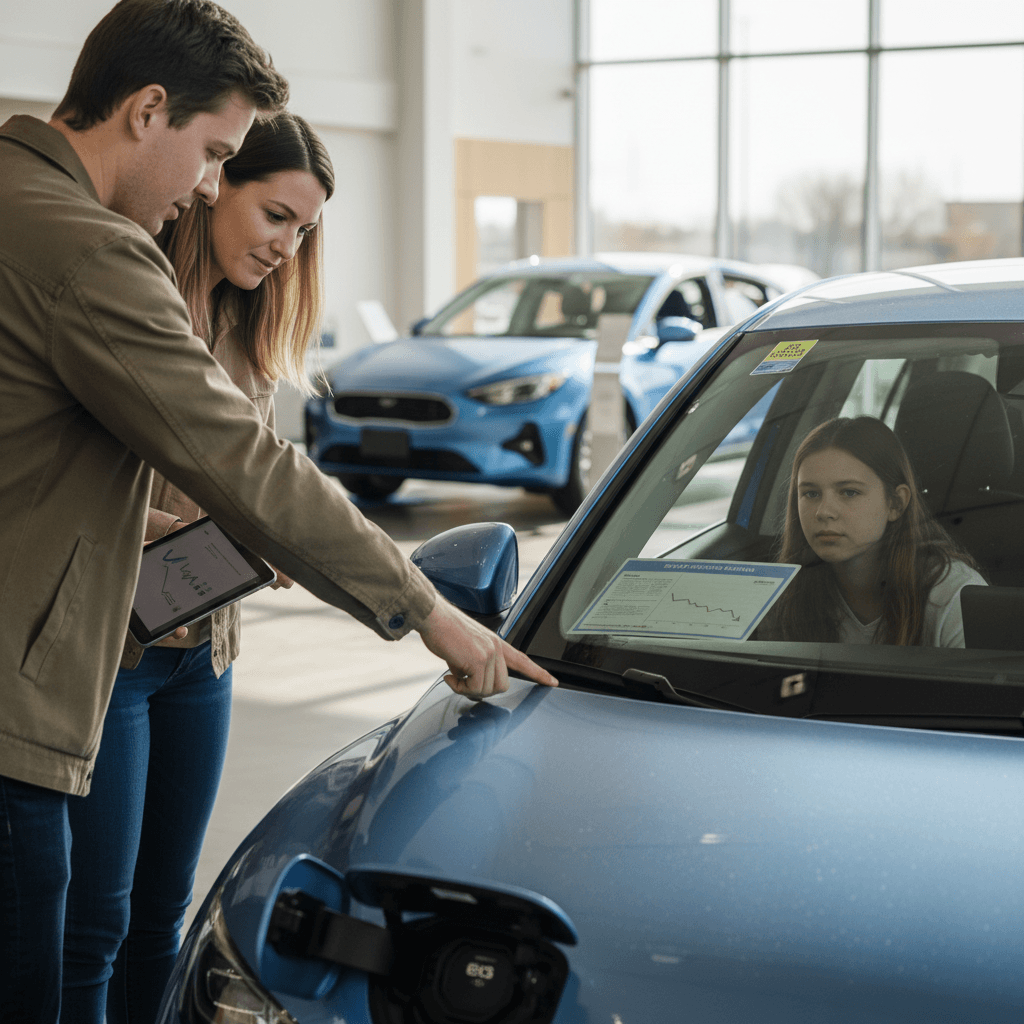
Here’s the upside to all this: if you’re shopping for a used car in 2025–2026, EV depreciation is your friend. Someone else has already absorbed the steep part of the curve. You get a lot of technology, performance, and comfort for the money, often with years of battery warranty still left.
Big advantages of buying a used EV today
1. More car for the money
A three‑year‑old EV that started life near $60,000 might now live in mid‑$30K territory, right where a new, modestly equipped gas crossover sits.
2. Lower running costs
Even if depreciation was rough on the first owner, you still benefit from <strong>lower fuel and maintenance costs</strong> compared with a gas car in the same price bracket.
3. Kinder depreciation curve going forward
Once an EV has already lost half its value, the next five years are often much gentler. Your personal depreciation bill can be surprisingly reasonable.
4. Warranty coverage you can see in writing
Many used EVs still carry multi‑year battery and powertrain warranties. When someone has verified battery health and warranty status, your risk drops dramatically.
Where Recharged fits in
Ready to find your next EV?
Browse VehiclesHow to protect yourself when buying a used EV
If you use depreciation to your advantage rather than letting it scare you off, a used EV can be one of the smartest buys on the lot. The key is to be picky about condition, battery health, and how the previous owner used the car.
Checklist: read this before you sign
The questions smart used‑EV buyers ask
Battery health & range
- Ask for a battery health report or state‑of‑health number.
- Compare remaining range to the original EPA rating.
- Check for fast‑charging history; heavy DC use isn’t a deal‑breaker but deserves scrutiny.
Charging fit for your life
- Confirm connector type and fast‑charging support.
- Map out public chargers near home, work, and travel routes.
- If you own, plan for a Level 2 home charger; if you rent, check landlord rules.
Warranty and history
- Verify remaining battery and powertrain warranty.
- Run a vehicle history report for accidents, floods, and mileage discrepancies.
- Review service records, especially any high‑voltage or charging‑system repairs.
How Recharged simplifies the used‑EV decision
Transparent battery diagnostics
Our Recharged Score battery health diagnostics give you a clear, easy‑to‑understand picture of pack condition, no guesswork, no mystery bars.
Fair market pricing, not vibes
We price each vehicle against the broader EV and gas market, factoring in incentives, mileage, and condition so you’re not overpaying just because it’s "electric."
Flexible ways to buy and sell
Finance your next EV, trade in a gas car, or get an instant offer or consignment for your current vehicle. We also offer nationwide delivery and an Experience Center in Richmond, VA if you like to kick the tires in person.
When do EVs start to hold their value better?
The steepest fall for many EVs happens in the first three to five years, especially for high‑MSRP models or those that launched with big incentives. After that, depreciation tends to slow, particularly if the car still offers competitive range and charging speeds.
Years 0–3: the cliff
New‑car buyers absorb the biggest hit as incentives, new tech, and off‑lease returns pile up. If you’re buying new, understand that the EV may lose value faster than a similarly priced gas car.
Years 4–10: the plateau
Once the market decides what a given EV is "really" worth, the curve flattens. Well‑cared‑for cars with healthy batteries and decent range can hold steady for years, much like a comparable gas vehicle.
A sweet spot for value
FAQ: Why electric cars depreciate so fast
Frequently asked questions about EV depreciation
Bottom line: turn EV depreciation into an advantage
Electric cars often depreciate faster than gas cars for a mix of reasons: battery anxiety, fast‑moving tech, incentives, market swings, and the simple fact that many early EVs were expensive experiments. But depreciation isn’t just a horror story, it’s also an opportunity. If you shop intelligently, insist on clear battery‑health data, and choose the right model at the right point in its life, you can let someone else pay for that steep early drop and enjoy years of quiet, low‑maintenance electric driving. And if you’d like a partner that lives and breathes used EVs, Recharged is here to help you find a car, and a price, that actually makes sense.