If you came here wondering “who invented the electric car?”, you probably hoped for one tidy name, a Tesla‑flavored Edison with a lightning bolt in his pocket. The truth is messier, older and a lot more interesting. Electric vehicles were on the road in the 1830s, peaked around 1900, vanished, and then came roaring back. Let’s untangle who did what, and when.
Short Answer
Did One Person Actually Invent the Electric Car?
When people ask who invented the electric car, they’re really asking two questions at once: 1. Who first put an electric motor on wheels? 2. Who built the first electric car that a normal person could plausibly use? Those have different answers. Early inventors built what you might call rolling science projects, heavy, slow, short‑range machines. The electric car you recognize today took decades of battery improvements, motor refinements and, eventually, modern electronics.
Careful With That Trivia Question
Earliest Experiments: 1830s–1860s
To understand who invented the electric car, you have to start before there were cars at all, when electricity itself was a new toy for ambitious tinkerers.
Early Electric Vehicle Milestones
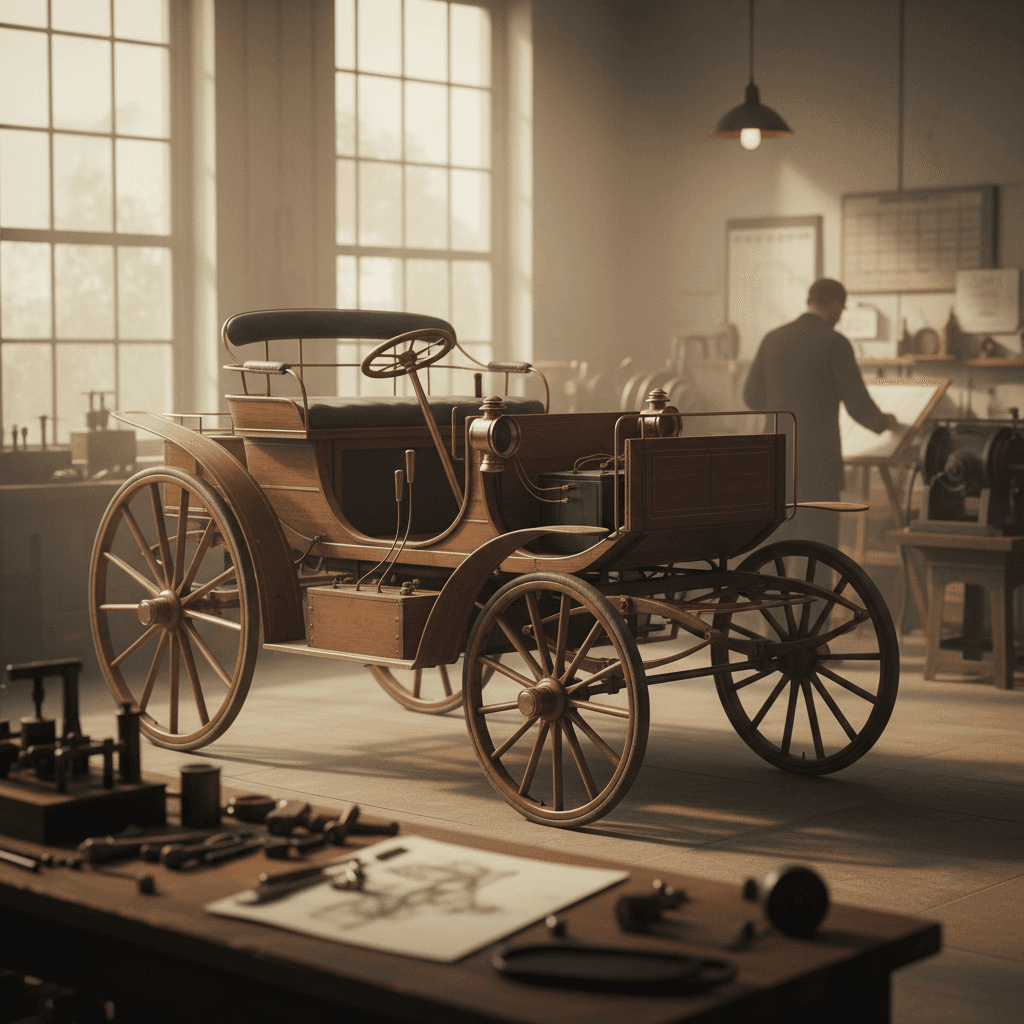
Robert Anderson’s 1830s electric carriage is usually where the story begins. His vehicle used primitive, non‑rechargeable batteries, so you couldn’t plug it in or drive far. It was more demonstration piece than transportation. On the other side of the Atlantic, Thomas Davenport and his wife Emily used a rudimentary electric motor and batteries to move a model car on rails. That’s not an automobile in the modern sense, but it shows how quickly people tried to turn electric motors into motion. The key enabling tech, though, was Gaston Planté’s rechargeable lead‑acid battery, introduced in 1859 and refined by Camille Faure in the early 1880s. Suddenly, storing enough energy to move a carriage was no longer a fantasy.
From Gadgets to Real Vehicles: 1870s–1890s
Once electricity and better batteries were available, inventors started building machines that looked less like lab experiments and more like vehicles you could actually ride, at least if you were brave and had good life insurance.
Key Late‑19th‑Century Electric Vehicle Pioneers
These are some of the names that show up when you ask who really invented the electric car.
Gustave Trouvé (France, 1881)
Andreas Flocken (Germany, 1888)
Charles Jeantaud & Louis Krièger (France, 1880s–1890s)
By the 1880s, you start seeing machines that behave like genuine cars: you could sit in them, steer them, and cover useful distances at city speeds. That’s why many historians point to Flocken’s 1888 Elektrowagen and Jeantaud’s early 1880s buggies when they answer the question of who invented the electric car. Still, these vehicles were expensive, hand‑built curiosities. The electric car hadn’t yet become a product category; it was a tech flex for engineers and wealthy early adopters.
So Who Built the First Real Electric Car?
If you define a “real” electric car as a four‑wheeled, self‑propelled vehicle you could plausibly use in everyday life, the credit usually goes to Andreas Flocken and his 1888 Flocken Elektrowagen. It was purpose‑built as an electric carriage, not a science experiment on rails or a converted tricycle. But if you broaden the definition even slightly, to include three wheels, prototypes, or city taxis, the picture blurs. French, German, Scottish and American inventors were all hacking together their own versions, often oblivious to one another.
How to Talk About the “First” Electric Car
When Electric Cars Ruled the City
By the late 1890s and early 1900s, before Ford’s Model T took over, electric cars weren’t fringe at all. In fact, they were arguably the best option for city driving.
Electric Cars at the Turn of the 20th Century
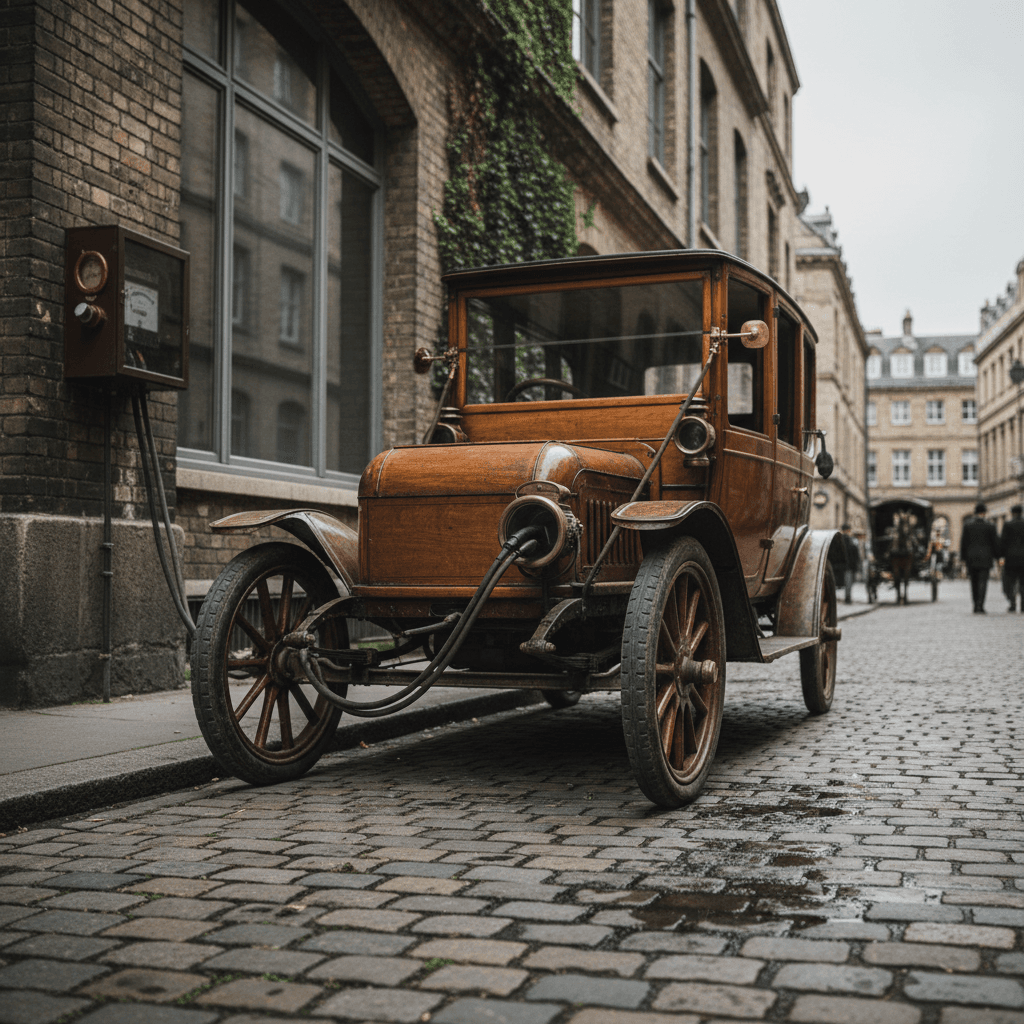
Urban drivers loved early electric cars because they were quiet, clean, and easy to start. You didn’t crank them like gasoline cars or wrangle steam boilers. You simply climbed in, flipped a switch, and glided away. Electric models from makers like Baker, Riker, Detroit Electric and others were marketed heavily to city professionals and especially to women, no grease, no gears, just polite, silent motion.
Why Early Electric Cars Faded Away
If electric cars were so promising around 1900, why did gasoline win? Short version: infrastructure, energy density, and economics ganged up on EVs.
- Limited battery tech: Lead‑acid packs were heavy, slow to recharge and offered modest range, fine for short city trips, terrible for America’s growing intercity ambitions.
- Cheap gasoline & better roads: Mass‑produced gasoline cars like the Ford Model T arrived just as road networks expanded. You could drive farther, refuel quickly, and carry more passengers and cargo.
- Rural electrification lagged: Much of the U.S. outside major cities didn’t have reliable electricity through the early 20th century, making at‑home charging impossible for millions of potential buyers.
- Economies of scale: Once gasoline cars went into true mass production, they became so cheap that low‑volume electric producers couldn’t compete on price.
The “What If” That Haunts EV History
The Modern Electric Car Is Born
After a long quiet period, the “who invented the electric car” question picks up again in the late 20th century. This time, it’s about mass‑produced, road‑legal electric cars in a world built for gasoline. In that context, a few key names dominate the story.
Modern Electric Car Milestones
From compliance cars to cultural icons.
1996 – GM EV1
2008 – Tesla Roadster
2010 – Nissan Leaf
2012 onward – Model S & the EV wave
So, who invented the modern electric car? Again, nobody alone. GM’s EV1 team proved viability, Tesla proved desirability, and brands like Nissan, Chevrolet, Hyundai and Ford proved scale. The result is the world you live in now: a used‑EV market where you can browse everything from early Nissan Leafs to long‑range Teslas without leaving your couch.
Timeline of Key Electric Car “Firsts”
Who Invented What? A Quick EV Timeline
A practical way to think about who invented the electric car is to look at specific firsts, carriages, production cars, taxis, and modern mass‑market EVs.
| Year | Inventor / Company | Country | “First” Claim |
|---|---|---|---|
| 1832–1839 | Robert Anderson | Scotland | First crude electric carriage (non‑rechargeable batteries). |
| 1859 / 1881 | Gaston Planté / Camille Faure | France | First rechargeable lead‑acid battery and major efficiency improvements, made practical EVs possible. |
| 1880–1881 | Gustave Trouvé | France | One of the first battery‑powered electric tricycles tested on public streets. |
| 1883–1888 | Charles Jeantaud & Andreas Flocken | France / Germany | Among the first practical four‑wheeled electric passenger cars; Flocken Elektrowagen often cited as first electric production car. |
| 1894–1897 | Henry Morris & Pedro Salom (Electrobat) | USA | Early electric carriages and some of the first electric taxicabs in New York. |
| 1899 | Camille Jenatzy – La Jamais Contente | Belgium | First car (an electric) to break 100 km/h (62 mph). |
| 1900s–1910s | Baker, Detroit Electric, others | USA | Commercial city EVs with dozens‑of‑mile ranges, marketed especially to urban drivers. |
| 1996 | GM EV1 | USA | First purpose‑built modern electric car from a major automaker. |
| 2008 | Tesla | USA | First long‑range, high‑performance modern EV (Tesla Roadster). |
| 2010 | Nissan | Japan | First mass‑market modern EV hatchback (Leaf). |
Dates are approximate for some early prototypes, where historical records are patchy.
What This History Means If You’re Shopping for a Used EV
All this backstory is more than cocktail‑party trivia. Knowing who invented the electric car, and how we got from wood‑framed city coupes to 300‑mile crossovers, actually helps you shop smarter today.
1. Battery tech has improved dramatically
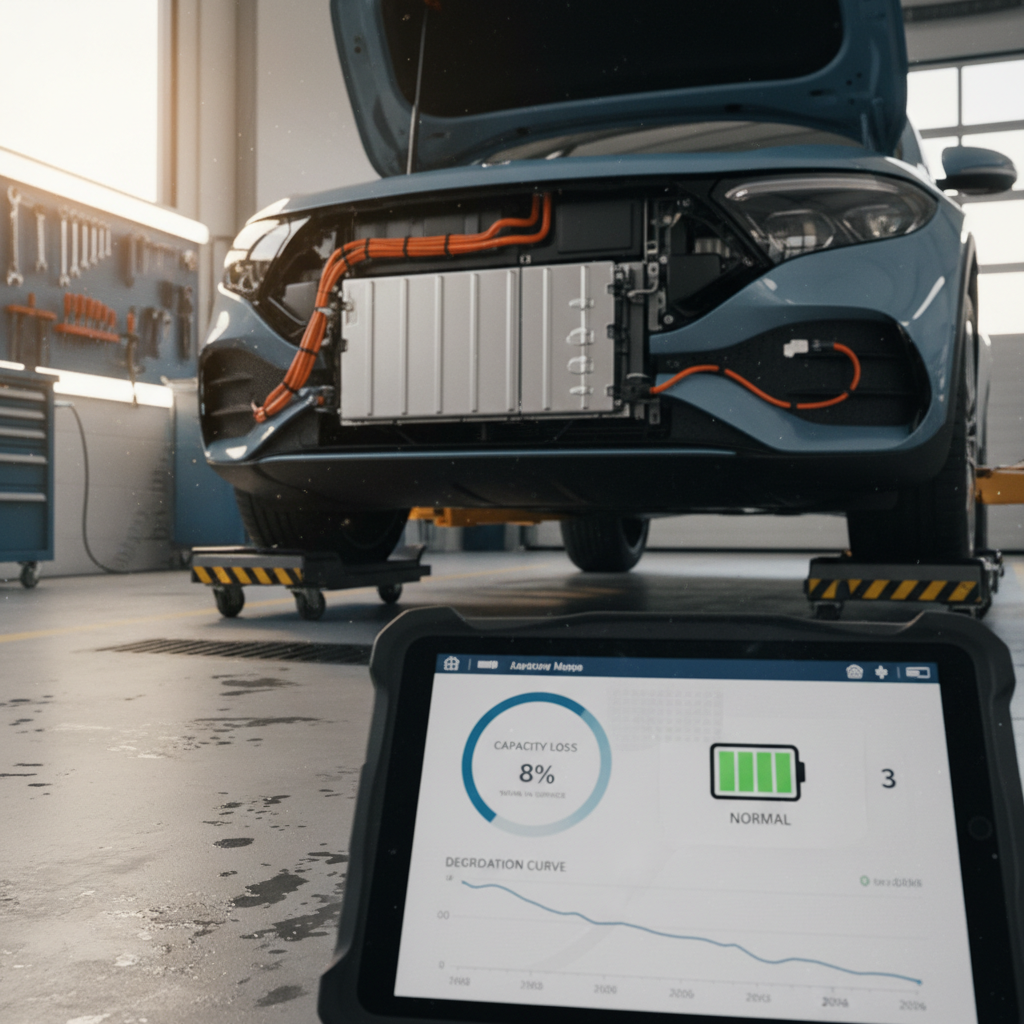
Early EVs died because their batteries were heavy, fragile and low on energy. Modern lithium‑ion packs are the opposite: light for their capacity, durable and backed by long warranties. That’s why a used 2018–2022 EV can still be a smart buy today, if you know its battery health.
At Recharged, every car comes with a Recharged Score that includes verified battery diagnostics, so you aren’t guessing about the most expensive part of the vehicle.
2. Range and use‑case matter more than “who did it first”
The original Baker or Detroit Electric coupes were excellent at short‑range city duty. The same logic applies now: if your daily driving is 30–50 miles, an earlier‑generation Leaf or e‑Golf may fit your life perfectly, and cost far less than a brand‑new EV.
If you want road‑trip flexibility, you’ll likely be happier in a newer long‑range model with DC fast‑charging.
Used EV Checklist Inspired by EV History
1. Start with your real daily range
Early EVs thrived in cities because most trips were short. The same is true today. Before you obsess over 300‑mile ranges, look at how many miles you actually drive in a typical day.
2. Focus on battery health, not just odometer
A 70,000‑mile EV with a healthy pack can be a better buy than a low‑mileage car that’s lived in extreme heat. Use tools like the <strong>Recharged Score</strong> to see verified battery condition.
3. Understand charging where you live
Early electric carriages died partly because chargers didn’t exist. Now, home Level 2 charging or reliable public infrastructure can make even a modest‑range EV entirely practical.
4. Consider how quickly you need to refuel
If you regularly drive long highway stretches, prioritize EVs with strong DC fast‑charging capability. If you mostly commute locally, overnight home charging may be all you need.
5. Look at total cost of ownership
Compared with a similar gasoline car, a used EV can save you thousands in fuel and maintenance over several years, even if the sticker price is similar when you buy it.
6. Get expert guidance
The first‑generation EV buyers had to figure everything out themselves. You don’t. Lean on EV‑specialist retailers like <strong>Recharged</strong> for model comparisons, charging planning and financing help.
Where Recharged Fits In
Ready to find your next EV?
Browse VehiclesFAQs: Who Invented the Electric Car?
Frequently Asked Questions About EV Origins
So, who invented the electric car? The honest answer is that it wasn’t one genius in a lab coat but a relay race: Anderson, Davenport, Trouvé, Flocken, Jeantaud, Krièger, Jenatzy, Morris and Salom, the GM EV1 engineers, Tesla’s early teams, and many more. What matters for you is that, after nearly two centuries of experimentation, the electric car has finally grown into the thing those early tinkerers imagined, a practical, enjoyable way to move people around. If you’re ready to make that history part of your daily life, the used EV market has never been richer in choice, or easier to navigate with the right partner at your side.