If you’re wondering where to sell a used EV in Florida, you’re not alone. Florida is now one of the largest EV markets in the country, with hundreds of thousands of electric vehicles on the road and more buyers shopping used to save money. That’s good news, but selling an EV is not quite the same as unloading a gas car at the nearest dealer. The right choice can easily mean thousands of dollars difference in your pocket.
Florida’s EV boom in a nutshell
Why selling a used EV in Florida is different
Stronger demand than most states
Between Orlando, Tampa Bay, South Florida, and the I‑4/I‑95 corridors, you have a deep pool of shoppers looking specifically for used EVs. Many are trying to dodge new‑car prices or take advantage of cheap off‑peak electricity instead of paying for gas.
But a more skeptical used‑EV buyer
At the same time, Florida shoppers have learned to ask tougher questions, especially after high‑profile headlines about EV depreciation. They want proof of battery health, realistic range in heat and humidity, and transparency about fast‑charging habits.
That combination, strong demand plus sophisticated buyers, means you’re rewarded when you market your Florida EV like a pro: priced correctly, battery documented, and sold through the right channel for your situation.
Florida’s EV and charging landscape at a glance
Main options: where to sell a used EV in Florida
Practically speaking, you have three main paths when deciding where to sell a used EV in Florida:
- Sell or trade it to a Florida dealer or franchise store
- Sell to an online car‑buying service or EV‑focused marketplace
- Sell it yourself in a private‑party transaction
Each has pros and cons on price, hassle, and how EV‑savvy the buyer is. Let’s unpack them.
Option 1: Florida dealers and franchised stores
Most Floridians’ first instinct is to pull into a local dealership. That can work, but with EVs you’ll want to be selective.
Florida dealer trade‑in vs. straight sale
What to expect when you walk into the showroom with an EV
Pros of trading to a dealer
- Fast and convenient: You can be done in an afternoon, especially if you’re buying another car.
- Tax benefit on trade: When you trade instead of sell outright, you usually pay sales tax only on the price difference for your next vehicle.
- No strangers at your house: The dealer handles all paperwork and title transfer.
Cons for used EVs
- Lower offers: Many mainstream dealers still treat EVs as risky inventory and bid accordingly.
- Limited EV expertise: If they don’t understand battery health reports or software options, they’ll undervalue your car.
- Less leverage: If you’re upside‑down on a loan, the convenience can hide negative equity rolled into a new note.
Not all Florida dealers want used EVs
If you like the idea of one‑stop convenience, get at least two or three appraisals: a local dealer, a regional group with strong EV sales, and an online EV‑savvy buyer. That will tell you quickly whether the dealer is in the right ballpark.
Option 2: Online car buyers and EV marketplaces
Over the last few years, online buyers and digital marketplaces have become some of the most practical answers to the question, “Where can I sell my electric car in Florida?” They’ll typically appraise your EV from your driveway, then pick it up at your home or office.
Common online options for selling a used EV
Know who you’re actually dealing with
Big national car buyers
EV‑specialist marketplaces
Consignment and assisted sales
How Recharged helps Florida EV sellers
Ready to find your next EV?
Browse VehiclesIf you want more than a dealer trade‑in without dealing with tire‑kickers from Facebook Marketplace, an EV‑focused marketplace or consignment partner is often the best balance between price and hassle.
Option 3: Private-party sale in Florida
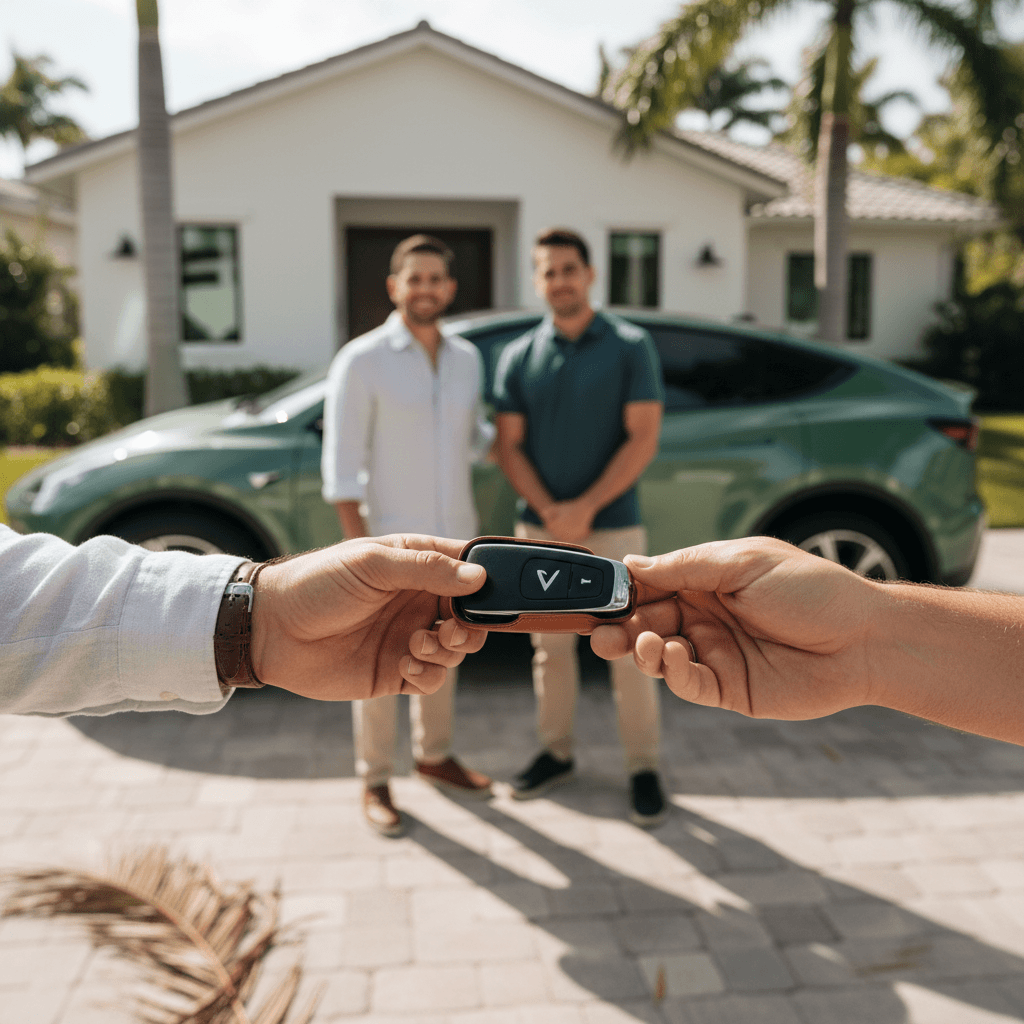
Selling your EV yourself, to a neighbor, a coworker, or someone who finds your listing online, usually delivers the highest selling price. In Florida’s major metros, late‑model Teslas, Hyundai/Kia EVs, and other popular models can move quickly when they’re priced right and well‑presented.
Why private sale can pay more
- Retail pricing: You’re marketing directly to the next driver, not wholesaling to a middleman.
- Local EV demand: In cities like Miami, Orlando, Tampa, and Jacksonville, there’s strong appetite for clean used EVs.
- Flexible terms: You can be picky about who you sell to and how quickly you need to close.
What you take on yourself
- Creating listings with quality photos and detailed EV‑specific descriptions.
- Screening buyers, coordinating test drives, and watching for scams.
- Handling Florida title transfer, payoff with your lender, and bill of sale.
Where Floridians list EVs privately
What makes selling an EV different from a gas car
Whether you sell to a dealer, an online marketplace, or a private buyer, EVs live and die on a few key factors that don’t matter as much with gas cars.
Four EV‑specific factors that drive your sale price
These are what smart buyers, and smart buyers’ lenders, look for
1. Battery health and degradation
2. Real‑world range in Florida conditions
3. Charging history and habits
4. Software, connectivity, and options
How Recharged documents EV condition
How to price your used EV in Florida
EV prices have been more volatile than gas cars, especially around late‑2025 when federal tax credits for used EVs expired. In early 2026, the market is still finding its footing, with some models holding well and others softening. That makes smart pricing critical.
Starting points for pricing a used EV in Florida
Use this as a framework, always adjust for today’s market data and your car’s condition.
| Scenario | Typical pricing strategy | What to watch |
|---|---|---|
| Late‑model Tesla, clean history | Start near the middle of current retail listings and adjust for mileage and options. | Tesla values in Florida can swing quickly, watch several weeks of listings before locking in. |
| Non‑Tesla mainstream EV (Hyundai, Kia, Ford, VW) | Price competitively against similar trims; expect more variation by region. | Some trims move quickly in Orlando/Tampa but slowly in rural areas, be open to statewide or national buyers. |
| Older or short‑range EV | Price to move; many buyers prioritize range over luxury on older cars. | Be transparent about real‑world range and battery health; overpricing leads to stale listings. |
| High‑mileage rideshare or fleet EV | Expect wholesale‑level pricing unless you can prove excellent maintenance. | Battery condition and interior wear matter more than model year alone. |
These are guidelines, not appraisals. Check live listings and offers before you commit to a number.
Use multiple valuation anchors
Step-by-step checklist to sell your EV in Florida
Florida used‑EV seller’s checklist
1. Gather EV‑specific records
Pull your service history, tire records, and any battery reports you have from the manufacturer or an independent inspection. If you’re working with Recharged, our Recharged Score Report will package this for buyers.
2. Prep the car inside and out
EV buyers notice details, clean charge port, fresh cabin filter, no mysterious warning lights. A basic detail and a health check can add real money to offers.
3. Decide how fast you need to sell
If you’re on a tight timeline or replacing the EV soon, prioritize dealers and online instant offers. If you have a few weeks, consider consignment or private‑party to maximize price.
4. Get 2–4 real offers
Request written appraisals from at least one local dealer, one national buyer, and, if possible, an EV‑specialist marketplace like Recharged. This quickly reveals the fair‑value range.
5. Set a realistic asking price
For private‑party listings, price slightly above the best offer you’re willing to accept, leaving a bit of room to negotiate. For instant‑offer or consignment partners, focus on net proceeds and fees.
6. Handle Florida paperwork correctly
Verify payoff with your lender, ensure the title is clear, and complete a Florida bill of sale. When working with Recharged or another professional buyer, they’ll typically handle the DMV details for you.
Common pitfalls to avoid when selling an EV
Top mistakes Florida EV sellers make
- Taking the first low dealer offer because “EVs are hard to sell now.”
- Advertising only the EPA range and ignoring real‑world Florida range.
- Failing to mention included home charging equipment (wallbox, portable Level 2).
- Skipping a battery/health report when buyers are on the fence.
- Letting the car sit unsold for months while prices soften further.
You can’t control the entire used‑EV market, but you can control how professional your listing looks, how well you document the car, and which buyers you invite to the table.
FAQs: selling a used EV in Florida
Frequently asked questions about selling a used EV in Florida
Bottom line: best way to sell a used EV in Florida
When you peel away the noise, Florida is actually one of the best states in America to sell a used EV. There are plenty of buyers, charging infrastructure has improved dramatically, and many shoppers understand the technology well enough to appreciate a well‑cared‑for car.
Your job is to pick the right lane for your situation. If you value speed and simplicity above all else, a dealer or online instant‑offer buyer may be your answer. If you want to maximize price and are willing to put in some effort, a private sale or consignment can make sense, especially for popular models in metro Florida.
An EV‑specialist like Recharged can bridge the gap: we combine battery‑health diagnostics, transparent pricing, financing and trade‑in support, and nationwide reach into a mostly digital experience. That means you don’t have to become an EV market analyst just to sell your car, you just have to choose the partner that aligns with how you like to sell.
Whichever route you take, go in with a clear picture of your EV’s battery health, realistic range, and current market value in Florida. Do that, and you’re far more likely to walk away from the deal feeling like you made a smart move, not just a fast one.