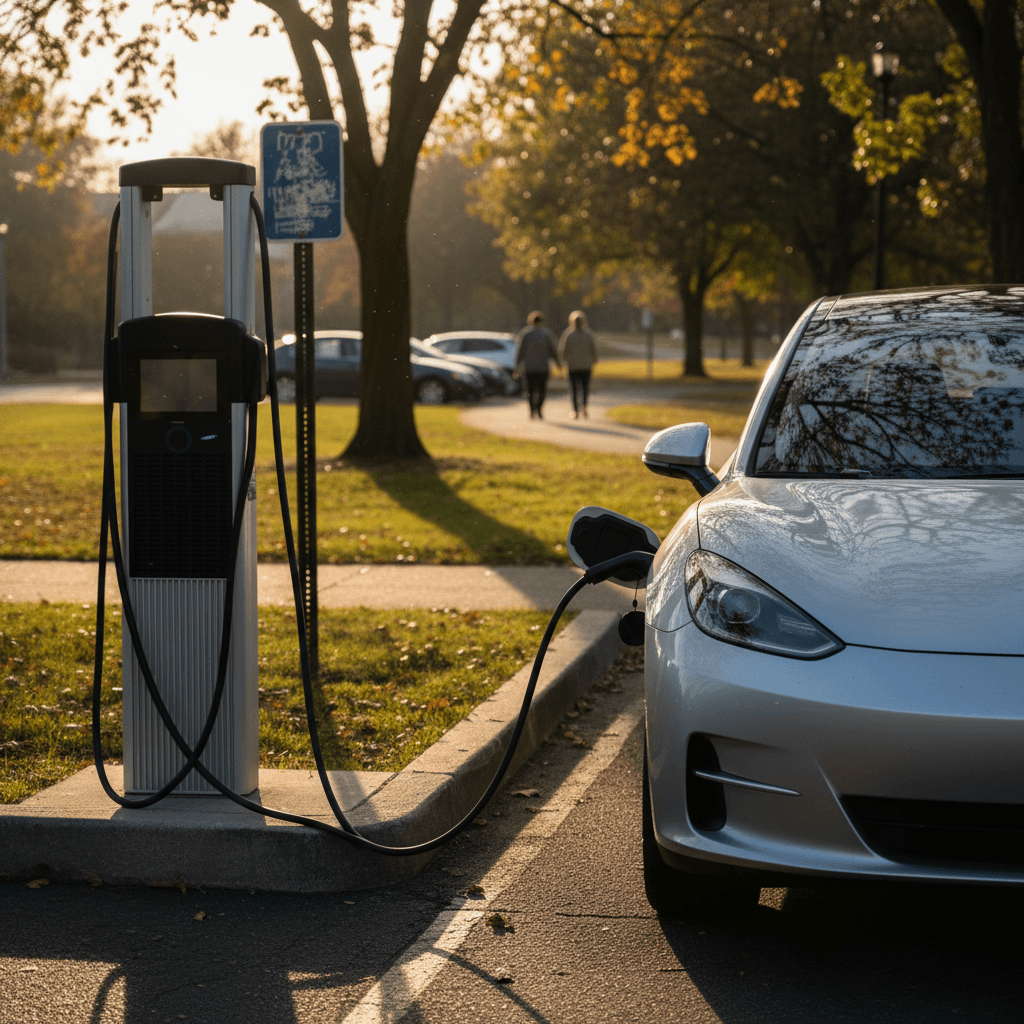
You can absolutely find places to charge an electric car for free, but it’s not the bottomless buffet it once was. In 2025, most public charging in the U.S. is pay-per-kWh or per-minute, and truly free EV charging is more of a perk or promotion than a lifestyle. The trick is knowing where to look, which apps to use, and when “free” actually costs you more in time than it saves in money.
The short story
Why “free” EV charging is a mixed blessing
Early EV adopters remember the golden era of free plugs at every tech campus and trendy grocery store. As EV adoption has climbed, most networks have moved to paid models, and many retailers quietly switched their once-free stations over to paid or time-limited access. Today, free charging is still around, but it’s more selective and often slower. That doesn’t make it useless, just something you should treat as a bonus, not a guarantee.
Free charging at a glance
Quick answer: Common places to charge your EV for free
- Workplace charging (if your employer offers it as a perk).
- Hotels and resorts that advertise free EV charging for guests.
- Shopping malls, grocery stores, and big-box retailers using free charging to attract customers.
- Municipal parking garages, park-and-ride lots, and some libraries or civic centers.
- Universities and hospitals (sometimes free for staff or patients, sometimes for everyone).
- Automaker promos that include free DC fast charging on networks like Electrify America or EVgo for a limited time.
30-second plan
Apps and maps: How to find free chargers near you
You don’t find free charging by wandering around parking lots. You find it in the filters. The major charging apps let you surface only stations that are free or include free options, so you’re not rolling the dice on every plug icon on the map.
Best tools to locate free EV charging
Use filters, not luck, to find zero-cost electrons.
PlugShare
Why it matters: It’s the most crowd-sourced view of all networks plus private stations.
- Add your car so it filters for compatible plugs.
- Under amenities, toggle Free Charging and uncheck paid-only locations.
- Read recent check-ins to confirm stations are still truly free and functional.
Google Maps & Apple Maps
Quick search: Type “EV charging station” and then look at the details.
- Tap each location and check pricing or notes, if price is blank or says “Free,” you’ve found a candidate.
- Not as detailed as PlugShare, but great for navigation and real-time traffic around the site.
Network & retailer apps
Examples: ChargePoint, EVgo, hotel and grocery apps.
- Some ChargePoint hosts set their stations to a $0 session fee.
- Loyalty apps (for hotels, supermarkets, or casinos) may show member-only free chargers or time-limited perks.
Filter details that actually matter
Typical places that offer free EV charging
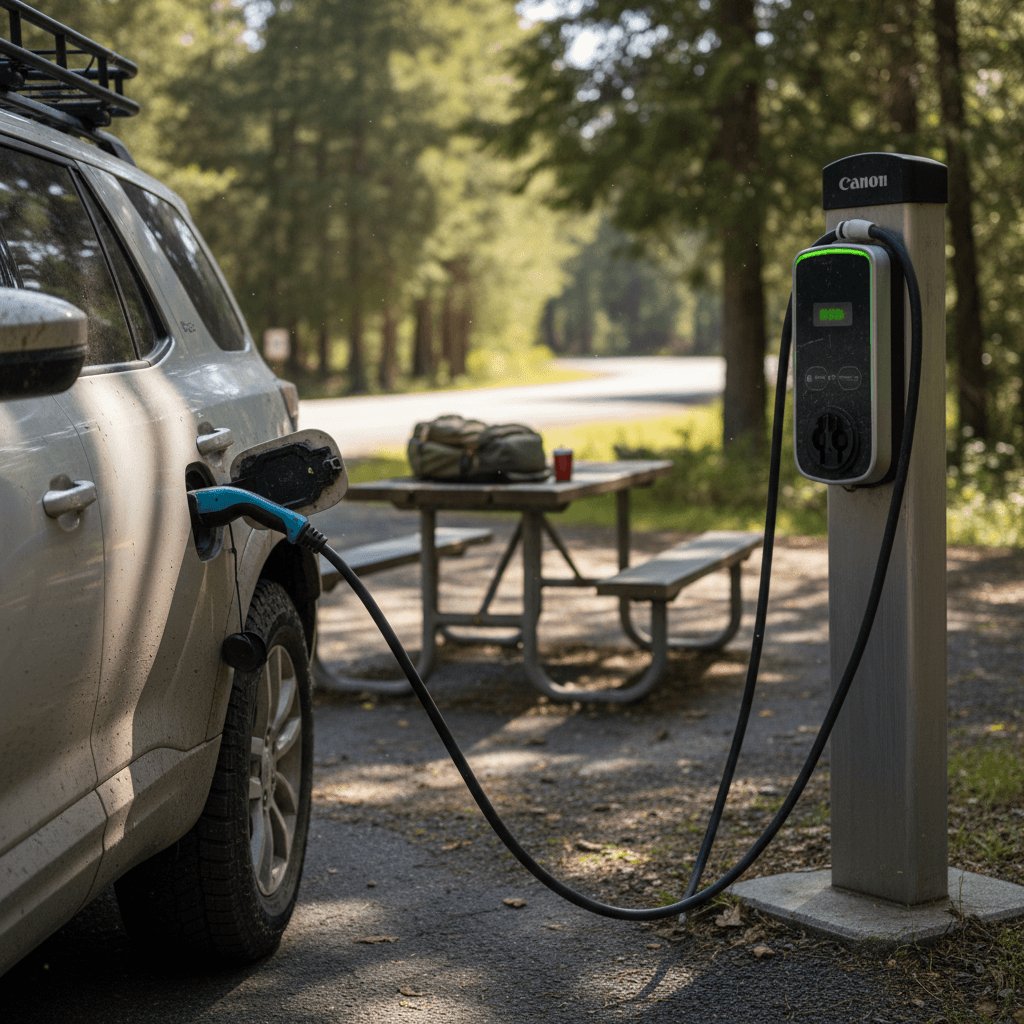
Once you start looking, you’ll notice a pattern: free charging tends to show up where someone wants you to stay a while, or where the property owner sees it as a public-good amenity. Here’s how that plays out in the real world.
1. Workplaces
Office campuses and corporate parks often add Level 2 chargers as an employee benefit. Sometimes they’re truly free; other times they’re free up to a certain number of hours per day.
- Ask HR or facilities if your company offers workplace charging or plans to.
- If you’re lobbying for it, emphasize that EV chargers are an employee perk and help with ESG goals.
For a typical commuter, free workplace charging can effectively offset half or more of their weekly energy costs.
2. Hotels and resorts
Mid-scale to upscale hotels increasingly advertise EV charging as a perk. Many still offer it free for overnight guests, especially Level 2 destination chargers.
- Check hotel listings for “EV charging” and confirm whether it’s free or just “available.”
- Call ahead and ask: Is it free for guests? Is it first-come, first-served? Any parking fees?
- If the hotel uses ChargePoint or a similar network, they can still set the price to $0 for guests.
3. Retailers, malls, and grocery stores
Some grocery chains, outlet malls, and big-box stores treat free charging as a magnet: plug in, go spend money, come back to a fuller battery.
- Expect 6–11 kW Level 2, ideal for 30–90 minute visits.
- Look for signage about session limits or store-customer-only rules.
- Even when free, don’t leave your car parked there all day, the next owner will thank you.
4. Municipal, university, and hospital parking
Cities, universities, and hospitals often install chargers as part of sustainability mandates. Pricing ranges from free to paid with a small parking fee.
- Park-and-ride lots and commuter garages sometimes offer free charging but paid parking.
- University lots may be free only for staff/students with permits.
- Hospitals may prioritize patients and visitors; check posted rules.
Don’t assume it’s still free
Free DC fast charging deals: When the fast stuff is free
Level 2 is where most free charging lives, but there’s another category: promotional free DC fast charging for new EV buyers or lessees. Automakers have used these deals to ease range anxiety and make the first years of EV ownership feel frictionless.
Examples of EVs that have offered free DC fast charging
Offers change frequently and may be limited by model year or purchase date. Always confirm with the dealer or automaker before assuming you qualify.
| Brand/model | Network | What’s included (typical) | Fine print |
|---|---|---|---|
| BMW i4 / i5 / iX | Electrify America | Roughly 2 years or ~1,000 kWh of DC fast charging | Limits vary by model year; sessions may be capped at 30 minutes. |
| Hyundai Ioniq 5 / Ioniq 6 | Electrify America or ChargePoint | Free 30-minute DC fast sessions for 2 years, or a kWh credit / home charger credit | You may have to choose between free public charging and a subsidized home charger. |
| Kia EV6 / EV9 | Electrify America | Around 1,000 kWh of DC fast charging usable within 3 years | Enough for several thousand miles, then standard rates apply. |
| Mercedes-Benz EQE / EQS | Mercedes hubs & Electrify America | Unlimited or time-limited free sessions for the first 2 years | Applies to first owner; fees start once the promo window closes. |
| VW ID.4 | Electrify America | Free 30-minute DC fast sessions for up to 3 years | Idle fees usually still apply if you stay plugged in after charging. |
Think of these as welcome gifts, not lifetime entitlements.
Check the glove box, and the fine print
Even without a promo, some luxury brands now include time-limited free access to their own branded hubs or partner networks. It’s generous, but it’s also smart: once you get used to a fast, reliable network, you’re more likely to stick with it when the free period ends.
Is free charging actually worth it?
Free charging sounds like found money, and sometimes it is. But time is a currency too. A slow, free Level 2 charger across town might cost you more in hassle than you save on your utility bill. To decide when to chase free electrons and when to plug in at home, think in terms of value per hour, not just cents per kWh.
When it’s smart to chase free charging (and when it’s not)
You’re already going to be there
Free hotel charging on a weekend away? A mall charger while you do a big grocery run? Perfect. You’re trading almost no extra time for real savings.
You don’t have reliable home charging
Apartment dwellers and street-parkers can benefit most from free Level 2. In that case, building a routine around workplace or municipal chargers can materially lower your cost of ownership.
You have a new-EV fast-charging promo
If your car came with free DC fast charging, use it, especially on road trips, while staying mindful of battery health and not relying solely on fast charging forever.
You’re road-tripping on a tight budget
If a hotel with free charging costs the same as one without, take the one with plugs every time. Over a long trip, that can offset a noticeable chunk of your travel budget.
Skip it when it’s a huge detour
Driving 20 miles out of your way, waiting for an occupied free charger, and babysitting a slow plug is rarely worth it compared with $3–$5 of off-peak home charging.
Skip it when the station is crowded
If every stall is full and drivers are circling, move on. Your time and sanity are worth more than a free session.
A smart middle ground
Etiquette and rules when you charge for free
Free doesn’t mean lawless. If anything, etiquette matters more at free stations because demand tends to be high and supply is limited. A few bad actors can ruin it for everyone and convince the property owner to start charging, or rip the stations out altogether.
- Obey time limits. If the sign says 2-hour charging, treat that as sacred. Set an alarm and move your car when you’re done.
- Don’t camp on the charger. Once your car is full, or full enough, unplug and move so someone else can use it.
- Leave the spot cleaner than you found it. Property managers notice trash, tangled cables, and damaged hardware.
- Check in on apps and leave honest reviews. Apps like PlugShare rely on driver feedback to flag broken or no-longer-free stations.
- Be courteous to staff. If a charger is on dealership, hotel, or campus property, ask what their rules are before you plug in.
- Never use EV-only spots for parking without charging. That goes double at free stations, don’t ICE other drivers out of their energy.
What gets free chargers shut down
How free charging fits into owning a used EV
If you’re shopping the used EV market, free charging is less about splashy promos and more about your real-life charging mix. New-car fast-charging deals often don’t transfer to second owners, or their clock has already run out. What still matters is whether you can routinely charge cheaply and conveniently, home, work, or a mix of both.
1. Don’t overvalue expired promos
A listing that brags about “3 years of free fast charging” might be technically true, but if the car is already 2.5 years old, that perk is nearly gone. Treat it like a free dessert at the end of a big meal, not the main course.
When you shop on platforms like Recharged, pay more attention to battery health, range, and fair pricing than to old promo stickers.
2. Focus on cost of ownership, not just free energy
Home or workplace charging at predictable, low rates usually beats chasing free public plugs. A used EV with a healthy battery, efficient drivetrain, and a good home-charging setup can cost pennies per mile, even if you never touch a free charger.
With Recharged, every vehicle includes a Recharged Score Report with verified battery health and fair market pricing, so you can see how your charging habits will play with the car’s remaining range and longevity.
How Recharged can help
FAQ: Free EV charging
Frequently asked questions about free EV charging
Free EV charging isn’t gone, it’s just grown up. Think of it as a marketing perk, a workplace benefit, or a civic amenity, not as a forever entitlement. Use the right apps, treat every free stall with respect, and fold those zero-cost sessions into a broader charging strategy built around home or workplace power. And if you’re choosing your next EV, especially a used one, focus less on yesterday’s giveaways and more on the car’s battery health, efficiency, and how it fits your real daily life.