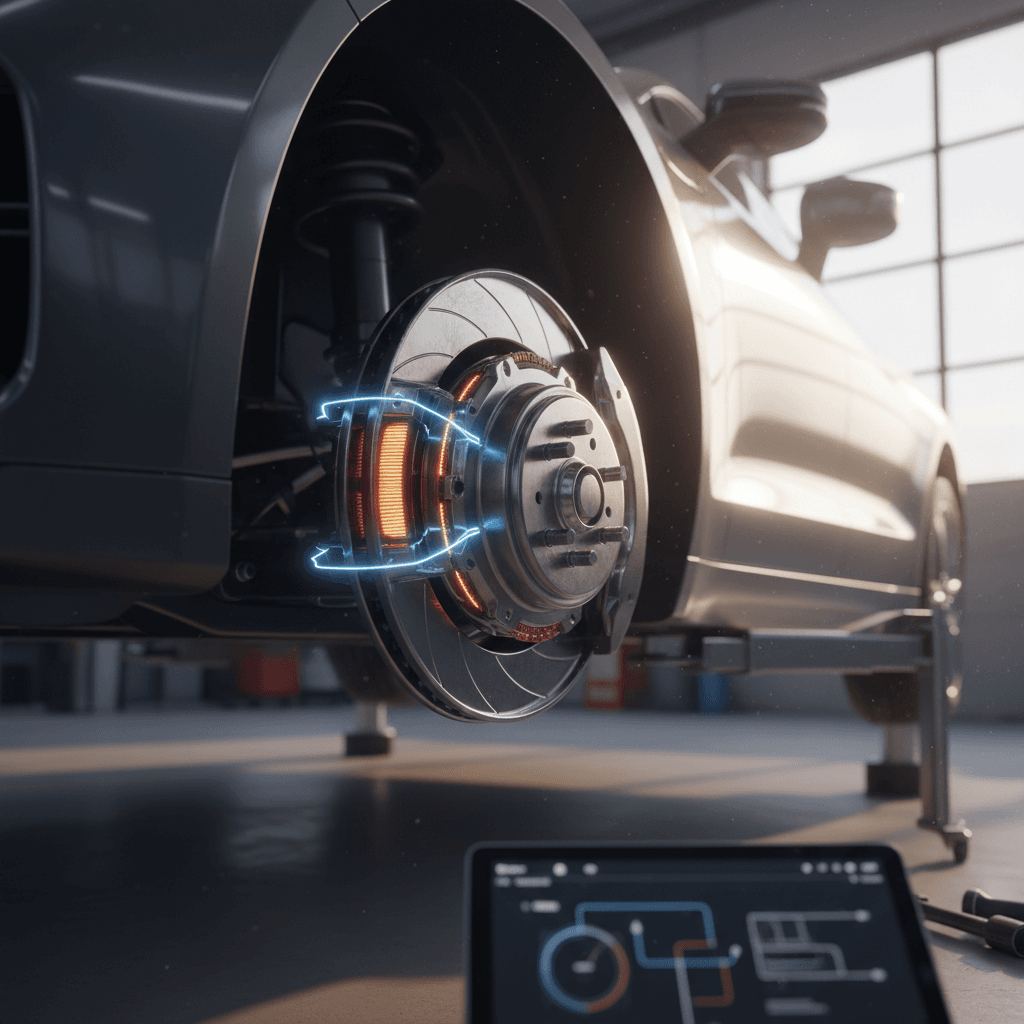
When you lift off the accelerator in an electric car and feel the car slow down, you’re feeling regenerative braking at work. Instead of wasting your speed as heat in the brakes, the electric motor turns into a generator and feeds energy back into the battery. Understanding what regenerative braking in a motor is – and how it behaves – helps you drive more efficiently, compare EVs, and shop smarter for a used electric vehicle.
Short answer
What is regenerative braking in a motor?
At its core, regenerative braking (often shortened to regen) is an energy recovery mechanism. In a conventional car, braking converts your car’s kinetic energy (its motion) into heat via friction brakes, and that energy is gone forever. In an EV or hybrid, the electric traction motor does double duty: it propels the car when you accelerate and acts as a generator when you slow down.
When you ask the car to decelerate – by lifting off the accelerator or pressing the brake pedal – the motor controller flips the operating mode. The motor applies a negative torque at the wheels, pushing back against their rotation. That resistance slows the vehicle, and the mechanical energy from your motion is turned into electrical energy and stored in the high-voltage battery. The whole process happens in milliseconds and is managed automatically by the car’s software.
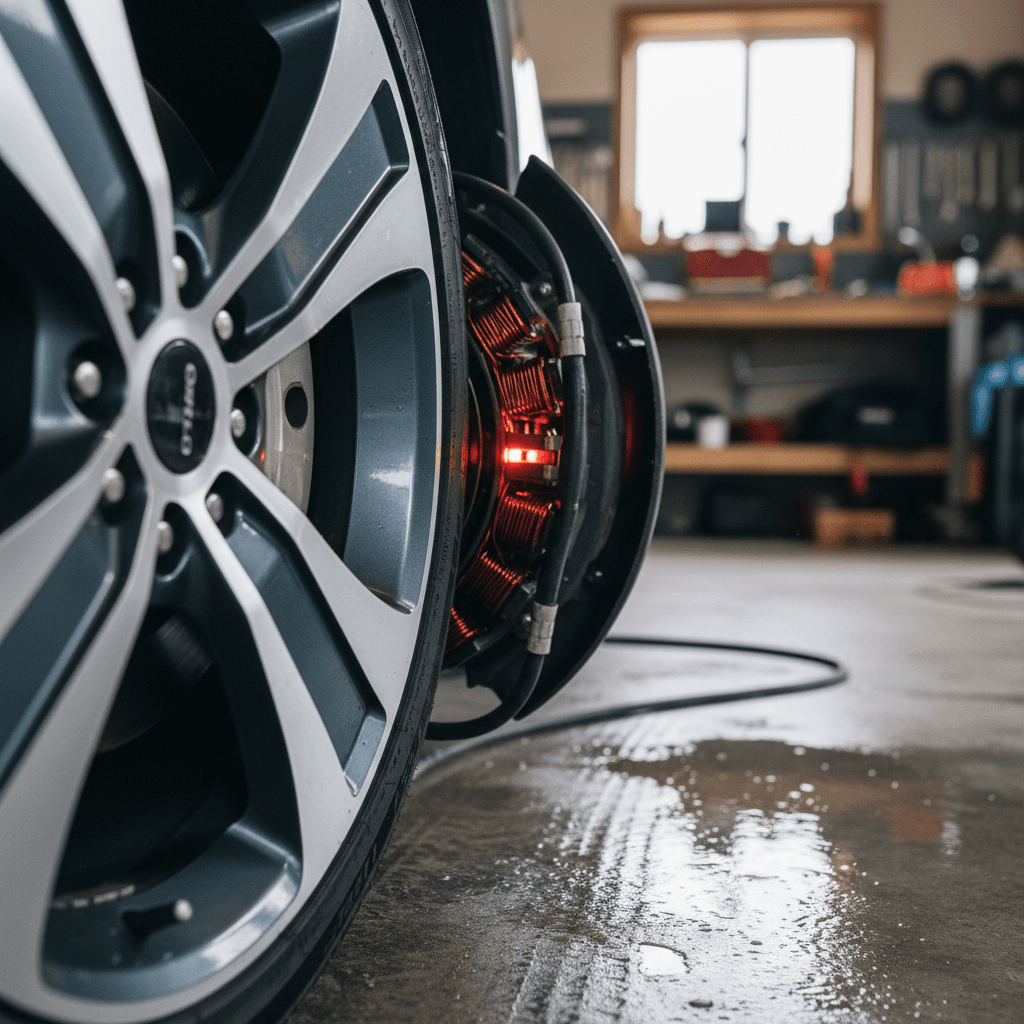
- In drive mode, the motor takes electricity from the battery and produces torque at the wheels.
- In regenerative braking mode, the wheels drive the motor, which now generates electricity and sends it back to the battery.
- Friction brakes are still there as backup and for hard or low-speed stops.
How regenerative braking works, step by step
Different brands tune regenerative braking differently, but the sequence under the skin is broadly similar. Here’s what’s happening when you slow an EV or hybrid that uses the motor for braking.
- You request deceleration. This can be as simple as lifting off the accelerator (in strong one-pedal modes) or pressing the brake pedal.
- The inverter reverses torque. The power electronics that normally feed AC current to the motor to create forward torque now command a negative torque. The motor’s electromagnetic fields are adjusted so it resists the rotation coming from the wheels.
- The motor becomes a generator. As the wheels turn the motor, it produces electrical current instead of consuming it. That current flows back through the inverter with controlled voltage and frequency.
- Energy flows to the high-voltage battery. The battery management system (BMS) decides how much current the pack can safely accept, based on state of charge, temperature, and health. Within those limits, it stores the recovered energy.
- Friction brakes blend in as needed. If you ask for more deceleration than the motor can provide – or at very low speeds – the car’s brake controller smoothly adds hydraulic braking at the wheels.
Think of it like a flipped motor
Motor types and why they matter for regen
The phrase “regenerative braking in motor” is broad, because modern EVs use several motor technologies. They all support regeneration, but they behave a bit differently and automakers tune them for distinct driving characteristics.
Common EV motor types and regen behavior
Different motors, same goal: turn motion back into stored energy
Permanent magnet motors
Induction (asynchronous) motors
Blended or multi‑motor systems
Battery limits cap regen
How much energy does regenerative braking recover?
One of the most common questions is: how effective is regenerative braking, really? The key distinction is between system efficiency (how much of the braking energy the motor and electronics turn back into usable electricity) and real‑world impact on range.
Regenerative braking by the numbers (typical modern EV)
The bottom line: regenerative braking can’t create free energy, but it does claw back a meaningful share of what you’d otherwise throw away as heat. You notice the benefit most in city driving, hills, and stop‑and‑go traffic, and much less on long, flat highway runs where you rarely touch the brakes.
Benefits of regenerative braking for EV drivers
For EV and hybrid drivers, regenerative braking in the motor isn’t just a neat engineering trick; it delivers everyday benefits you can feel in your wallet, at the pedal, and over the life of the car.
Why regenerative braking matters
Four concrete advantages you get from motor-based braking
More usable range
Lower running costs
Reduced brake wear
Less dust, less heat
Where Recharged fits in
Ready to find your next EV?
Browse VehiclesLimits and drawbacks of regenerative braking
Motor‑based regenerative braking is powerful, but it isn’t magic. There are physical and practical limits that automakers have to work around – and that you’ll occasionally feel as a driver.
- You still need friction brakes. At very low speeds, in emergency stops, or when the battery is full or cold, regen can’t provide enough deceleration and hydraulic brakes take over.
- Tire grip sets a ceiling. The motor can only apply as much negative torque as the tires and road surface can transmit without skidding. Stability and ABS systems may reduce regen to keep the car controllable on slippery surfaces.
- Battery charge and temperature matter. A nearly full or cold battery can’t absorb high regeneration currents, so the car dials back regen strength until conditions improve.
- Not all driving gives you much regen. Long highway stints with cruise control just don’t involve much braking, so the regen contribution there is modest.
Don’t count on regen for emergency stops
Regen braking feel, one-pedal driving, and settings
If you’re new to EVs, the driving feel of regenerative braking can be surprising at first. Lift off the accelerator in some cars and the deceleration feels like you downshifted two gears in a manual transmission. Others coast more gently, relying on the brake pedal to trigger stronger regen.
Strong regen / one‑pedal driving
Many EVs offer a high‑regen or one‑pedal mode. When it’s enabled:
- Lifting off the accelerator commands strong negative torque from the motor.
- You can often slow to walking speed (or a full stop in some models) without touching the brake pedal.
- The brake lights illuminate automatically to warn drivers behind you.
This can be very efficient in city driving and quickly becomes intuitive for a lot of drivers.
Mild regen / coasting feel
Other vehicles prioritize a more traditional, coasting feel:
- Lifting off the accelerator feels similar to a modern automatic‑transmission car.
- Regen ramps up when you press the brake pedal, then blends into friction brakes as needed.
- Some drivers prefer this because it feels more familiar and makes highway driving smoother.
Many cars let you adjust this behavior in drive modes or menus.
Check your regen settings
Regenerative braking and brake wear on used EVs
When you’re looking at a used electric car, regenerative braking is part of the brake health story. In theory, less use of friction brakes should mean longer‑lasting pads and rotors. In practice, that only holds if the hardware is checked and exercised periodically.
What to check on a used EV’s brakes
1. Brake pad condition
Ask for a visual inspection or service record. EV pads can last far longer than in gas cars, but if the calipers stick or slides seize from lack of use, you can still end up replacing them early.
2. Rotor surface and corrosion
Because regen does so much of the work, pads may not wipe the rotors as often. In wet or salty climates, that can let surface rust build up. Some light surface rust is normal, but heavy pitting or grooves are a warning sign.
3. Smooth transition from regen to friction
On a test drive, pay attention as you slow from highway speeds to a stop. The handoff from motor braking to friction braking should feel smooth and predictable, not grabby or inconsistent.
4. Dashboard warnings or reduced regen
If an EV shows warnings about the braking or stability system, the car may limit regen and lean heavily on friction brakes. That’s both less efficient and potentially expensive if ignored.
On Recharged, every used EV includes a Recharged Score Report. Alongside battery health data and fair‑market pricing, you get expert notes from a specialist EV test drive – including how the regenerative braking feels, any unusual noises during blended braking, and whether there are obvious signs of neglected pads or rotors.
How to drive to get the most from regenerative braking
You don’t need to be an engineer to benefit from regenerative braking in your motor. A few simple driving habits can maximize energy recovery without slowing you down – literally or figuratively.
Driving habits that boost regen benefits
Look farther ahead
Smooth, early deceleration lets the motor handle more of the braking, instead of wasting energy in sudden stops where friction brakes have to jump in.
Use stronger regen modes in city driving
In stop‑and‑go traffic or hilly areas, a high‑regen or one‑pedal mode can recapture more energy and reduce how often you move your foot to the brake pedal.
Don’t obsess over the regen gauge
Watching your energy flow screen is educational, but constantly chasing maximum regen can make your driving less smooth. Focus on traffic first, efficiency second.
Remember regen is weaker with a full or cold battery
Right after a fast charge or on a cold morning, expect less regen. Leave more distance and be ready to use the brake pedal until the pack warms or the charge level drops a bit.
Combine regen with eco driving
Steady speeds, sensible acceleration, and good use of regen together deliver more range than any one trick on its own.
FAQ: regenerative braking in motors
Frequently asked questions about regenerative braking in motors
Key takeaways
Regenerative braking in a motor is one of the key reasons electric vehicles feel so different – and so efficient – compared with traditional cars. By turning the traction motor into a generator whenever you slow down, your EV recovers a meaningful share of energy that would otherwise disappear as heat in the brake pads.
For you as a driver, that translates into more usable range, lower running costs, and less brake wear. The experience will vary depending on motor type, software tuning, battery state, and your driving style, but the underlying physics is the same across most modern EVs and hybrids.
If you’re exploring your first electric car – or moving from one brand to another in the used market – pay attention to how regenerative braking feels on a test drive. And if you’re browsing used EVs on Recharged, the included Recharged Score Report and EV‑specialist support can help you understand not just the battery health, but also how the car’s motor, brakes, and regen system are working together to deliver the efficiency and confidence you’re looking for.