EV charging levels describe how electricity reaches the battery, not the plug shape or the size of the battery. The basic progression is simple: Level 1 is slow AC charging from an ordinary outlet, Level 2 is faster AC charging for routine use, and Level 3 sends DC power directly to the battery for rapid charging. Once you match the level to where the car sits and how far you drive, charging becomes much less mysterious.
The three charging levels compared
The three levels differ mainly in their power source, charging speed, and intended setting. Level 1 and Level 2 supply alternating current, or AC, which the vehicle converts before storing the energy. So-called Level 3 charging supplies direct current, or DC, and is designed for shorter public charging stops.
Level 1 vs. Level 2 vs. Level 3
Use this table to match each charging level with its most practical role.
| Charging level | Power source | Best for | Main trade-off |
|---|---|---|---|
| Level 1 | 120-volt AC outlet | Light daily driving | Slowest charging |
| Level 2 | 240-volt AC power | Home and workplace | Installation may be needed |
| Level 3 | DC fast power | Trips and quick stops | Public infrastructure needed |
Charging speed still depends on the EV, battery temperature, state of charge, and equipment.
“Level 3” usually means DC fast charging
Which charging level fits your routine?
Level 2 is the practical default for most EV households because a parked car can recover substantial driving range while you sleep or work. Level 1 can still make sense when your daily mileage is modest, the car remains parked for long stretches, and you have a suitable outlet. If you're planning a home setup, review the basics in our home EV charging guide and have the circuit evaluated by a qualified electrician.
DC fast charging is the travel tool rather than the automatic everyday choice. It helps you add energy during a meal, coffee stop, or brief break, but the result varies by vehicle and conditions. Before a trip, check whether your EV can precondition its battery, a process that warms or cools the pack toward a temperature that supports faster charging, and use the vehicle's navigation system when it manages that process automatically.
Know the difference between kW and kWh
Real-world speed depends on the vehicle and conditions
Actual charging speed depends on the EV, charger, battery temperature, and current state of charge. In one Recharged team drive, a Cybertruck generally added around 30 miles of indicated range per hour on workplace Level 2 charging; on that particular day, a little more than seven hours added about 160 miles. During a later DC fast-charging stop, the preconditioned truck initially charged much faster, then slowed as the battery filled, normal behavior for a managed charging curve, not a direct comparison that every EV will match.
On Level 2 at work, we generally see around 30 miles of range added per hour in the Cybertruck. On that day, a little over seven hours added about 160 miles.

The lesson isn't that every Level 2 charger adds the same number of miles per hour. Range-added estimates change with vehicle efficiency, battery size, weather, and how the dashboard calculates remaining range. For trip planning, think in terms of the time needed to reach your next stop rather than waiting for the battery to reach a full charge; our guide to EV charging time explains the other variables.
What Recharged battery diagnostics show
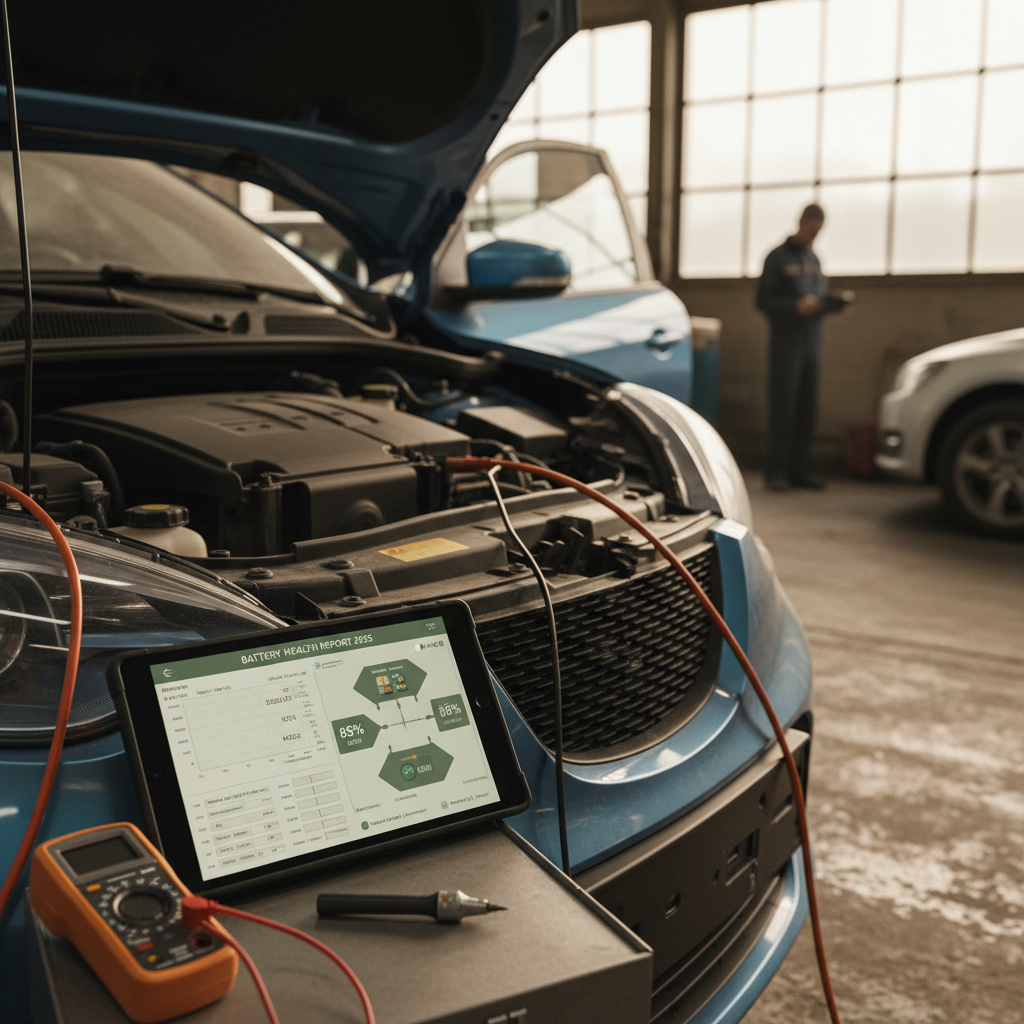
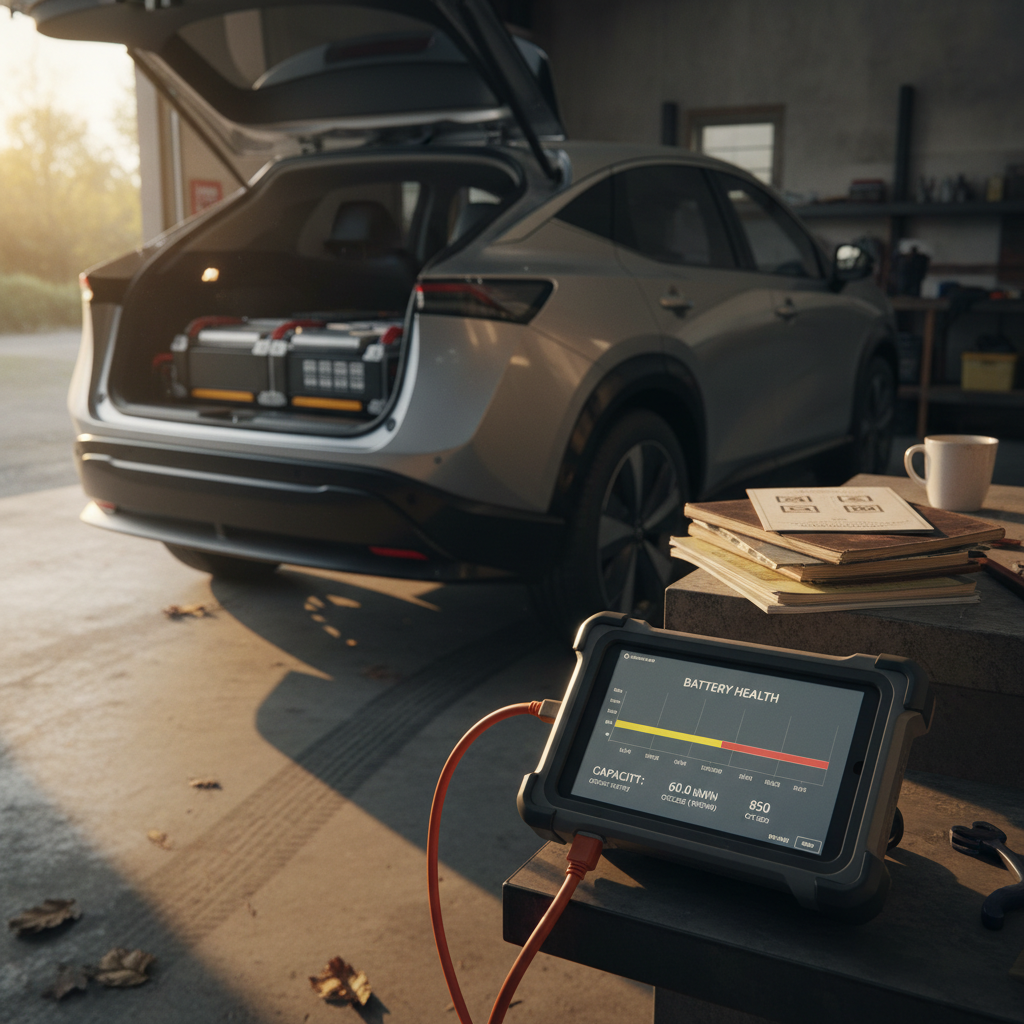
Recharged battery diagnostics show that the charging level alone cannot tell you a used EV's present battery condition. Across 2,242 Recharged Score inspections, tested remaining capacity averaged 93.9% of original capacity, while the median was 94.9%. Those vehicles span different models, ages, mileage totals, climates, and charging histories, so the fleet averages aren't a promise about an individual car. The practical takeaway is to verify the actual battery rather than judging it solely by whether its previous owner used Level 1, Level 2, or DC fast charging.
A proper used-EV evaluation should combine battery diagnostics with service history, charging operation, and a physical inspection. Every vehicle sold by Recharged includes a Recharged Score Report with verified battery-health information, helping you evaluate the car in front of you rather than rely on assumptions about its past. Learn what those results mean in our guide to EV battery health.
Recharged data
Used EV battery health
94%
avg remaining capacity
From Recharged battery inspections, not manufacturer estimates.
- Lowest
- 63%
- Median
- 95%
- Highest
- 100%
- Est. range
- 266 mi avg
- Cell balance pass
- 100%
- Quick charges
- 18 avg
- Slow charges
- 65 avg
Average cell imbalance: 7.3 mV
Based on vehicles Recharged tested
Recharged data
Used EV prices at Recharged
$30,997
median list price
Current list prices for matching inventory at Recharged.
- Lowest
- $12,996
- Average
- $34,803
- Highest
- $146,998
Average Recharged Score on these listings
4.8 / 5
Range
3.7 – 5.0
Based on available listings
Every EV is battery-tested with a Recharged Score. Nationwide delivery.
Charging levels and connectors are different
A charging level tells you how power is delivered, while a connector tells you whether the cable physically and electronically works with the vehicle. Depending on the EV and charging site, you may encounter NACS, meaning North American Charging Standard, or CCS, meaning Combined Charging System, along with other connector formats. An adapter may help in some situations, but it doesn't automatically make every charger or charging speed compatible, so confirm support in the owner's manual and the charging network's app before relying on a station.
This distinction matters when you're shopping for a used EV because two cars can both support Level 2 and DC fast charging while using different connectors or accepting different charging rates. Check the charge-port type, included portable cable, available adapters, and nearby networks before buying. Our used-EV buying checklist covers charging equipment alongside battery condition and ownership costs.
Instant offer, trade-in, or consignment. Pickup available.
EV charging level FAQ
The bottom line
Choose the charging level according to the job: Level 1 for low-mileage situations with plenty of parking time, Level 2 for routine home or workplace charging, and DC fast charging for travel or quick energy stops. Don't assume the fastest option is always necessary, and don't confuse charging level with connector compatibility. When buying a used EV, verify that its charging hardware suits your routine and that its battery condition has been tested directly.