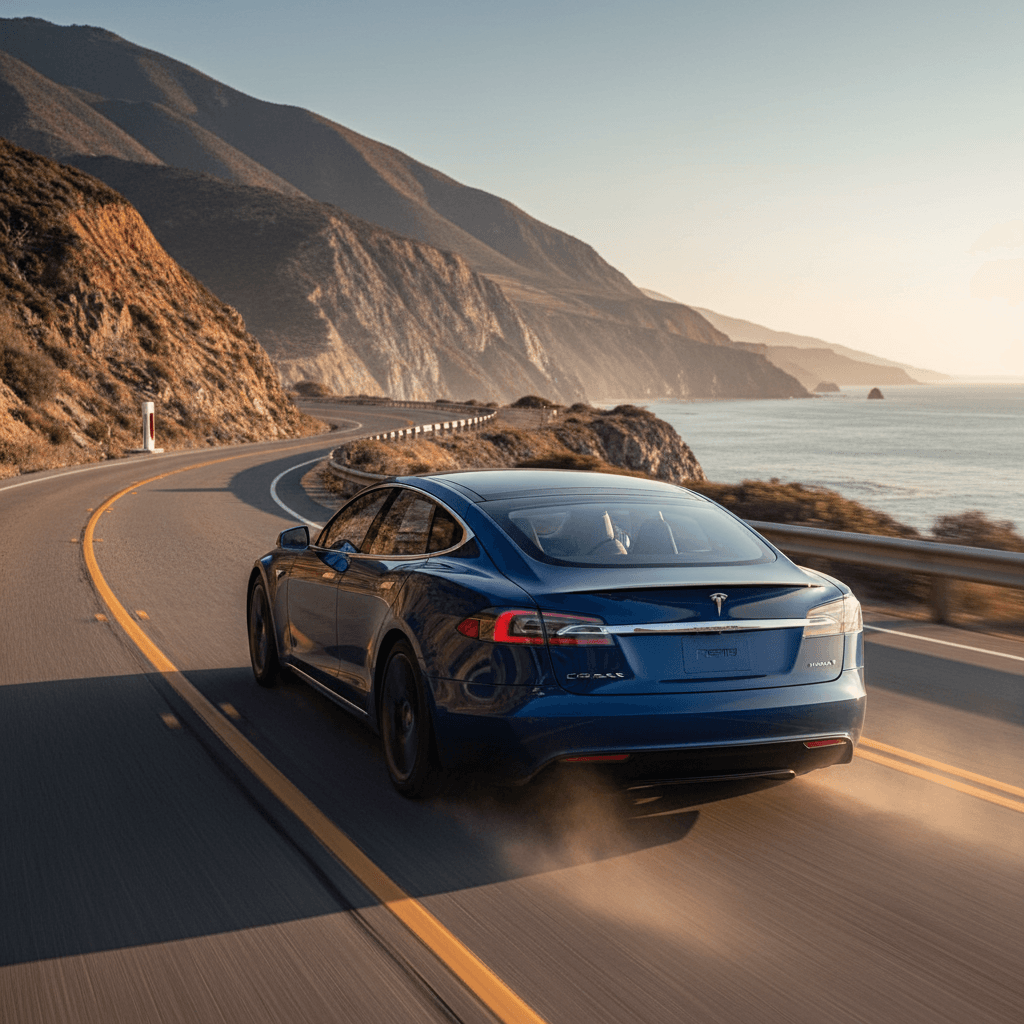
The Tesla Model S Plaid isn’t just fast. It’s a distortion of time. The numbers, sub‑2‑second 0–60 mph launches, quarter miles in the 9s, a rated top speed up to 200 mph, read like misprints. This performance review cuts through the hype to explain what the Plaid actually feels like on the road and track, how its brakes and handling cope with that power, what the range really looks like, and what you should know if you’re eyeing a used Model S Plaid.
Context: Which Plaid Are We Talking About?
Who the Tesla Model S Plaid Is Really For
On paper, the Plaid is a family hatchback that outruns million‑dollar hypercars. In practice, it’s for a very specific kind of driver: someone who wants drag‑strip absurdity in a quiet, clean, everyday EV wrapper. If your idea of performance is clipping apexes and feeling the steering talk to you, a Porsche Taycan or even a good sport sedan may satisfy you more. If your dream is rolling silently up to a light and vaporizing everything when it turns green, this is your car.
Is the Plaid Your Kind of Performance Car?
Three mindsets that actually make sense of 1,000+ hp in a big EV sedan
The Straight‑Line Addict
You care about 0–60 times and quarter miles. You grew up on drag‑strip lore, now you want the silent, instant‑torque version. The Plaid gives you that in a car you can commute in.
The Tech Maximalist
You want the most extreme expression of EV powertrain tech available at anything like a normal‑car price. The Plaid is your rolling proof‑of‑concept.
The One‑Car Garage
You need a comfortable 4‑door with range, space, and Autopilot, but you refuse to give up supercar‑level acceleration. The Plaid is the rare car that can be both family hauler and traffic‑light bully.
Headline Numbers: Acceleration, Top Speed, and Range
Tesla Model S Plaid: Key Performance Specs
Across recent instrumented tests, Plaid sedans consistently sprint to 60 mph in roughly 2.1–2.3 seconds on standard high‑performance street tires, and clear the quarter mile in the 9.2–9.4‑second range at around 150 mph. That’s not just “fast for an EV.” That’s in the same conversation as the Lucid Air Sapphire and Porsche Taycan Turbo GT, cars that exist specifically to push the envelope of what a street‑legal sedan can do.
Top speed is where model‑year nuance matters. Early Model S Plaids, equipped with the optional Track Package, unlocked a true 200‑mph top speed when fitted with track‑oriented wheels, tires, and carbon‑ceramic brakes. Later refreshes traded that ceiling for slightly more refinement, with some 2025+ cars capped closer to the mid‑100s mph in the name of range, noise, and stability. For anything resembling legal driving, the difference is academic, but track rats will care.
Plaid Wheel Choice Matters
Real-World Acceleration: Launch Control and Traction
The first time you launch a Plaid properly, battery warm, tires warm, road dry, you don’t really “accelerate.” You’re moved. The car seems to rotate the world around you. The thrust arrives with no drama, no shifting, and almost no noise; your inner ear is the only instrument that understands how fast you’re going. That’s the party trick. But living with 1,000+ horsepower brings its own set of realities.
- Launches this violent are physically tiring. Two or three hard pulls and most passengers are done for the day.
- Street surfaces and temperatures become a real limiting factor. On cold or dusty asphalt, the traction control is constantly negotiating with physics.
- Because the Plaid is single‑speed, there are no gear changes to interrupt acceleration, midrange roll‑on from 40–80 mph is almost as shocking as the 0–60 stats.
How the Plaid Manages Traction
Tesla’s software is doing a huge amount of work. With tri‑motor torque vectoring at the rear axle, the Plaid can shuffle power side‑to‑side to stabilize the car even as all four tires are being overwhelmed. In the dry, the system is astonishing; in the wet, you’re reminded this is a very heavy car with more power than it truly needs.
Launch Control in Daily Use
To access the wildest numbers, you’ll spend time in Drag Strip Mode, preconditioning the battery and tires. For daily driving, the car defaults to a more humane throttle map, and you’ll generally use only a fraction of the available power. The beauty of the Plaid is that it can be uncannily docile until you flatten the pedal.
Respect the Weight
Handling and Ride: Can It Corner Like It Accelerates?
Big surprise: a car this heavy and this fast doesn’t completely rewrite physics in the corners. The Plaid is grippy, stable, and eerily quick point‑to‑point, but it’s not a dance partner in the way a lighter, more focused sports sedan can be. Think ballistic missile, not ballet dancer.
On-Road Personality
How the Plaid behaves when the road starts to bend
High-Speed Stability
The long wheelbase, low center of gravity, and aero work make the Plaid rock‑solid at speeds that would have old sports sedans wandering. Lane changes at 80–90 mph feel unremarkable, which is slightly terrifying when you remember how fast you’re actually going.
Cornering Feel
Steering is light and accurate but short on feedback. Body control is good, not magical; if you push hard on a bumpy back road, you feel the weight. On a smooth track, it’s devastatingly quick but not especially communicative.
Ride quality depends heavily on wheels and tires. On 21‑inch wheels, broken pavement can make the car feel busy, especially at low speeds. The smaller 19‑inch setup calms the body motions and better suits American roads without meaningfully sacrificing handling for street use.
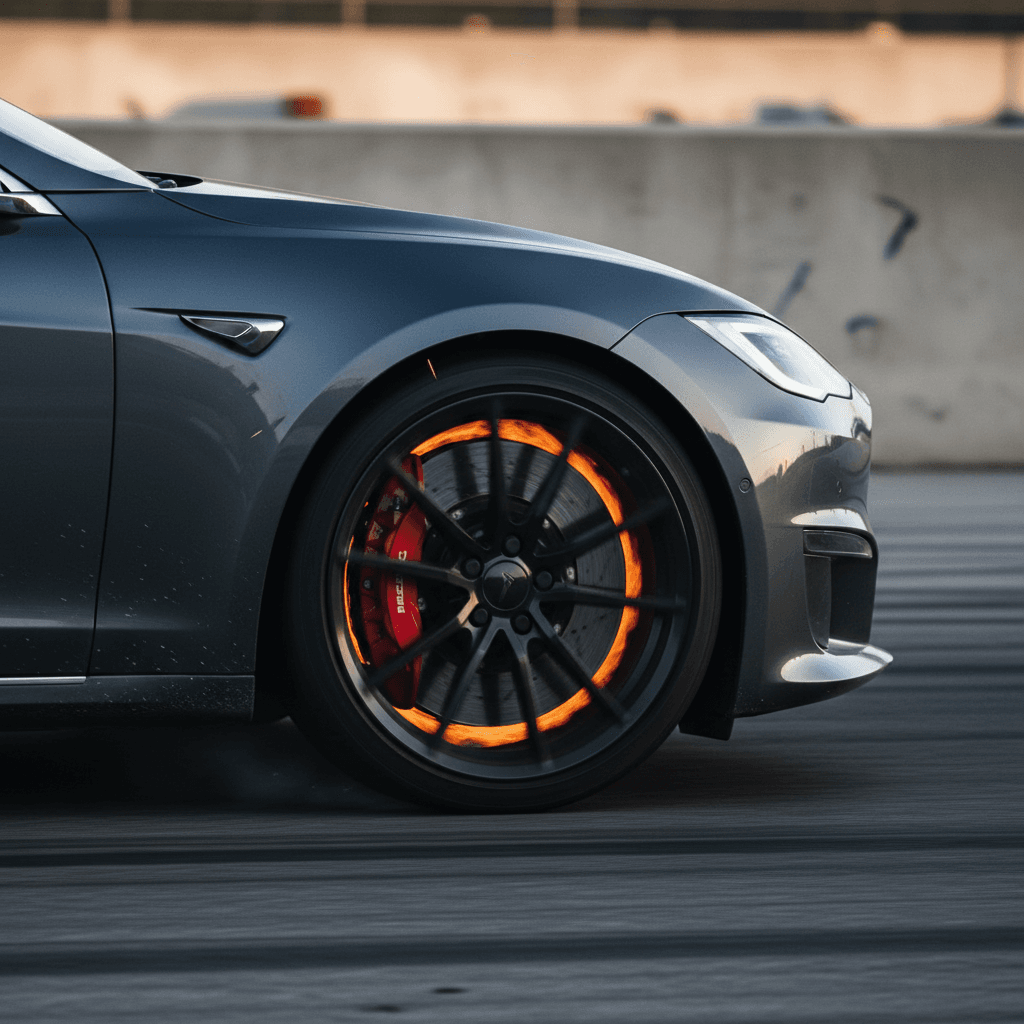
Brakes and the Essential Track Package
Here’s the part of the Plaid story that spec sheets tend to whisper: the standard brakes are the limiting factor when you really use all that speed. For commuting and the occasional on‑ramp heroics, the stock iron‑rotor setup is fine. Start doing repeated 130‑to‑40 mph stops on track, and you find the edge of the envelope quickly.
Model S Plaid Brake Options
What you get with the standard setup vs. the optional carbon‑ceramic Track Package.
| Feature | Standard Brakes | Track Package Brakes |
|---|---|---|
| Rotor type | Iron | Carbon‑ceramic |
| Rotor size (front/rear) | Approx. 390 mm / 365 mm | 410 mm / 410 mm |
| Calipers | Fixed multi‑piston | Upgraded forged multi‑piston |
| Best use case | Street, occasional spirited driving | Track days, repeated high‑speed stops |
| Pedal feel under abuse | Can soften and lengthen | Stays consistent much longer |
| Price when new | Included | Roughly $20,000+ installed |
If you’re serious about track days, budget for the Track Package from day one, or look for a used Plaid that already has it fitted.
Track Use Without the Package
Range, Efficiency, and Thermal Management
You don’t buy a Plaid for hyper‑miling, yet its efficiency is still impressive for such a monster. Depending on wheel choice and model year, EPA combined range lands roughly between 320 and 360 miles. That’s more than enough for most daily driving and even serious road‑trip duty, especially paired with Tesla’s Supercharger network.
- Drive it gently on 19‑inch wheels and you can see real‑world consumption close to the mid‑300‑mile range between charges.
- Fit 21‑inch wheels, run at higher freeway speeds, or do lots of full‑throttle hits, and realistic range moves into the mid‑200s.
- Aggressive track work will chew through both range and tires in a hurry, think of the Plaid like a supercar in that environment, not a commuter.
Thermal management is generally excellent. Tesla’s battery conditioning means the car can repeat hard launches and fast‑charge sessions better than early performance EVs. Still, after multiple back‑to‑back full‑power pulls, you’ll feel the car dial power back slightly to protect the drivetrain. It’s more discreet than many rivals, but the laws of thermodynamics still apply.
Charging Reality Check
Performance vs Rivals: Lucid Air Sapphire, Porsche Taycan
In the arms race of mega‑sedans, the Plaid is no longer the only nuked‑out option. The Lucid Air Sapphire and Porsche Taycan Turbo GT have entered the chat, bringing with them very serious chassis tuning and track credentials. The question is not just who wins the spec‑sheet drag race, but which car best fits your idea of performance.
How the Model S Plaid Stacks Up
A simplified, enthusiast‑focused comparison
Tesla Model S Plaid
- Strengths: Outrageous straight‑line speed, strong range, best charging network, relatively attainable price for this performance.
- Weaknesses: Brakes and steering feel trail the best; cabin and controls feel older next to newer EVs.
Lucid Air Sapphire
- Strengths: Even more power and pace, superb high‑speed composure, very luxurious interior.
- Weaknesses: Higher price, smaller charging network, limited availability.
Porsche Taycan Turbo GT
- Strengths: Best steering and chassis feel in the segment, track‑honed brakes and balance.
- Weaknesses: Tighter interior, less range, price skyrockets with options.
The Plaid is less a car than a proof that the internal‑combustion super sedan is officially out of ideas.
Living With a Plaid: Daily Driving and Usability
All the wild numbers mask a simple truth: most days, the Model S Plaid is just a quiet, slightly firm luxury EV with a large hatchback trunk. The seats are comfortable, the cabin is airy, and Autopilot or similar driver‑assist features handle the dull parts of long drives. If you never dipped below half throttle, you could forget you’re driving a thousand‑horsepower science project.
What Daily Life in a Plaid Actually Feels Like
Acceleration on Tap, Not Always in Use
You learn to “feather” the throttle. A quarter of pedal travel is enough to dispatch traffic; full travel is a special‑occasion event.
Cabin Tech That’s Aging Gracefully
The big center screen is still clean and responsive, but newer rivals now match or beat Tesla’s UX polish. Over‑the‑air updates help, but the basic architecture is no longer futuristic.
Noise and Comfort
Later refreshes focus on better noise isolation and smoother suspension tuning, making the Plaid quieter and calmer at highway speeds than the 2021–2022 cars.
Practical Space
The hatchback trunk and small front trunk make it genuinely useful, golf clubs, strollers, Costco runs. There’s something delightfully absurd about doing school pickup in a 9‑second quarter‑mile car.
Yoke vs. Wheel, Old vs. New
Buying a Used Model S Plaid: What to Watch For
Because the Plaid is so shockingly quick, how previous owners used it matters more than with an ordinary EV. Many Plaids have lived relatively easy lives as status symbols and highway commuters. Others have spent their weekends chasing quarter‑mile records. When you’re evaluating a used Plaid, you’re really evaluating its history of abuse, maintenance, and battery health.
Used Plaid Inspection Priorities
1. Battery Health and Fast-Charging History
Look for a <strong>verified battery‑health report</strong> rather than guessing from displayed range. Frequent DC fast‑charging and many deep cycles can accelerate degradation over time, especially in a performance‑oriented car.
2. Brake and Tire Wear
Check for uneven tire wear, heat‑cracked rotors, or glazed pads, these can hint at heavy track use. A Plaid can eat a set of performance tires in a few thousand hard miles.
3. Suspension and Alignment
Listen for clunks over bumps and inspect for curb rash on wheels. Hard launches and aggressive corner exits are tough on bushings, ball joints, and alignments.
4. Software, Warranty, and Options
Confirm which software features are active (performance modes, driver‑assist packages) and how much factory warranty remains. A car with the Track Package, recent service history, and intact warranties is a safer bet.
How Recharged Helps With High-Performance EVs
Because Recharged specializes in used EVs, our team can also help you compare a Plaid with more sensible alternatives, a Long Range Model S, a used Taycan, or something entirely different, and line up financing, trade‑in options, and nationwide delivery so the car that shows up in your driveway matches the performance reality you read about on the spec sheet.
FAQ: Tesla Model S Plaid Performance
Common Questions About Model S Plaid Performance
Bottom Line: Should You Buy a Plaid?
The Tesla Model S Plaid is not a balanced car. It is an argument. It argues that the future of speed is silent, electron‑driven, and available to anyone with the credit score for a luxury sedan. As a performance object, it’s flawed, its brakes need help for serious track use, its steering doesn’t speak the way an enthusiast might wish, and newer rivals now nibble at its crown. But as an experience, as a thing you can actually live with that also happens to run 9‑second quarters, it remains unmatched.
If that mixture of
If that mixture of everyday usability and supercar‑slaying straight‑line pace sounds like your dream garage in one car, the Plaid earns its reputation. Just go into the purchase with clear eyes about brakes, range, and how previous owners treated the car, especially on the used market. With verified battery health and expert guidance, which is exactly what you get through Recharged’s Recharged Score Report and EV‑specialist support, a used Model S Plaid can be one of the wildest yet most rational performance buys you can make right now.